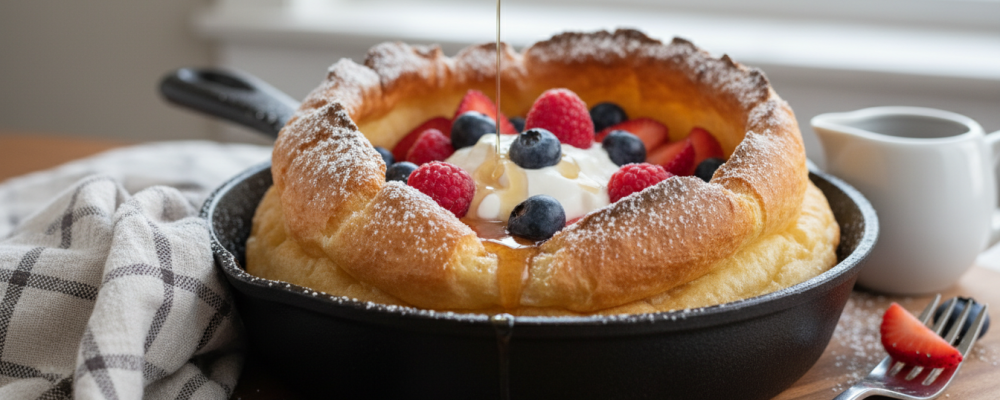

Let me tell you about one of the most magical things that happens in baking: the moment a Dutch Baby emerges from the oven, puffed up like a golden soufflé, with dramatic edges reaching toward the sky and a tender center that looks almost impossible. It’s pure theater—the kind of breakfast that makes people gasp and grab their phones to photograph before it inevitably deflates (which it will, and that’s perfectly normal). This is breakfast as performance art, and I absolutely adore it.
What makes me love Dutch Babies isn’t just their visual drama, though that’s certainly part of the appeal. It’s how something so simple—eggs, milk, flour, butter—can transform into something that feels extraordinary. You’re not doing anything complicated here. You’re whisking a batter that’s thinner than regular pancake batter, pouring it into a screaming hot skillet with melted butter, and letting the oven work its magic. The high heat causes the eggs to puff spectacularly, the butter creates crispy, lacy edges, and you end up with this gorgeous contrast of textures that’s part pancake, part popover, part custard.
And honestly? Even after it deflates—which happens within minutes of leaving the oven—it’s still absolutely gorgeous. That collapse creates these beautiful ripples and valleys perfect for catching pools of lemon juice and drifts of powdered sugar. It’s breakfast that rewards spontaneity and celebration, the kind of thing you make when you want your morning to feel special.
─────────
The Inspiration Behind This Recipe
My first Dutch Baby experience happened at a brunch restaurant in Portland, where the server delivered this enormous, puffy pancake to the table next to mine. I watched it arrive in all its glory, saw everyone’s cameras come out, and then witnessed the gradual deflation as they squeezed lemon over it and dug in with forks. I was mesmerized. When I asked what it was, the server smiled and said, “You have to order one.” So I did, and I’ve been making them ever since.
What captivated me was the combination of simplicity and spectacle. In pastry school, we learn to make incredibly complex desserts that require days of preparation and specialized equipment. The Dutch Baby is the opposite—it’s accessible, forgiving, and dramatic all at once. You don’t need special skills or unusual ingredients. You need a hot oven, a cast-iron skillet, and the confidence to pour batter into sizzling butter without second-guessing yourself.
I started experimenting with Dutch Babies at home, trying different pan sizes, oven temperatures, and batter proportions. This version represents what I’ve learned works most reliably: a slightly sweet batter with just enough structure to puff dramatically, baked in a preheated skillet that’s hot enough to create immediate rise. It’s become my go-to breakfast when I want to impress without stress—the kind of recipe that makes you look like a pastry genius when you’re really just following a very clever technique.
─────────
A Brief History of Dutch Baby Pancakes
Despite the name, Dutch Babies have no connection to the Netherlands. They’re actually German in origin, derived from a dish called Pfannkuchen (pan cakes). The “Dutch” likely comes from “Deutsch,” the German word for German, misheard or mispronounced by English speakers. The dish gained American popularity in the early 1900s when a Seattle restaurant called Manca’s Cafe began serving oversized versions of the German pancake, dubbing them “Dutch Babies.”
The technique itself relates to German and Austrian cooking traditions, particularly popovers and Yorkshire pudding—both rely on high heat and eggy batters to create dramatic rise and airy texture. What makes Dutch Babies distinct is their sweetness and the traditional serving method with lemon and powdered sugar, which transforms them from a savory side dish into a breakfast or dessert centerpiece.
By the mid-20th century, Dutch Babies had become a staple of American brunch culture, particularly on the West Coast. The dish experienced renewed popularity in recent decades as home cooks discovered its impressive presentation and minimal effort requirements. Today, it’s experienced a full renaissance through social media, where the dramatic puff and photogenic collapse make it perfect for sharing and inspiring others to try this centuries-old technique.
─────────
Why This Cooking Method Works
Preheating the skillet in the oven is absolutely essential—this isn’t a step you can skip. The blazing hot cast iron creates immediate contact heat when the cold batter hits it, causing rapid steam production that makes the pancake puff dramatically. Cold or room-temperature pans won’t generate enough initial heat, resulting in a flat, disappointing pancake that never achieves that signature rise. The cast iron’s heat retention also ensures even cooking and those gorgeously crispy edges.
The batter’s composition is specifically engineered for maximum puff. It’s thinner than regular pancake batter—more like crepe batter—which allows it to spread quickly across the hot pan and rise more dramatically in the oven’s heat. The higher proportion of eggs to flour creates a structure similar to popovers or Yorkshire pudding: plenty of protein to set and trap air bubbles, but not so much flour that it weighs everything down. The result is a pancake that’s light and airy rather than dense.
Baking at 425°F provides the intense heat necessary for dramatic rise while giving the structure time to set before deflation begins. Lower temperatures won’t create enough steam for proper puffing, while higher temperatures risk burning the edges before the center cooks through. The twenty-minute baking time allows the exterior to become golden and crispy while the interior stays tender and slightly custardy. The inevitable deflation happens because the steam escapes once you remove it from the oven—this is physics, not failure, and it’s completely normal.
─────────
Flavor Profile: What to Expect
This pancake delivers delicate sweetness with bright, contrasting elements:
- Buttery richness – From the melted butter that browns slightly in the pan, creating nutty depth
- Eggy custard – The interior has a soft, almost pudding-like quality that’s tender and delicate
- Crispy edges – Golden-brown, lacy borders that provide textural contrast and concentrated flavor
- Subtle vanilla – Present but not dominating, adding warmth and aromatic sweetness
- Bright lemon – Fresh citrus juice cuts through the richness and adds sparkling acidity
- Powdered sugar sweetness – Light dusting adds visual appeal and gentle sweetness without cloying
- Caramelized notes – Where the batter meets the hot butter, you get beautiful Maillard flavors
The overall experience is elegant and light—not heavy like some pancakes can be. The combination of crispy edges and custardy center creates textural interest that keeps each bite engaging. When you add lemon juice, it soaks into those ripples and valleys, creating pockets of bright, tart flavor that balance the butter and eggs beautifully.
─────────
Tips for Making the Best Dutch Baby Pancake
Use a well-seasoned cast-iron skillet for the most reliable puffing and the best crispy edges.
- Let the skillet get screaming hot – A full 10 minutes in the preheating oven ensures maximum puff
- Don’t open the oven door – Resist the temptation to peek; temperature drops prevent proper rising
- Use room temperature ingredients – Cold eggs and milk from the fridge can shock the hot pan
- Whisk the batter smooth – No lumps should remain; a blender works perfectly for this
- Work quickly – Once you remove the hot skillet, add butter and batter immediately to maintain temperature
- Expect deflation – The pancake will collapse within minutes of leaving the oven—this is normal and desired
- Serve immediately – Dutch Babies are best enjoyed straight from the oven while still warm
- Keep toppings simple – Let the pancake be the star; lemon and powdered sugar are classic for good reason
For extra indulgence, serve with fresh berries, whipped cream, maple syrup, or Nutella. Some people love adding sliced apples or pears to the pan before pouring in the batter for a fruit-studded variation.
─────────
Serving Suggestions and Side Pairings
A Dutch Baby is dramatic enough to be the centerpiece of your brunch spread, but it pairs beautifully with savory sides that balance its sweetness. Crispy bacon or breakfast sausage provides salty, meaty contrast. Scrambled eggs or a simple frittata adds protein without competing for attention. Fresh fruit salad with berries and citrus offers bright, refreshing flavors that complement the lemon topping.
Presentation is everything with a Dutch Baby. Bring the skillet directly to the table so everyone can see it in its full puffed glory before it deflates. Have your powdered sugar and lemon wedges ready to add immediately—this creates a beautiful tableside moment. Cut it into wedges like a pie and serve directly from the pan for rustic charm, or transfer slices to individual plates for more formal presentations.
This pancake shines at leisurely weekend brunches, holiday breakfasts, or any morning when you want to create a memorable experience. It’s particularly perfect for Valentine’s Day, Mother’s Day, or birthday breakfasts when you want something special but don’t want to spend hours in the kitchen. The visual drama makes everyone feel celebrated and creates that “wow” moment that turns breakfast into an occasion.
─────────
Storage, Reheating, and Make-Ahead Tips
- Mix batter ahead: Whisk together up to 1 hour before baking; store covered at room temperature
- Preheat pan early: Start heating the skillet 10 minutes before you’re ready to bake
- Not freezer-friendly: Dutch Babies don’t freeze well due to their delicate texture
- Limited leftover appeal: These are truly best fresh from the oven; texture degrades quickly
- Reheat if necessary: Warm leftovers in a 350°F oven for 5 minutes, though they won’t regain the original texture
- Make multiple small ones: Use muffin tins for individual Dutch Baby pancakes that reheat better
- Serve immediately: Unlike many breakfast dishes, this one demands prompt serving for best experience
The reality is that Dutch Babies are an “eat it now” dish. While you can reheat leftovers, you’ll lose the magical contrast between crispy edges and tender center. This is breakfast theater meant to be enjoyed in the moment—part of its charm is that ephemeral quality that makes the experience feel special and unrepeatable.
─────────
Why This Recipe Deserves a Spot in Your Rotation
This recipe earns its place because it delivers maximum drama with minimum effort—the ultimate impressive-to-easy ratio. You’re working with pantry staples and one skillet, yet the result looks like something from a professional brunch kitchen. It’s the kind of recipe that builds your confidence because the technique is simple but the payoff is spectacular. Once you’ve made your first successful Dutch Baby, you’ll feel capable of tackling all sorts of other baking projects.
Beyond the practical benefits, Dutch Babies simply create joy. There’s something wonderful about gathering people around to watch this golden miracle emerge from the oven, seeing their faces light up at the dramatic puff, and sharing in that communal “wow” moment. It transforms breakfast from routine into ritual, making ordinary mornings feel special. That emotional connection—the way food can create memories and moments—is exactly why certain recipes endure across generations.
─────────
Recommended Drink Pairing
The delicate sweetness and bright lemon notes of a Dutch Baby pair beautifully with beverages that complement rather than compete. Champagne or prosecco creates a celebratory pairing—the bubbles and acidity cut through the butter while the wine’s subtle sweetness harmonizes with the powdered sugar. A mimosa doubles down on the citrus theme, with orange juice amplifying the bright, fresh flavors.
For coffee lovers, a light to medium roast with citrus or berry notes mirrors the lemon’s brightness and provides gentle bitterness that balances the sweetness. A cappuccino or flat white adds creamy texture that complements the custardy interior. Earl Grey tea brings bergamot’s citrus aromatics that beautifully echo the lemon topping, while the tea’s slight astringency cleanses the palate between bites. For non-caffeinated options, herbal teas like chamomile or mint provide gentle, complementary flavors that don’t overwhelm the pancake’s delicate nature. Fresh-squeezed orange juice offers bright, sweet-tart refreshment that plays well with both the lemon and the eggy richness. For children or anyone wanting something playful, hot chocolate with whipped cream creates an indulgent breakfast experience that feels like pure celebration.
Dutch Baby Pancake
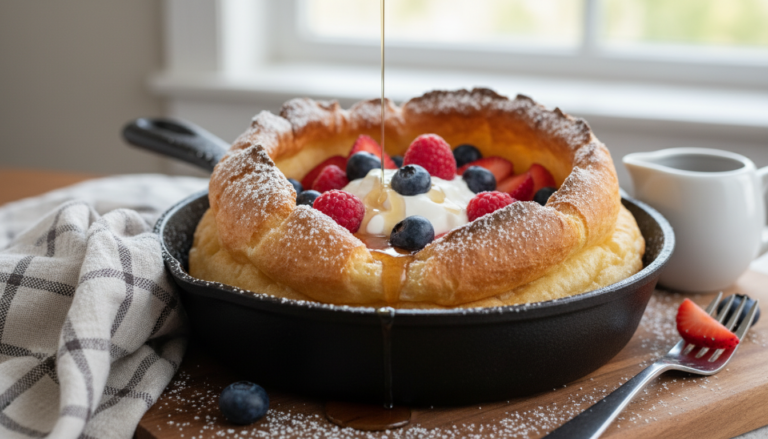
This Dutch Baby Pancake is breakfast drama at its finest—a simple batter transforms in a scorching hot skillet into a puffy, golden masterpiece with crispy edges and a soft, custardy center, finished with powdered sugar and bright lemon.
4
servings10
minutes20
minutes180
kcal30
minutesIngredients
3 large eggs
150 ml whole milk
100 g all-purpose flour
1 tbsp sugar
1 tsp vanilla extract
1/4 tsp salt
2 tbsp unsalted butter
Powdered sugar, for serving
Lemon wedges, for serving
Directions
- Preheat oven to 220°C (425°F). Place a cast-iron skillet in the oven to heat.
- In a bowl, whisk together eggs, milk, flour, sugar, vanilla extract, and salt until smooth.
- Carefully remove the skillet from the oven and add butter to melt.
- Pour the batter into the hot skillet and return to the oven.
- Bake for 20 minutes until puffed and golden brown.
- Remove from oven, sprinkle with powdered sugar and serve with lemon wedges.
Nutrition Facts
- Total number of serves: 4
- Calories: 180kcal
- Cholesterol: 0mg
- Sodium: 620mg
- Potassium: 400mg
- Sugar: 8g
- Protein: 6g
- Calcium: 60mg
- Iron: 2mg
About This Author

Aurora Wright
Pastry Chef & Dessert Editor
Aurora is the sweet side of Daily Dish. A trained pastry chef and dessert stylist, she’s responsible for our mouth-watering cakes, cookies, and confections. She brings precision, artistry, and a touch of whimsy to every recipe she creates — and taste-tests more chocolate than she’ll admit.
Favorite dish: Flourless dark chocolate torte.
Kitchen motto: “Life’s too short to skip dessert.”