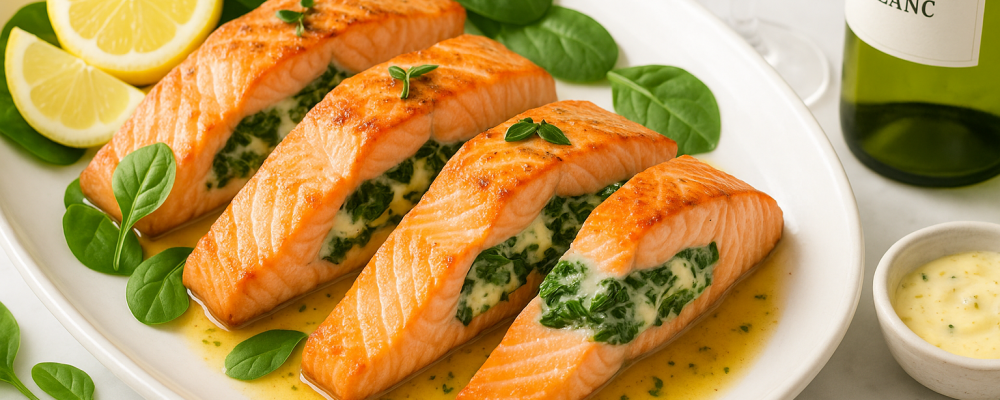
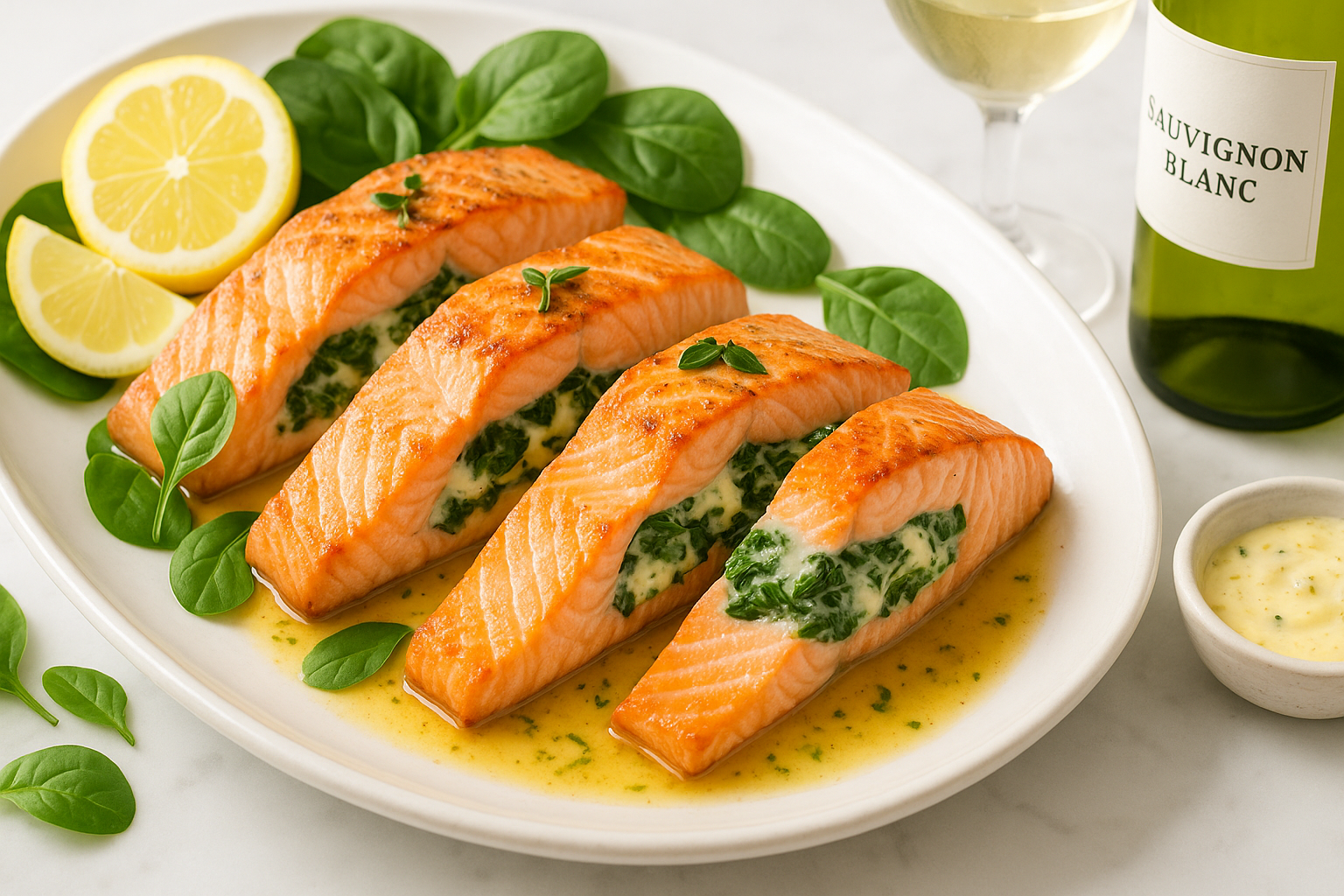
Creamy Stuffed Salmon

Creamy Spinach Stuffed Salmon in Garlic Butter

Healthy Fact of the Day

Use light cream cheese and reduce butter by half while adding lemon juice to the garlic sauce—you'll keep all the flavor with fewer calories and heart-healthy omega-3s shine through.
Creamy Spinach Stuffed Salmon in Garlic Butter

Creamy Spinach Stuffed Salmon in Garlic Butter

Recipe by Daily Disher

Flaky salmon stuffed with creamy spinach and Parmesan, bathed in garlic butter—elegant dining made easy.

Course: MainCuisine: AmericanDifficulty: Medium
0.0 from 0 votes
Servings

4

servings
Prep time

15

minutes
Cooking time

20

minutes
Calories

450

kcal

35

minutes

    Ingredients

    • 4 fillets salmon

    • 4 cups fresh spinach

    • 1 cup cream cheese

    • 1/2 cup grated parmesan cheese

    • 3 cloves garlic

    • 1/4 cup butter

    • 1 tbsp olive oil

    • 1/4 tsp salt

    • 1/4 tsp pepper

    Directions

    • Preheat your oven to 375°F (190°C).
    • Heat olive oil in a pan over medium heat and add spinach, cooking until wilted.
    • In a bowl, combine cream cheese, parmesan cheese, and the wilted spinach.
    • Cut a slit into the side of each salmon fillet to create a pocket and stuff with the spinach mixture.
    • Season the salmon with salt and pepper.
    • Melt butter in a pan with minced garlic over medium heat until the garlic is fragrant.
    • Place stuffed salmon in a baking dish and pour over the garlic butter.
    • Bake in the preheated oven for 15-20 minutes, or until salmon is cooked through.

    Nutrition Facts

    • Total number of serves: 4
    • Calories: 450kcal
    • Cholesterol: 0mg
    • Sodium: 620mg
    • Potassium: 400mg
    • Sugar: 8g
    • Protein: 6g
    • Calcium: 60mg
    • Iron: 2mg

    Creamy Spinach Stuffed Salmon in Garlic Butter transforms a simple fillet into restaurant-worthy elegance. Each tender salmon pocket bursts with a rich blend of wilted spinach, cream cheese, and nutty Parmesan, all swimming in fragrant garlic butter that adds luxury to every bite. This impressive dish comes together in under 30 minutes but looks like hours of effort. Pair with a crisp Sauvignon Blanc or unoaked Chardonnay—their bright acidity balances the richness while complementing the salmon’s natural oils.


    0.0 from 0 votes

    Recent Recipes

    Crispy Hashbrown Breakfast Nachos

    • August 1, 2026
    • 12 min read

    Five Ways to Use Cottage Cheese That

    • August 1, 2026
    • 3 min read

    Why Heat Changes Everything: The Science of

    • August 1, 2026
    • 11 min read

    Crispy Parmesan Crusted Baked Salmon

    • August 1, 2026
    • 6 min read

    Tostitos Just Completed the Dip Trifecta —

    • July 31, 2026
    • 3 min read

    The August Kitchen: Cooking at the Peak

    • July 31, 2026
    • 11 min read

    Fiesta Lime Chicken with Avocado

    • July 31, 2026
    • 5 min read

    Domino’s Half-Price Pizza Is Back — And

    • July 30, 2026
    • 1 min read

    Strawberry Basil Moscow Mule

    • July 30, 2026
    • 12 min read

    The Table We Return To

    • July 30, 2026
    • 11 min read

    Tip of the Day

    “Always let your meat rest before slicing.”

    Whether you're roasting a chicken, grilling steak, or baking pork tenderloin, letting cooked meat rest for 5–10 minutes before slicing allows the juices to redistribute evenly. This simple step keeps your meat juicy and tender, ensuring every bite is flavorful and moist. Bonus: It gives you a moment to plate your sides or garnish for a perfect presentation!

    Our Latest Recipes

    Breakfast
    Benjamin Brown

    Crispy Hashbrown Breakfast Nachos

    Avocado provides heart-healthy monounsaturated fats and potassium while green onions add vitamin K and antioxidants—making these indulgent loaded hashbrowns more nutritionally balanced than they might appear.

    Read More »
    Uncategorized
    Daily Disher

    Five Ways to Use Cottage Cheese That Are Actually Worth the Hype

    Cottage cheese earns its viral moment nutritionally — a single cup delivers around 25 grams of protein, which rivals chicken breast ounce for ounce. It’s also high in casein protein, which digests slowly and keeps you full significantly longer than whey-based sources. Look for full-fat or 2% versions rather than fat-free — the fat helps with satiety and carries the flavor in a way the fat-free version simply doesn’t. If sodium is a concern, give it a quick rinse in a fine mesh strainer, which removes a meaningful amount without affecting texture.

    Read More »
    Blog
    Daily Disher

    Why Heat Changes Everything: The Science of a Summer Kitchen

    High ambient temperatures in the kitchen can significantly affect the nutrient retention of cooking oils — oils that are heated past their smoke point undergo oxidation that produces harmful compounds including aldehydes and acrolein, which have been associated with inflammatory effects in research. Using oils with higher smoke points for high-heat August cooking — avocado oil, refined coconut oil, clarified butter — reduces the formation of these compounds compared to using delicate oils like extra virgin olive oil at temperatures that exceed their smoke point. Reserving extra virgin olive oil for finishing and dressing rather than high-heat cooking is both a culinary and a nutritional best practice, and particularly relevant in the August kitchen where oils reach higher temperatures more quickly.

    Read More »

    Get your daily dose of delicious!

    Skip to content












