
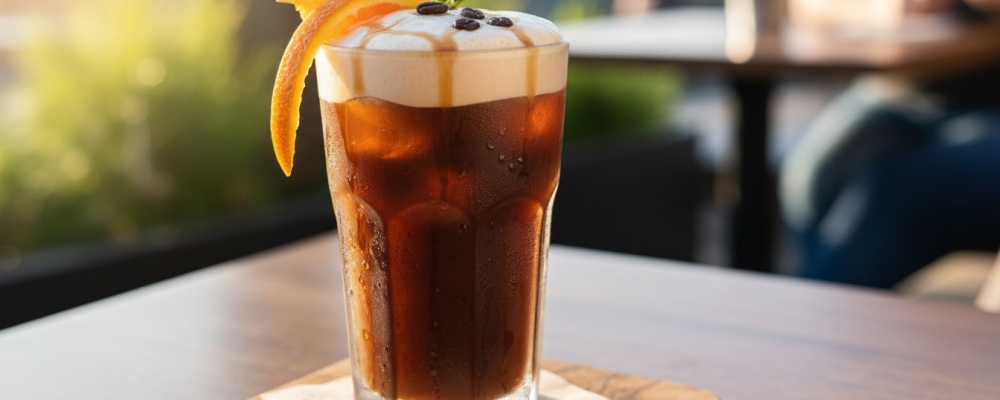

The Long Island Iced Tea is legendary for its deceptive strength — it tastes mild despite containing four different spirits. The Long Island Iced Coffee takes this concept and adds a fifth spirit plus coffee, creating something even more complex and intriguing. What makes this variation work is how the coffee element integrates with the classic LIIT structure, adding depth and bitterness that balances the sweetness while introducing an energizing component that changes the drinking experience entirely.
From a technical standpoint, this cocktail is fascinating because it combines five spirits with different flavor profiles — vodka’s neutrality, rum’s sweetness, gin’s botanicals, tequila’s earthiness, and coffee liqueur’s rich chocolate-coffee notes. Adding cold brew coffee could overwhelm this delicate balance, but instead it acts as a unifying element that ties everything together. The coffee’s bitterness counteracts the sweetness from the cola and sugar, while its bold flavor stands up to all five spirits without being buried.
The result is a cocktail that’s greater than the sum of its parts. Each spirit contributes something unique to the final flavor profile, but no single one dominates. The coffee provides a backbone that makes the drink cohesive rather than chaotic. It’s a study in complexity and balance — seemingly impossible to pull off, yet when executed properly, it works beautifully.
─────────
The Inspiration Behind This Recipe
This cocktail emerged from the coffee cocktail renaissance and the enduring popularity of Long Island Iced Tea. Bartenders have been creating LIIT variations for decades — Tokyo Tea (add melon liqueur), Texas Tea (add bourbon), Miami Iced Tea (add peach schnapps) — each putting a regional or flavor spin on the classic. The Long Island Iced Coffee represents a logical evolution: what if instead of just adding another spirit or flavor, we fundamentally changed the character by incorporating coffee?
The inspiration also came from observing how espresso martinis had revitalized interest in coffee cocktails. People wanted drinks that provided both alcohol and caffeine — that combination of relaxation and alertness that makes you feel simultaneously chill and energized. The Long Island Iced Coffee delivers this in a bolder, more aggressive format than the relatively refined espresso martini.
The challenge was maintaining balance. With six different alcohol components (five spirits plus coffee liqueur), plus coffee, sugar, and cola, there are multiple opportunities for the drink to become muddy or overwhelming. The key was careful proportioning and understanding how each element interacts with the others. The cold brew needed to be strong enough to assert itself but not so strong it turned the drink bitter. The sugar needed to balance coffee’s bitterness without making the cocktail cloying. The cola had to tie everything together without dominating.
─────────
A Brief History of the Long Island Iced Tea and Coffee Cocktails
The Long Island Iced Tea was allegedly created in the 1970s by Robert “Rosebud” Butt, a bartender in Long Island, New York, during a cocktail competition. The challenge was to create a drink using triple sec; Butt combined vodka, rum, gin, tequila, triple sec, lemon juice, simple syrup, and cola, creating something that looked like iced tea but packed significantly more punch. The drink became infamous for its strength and became a staple at college bars and casual drinking establishments throughout the 1980s and 90s.
The cocktail’s appeal lies in its deceptive nature — it tastes relatively mild and refreshing despite containing enough alcohol to make four normal drinks. The cola provides familiarity and sweetness that masks the alcohol content, making it dangerously easy to drink. This “stealth strength” has made the Long Island Iced Tea both celebrated and notorious.
Coffee cocktails have their own rich history, from Irish Coffee (created in the 1940s) to the modern espresso martini (1980s). The combination of caffeine and alcohol creates a unique physiological effect — the alcohol produces relaxation while caffeine provides alertness, creating a state that many find pleasantly stimulating. The Long Island Iced Coffee sits at the intersection of these two cocktail traditions, combining LIIT’s multi-spirit boldness with coffee culture’s energizing appeal.
─────────
Why This Mixing Method Works
The shaking method is essential for this complex cocktail because you’re combining multiple spirits with different viscosities and characteristics along with cold brew coffee and granulated sugar. Vigorous shaking serves several critical functions: it dissolves the sugar completely, which is essential for achieving proper sweetness and preventing grainy texture; it thoroughly integrates five spirits plus coffee liqueur that would otherwise layer according to their different densities; and it creates proper dilution that tempers the high alcohol content and allows the flavors to harmonize.
The dilution aspect is particularly important in a Long Island Iced Coffee. With six alcohol components, this drink has an extremely high proof before dilution. The water from melting ice during shaking doesn’t weaken the drink — it’s essential for balance. Without adequate dilution, the cocktail would taste harsh, burning, and undrinkable. With proper dilution, all those spirits integrate into something surprisingly smooth and cohesive.
Topping with cola after straining rather than shaking it with the other ingredients preserves carbonation while allowing the cola to perform its traditional LIIT role: adding sweetness, color, and that distinctive flavor that ties the drink together. The cola also provides visual appeal, creating a dark, iced-coffee-like appearance that makes the drink recognizable. Serving over fresh ice in tall glasses ensures the drink stays properly chilled throughout the extended drinking time this substantial cocktail requires.
─────────
Flavor Profile: What to Expect
The Long Island Iced Coffee delivers a bold, complex taste experience:
- Rich Coffee Foundation: Cold brew provides smooth, bold coffee flavor with lower acidity than hot-brewed coffee
- Multi-Spirit Complexity: Five different spirits create layers of flavor — vodka’s cleanness, rum’s sweetness, gin’s botanicals, tequila’s earthiness, coffee liqueur’s chocolate-coffee richness
- Balanced Bitterness: Coffee and cola’s bitterness prevent the drink from being one-dimensionally sweet
- Sweet-Tart Balance: Sugar and cola provide sweetness while lemon adds essential tartness
- Cola Familiarity: Recognizable cola flavor makes the high-proof drink surprisingly approachable
- Smooth Integration: Despite numerous components, proper technique creates cohesive rather than chaotic flavor
- Energizing Kick: Caffeine from cold brew and coffee liqueur provides alertness alongside alcohol’s relaxation
The overall experience is bold, energizing, and deceptively smooth. It’s strong without tasting harsh, complex without being confusing, caffeinated without being jittery.
─────────
Tips for Making the Best Long Island Iced Coffee
Create the ultimate caffeinated cocktail with these essential techniques:
- Use quality cold brew: Make your own or buy good-quality cold brew concentrate. The coffee flavor is central to this drink, so quality matters. Avoid regular brewed coffee that’s been chilled — it tastes acidic and thin.
- Equal proportions of spirits: The classic LIIT uses equal parts of each spirit (typically 0.5 oz each). Maintain these proportions for balance — no single spirit should dominate.
- Choose decent spirits: You don’t need top-shelf, but avoid bottom-shelf options. Mid-range vodka, white rum, London dry gin, blanco tequila, and Kahlúa work beautifully.
- Dissolve sugar completely: Shake vigorously for at least 15-20 seconds to ensure the sugar dissolves. You should hear the shaker getting quieter as sugar dissolves.
- Fresh lemon for garnish and brightness: While the original LIIT uses lemon juice, this coffee version uses lemon primarily as garnish. Express the oils from the peel over the drink for aromatic enhancement.
- Good cola matters: Use Coke or Pepsi rather than generic cola. The flavor difference is noticeable in the final drink.
- Serve in tall glasses: Highball or Collins glasses work best. The drink needs room for ice and cola topping.
For maximum caffeine kick, use cold brew concentrate rather than regular cold brew — just adjust the amount to avoid excessive bitterness.
─────────
Serving Suggestions and Garnish Ideas
The Long Island Iced Coffee looks best in tall highball or Collins glasses filled with ice, where its dark, coffee-like color can be appreciated. The drink should look like iced coffee at first glance, which is part of its deceptive charm. Clear glassware showcases the attractive dark color, while the ice keeps everything properly chilled throughout the extended drinking time this strong cocktail requires.
The lemon slice garnish is classic and essential — it provides visual contrast against the dark liquid and adds aromatic citrus that enhances each sip. For extra appeal, cut a lemon wheel and make a small slit so it perches on the rim. You could also add a coffee bean or three (representing health, wealth, and happiness in Italian tradition) floating on top for coffee cocktail authenticity. Some bartenders like to add a sprig of fresh mint for aromatic appeal, though this is optional.
This cocktail is perfect for late-night gatherings when you want to stay energized, college reunions or nostalgic parties where Long Island Iced Tea would typically appear, brunch events where coffee cocktails feel appropriate, or any occasion where you want maximum impact in a glass. Just be mindful of the high alcohol content — this is a sipping drink despite its approachable flavor, and the caffeine can mask how intoxicated you’re becoming. Serve responsibly and encourage guests to pace themselves.
─────────
Storage and Make-Ahead Tips
- Pre-batch the spirit base: Combine vodka, rum, gin, tequila, and coffee liqueur in a sealed container and store at room temperature for up to a month. Add cold brew and sugar when ready to shake and serve.
- Cold brew coffee storage: Homemade cold brew keeps for 2 weeks refrigerated; store-bought follows package guidelines, usually 7-10 days after opening.
- Make cold brew in advance: If making your own, steep coarsely ground coffee in cold water for 12-24 hours, then strain. This can be done days ahead.
- Simple syrup alternative: Instead of granulated sugar, you can use simple syrup (equal parts sugar and water, dissolved), which integrates more quickly. Use half the volume since it’s pre-dissolved.
- Spirit storage: All five base spirits keep indefinitely at room temperature in a cool, dark place.
- Ice preparation: Make extra ice cubes ahead of time. You’ll need substantial amounts for both shaking and serving.
This cocktail must be made fresh to order — you cannot batch complete drinks because the cola would go flat. Batch the spirit-coffee base and build individual drinks when serving.
─────────
Why This Recipe Deserves a Spot in Your Rotation
The Long Island Iced Coffee is not for everyone, and that’s part of what makes it special. This is a cocktail with attitude — bold, unapologetic, and designed for specific moments when you want something that makes a statement. It’s the drink you order when you want to impress (or intimidate), when you need both liquid courage and alertness, or when you simply want to experience something that pushes cocktail boundaries.
What makes this recipe valuable is how it demonstrates advanced cocktail principles. You learn how to balance multiple spirits without creating muddy flavors. You understand how coffee can function as both flavoring and structural element. You discover how seemingly incompatible ingredients can work together when proportioned correctly. These lessons translate to countless other complex cocktails and make you a more confident, skilled bartender capable of handling ambitious recipes.
─────────
Recommended Food Pairing
The Long Island Iced Coffee’s bold, complex character pairs best with substantial foods that can stand up to its intensity. Barbecue is an excellent match — think pulled pork, beef brisket, or smoked ribs with tangy sauce. The cocktail’s sweetness balances barbecue’s smoky, savory qualities, while the coffee’s bitterness cuts through fatty richness. The combination creates a satisfying contrast that makes both food and drink taste better.
Burgers and fries are natural companions, particularly gourmet burgers with bold toppings like bacon, blue cheese, or spicy jalapeños. The cocktail’s complexity stands up to aggressive burger flavors without being overwhelmed. Wings — whether Buffalo, BBQ, or Korean-style — also pair excellently, as the drink provides sweet-bitter balance that complements spicy sauces.
For late-night food, this cocktail works wonderfully alongside pizza, loaded nachos, or pub food like mozzarella sticks and onion rings. The coffee element makes it feel less out of place at unconventional drinking times (like brunch or afternoon), while its strength ensures it still functions as a proper cocktail. Avoid delicate or subtle foods — this is a bold drink that needs equally bold food to match its intensity. The key is choosing hearty, flavorful dishes that benefit from a strong, complex beverage rather than foods that would be overwhelmed by it.verbena iced tea keeps the palate clean and refreshed alongside this bright, springtime salad.
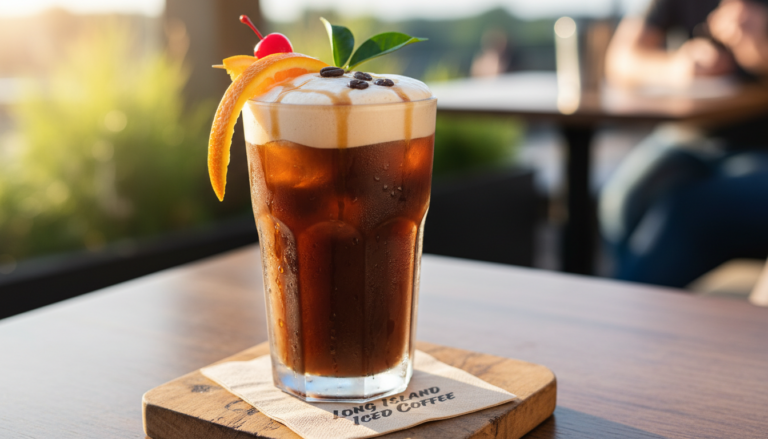
Long Island Iced Coffee
This powerhouse cocktail combines vodka, rum, gin, tequila, and coffee liqueur with cold brew — the Long Island Iced Tea’s caffeinated cousin with serious character.
4
servings30
minutes40
minutes300
kcal1
hour10
minutesIngredients
0.5 oz vodka
0.5 oz rum
0.5 oz gin
0.5 oz tequila
0.5 oz coffee liqueur
3 oz cold brew coffee
1 tsp sugar
1 oz cola
1 slice lemon
1 cup ice
Directions
- Fill a shaker with ice.
- Add vodka, rum, gin, tequila, and coffee liqueur to the shaker.
- Pour in cold brew coffee and add sugar.
- Shake well until sugar is dissolved.
- Strain the mixture into two tall glasses filled with ice.
- Top with cola and garnish with a lemon slice.
- Serve immediately.
Nutrition Facts
- Total number of serves: 4
- Calories: 245kcal
- Cholesterol: 0mg
- Sodium: 620mg
- Potassium: 400mg
- Sugar: 8g
- Protein: 6g
- Calcium: 60mg
- Iron: 2mg
About This Author

Benjamin Brown
Recipe Developer
Benjamin is our flavor engineer. A classically trained chef turned recipe developer, he’s obsessed with balancing taste, texture, and creativity. He ensures that every recipe we publish is not only delicious but also reliable, approachable, and repeatable — even for beginners.
Favorite dish: Slow-braised short ribs with red wine reduction.
Kitchen motto: “Cooking is part science, part soul.”















