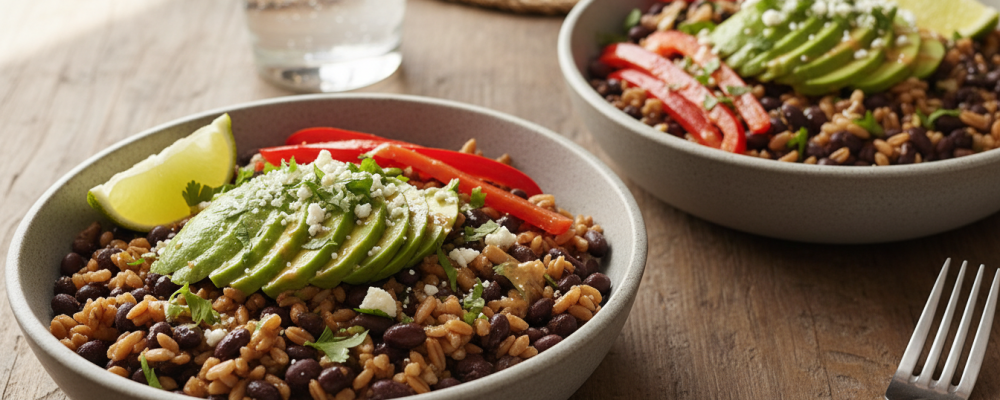

Plant-based meal prep presents specific technical challenges that meat-based preparations don’t face: achieving adequate protein density without animal sources, creating satiety that lasts 4-5 hours without fat-rich proteins, and maintaining textural interest when vegetables comprise the majority of the bowl. This recipe addresses all three challenges through strategic grain and legume pairing, understanding of complete protein combinations, and deliberate ingredient selection based on storage characteristics.
The farro-black bean combination isn’t arbitrary—it’s nutritional engineering. Farro (an ancient wheat grain) contains incomplete protein lacking certain essential amino acids, primarily lysine. Black beans contain incomplete protein lacking other amino acids, primarily methionine. When consumed together, they provide complementary amino acids that create complete protein—all nine essential amino acids in proportions your body can utilize for muscle maintenance and metabolic function. This complementary protein concept allows plant-based meals to match animal proteins’ biological value without requiring meat.
What makes this specific combination particularly effective for meal prep is how both components maintain structural integrity and improve with time. Farro’s dense, chewy texture comes from intact bran layers and protein-rich endosperm that resist the mushiness common in more processed grains. Unlike quinoa which can become slightly sticky, or rice which retrogrades and hardens, farro maintains pleasant chewiness for 5+ days refrigerated. Black beans, being preserved legumes even before cooking, contain compounds that stabilize their structure—they don’t break down into mush like some beans might, maintaining their shape and bite throughout storage.
The vegetable selection reflects understanding of what maintains quality over multiple days versus what degrades rapidly. Cherry tomatoes, corn, and cilantro all preserve well when kept cold. Avocado presents the primary storage challenge—its tendency to oxidize and brown—which requires strategic handling I’ll address in methodology sections. The lime-cumin dressing provides not just flavor but preservation benefits: lime’s acidity helps prevent avocado oxidation while cumin’s essential oils contribute antimicrobial properties that extend shelf life beyond basic refrigeration.
─────────
The Inspiration Behind This Recipe
This recipe emerged from analyzing why commercial plant-based bowl concepts succeed nutritionally but often fail in execution for home meal prep. Restaurant versions can afford to assemble bowls fresh daily, using just-cooked grains and just-cut vegetables. Home meal prep requires advance preparation that maintains quality for 4-5 days—a fundamentally different engineering problem requiring different solutions.
The farro selection came from systematic testing of grain options for extended storage. Rice works adequately but becomes progressively drier and harder. Quinoa maintains decent texture but its mild flavor can become monotonous across multiple meals. Barley stays chewy but its long cooking time (45-60 minutes) creates preparation barriers. Farro emerged as optimal: relatively quick cooking (20-25 minutes), exceptional texture retention, and distinctive nutty flavor that prevents palate fatigue.
I chose black beans specifically over other legume options for both nutritional and practical reasons. Nutritionally, black beans provide the highest protein density among common beans—approximately 15 grams per cup cooked. Practically, their firm texture and dark color maintain better visual appeal during storage compared to pinto beans (which can look gray and mushy) or kidney beans (which can become mealy). The black color also creates striking visual contrast against the golden farro, green avocado, and red tomatoes—important because appearance significantly affects meal prep adherence.
The lime-cumin dressing represents deliberate flavor profiling designed to prevent these bowls from tasting bland or health-food-virtuous. Southwestern/Mexican flavors—lime, cumin, cilantro, corn—create a recognizable, craveable flavor profile that makes plant-based eating feel like a choice rather than a sacrifice. The brightness from lime and herbaceousness from cilantro keep these bowls tasting fresh rather than heavy or earthy, which can be a problem with bean-based preparations.
─────────
A Brief History of Grain-Legume Combinations and Ancient Grains
The practice of combining grains and legumes for complete protein has ancient roots across multiple cultures—from Mexican beans and corn to Middle Eastern rice and lentils to Asian rice and soybeans. These traditional pairings emerged not from nutritional science (which only identified amino acids in the 20th century) but from practical observation: societies that combined these foods thrived and sustained themselves without meat dependency. Modern research confirmed what traditional cultures discovered empirically: specific grain-legume combinations create complete proteins rivaling meat’s nutritional value.
Farro specifically has been cultivated in the Mediterranean region for millennia, with evidence of farro farming dating back 10,000 years to the Fertile Crescent. The grain sustained Roman legions and remained a staple in Italian cuisine (particularly in Tuscany) even as other wheat varieties gained prominence elsewhere. Farro’s recent resurgence in Western markets reflects growing interest in “ancient grains”—minimally processed varieties that retain more nutrients and fiber than refined grains.
The contemporary grain bowl phenomenon—where grains serve as base for composed meals with proteins, vegetables, and dressings—emerged in the 2000s and 2010s as fast-casual restaurants sought alternatives to sandwich-based lunches. Plant-based variations gained particular momentum as flexitarian eating patterns (reducing but not eliminating meat) became mainstream. The format solved multiple problems: balanced nutrition in a single vessel, visual appeal through colorful composition, customizability to individual preferences, and meal prep suitability through component-based assembly.
What makes black bean and farro bowls particularly suited to current dietary trends is how they address the growing desire for plant-forward eating without requiring full vegetarian or vegan commitment. These bowls provide complete nutrition whether you eat them as occasional meatless meals or as part of a fully plant-based diet—that flexibility makes them accessible to the widest possible audience.
─────────
Why This Cooking Method Works for Meal Prep
The success of these grain bowls for extended storage hinges on understanding how different components age over time and engineering assembly to optimize each element’s storage characteristics. Farro’s structure—intact bran, chewy endosperm, minimal starch gelatinization—means it doesn’t undergo the retrogradation process that makes rice hard and dry after refrigeration. The grain’s protein and fiber matrix maintains its integrity whether served hot, warm, or cold, making it one of the most meal-prep-friendly grains available.
Cooking farro in water (rather than broth, which some recipes suggest) serves strategic purposes. While broth adds immediate flavor, it also introduces sodium and organic compounds that can develop off-flavors during extended storage. Water-cooked farro tastes neutral and clean, accepting the lime-cumin dressing’s flavors more readily. The dressing provides all necessary seasoning while remaining shelf-stable longer than absorbed broth seasonings would.
Black beans’ storage stability comes from their cell structure and the cooking process that partially broke down but didn’t eliminate their protective cell walls. Canned black beans (recommended for meal prep convenience) have been pre-cooked and preserved, meaning they’re already in a stable state for extended storage. Rinsing removes excess sodium and the viscous liquid that can make bowls gummy, while also creating cleaner bean flavor that integrates better with other ingredients.
The vegetable preparation methodology reflects understanding of oxidation, moisture release, and textural degradation timelines. Cherry tomatoes maintain structure because they’re used whole or halved—cutting exposes interior tissues that release moisture and soften rapidly. Corn kernels (whether frozen-then-thawed or canned-then-drained) have minimal moisture at their surface and maintain their sweet, crisp character for days. Cilantro, while delicate compared to heartier herbs, stays fresh for 3-4 days when properly stored and added to bowls during assembly rather than wilting in the dressing.
Avocado presents the primary technical challenge: enzymatic browning (oxidation) that creates unappealing brown surfaces within hours of cutting. The solution involves multiple protective strategies: (1) cutting avocado into larger dice rather than mashing maintains more cell integrity, (2) tossing immediately with lime juice creates an acidic barrier that slows oxidation, (3) storing bowls with avocado on top rather than mixed in minimizes air exposure to cut surfaces. For maximum quality, some meal preppers store diced avocado separately in lime juice and add it only when eating—this adds 30 seconds to serving time but preserves perfect green color through day five.
The lime-cumin dressing’s composition serves both flavor and preservation functions. The high acid content (pH approximately 2-3 from lime juice) creates an environment hostile to bacterial growth. The olive oil coats ingredients, reducing oxygen exposure that causes oxidation and flavor degradation. Cumin’s volatile oils (primarily cuminaldehyde) have documented antimicrobial properties that contribute to shelf life extension. This isn’t just dressing—it’s a preservation system that keeps these bowls safe and appealing longer than undressed components would remain.
─────────
Flavor Profile: What to Expect
These black bean and farro bowls deliver bright, satisfying southwestern-inspired flavors with excellent textural variety:
- Nutty and chewy from farro that provides distinctive grain flavor more pronounced than rice or quinoa
- Earthy and substantial from black beans that contribute that characteristic bean creaminess and protein satisfaction
- Sweet and crisp from corn kernels that add pops of natural sweetness and pleasant texture
- Bright and juicy from cherry tomatoes that burst with sweet-tart flavor
- Creamy and rich from avocado that provides luxurious texture and healthy fats
- Bright and zesty from lime juice that cuts through richness with citrus acidity
- Warm and aromatic from cumin that adds that distinctive southwestern spice without heat
- Fresh and herbaceous from cilantro that provides essential brightness and aromatic complexity
The overall composition creates that coveted “complete meal” sensation where no component dominates but everything works together harmoniously. The farro and beans provide substance and satiety, the vegetables contribute freshness and textural interest, the dressing ties everything together with bright acidity and spice warmth. These taste distinctly southwestern but approachable—not aggressively spiced, just pleasantly seasoned.
Over 3-5 days of storage, the flavors integrate beautifully as the farro and beans absorb the lime-cumin dressing. The cumin’s warmth becomes more pronounced and evenly distributed. The lime mellows from sharp to rounded while maintaining its brightening effect. The beans and farro essentially marinate in the dressing, developing more complex, integrated flavor where everything tastes like it belongs together rather than existing as separate components sharing a container. Many people prefer day-three bowls to freshly made ones because the flavors have had time to fully develop and meld.
─────────
Tips for Making the Best Black Bean & Farro Bowls
Precision in component preparation and assembly creates bowls that remain appealing throughout the storage period:
- Rinse farro thoroughly: This removes any debris or dust from processing and helps prevent clumping during cooking. Use a fine-mesh strainer under cold running water for 30 seconds.
- Cook farro to al dente: Remove from heat when grains are tender but still have slight chew—about 20-25 minutes depending on farro variety. Overcooked farro becomes mushy and loses its distinctive texture.
- Cool farro before assembly: Spread cooked farro on a baking sheet to cool quickly to room temperature (about 15 minutes). Hot farro wilts vegetables and creates condensation in sealed containers.
- Rinse canned black beans thoroughly: Drain and rinse under cold water for 30 seconds, stirring gently. This removes excess sodium and the thick liquid that can make bowls gummy or slimy.
- Pat vegetables dry: Use paper towels to remove surface moisture from tomatoes and corn. This prevents excess water pooling in storage containers.
- Cut avocado strategically: Dice into 1/2-inch cubes rather than smaller pieces—larger chunks maintain structure better and oxidize more slowly than finely diced avocado.
- Toss avocado with lime immediately: After dicing, immediately toss with lime juice from the dressing. The acid creates a protective barrier against oxidation.
- Store avocado on top: When assembling bowls, place avocado as the top layer. This minimizes cut surface exposure to air and creates a protective layer over other ingredients.
- Alternative avocado storage: For maximum freshness, store diced avocado separately in a small container completely covered with lime juice. Add to bowls just before eating—takes 30 seconds and guarantees perfect green color through day 5.
- Make extra dressing: The lime-cumin dressing keeps for 2 weeks refrigerated. Make double or triple batches and use for salads, grain bowls, or as a marinade throughout the week.
- Use fresh cilantro at serving: While cilantro can be added during assembly, adding fresh cilantro just before eating maximizes its aromatic impact and bright flavor.
The most critical factors are farro doneness (al dente, not mushy), complete cooling before assembly (prevents vegetable wilting and condensation), and strategic avocado handling (minimizes oxidation that makes bowls look unappetizing).
─────────
Portioning and Container Suggestions
This recipe yields four generous meal-sized bowls when using approximately 3 cups cooked farro as the base. Each bowl provides roughly 400-500 calories with 18-22 grams of complete protein (from the bean-grain combination), substantial fiber (15+ grams), and healthy fats from avocado and olive oil—creating balanced nutrition that sustains energy for 4-5 hours.
For optimal presentation and component separation, use shallow, wide containers (approximately 4-5 cup capacity) rather than deep, narrow ones. Shallow containers allow you to see all components at once, maintaining visual appeal that makes you actually want to eat what you’ve prepped. Wide containers also facilitate even mixing when you’re ready to eat—you can toss everything together or keep components somewhat separate based on preference.
Glass containers with tight-sealing lids work beautifully for these bowls. The clear glass showcases the colorful layers—golden farro, black beans, red tomatoes, yellow corn, green avocado and cilantro. When your lunch looks this vibrant through the container, meal prep feels less like obligation and more like choosing something appealing. Glass also doesn’t absorb odors or stains from cumin and lime, unlike some plastics.
For strategic assembly that maintains maximum freshness, layer in this specific order: farro on bottom (heaviest, most stable), black beans and corn next (also structurally stable), cherry tomatoes around the sides (adds color, releases minimal moisture when halved), avocado on top (minimizes oxidation through reduced air exposure). Cilantro can be added during assembly or kept separate and added fresh before eating.
If you’re batch-prepping for the week, consider assembling components in stages: cook farro and prepare beans Sunday, assemble full bowls Sunday evening or Monday morning. This reduces the single-session time commitment while maintaining optimal freshness.
─────────
Storage, Reheating, and Shelf Life Tips
- Refrigerator storage: Store assembled bowls in airtight containers for 4-5 days. Farro and beans maintain excellent quality throughout; avocado may show slight browning by day 4-5 but remains safe and flavorful.
- Component storage alternative: Store farro, beans, vegetables, and dressing separately, assembling bowls fresh each morning. This maximizes quality but requires daily 2-3 minute assembly.
- Avocado oxidation management: If avocado browns significantly by day 3-4, simply scrape off the oxidized surface layer—the interior remains perfect. Or store separately as mentioned in tips section.
- Temperature serving options: These bowls are excellent cold, at room temperature, or warm. Each temperature creates different eating experiences—cold is refreshing, room temperature brings out more flavor, warm is comforting.
- Reheating method: If you prefer warm bowls, remove avocado first (it becomes unpleasantly soft when heated). Microwave farro, beans, corn, and tomatoes for 60-90 seconds, then add cold avocado back. This temperature contrast is actually quite pleasant.
- Freezing farro and beans: The grain and bean components freeze well for up to 3 months. Freeze without vegetables or dressing, then thaw and add fresh components when ready to eat.
- Dressing application timing: For absolute peak freshness, store dressing separately and add just before eating. This keeps farro and beans from absorbing all the dressing during storage, maintaining distinct flavors.
- Cilantro preservation: Store cilantro stems in a jar of water in the refrigerator, covered loosely with a plastic bag. This keeps cilantro fresh for 5-7 days, allowing you to add fresh leaves throughout the week.
- Quality indicators: Fresh bowls smell pleasantly of lime and cumin. Any sour or fermented odors indicate spoilage. Properly stored, these bowls remain safe and appealing for the full 4-5 day period.
- Texture expectations: Farro remains pleasantly chewy throughout storage. Beans maintain their structure. Corn stays crisp. Tomatoes soften slightly by day 4-5 but remain perfectly edible. Avocado may brown on exposed surfaces but maintains good texture.
- Add-on suggestions: Boost nutrition or flavor by adding fresh elements at serving: extra lime wedges, hot sauce, crumbled queso fresco, pumpkin seeds, or a dollop of Greek yogurt.
─────────
Why This Recipe Deserves a Spot in Your Meal Prep Rotation
From a nutritional completeness perspective, these plant-based bowls deliver everything required for optimal function without any animal products. The 18-22 grams of complete protein per bowl approaches the 20-40 gram range that research suggests optimizes muscle protein synthesis and satiety. The 15+ grams of fiber far exceeds what most Americans consume (average is 10-15 grams daily, recommendations are 25-35 grams), supporting digestive health, blood sugar stability, and cardiovascular function. The healthy fats from avocado and olive oil support nutrient absorption and hormonal function. You’re not sacrificing nutrition by choosing plant-based—you’re consuming a nutritionally superior meal compared to many meat-based alternatives.
The economic calculation strengthens the case significantly. Four bowls cost approximately $8-12 to prepare—roughly $2-3 per bowl. Restaurant grain bowls or fast-casual plant-based meals cost $10-15 per comparable serving. You’re saving $8-12 per bowl, which compounds to $32-48 per weekly batch. Annualized, that’s $1,664-2,496 saved from a single meal prep recipe. When people claim healthy eating is expensive, they’re typically comparing fresh ingredients to processed foods rather than comparing home meal prep to restaurant alternatives. These bowls prove plant-based eating can be both nutritionally optimal and economically efficient.
The versatility advantage deserves emphasis—these bowls serve multiple dietary approaches simultaneously. For vegetarians and vegans, they provide complete nutrition in an appealing format. For flexitarians reducing meat intake, they offer satisfying meatless options that don’t feel like sacrifice. For omnivores, they provide vegetable-forward variety that prevents meat-heavy monotony. For anyone focused on fiber intake or blood sugar management, they deliver exceptional nutrition for those specific goals. One recipe serving multiple audiences and purposes maximizes the value from your meal prep time investment.
But perhaps most valuable is how these bowls demonstrate that plant-based eating doesn’t require deprivation, blandness, or virtuousness. The lime-cumin dressing, the fresh cilantro, the creamy avocado—these are genuinely delicious components that happen to be plants rather than being merely tolerable substitutes for animal products. When plant-based meals taste this good and satisfy this completely, reducing meat intake stops being discipline and becomes preference. That psychological shift from “should eat” to “want to eat” is what creates sustainable dietary changes rather than temporary compliance that fades when motivation wanes.
─────────
Meal Prep Pairing Suggestions
Black bean and farro bowls function optimally within a diverse lunch strategy that provides protein variety and prevents palate fatigue. Pair them with Lemon Herb Salmon Bowls or Greek Chicken Wraps for a week covering different protein sources—plant-based Monday and Wednesday, fish or poultry Tuesday and Thursday, your choice Friday. This rotation prevents the monotony that often derails meal prep while ensuring consistent nutrition across varied sources.
For those following flexitarian patterns or trying to increase plant-based meals gradually, these bowls work excellently as “meatless Monday” anchors or mid-week break from animal proteins. Combining them with Cottage Cheese Scrambled Eggs (breakfast), Greek Chicken Wraps (some lunches), and Sheet Pan Chicken with Vegetables (dinners) creates a balanced week where plant-based meals provide variety without requiring full vegetarian commitment.
These bowls also pair strategically with the no-cook snack options for comprehensive plant-forward eating. Combine with Caprese Skewers, Dark Chocolate Energy Bites, and fresh fruit portions for a largely plant-based meal plan that still includes some dairy and eggs but derives most calories from whole plant foods. This approach—plant-predominant rather than plant-exclusive—represents the dietary pattern that research most strongly associates with longevity and disease prevention.
From a complete weekly meal prep perspective covering all eating occasions, these bowls integrate seamlessly into comprehensive systems. Combine black bean farro bowls (lunch some days) with Baked Oatmeal Cups or Sweet Potato Pancakes (breakfast), various grain bowls and wraps (lunch rotation), and Sheet Pan Chicken or other dinner options (evening meals), plus energy bites and vegetable-based snacks (between-meal hunger). This comprehensive approach means Sunday preparation covers every eating occasion while providing enough variety to prevent the boredom that often causes meal prep abandonment.
The strategic advantage of including at least one excellent plant-based recipe in your regular rotation extends beyond nutrition to psychological sustainability. When healthy eating requires avoiding entire food categories or perpetually choosing “diet” versions of foods you actually want, adherence becomes willpower-dependent rather than preference-driven. Having genuinely appealing plant-based options means choosing them enthusiastically rather than grudgingly, which is the only approach that works long-term. These farro bowls prove that plant-based can mean satisfying, delicious, and something you actively look forward to eating rather than merely tolerating for health virtue. That alignment of nutritional goals with genuine eating pleasure—not compromise, but authentic satisfaction—is what transforms temporary meal prep experiments into permanent healthy eating patterns that last years rather than weeks.
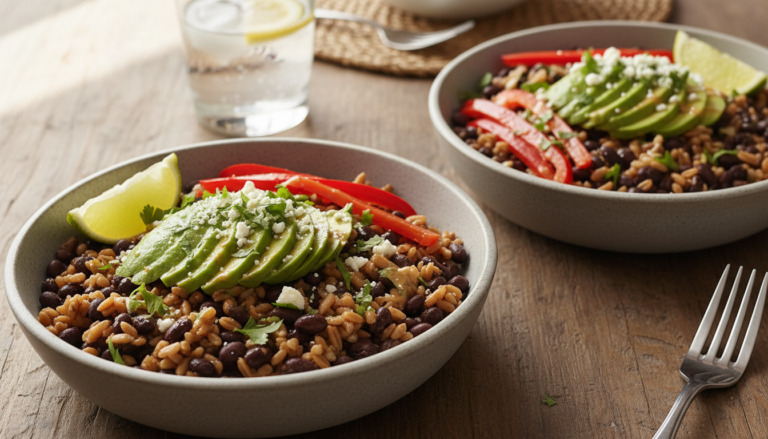
Black Bean & Farro Bowls
This black bean and farro bowls recipe delivers complete plant-based protein with hearty grains and fresh vegetables in a format that holds up beautifully throughout the week.
4
servings15
minutes25
minutes400
kcal40
minutesIngredients
1 cup farro
2 cups water
1 can black beans, drained and rinsed
1 cup cherry tomatoes, halved
1 cup corn kernels
1 large avocado, diced
1 tablespoon olive oil
1 teaspoon lime juice
0.5 teaspoon cumin
0.5 teaspoon salt
0.25 teaspoon black pepper
2 tablespoons cilantro, chopped
Directions
- Rinse farro under cold water.
- In a large pot, bring water to a boil and add farro.
- Reduce heat to low, cover, and simmer for 20 minutes or until farro is tender.
- While farro is cooking, prepare the black beans, tomatoes, corn, and avocado.
- In a small bowl, whisk together olive oil, lime juice, cumin, salt, and pepper.
- Once farro is cooked, transfer to a large mixing bowl.
- Add black beans, cherry tomatoes, corn, and diced avocado to the farro.
- Pour the dressing over the mixture and toss to combine.
- Top with chopped cilantro before serving.
Nutrition Facts
- Total number of serves: 4
- Calories: 400kcal
- Cholesterol: 0mg
- Sodium: 620mg
- Potassium: 400mg
- Sugar: 8g
- Protein: 6g
- Calcium: 60mg
- Iron: 2mg
About This Author

Benjamin Brown
Recipe Developer
Benjamin is our flavor engineer. A classically trained chef turned recipe developer, he’s obsessed with balancing taste, texture, and creativity. He ensures that every recipe we publish is not only delicious but also reliable, approachable, and repeatable — even for beginners.
Favorite dish: Slow-braised short ribs with red wine reduction.
Kitchen motto: “Cooking is part science, part soul.”