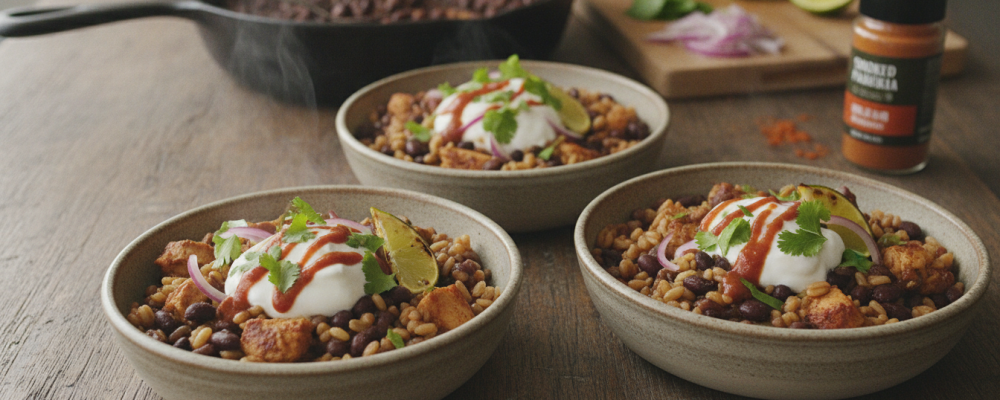

The flavor foundation of this bowl is built in a single pan over approximately ninety seconds, and those ninety seconds determine everything about the finished dish. Garlic, smoked paprika, cumin, and minced chipotle in adobo—added to hot olive oil before any liquid enters the pan—undergo a simultaneous set of chemical transformations that, taken together, produce a flavor complexity that would otherwise require a far longer ingredient list and significantly more active cooking time to achieve.
The mechanism is fat-soluble extraction. Every one of these aromatics contains flavor compounds that dissolve preferentially in fat rather than water: capsaicin and the adobo’s smoky char compounds from the chipotle, the terpenoids that produce cumin’s earthy warmth, the carotenoids that give smoked paprika its color and its distinctive dry-smoke sweetness, and the allicin precursors in the garlic that convert to their aromatic form only when the cell walls are disrupted by heat and direct fat contact. Adding these four ingredients to hot olive oil simultaneously releases and dissolves all of these fat-soluble compounds into the fat phase, which then becomes the carrier medium for every flavor in the subsequent dish. When the tomato sauce and beans arrive, they are absorbed into an already-seasoned fat rather than seasoning themselves incrementally in a water-based environment.
The practical result of this sequencing is a bowl that tastes deeply, evenly seasoned throughout—where every black bean and every grain of farro carries the chipotle-cumin-paprika character rather than tasting of sauce on the outside and plain legume within. That uniformity of flavor is not achievable by adding spices directly to the liquid phase, regardless of simmering time. The blooming step is the technique that determines the flavor ceiling of the entire bowl.
─────────────────────────────────────────
The Inspiration Behind This Recipe
The design challenge for this recipe was a specific one: to build a plant-based bowl with enough flavor depth and enough structural substance that it occupies the same satisfaction register as a meat-protein bowl without any of the typical compromises—no tofu that needs extensive treatment, no processed meat substitute, no flavor gap where the protein should be. Black beans, when properly seasoned and properly cooked, do not require any of these compensations. They are a complete protein source with an inherently smoky, earthy flavor profile that is directly compatible with the chipotle-paprika-cumin spice logic of this recipe—a natural alignment that makes the bowl taste cohesive and intentional rather than assembled and approximate.
Chipotle in adobo was the spice choice that elevates this above a standard black bean bowl, and the reasoning is layered. Chipotle peppers are jalapeños that have been smoke-dried—they contain the heat of fresh jalapeño transformed by smoking into something deeper, more complex, and more specifically flavored. The adobo sauce in which they’re packed adds tomato, vinegar, garlic, and additional spices that pre-season the chipotle before it even enters the pan. One tablespoon of minced chipotle in adobo delivers heat, smoke, acid, umami, and additional allium character simultaneously—the most efficient single-ingredient flavor addition available in the Mexican-inspired spice pantry, and the ingredient that most distinguishes this bowl from a competent but unremarkable black bean preparation.
Farro was chosen as the grain base specifically because its textural and flavor properties make it the most compatible grain available for a bean-and-tomato preparation of this character. Its firm, chewy bite resists the softening that rice and couscous undergo when sauced legumes sit over them in a refrigerator container, and its mild nuttiness complements rather than competes with the chipotle sauce’s smoke and heat. A grain that is still pleasantly chewy on day four of refrigeration is a meaningful practical advantage in a meal prep bowl, and farro provides it more reliably than any other commonly available grain.
─────────────────────────────────────────
A Brief History of Chipotle and Black Bean in Mexican Cooking
Black beans—frijoles negros—are among the most ancient and most central ingredients in Mesoamerican cooking, cultivated across the region for at least seven thousand years and present in virtually every regional Mexican cuisine from the Yucatán to Oaxaca to the northern border states. Their specific combination with smoky chili—whether fresh, dried, or smoke-preserved—reflects a flavor logic that predates written culinary records: the earthiness of the bean against the heat and smoke of dried chili produces a combination that is simultaneously grounding and stimulating, satisfying in a way that neither ingredient achieves independently.
Chipotle peppers—smoked and dried jalapeños—represent one of the oldest food preservation techniques in Mesoamerican culinary history. Before refrigeration, preserving fresh chili through smoking and drying extended a highly perishable ingredient into a shelf-stable one while transforming its flavor profile from fresh and sharp to deep, smoky, and complex. The adobo preparation—simmering chipotle peppers in a sauce of tomato, vinegar, and spices—is a later innovation that further extends the chipotle’s shelf life while contributing additional flavor dimensions to what is already a richly complex ingredient.
Smoked paprika arrives at this recipe from a parallel smoking tradition—Spanish pimentón de la Vera, where peppers are dried over oak fires in the Extremadura region of Spain, producing a spice with a distinctly European smoke character that complements the chipotle’s Mesoamerican smoke without duplicating it. The combination of two smoking traditions—Spanish paprika and Mexican chipotle—in a single bowl produces a layered smoke character that is more complex and more interesting than either ingredient would achieve alone.
─────────────────────────────────────────
Why This Cooking Method Works for Meal Prep
The ten-minute simmer after the beans and tomato sauce are added is calibrated specifically for the degree of bean saturation and sauce concentration required for optimal meal prep performance. Black beans simmered for ten minutes in a spiced tomato sauce absorb a measurable amount of the sauce’s fat-soluble flavor compounds through their slightly porous surface—not the deep penetration that a longer braise would achieve, but sufficient to move the beans from surface-seasoned to seasoned throughout. The sauce simultaneously concentrates during the simmer as its surface water evaporates, thickening from a liquid to a coating consistency that clings to the farro rather than pooling at the base of the storage container.
Cooking the farro separately and combining at assembly—rather than simmering the beans directly with the farro—is the structural decision that maintains the grain’s textural integrity across the storage window. Farro cooked in a tomato-based sauce absorbs liquid from the sauce and swells during refrigeration, eventually producing a dense, porridge-like mass by day three. Farro cooked independently in water and combined with the bean mixture at portioning maintains its individual grain structure, producing a bowl where the farro and the bean stew remain distinct components rather than a unified mass—a textural quality that makes each day’s serving as enjoyable as the first.
The lime juice is added after the simmer is complete and the heat has been reduced, rather than during simmering. Citric acid added to a simmering tomato preparation undergoes rapid thermal degradation that destroys most of its aromatic freshness within the first minute of heat exposure, producing a dull, flat sourness rather than the vivid, bright citrus note that the recipe targets. Off-heat addition preserves the lime’s volatile aromatic compounds—the ones that register as freshness rather than sourness—and maintains the brightness that keeps the bowl tasting alive rather than cooked-flat across the full week.
─────────────────────────────────────────
Flavor Profile: What to Expect
This bowl is bold, smoky, and deeply layered—a flavor profile that improves with time rather than fading:
- Dual smoke character – Chipotle’s char-smoke and smoked paprika’s oak-smoke combine into a complex, layered smokiness that registers differently in different bites—sometimes deeper and more savory, sometimes more fruity and sweet, always distinctly present
- Earthy, warming cumin – Cumin provides the foundational earthy warmth that anchors the spice blend and makes the bowl taste specifically, cohesively of Mexican-inspired cooking rather than generically seasoned
- Tomato-based richness – The tomato sauce contributes acidity, umami, and a sweetness that tempers the chipotle’s heat and gives the bean mixture a cohesive, stew-like quality that makes the bowl feel complete rather than merely combined
- Protein-dense black beans – Simmered until the sauce has penetrated their surface, the beans deliver a dense, slightly nutty chew and a savory depth that is the bowl’s primary protein character
- Sweet, textural corn – Corn kernels provide pops of natural sweetness that interrupt the smoky-savory register with bright contrast and a satisfying crunch throughout
- Nutty, chewy farro – The grain base contributes a mild earthiness and a firm, resilient chew that holds its own against the assertive bean mixture and gives the bowl structural substance
- Bright lime finish – Applied off-heat, the lime juice cuts through the sauce’s richness with a vivid acidity that keeps the bowl tasting fresh rather than heavy
- Herbal cilantro – The garnish introduces a clean, slightly citrusy green note at the surface that lifts the entire bowl’s darker, smokier flavors
The chipotle and adobo compounds deepen and distribute through the bean mixture over the first twenty-four to forty-eight hours of refrigeration, producing a day-two bowl that is measurably more cohesive and more deeply flavored than the freshly cooked version. This recipe is specifically designed to reward meal prep patience.
─────────────────────────────────────────
Tips for Making the Best Smoky Chipotle Black Bean & Farro Bowls
Execution at the blooming and simmering stages determines the quality ceiling of the finished bowl:
- Bloom the spices at medium heat, not high – High heat chars the spices rather than blooming them, producing bitter rather than complex aromatic extraction. Medium heat with active stirring for sixty to ninety seconds achieves the correct result: visibly darker spices, intensely fragrant pan, no scorching.
- Mince the chipotle finely – Large pieces of chipotle distribute unevenly through the sauce and produce bites that are extremely hot adjacent to a piece and mild everywhere else. Finely minced chipotle distributes evenly and produces consistent heat throughout every bite of the finished bowl.
- Include some of the adobo sauce – The liquid that surrounds the chipotle peppers in the can—the adobo itself—contains concentrated tomato, vinegar, and spice flavors that add significant depth to the bowl. One to two teaspoons of adobo sauce added with the minced chipotle deepens the overall flavor without adding perceptible heat.
- Cook farro in salted water or broth – Farro cooked in plain unsalted water tastes bland against the assertive bean mixture. A generous pinch of salt in the cooking water—or using vegetable broth instead—produces a grain that is already seasoned before it enters the bowl.
- Simmer uncovered for sauce concentration – An uncovered simmer allows surface water to evaporate and the sauce to concentrate to coating consistency. A covered simmer traps steam and produces a thinner, more liquid sauce that pools at the container base rather than coating the beans and farro uniformly.
- Add lime off-heat – This is worth repeating: lime juice added to a simmering preparation loses its aromatic brightness within seconds. Remove the pan from heat, let the simmer subside, then add the lime. The difference in flavor freshness is immediately and clearly perceptible.
Optional: A small amount of dark chocolate—half an ounce, finely chopped—stirred into the simmering bean mixture in the final two minutes adds the classic mole-inspired depth that distinguishes a complex Mexican-inspired preparation from a simply spiced one. The chocolate is undetectable as chocolate; it reads as a deeper, more rounded version of everything else in the bowl.
─────────────────────────────────────────
Portioning and Container Suggestions
This recipe produces four generous bowls from a single batch—one per day for a four-day lunch or dinner rotation. A two-container storage system works best per serving: farro in one wide, flat container and the chipotle black bean mixture in a second container. Keeping them separate prevents the farro from absorbing the bean mixture’s liquid during refrigeration and arriving at the bowl with a dense, over-saturated texture—the bean mixture is spooned over the reheated farro at serving time, which preserves both components at their intended consistency independently.
The bean mixture stores well in deep containers that minimize the surface area exposed to air, which slows the slight surface oxidation that can affect the tomato sauce’s color over several days of storage. A container with a tight-fitting lid is more important for this component than for most others in the collection—the chipotle’s volatile aromatic compounds, kept sealed, remain in the container’s atmosphere rather than dissipating into the refrigerator, which produces a noticeably more aromatic result when the container is opened at serving time.
Fresh cilantro stored separately in a sealed bag and added at serving time maintains its color and herbal freshness far better than cilantro stored on the assembled bowl. The thirty seconds of garnishing at serving is worth the effort on every day of the week.
─────────────────────────────────────────
Storage, Reheating, and Shelf Life Tips
- Chipotle black bean mixture: Keeps in an airtight container for up to 5 days in the refrigerator. The flavor deepens and becomes more cohesive through days two and three as the bloomed spice compounds continue to distribute through the bean mixture.
- Farro storage: Keeps for 5 days refrigerated—one of the best grain shelf lives in the collection. Add a teaspoon of water or olive oil before reheating to restore the grain’s original moisture.
- Freezer storage: The chipotle black bean mixture freezes exceptionally well for up to 3 months—tomato and bean preparations are among the most freeze-stable foods available. Farro also freezes well for up to 2 months in portioned bags. Thaw both overnight in the refrigerator before reheating.
- Reheating the bean mixture: Microwave at full power for 90 seconds to 2 minutes, stirring once halfway through. Alternatively, reheat in a small saucepan over medium-low heat with a small splash of water to restore the sauce consistency if it has thickened significantly in storage.
- Reheating farro: Add a teaspoon of water, cover loosely, and microwave at full power for 60–90 seconds, stirring after reheating.
- Lime and cilantro: Always add fresh at serving. Neither holds its aromatic character through storage on the assembled bowl.
- Heat adjustment: Chipotle’s heat can intensify slightly during refrigeration as the capsaicin continues to distribute through the sauce. If the bowl seems hotter on day three than day one, a small amount of additional tomato sauce stirred in before reheating restores the original balance without diluting the overall flavor.
─────────────────────────────────────────
Why This Recipe Deserves a Spot in Your Meal Prep Rotation
The efficiency argument and the flavor argument converge in this recipe more directly than in most. The efficiency case: one blooming step, one simmering step, one grain cook—three operations producing a complete, plant-based, protein-complemented meal prep bowl that holds its quality for five days and freezes for three months. The flavor case: the specific combination of chipotle smoke, smoked paprika, cumin, and tomato produces a depth and a boldness that most plant-based preparations don’t achieve, and that improves rather than diminishes with refrigerator time.
The compounding argument—the observation that this bowl is measurably better on day three than day one—is one of the strongest reasons to keep any recipe in a regular rotation. It means the discipline of prepping ahead is rewarded rather than merely tolerated; that the back half of the week is the most satisfying rather than the least. For a plant-based bowl specifically, this quality is particularly valuable—it counters the common experience of plant-based meal prep losing its appeal as the week progresses and replaces it with the opposite: a bowl that earns its place on the prep list by getting better the longer it sits. That is a meaningful and genuinely useful quality, and it makes this recipe worth building around.
─────────────────────────────────────────
Meal Prep Pairing Suggestions
Smoky Chipotle Black Bean & Farro Bowls pair most naturally with other legume-over-grain bowls that offer genuine contrast in flavor tradition and spice character. Our Coconut Curry Chickpea & Basmati Rice Bowls are the ideal plant-based rotation partner—both are legume-based, grain-supported bowls built around a bold, fat-bloomed spice foundation, but the curry bowl’s South Asian warmth and coconut richness are completely distinct in character from this bowl’s Mexican-inspired smoke and heat. Alternating between them across the week delivers two genuinely different plant-based bowl experiences that share a structural philosophy without repeating a flavor note.
For a rotation that introduces a different protein format alongside two fully plant-based bowls, our Harissa Chicken & Roasted Cauliflower Grain Bowls provide the spiced, grain-based protein option that covers the same bold, globally-inspired seasoning logic in a roasted chicken format. A week that rotates between smoky chipotle black beans, coconut curry chickpeas, and harissa chicken covers three distinct spice traditions—Mexican, South Asian, and North African—three different grain bases, and a full range from plant-based to animal protein, all assembled from a single Sunday session. That kind of breadth—genuine culinary variety across a complete week—is the standard a well-designed meal prep rotation should aspire to, and these three bowls achieve it efficiently and without compromise.
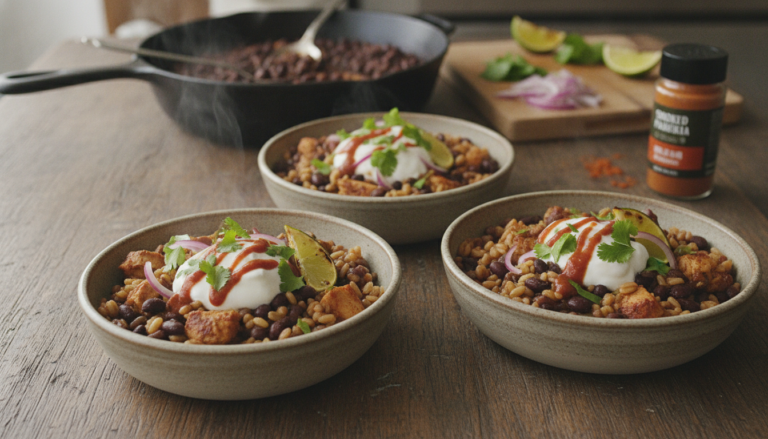
Smoky Chipotle Black Bean & Farro Bowls
These Smoky Chipotle Black Bean & Farro Bowls are a boldly flavored, plant-based meal prep bowl built on a bloomed chipotle-cumin-paprika base, simmered black beans in tomato sauce, and nutty farro—a complete, deeply satisfying bowl that improves in the refrigerator every day it sits.
4
servings15
minutes30
minutes400
kcal45
minutesIngredients
1 cup farro
2 cans black beans, drained and rinsed
1 cup tomato sauce
2 tablespoons chipotle in adobo, minced
1 teaspoon smoked paprika
1 teaspoon cumin
2 cloves garlic, minced
1 tablespoon olive oil
1 cup corn kernels
1 lime juice
1 cup cilantro, chopped
1 teaspoon salt
0.5 teaspoon black pepper
Directions
- Cook farro according to package instructions; set aside.
- Heat olive oil in a pan over medium heat.
- Add garlic, smoked paprika, cumin, and minced chipotle; sauté until fragrant.
- Mix in black beans, tomato sauce, and corn; stir to combine.
- Simmer for 10 minutes, stirring occasionally.
- Add lime juice, salt, and pepper to taste.
- Serve black bean mixture over farro in bowls.
- Garnish with chopped cilantro.
Nutrition Facts
- Total number of serves: 4
- Calories: 400kcal
- Cholesterol: 0mg
- Sodium: 620mg
- Potassium: 400mg
- Sugar: 8g
- Protein: 6g
- Calcium: 60mg
- Iron: 2mg
About This Author

Benjamin Brown
Recipe Developer
Benjamin is our flavor engineer. A classically trained chef turned recipe developer, he’s obsessed with balancing taste, texture, and creativity. He ensures that every recipe we publish is not only delicious but also reliable, approachable, and repeatable — even for beginners.
Favorite dish: Slow-braised short ribs with red wine reduction.
Kitchen motto: “Cooking is part science, part soul.”