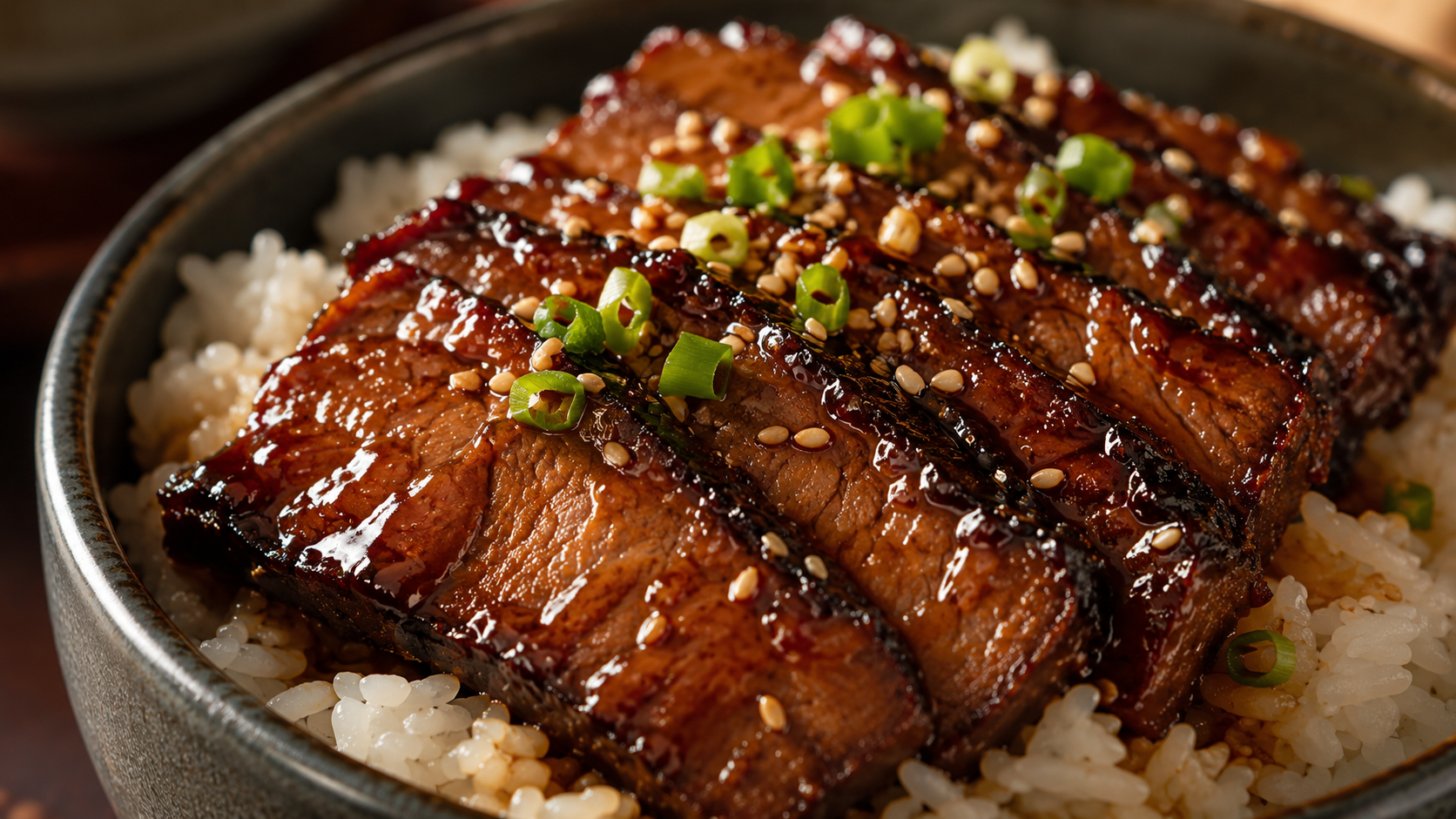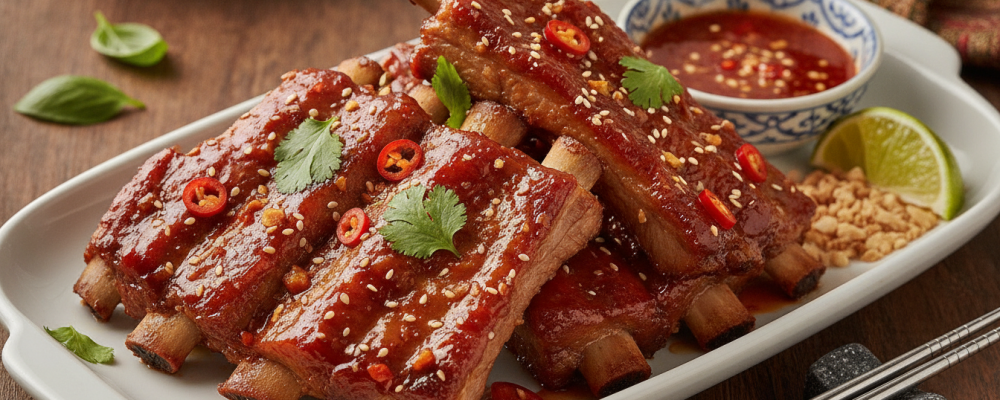

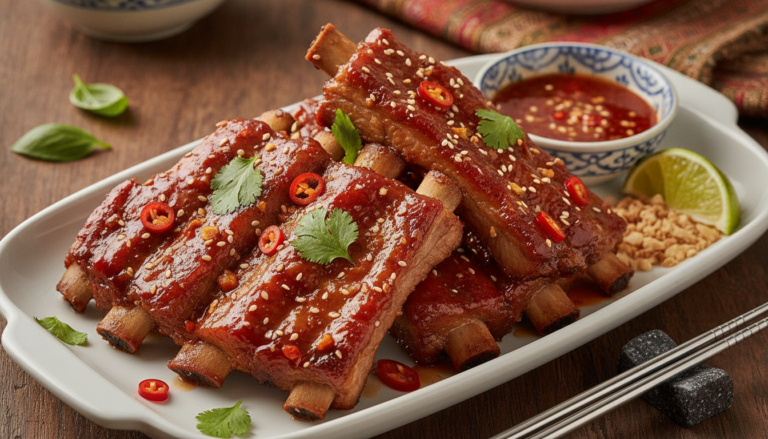
There are rib recipes built around the American BBQ tradition, and then there are rib recipes that take the same fundamental technique—low and slow in the oven, finished at high heat—and apply it to a completely different flavor tradition, producing something that stops you mid-bite and makes you reconsider everything you thought you knew about what ribs could taste like. These Thai Style Sweet Chili Ribs are that second kind of recipe. A sauce built from sweet chili, soy, fish sauce, ginger, garlic, honey, and lime—the essential sweet-spicy-sour-umami framework of Thai cooking—lacquers the ribs through a ninety-minute covered braise and a twenty-minute high-heat glaze into something that is sticky, complex, deeply savory, and completely addictive. They are genuinely one of the most impressive things you can pull out of a home oven.
The sauce is the achievement of this recipe, and every ingredient in it earns its place. The sweet chili sauce provides the fruity sweetness and baseline heat. The soy sauce delivers salt and umami depth. The fish sauce—the ingredient that separates this from a generic Asian-inspired rib—adds a fermented, briny complexity that cannot be replicated by any other condiment and that makes the finished sauce taste like it has been cooking for hours rather than minutes. The honey ensures a proper caramelized glaze in the final high-heat stage. The lime juice provides the bright acidity that keeps the sweetness from tipping into cloying. Together, they create a sauce with the layered character of Thai cooking—a balance of flavors that hits every note simultaneously rather than in sequence.
The two-stage oven method is where the technique earns its results. The covered low-heat braise renders the fat, breaks down the collagen, and allows the first application of sauce to penetrate the meat deeply. The uncovered high-heat glaze caramelizes the second application into a sticky, lacquered exterior with slightly charred edges that provide the bittersweet contrast a great glaze always delivers. The result is ribs that are tender within and complex without—exactly what the format demands.
The Inspiration Behind This Recipe
This recipe draws from Thai cooking’s mastery of the sweet-heat-acid-umami balance—a flavor framework that defines much of the cuisine’s most celebrated dishes and that has proven itself equally at home on a rack of pork ribs as it does on grilled chicken, noodles, or seafood. The inspiration was specifically the nam jim style of Thai dipping sauces—fresh, bold, multi-note condiments built on the interplay of sweet chili, lime, fish sauce, and garlic—applied as a rib glaze rather than a tableside condiment.
The rib format was chosen because it provides the ideal canvas for a sauce this complex: the long, slow cook gives the flavors time to penetrate the meat deeply, and the high surface-area-to-meat ratio of a rack of ribs means every bite has a concentrated, sauce-glazed exterior.
A Brief History of Thai Flavors and Asian-Inspired Ribs
Thai cuisine’s signature flavor balance—known as the four pillars of sweet, sour, salty, and spicy—has roots in the complex interplay of trade routes, neighboring culinary traditions, and local ingredients that have shaped Thai cooking over centuries. Fish sauce, the cornerstone of Thai seasoning, is derived from fermented fish and salt and has been produced throughout Southeast Asia for at least two thousand years. Sweet chili sauce as a condiment is a more modern development, becoming widely available internationally in the latter half of the 20th century and quickly establishing itself as one of the most versatile and universally appealing condiments in global cooking.
The application of Asian-inspired glazes to American rib formats gained mainstream American popularity through the proliferation of pan-Asian casual dining in the 1980s and 1990s, where menus began featuring Asian-BBQ fusion ribs that introduced American diners to the remarkable compatibility of Thai and Southeast Asian flavors with slow-cooked pork. This recipe draws from that tradition while applying it with the specificity and flavor precision of authentic Thai seasoning rather than the simplified “Asian” approximations that the early fusion era sometimes produced.
Why the Two-Stage Oven Method Is Essential
The two-stage cooking approach—ninety minutes covered at 300°F followed by twenty minutes uncovered at 400°F—is not merely a practical convenience but a specifically designed technique sequence that produces a result neither stage could achieve alone. Understanding why makes you a better rib cook across all preparations.
The covered low-heat stage creates a moist, enclosed environment that functions as a braise rather than a roast. The fat in the ribs renders gradually and continuously, keeping the meat moist from within. The collagen in the connective tissue breaks down into gelatin, producing the characteristic tenderness of properly braised ribs. The first sauce application, absorbed during this stage, seasons the meat from the surface inward.
The uncovered high-heat stage serves an entirely different function: it dehydrates the surface of the ribs, concentrates the second sauce application, and allows the honey and natural sugars in the sauce to caramelize under direct oven heat. The Maillard reaction produces the complex, slightly bitter flavor compounds at the glaze’s edges that provide essential contrast to the sweetness. Without this stage, the ribs are tender but the glaze is merely a coating. With it, the glaze becomes the defining element of the finished dish.
Flavor Profile: What to Expect
These ribs deliver a bold, layered, deeply complex flavor experience in every bite:
- Sweet, fruity chili that provides the glaze’s approachable sweetness and the foundation for all the more complex flavors built around it
- Deep, fermented fish sauce umami that adds a savory, briny complexity that makes every other flavor taste more vivid and intentional
- Sticky, caramelized honey that lacquers the surface in the final high-heat stage into something glossy and slightly charred at the edges
- Bright lime acidity that cuts through the sweetness and fat and keeps every bite feeling vibrant rather than cloying
- Aromatic ginger and garlic that carry through the sauce and add warm, spiced depth throughout
- Sesame oil richness that adds a toasted, nutty undertone to the surface of the ribs before the sauce is applied
- Toasted sesame seeds and green onion that add crunch, freshness, and visual appeal
The overall effect is sweet, sticky, savory, bright, slightly spicy, and deeply satisfying—ribs that taste like a serious culinary tradition applied with confident precision.
Tips for Making the Best Thai Style Sweet Chili Ribs
These technique details will produce consistently exceptional results:
- Remove the membrane: The thin membrane on the bone side of the rack prevents sauce from penetrating from the underside and makes the ribs tougher. Slide a knife under the edge and pull it off before applying the sesame oil.
- Divide the sauce equally: Half for the initial application, half for the glaze. The initial application seasons the meat; the glaze creates the finished exterior. Both stages need their full portion to work correctly.
- Seal the foil tightly: Any gaps in the foil covering allow steam to escape during the low-heat braise stage, which reduces moisture retention and can dry out the ribs before the glaze stage.
- Watch the high-heat stage carefully: At 400°F with a honey-based sauce, the glaze can go from perfectly caramelized to burned in under two minutes. Check every five minutes and pull when the edges are darkened but not charred.
- Rest before cutting: Five minutes of resting allows the juices to redistribute and the glaze to set slightly, which makes cutting between the bones significantly cleaner.
- Cut between every bone for serving: Individual riblets are easier to eat and make for a more impressive presentation than a full rack.
Serving Suggestions and Side Pairings
These ribs are bold enough to anchor any spread:
- Over jasmine or coconut rice to soak up the glaze and any sauce that pools on the serving plate
- Alongside a simple cucumber salad with rice vinegar and sesame for cool, acidic contrast
- With steamed bok choy or broccoli for a clean, slightly bitter vegetable counterpoint
- As a party platter of individual riblets with extra sweet chili sauce for dipping
- Paired with a cold Asian slaw for a complete, impressive dinner spread
Storage, Reheating, and Make-Ahead Tips
These ribs hold up well and reheat beautifully:
- Refrigerate cut ribs in an airtight container for up to 4 days. The glaze intensifies as it sits.
- Reheat in a 350°F oven covered loosely with foil for 10–12 minutes, then uncover for the final 3 minutes to restore the glaze’s caramelized finish. Brush with a small additional amount of sweet chili sauce before the final uncovered stage.
- Freeze fully cooked ribs for up to 2 months. Thaw overnight and reheat as directed.
- Make the sauce up to 3 days in advance and refrigerate—the flavors actually meld and deepen with time.
Why This Recipe Deserves a Spot in Your Rotation
Thai Style Sweet Chili Ribs earn their place as the dinner party rib recipe that makes everyone think you’ve done something remarkable—and you have, but the remarkable part is how straightforward the technique is once you understand why each step exists. These ribs are impressive enough for a special occasion and practical enough for a weekend dinner. They represent everything that great home cooking should be: deeply flavored, thoughtfully executed, and genuinely worth the effort every time you make them.
Recommended Drink Pairing
A rib this sticky and complex calls for something cold and vibrant that can meet the sweet-heat balance head on. A Pineapple & Coconut Margarita is a stunning match—the tropical sweetness echoes the chili glaze while the citrus cuts through the richness of the pork and glaze beautifully. A cold, crisp Thai lager or a sparkling lemonade is the effortless, crowd-friendly companion that refreshes perfectly between ribs.
For non-alcoholic options, a cold sparkling limeade with fresh mint or a lightly sweetened Thai iced tea provides the cool, slightly sweet refreshment that makes sticky, spiced ribs even more enjoyable.
Thai Style Sweet Chili Ribs
Thai Style Sweet Chili Ribs braise pork ribs in a bold sweet chili, soy, fish sauce, ginger, and honey sauce, then glaze at high heat until sticky, lacquered, and deeply complex—a rib recipe that brings genuine Thai flavor to your home oven.
4
servings20
minutes2
hours670
kcal2
hours20
minutesIngredients
2 pounds pork ribs
1 cup sweet chili sauce
2 tablespoons soy sauce
1 tablespoon fish sauce
1 teaspoon ginger, grated
2 cloves garlic, minced
1 tablespoon honey
1 tablespoon lime juice
1 teaspoon chili flakes
1 teaspoon sesame oil
1 tablespoon sesame seeds, toasted
2 tablespoons green onions, sliced
Directions
- Preheat oven to 300°F (150°C).
- In a bowl, mix sweet chili sauce, soy sauce, fish sauce, ginger, garlic, honey, lime juice, and chili flakes.
- Rub ribs with sesame oil and place on a baking sheet.
- Pour half of the sauce mixture over the ribs, coating evenly.
- Cover ribs with foil and bake for 90 minutes.
- Remove foil and increase oven temperature to 400°F (200°C).
- Baste ribs with remaining sauce and bake uncovered for 20 minutes.
- Let ribs rest for 5 minutes before serving.
- Garnish with sesame seeds and green onions.
Nutrition Facts
- Total number of serves: 4
- Calories: 670kcal
- Cholesterol: 0mg
- Sodium: 620mg
- Potassium: 400mg
- Sugar: 8g
- Protein: 6g
- Calcium: 60mg
- Iron: 2mg
About This Author

Benjamin Brown
Recipe Developer
Benjamin is our flavor engineer. A classically trained chef turned recipe developer, he’s obsessed with balancing taste, texture, and creativity. He ensures that every recipe we publish is not only delicious but also reliable, approachable, and repeatable — even for beginners.
Favorite dish: Slow-braised short ribs with red wine reduction.
Kitchen motto: “Cooking is part science, part soul.”