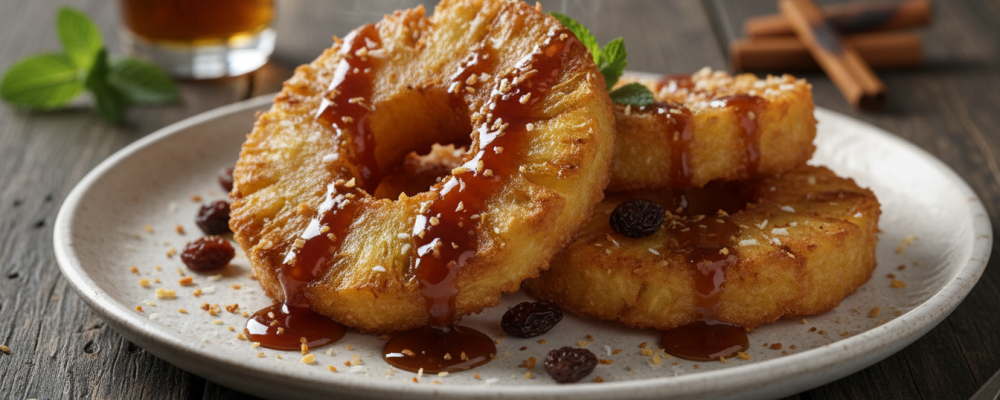

I’ve made thousands of desserts in my career—elaborate tarts, intricate layer cakes, delicate soufflés that require perfect timing and nerves of steel. And yet, some of my most treasured food memories involve the simplest preparations. These Rum Soaked Fried Pineapple rings belong firmly in that category. They require minimal technique, a handful of ingredients, and about 40 minutes from start to finish. Yet the result is something genuinely spectacular—deeply caramelized, perfumed with rum and cinnamon, sweet-tart and warm and completely irresistible.
What makes this recipe special is the transformative power of heat and caramelization. Raw pineapple is delicious—bright, acidic, tropical, refreshing. But cooked pineapple is something else entirely. The sugars concentrate and caramelize, the acidity mellows, and the fruit develops deep, complex sweetness with subtle bitterness at the edges where caramelization happens most intensely. Add rum, brown sugar, and butter to the equation, and you’ve created a sauce that’s rich enough to feel like dessert all on its own.
The rum soak is what elevates this from simple pan-fried fruit to something worth talking about. Dark rum brings molasses depth, vanilla notes, and subtle warmth that complements both the pineapple and the brown sugar perfectly. During cooking, the alcohol cooks off but the flavor compounds remain, creating complexity without overwhelming the fruit. It’s the same principle I use when adding spirits to pastry creams or cake layers—a little alcohol introduces notes that nothing else can replicate.
I first made this on a cold Monday evening when I was craving something tropical and warm. The kitchen filled with the most intoxicating aroma—caramelizing sugar, warm rum, cinnamon, and pineapple all mingling together. My neighbors actually knocked on the door to ask what I was cooking. That’s the mark of a truly special recipe: one that draws people in before they’ve even tasted it.
─────────
The Inspiration Behind This Recipe
Rum Soaked Fried Pineapple draws inspiration from several culinary traditions that celebrate the marriage of tropical fruit and spirits. The concept echoes Bananas Foster—the classic New Orleans dessert created in 1951 at Brennan’s Restaurant—which pioneered the technique of pan-cooking fruit in butter, brown sugar, and spirits. This recipe applies that same elegant framework to pineapple, bringing Caribbean influence through the rum and tropical fruit combination.
The inspiration also reflects Caribbean culinary traditions where rum is a foundational ingredient in both savory and sweet preparations. In the Caribbean, rum is used to marinate meats, flavor desserts, and preserve fruits—it’s not just a beverage but a cooking ingredient with deep cultural significance. Pineapple, native to South America and widely cultivated throughout the Caribbean, pairs naturally with rum in both flavor and cultural heritage.
This recipe also emerged from the desire to create a versatile dessert that works across multiple serving contexts: elegant enough for dinner party presentation over ice cream, casual enough for weeknight snacking straight from the pan, and dramatic enough to impress guests who’ve never seen caramelized pineapple before.
─────────
A Brief History of Caramelized Fruit Desserts and Caribbean Rum
Cooking fruit in sugar and butter has ancient roots in European cuisine, where fruit compotes, poached fruits, and pan-fried preparations appeared in medieval cookbooks. The technique of caramelizing fruit in a skillet gained particular sophistication in French cuisine, where sautéed fruits became classic accompaniments to both sweet and savory dishes.
Rum itself has a rich Caribbean history dating to the 17th century, when sugarcane cultivation in the Caribbean led to the discovery that fermented molasses could be distilled into spirits. Dark rum specifically develops its deep color and complex flavor from aging in charred oak barrels, acquiring notes of vanilla, caramel, molasses, and tropical fruit. These characteristics make it a natural partner for caramelized pineapple.
Pineapple has been cultivated in tropical regions for thousands of years, originating in South America before spreading throughout the Caribbean and eventually to Europe and beyond. In 18th-century Europe, pineapples were so rare and expensive that they were rented out as status symbols for dinner parties. Today, their accessibility belies their sophisticated flavor profile—complex, tropical, and capable of extraordinary transformation under heat.
This recipe honors these intersecting histories while creating something thoroughly approachable for modern home cooks.
─────────
Why This Cooking Method Works
Rum soaking allows alcohol molecules to penetrate pineapple’s cellular structure, carrying flavor compounds deep into the fruit. As the alcohol evaporates during cooking, these flavor molecules remain behind, creating complex taste throughout rather than just on the surface.
Dark rum specifically contributes aged oak, molasses, and vanilla notes that complement both the pineapple’s tropical sweetness and the brown sugar’s caramel character. Light rum would taste thinner and less complex.
Medium heat allows gradual caramelization without burning. Pineapple contains natural sugars that caramelize beautifully under controlled heat but burn quickly if temperature is too high.
Butter as cooking fat promotes even browning, adds richness, and creates a cohesive sauce with the brown sugar. It also prevents sticking and helps the sugar melt smoothly.
Brown sugar provides more complex flavor than white sugar due to its molasses content. It caramelizes at slightly lower temperatures and creates deeper, more nuanced sweetness.
Cinnamon enhances both the rum and the caramelized sugar, adding warmth and spice that bridges the gap between tropical and cozy flavor profiles.
Dissolving sugar before adding pineapple creates an even caramel base that coats fruit uniformly rather than creating clumps of unmelted sugar.
3-4 minutes per side allows adequate time for browning while keeping the fruit tender rather than mushy. Pineapple holds up well to heat but benefits from controlled cooking time.
─────────
Flavor Profile: What to Expect
Rum Soaked Fried Pineapple delivers multi-layered tropical indulgence with remarkable complexity. The caramelized pineapple itself is sweet, slightly tart, and deeply tropical with that characteristic pineapple brightness transformed by heat into something warmer and more complex. The edges develop slight bitterness from caramelization that creates sophisticated contrast.
Dark rum contributes molasses depth, vanilla warmth, and subtle oak complexity. Even after cooking, its flavor presence is distinctive—adding notes you can’t achieve with any other ingredient.
Brown sugar caramel provides rich, toffee-like sweetness with slight bitterness. Combined with butter, it creates a luscious sauce that clings to the pineapple and pools around it.
Butter adds dairy richness and silky mouthfeel that rounds out the sauce and makes everything taste more luxurious.
Cinnamon brings warming spice that bridges tropical and cozy flavor profiles. Its aromatic quality complements rum’s complexity while adding gentle heat.
The texture offers wonderful contrast: slightly firm, juicy pineapple with caramelized, slightly sticky exterior coating. The sauce is thick and glossy, perfect for spooning over ice cream or soaking into cake.
Overall, expect tropical warmth—bright fruit flavors deepened by caramelization, enriched by butter, perfumed with rum, and warmed with spice. It tastes like a Caribbean sunset in dessert form.
─────────
Tips for Making the Best Rum Soaked Fried Pineapple
- Choose ripe pineapple: Look for golden color, fragrant aroma at the base, and slight give when pressed. Underripe pineapple won’t develop proper sweetness when cooked.
- Cut evenly: Uniform rings or chunks ensure even cooking. Aim for ½-inch thickness for rings—thick enough to hold up during cooking without falling apart.
- Don’t skip the soak: Thirty minutes is the minimum for proper flavor penetration. Longer soaking (up to 2 hours) creates even more complex flavor.
- Pat pineapple dry: Before adding to the skillet, lightly pat soaked pieces dry to prevent splattering and ensure better caramelization.
- Use dark rum: Light rum won’t provide the depth of flavor this recipe needs. Myers’s, Gosling’s, or Plantation are excellent choices.
- Watch the heat: Medium heat is crucial. Too high and the sugar burns before the pineapple cooks; too low and you get stewed rather than caramelized fruit.
- Don’t crowd the pan: Cook in batches if needed. Crowding creates steam that prevents caramelization.
- Resist moving too soon: Let the pineapple develop a golden crust before flipping. It will release naturally when properly caramelized.
- Reserve the rum: Don’t discard the soaking rum. Add a splash to the pan sauce for extra depth and drama.
- Serve immediately: This dish is best hot from the pan when caramelization is at its peak.
─────────
Serving Suggestions and Side Pairings
Rum Soaked Fried Pineapple is remarkably versatile and elevates numerous dishes:
Classic dessert: Serve warm over vanilla ice cream or coconut ice cream. The temperature contrast and melting ice cream sauce is extraordinary.
Elegant plating: Fan rings on a plate with a scoop of ice cream, drizzle remaining pan sauce, and garnish with fresh mint for restaurant-quality presentation.
Brunch addition: Serve alongside French toast, waffles, or pancakes as a tropical fruit topping that replaces ordinary syrup.
Savory pairing: Serve alongside grilled pork chops, pork tenderloin, or ham—pineapple’s acidity and sweetness complement pork beautifully.
Tropical dessert board: Include alongside coconut macaroons, macadamia nut cookies, and tropical fruits for a themed dessert spread.
Pairing suggestions:
- Vanilla, coconut, or macadamia nut ice cream
- Fresh whipped cream with vanilla
- Pound cake or angel food cake
- Grilled or roasted pork dishes
- Greek yogurt for a lighter accompaniment
- Toasted coconut flakes for garnish
- Caramel sauce for extra indulgence
- Fresh mint for brightness and color
─────────
Storage, Reheating, and Make-Ahead Tips
Storage: Store cooled pineapple and sauce in an airtight container in the refrigerator for up to 3 days. The flavor actually develops and deepens slightly overnight.
Reheating: Reheat gently in a skillet over low heat for 2-3 minutes per side, or microwave for 30-45 seconds. Add a splash of rum or butter if the sauce needs refreshing.
Make-ahead soaking: Soak pineapple in rum up to 8 hours ahead in the refrigerator. The extended soak creates deeper rum flavor.
Sauce separately: The brown sugar butter sauce can be made ahead and refrigerated for up to a week. Reheat gently and add pineapple to warm through.
Serving at room temperature: While best served warm, this dish is also delicious at room temperature, making it suitable for buffet-style serving.
Freezing: Not recommended. Cooked pineapple becomes mushy when frozen and thawed.
Component planning: For dinner parties, complete the rum soak well ahead. The actual pan cooking takes only 8-10 minutes and can be done while guests enjoy appetizers.
Leftover uses: Chop leftover pineapple and fold into oatmeal, yogurt parfaits, or use as a topping for cheesecake.
─────────
Why This Recipe Deserves a Spot in Your Rotation
Rum Soaked Fried Pineapple deserves a permanent place in your dessert repertoire because it occupies that rare sweet spot between impressive and effortless. This is the dessert you make when you want to genuinely wow people without spending hours in the kitchen—when you need something that looks and tastes sophisticated but comes together in under 45 minutes with ingredients that cost very little.
From an entertaining perspective, this recipe creates a moment. The caramelizing sugar fills your home with an intoxicating aroma that builds anticipation before anyone takes a bite. Serving warm caramelized fruit over melting ice cream creates visual drama. And that first bite—the contrast of warm, rum-kissed pineapple against cold, creamy ice cream—delivers a sensory experience that people genuinely remember.
The recipe also demonstrates important cooking principles about caramelization, heat management, and how spirits enhance flavor. Understanding how sugar transforms under heat, how alcohol carries and preserves flavor compounds, and how timing affects texture—these are foundational lessons that apply across countless desserts and savory dishes alike.
Most importantly, this recipe proves that exceptional desserts don’t require exceptional skill. They require quality ingredients, proper technique, and the understanding that transformation—taking something simple and making it extraordinary—is what cooking is really about. Fresh pineapple becomes caramelized decadence. Simple rum becomes complex flavor. Basic brown sugar becomes sophisticated caramel. That’s the magic of this recipe, and that’s why it deserves to be made again and again.
─────────
Recommended Drink Pairing
Rum: A quality dark rum served neat or on the rocks echoes the dessert’s spirit-forward character. A rum cocktail like a Dark and Stormy (dark rum, ginger beer, lime) provides refreshing contrast.
Wine: A late-harvest Riesling or Sauternes with their honeyed sweetness and tropical fruit notes complement the caramelized pineapple beautifully. A Moscato d’Asti offers effervescent sweetness.
Cocktail: A classic Piña Colada (rum, coconut cream, pineapple juice) continues the tropical theme while echoing every flavor in the dish. A classic Daiquiri provides citrusy, rum-forward refreshment.
Non-alcoholic: Fresh pineapple juice with ginger and lime creates a sophisticated mocktail that mirrors the dessert’s tropical character. Sparkling water with a pineapple wedge provides effervescent refreshment.
Coffee: A dark roast coffee or espresso provides bitter, roasted contrast that balances the sweetness beautifully—a classic dessert pairing principle applied here with particular success.
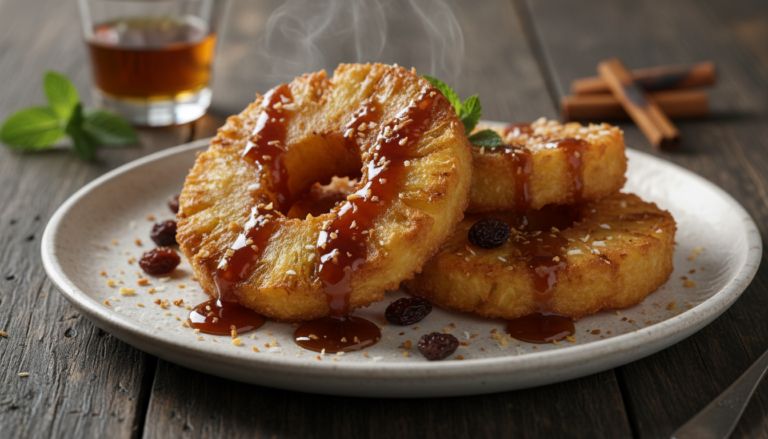
Rum Soaked Fried Pineapple
Rum Soaked Fried Pineapple features fresh pineapple rings soaked in dark rum and pan-fried in buttery brown sugar and cinnamon until golden and caramelized for an indulgent tropical treat.
4
servings15
minutes10
minutes210
kcal25
minutesIngredients
1 whole pineapple
1/4 cup dark rum
2 tablespoons butter
2 tablespoons brown sugar
1/2 teaspoon ground cinnamon
Directions
- Peel and core the pineapple, cutting it into rings or chunks.
- Soak the pineapple pieces in dark rum for 30 minutes.
- In a large skillet, melt butter over medium heat.
- Add brown sugar and ground cinnamon, stirring until sugar dissolves.
- Add the soaked pineapple pieces and cook for 3-4 minutes each side, until caramelized.
- Remove from heat and serve warm.
Nutrition Facts
- Total number of serves: 4
- Calories: 210kcal
- Cholesterol: 0mg
- Sodium: 620mg
- Potassium: 400mg
- Sugar: 8g
- Protein: 6g
- Calcium: 60mg
- Iron: 2mg
About This Author

Aurora Wright
Pastry Chef & Dessert Editor
Aurora is the sweet side of Daily Dish. A trained pastry chef and dessert stylist, she’s responsible for our mouth-watering cakes, cookies, and confections. She brings precision, artistry, and a touch of whimsy to every recipe she creates — and taste-tests more chocolate than she’ll admit.
Favorite dish: Flourless dark chocolate torte.
Kitchen motto: “Life’s too short to skip dessert.”