
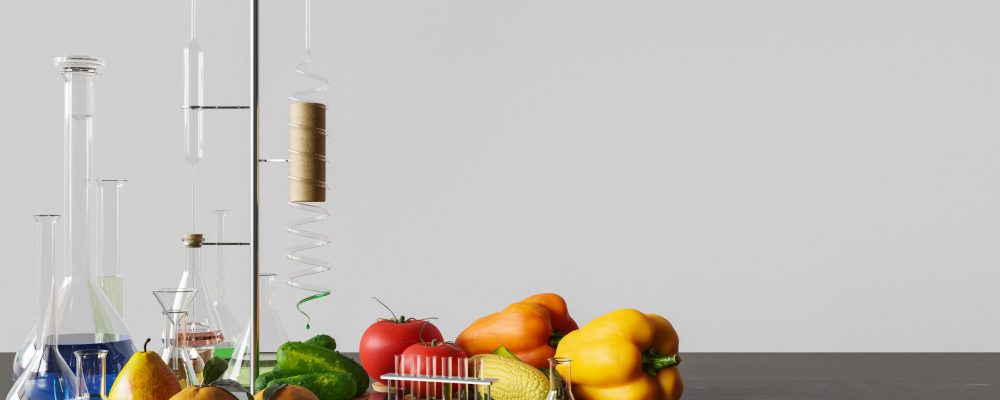

There is a gap between what most home cooks know about cooking and what food science knows about cooking.
Not a gap in skill. Not a gap in taste or instinct or the accumulated practical knowledge that produces genuinely good food. A gap in explanation — in the specific understanding of what is actually happening to food at a chemical and physical level when it is cooked, stored, seasoned, and transformed.
This gap matters because understanding the science behind a technique produces a fundamentally different kind of knowledge than understanding the technique alone. The cook who knows that you should salt pasta water because it makes the pasta taste better has useful knowledge. The cook who knows that the salt diffuses into the pasta during cooking, seasoning the starch from within rather than coating it from without, has a different and more flexible understanding — one that tells them what will happen if they salt the water more or less, and why the water should taste noticeably salty, and what the pasta is actually doing during those minutes in the boiling pot.
The science doesn’t replace the intuition. It informs it — gives it a foundation that makes adjustment and improvisation and troubleshooting possible in ways that purely experiential knowledge does not.
What Heat Actually Does to Protein
Protein denaturation is one of the most fundamental transformations in cooking — and one of the most consistently misunderstood.
Raw protein — the protein in a chicken breast, in an egg white, in a piece of fish — exists in a specific three-dimensional structure. The protein chains are folded into specific configurations held in place by chemical bonds. This native structure is what gives raw protein its specific texture — slippery, tender, with a translucency that cooked protein loses.
When heat is applied, these bonds begin to break. The protein chains unfold — denature — and then form new bonds with each other in a different configuration. This process, which begins at relatively low temperatures and accelerates with heat, is what transforms a raw egg from a clear, viscous liquid into an opaque, firm solid. It is what makes a piece of chicken go from pink and soft to white and firm. It is what turns a rare steak from yielding and silky to progressively firmer as the internal temperature rises.
The key insight that food science provides about denaturation — and that most home cooks don’t have — is that it is temperature-dependent and time-dependent simultaneously. Higher temperatures denature protein faster, but lower temperatures maintained for longer can produce the same degree of denaturation with significantly different results.
This is the principle behind sous vide cooking: that a piece of chicken held at exactly 145°F for an extended period will denature its proteins completely — producing safe, fully cooked chicken — while maintaining a juiciness and tenderness that the same chicken cooked quickly to the same internal temperature in a conventional oven doesn’t achieve. The conventional high-heat cooking overshoots in the outer layers while the center catches up. The low, slow, precise temperature cooking produces even denaturation throughout.
The practical implication for home cooks without a sous vide setup is simpler: lower heat and longer time produces more even cooking in thick proteins, with less of the dried-out exterior that high-heat cooking often produces before the interior reaches the right temperature.
The Emulsion and Why It Breaks
An emulsion — a stable suspension of two liquids that don’t naturally mix — is one of the most fundamental preparations in cooking, and understanding why emulsions form and why they break is one of the most practically useful pieces of food science available to any home cook.
Oil and water don’t mix because their molecular structures are incompatible — water molecules are attracted to other water molecules, oil molecules are attracted to other oil molecules, and the two phases will always separate if given the opportunity.
An emulsifier is a molecule with a water-attracting end and an oil-attracting end — a molecular bridge that simultaneously bonds to both phases and prevents them from separating. In cooking, the most common emulsifiers are lecithin (present in egg yolks), the proteins in dairy products, and the starch in cooking liquids.
When a vinaigrette is made by adding oil to vinegar while whisking, the whisking breaks the oil into small droplets that are suspended in the vinegar. Without an emulsifier, these droplets will eventually coalesce and the dressing will separate. With a small amount of Dijon mustard — which contains mucilage compounds that act as emulsifiers — the droplets remain suspended and the dressing holds together.
The reason an emulsion breaks — the sauce splits, the hollandaise curdles, the mayonnaise separates — is almost always that one of the conditions maintaining the emulsion has been disrupted. Too much heat causes the proteins in a mayonnaise to denature completely, collapsing the structure that holds the emulsion together. Too much oil added too fast overwhelms the emulsifier’s capacity to surround each droplet and keep it suspended. Too much acid can destabilize certain emulsifiers.
The food science fix for a broken emulsion is to start fresh with a small amount of new emulsifier — a new egg yolk, a small amount of mustard — and add the broken emulsion to it slowly, whisking constantly, giving the new emulsifier the opportunity to surround and stabilize the droplets again. This repair technique works because it restores the conditions the emulsion needs — it doesn’t recreate a new emulsion so much as extend an existing one with a new emulsifying foundation.
The Maillard Reaction Revisited: What Temperature Actually Does
The Maillard reaction — the cascade of chemical reactions between amino acids and reducing sugars that produces browning and flavor complexity — was discussed in an earlier issue in terms of its general requirements. But the food science of the Maillard reaction contains specific insights that are practically useful beyond the general principle.
The reaction rate doubles approximately every 18°F above the threshold temperature. This means that the difference between a surface temperature of 300°F and 350°F is not a linear increase in browning speed — it is a doubling of the reaction rate. And the difference between 350°F and 400°F is another doubling.
This explains why the last few degrees of pan temperature matter so disproportionately to the quality of a sear. A pan that is merely hot will produce some browning. A pan that is genuinely hot will produce dramatically more browning in the same amount of time — not a little more, but exponentially more, because the reaction rate increases exponentially rather than linearly with temperature.
It also explains the specific value of techniques that maximize surface temperature: the screaming hot cast iron, the brief blast under a broiler to finish browning, the reason that patting food completely dry before searing is so important. Every degree of surface temperature that evaporating surface moisture would have prevented is a significant loss of Maillard reaction rate — which is why the difference between a slightly wet piece of fish and a completely dry one is not proportional to the moisture difference but exponentially larger.
How Salt Actually Works at a Molecular Level
Salt’s role in cooking is so fundamental that most home cooks accept its importance without understanding the mechanism — and understanding the mechanism reveals applications that the general principle doesn’t.
Sodium chloride in solution dissociates into sodium and chloride ions. In food, these ions interact with flavor compounds, with proteins, and with water in ways that produce the specific effects of salt on cooking.
The enhancement of flavor by salt is not primarily a matter of making food taste saltier. At sub-threshold concentrations — amounts of salt below what the palate registers as salty — sodium ions suppress bitter compounds specifically, by blocking the receptors that detect bitterness more effectively than they block the receptors for other tastes. This is the mechanism behind the folk technique of adding a pinch of salt to coffee — the salt doesn’t make the coffee taste salty, it suppresses the bitterness that makes coffee unpleasant to some palates.
The effect of salt on meat — the dry-brining effect — operates through osmosis and then diffusion. Salt applied to the surface of meat initially draws moisture to the surface through osmosis. This moisture dissolves the salt, creating a concentrated brine on the surface of the meat. This brine is then drawn back into the meat through diffusion, carrying the dissolved salt with it. The result is meat that is seasoned throughout its structure rather than just at the surface — and the dissolved proteins in the brine that was reabsorbed have been partially denatured by the salt, improving the meat’s ability to retain moisture during cooking.
This is the scientific explanation for why dry-brining for extended periods — overnight, or for twenty-four to forty-eight hours for large pieces of meat — produces significantly better results than salting immediately before cooking. The osmotic and diffusion processes require time.
Starch Gelatinization and Why Sauces Thicken
The thickening of sauces and soups by starch — cornstarch, flour, arrowroot — is one of the most common techniques in cooking, and understanding what is actually happening when starch thickens a liquid changes how and when the technique is applied.
Starch granules are compact structures that resist water at room temperature. When heated in liquid, the granules begin to absorb water and swell — a process that begins at specific temperatures for each type of starch and that is called gelatinization. As the granules swell, they occupy more space in the liquid and impede its flow, which is what produces the thickening effect. As heating continues, the swollen granules can break, releasing starch molecules into the liquid in a more diffuse form that produces a clearer, smoother gel.
The specific gelatinization temperature of different starches — cornstarch gelatinizes at a lower temperature than flour, arrowroot at a lower temperature than cornstarch — explains why different starches behave differently as thickeners and why certain starches are preferred for certain applications. Arrowroot, which gelatinizes at a low temperature and produces a particularly clear gel, is used for delicate fruit sauces where the clarity of the sauce matters and high heat would damage the flavor. Cornstarch, which produces a cleaner, glossier result than flour, is used in Chinese cooking for the specific texture of velveted proteins and glossy sauces.
The practical implication of starch gelatinization science for home cooks is specific: starches must reach their gelatinization temperature to thicken effectively, and once gelatinized, prolonged cooking at high heat can break the starch granules completely, thinning the sauce rather than thickening it further. This is why sauces thickened with cornstarch should not be boiled hard for extended periods — the starch that thickened them will eventually break and the sauce will thin.
The Takeaway
Food science is not a replacement for the intuitive knowledge of an experienced cook. It is a lens that makes that knowledge more explicable, more transferable, and more applicable in situations that experience alone hasn’t covered.
Understanding protein denaturation explains why low-and-slow produces juicier results. Understanding emulsion chemistry explains how to fix a broken sauce. Understanding the Maillard reaction’s exponential temperature dependence explains why pan temperature matters so disproportionately. Understanding salt’s molecular mechanism explains why dry-brining time matters. Understanding starch gelatinization explains why some sauces thin when overcooked.
Each of these is a piece of knowledge that costs nothing to acquire and pays dividends in every subsequent meal that involves the technique it explains.
The science is already happening in the kitchen.
Understanding it is simply a matter of paying attention to what is already there.














