
There is a category of kitchen mistake that happens before any cooking begins.
Not at the stove. Not with the knife. Not in the seasoning or the technique or the timing. It happens in the refrigerator — or more precisely, in the decisions about what goes in the refrigerator and what doesn’t, what gets stored loose and what gets wrapped, what gets used immediately and what can wait, and how all of these decisions affect the quality of what eventually reaches the plate.
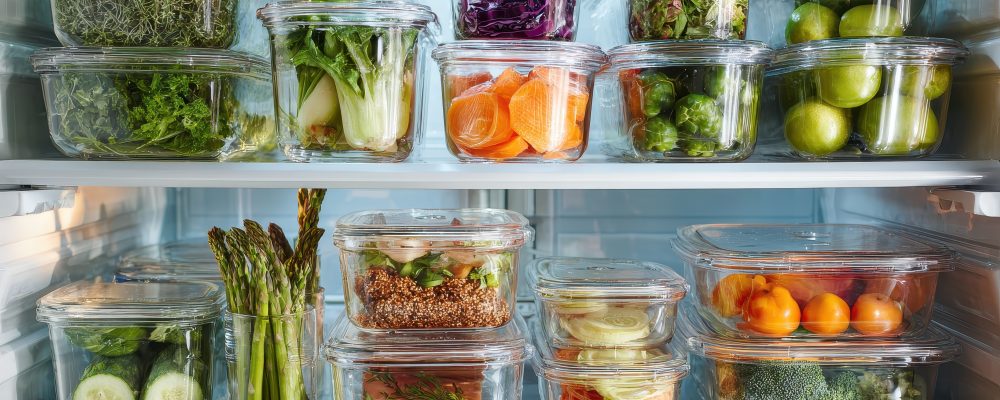
Most home cooks store produce the way it came — in the bag from the grocery store, in the container from the farmers market, in whatever configuration made sense at the point of purchase rather than at the point of storage. The result is produce that deteriorates faster than it should, that loses flavor and texture and nutritional value in the days between buying and cooking, and that arrives at the stove already compromised by decisions made in the refrigerator.
The rules of produce storage are not complicated. They are, however, specific — and the specifics matter more than most home cooks realize.
The Refrigerator Is Not a Universal Preserve
The first and most important principle of produce storage is one that contradicts the instinct of most home cooks: the refrigerator is not the right place for everything.
The refrigerator preserves by cold — by slowing the enzymatic and microbial processes that cause food to spoil. For most foods, this is exactly what is wanted. For certain produce, particularly tropical and subtropical fruits and vegetables, cold does something more damaging than spoilage: it disrupts the enzymatic processes responsible for ripening and flavor development, converting the sugars and aromatic compounds that produce flavor into starch and less flavorful compounds in a way that cannot be reversed.
Tomatoes are the most dramatic example. Cold destroys the volatile aromatic compounds in tomatoes — the same compounds responsible for the flavor that makes a peak-season tomato extraordinary — in a way that warming the tomato afterward cannot undo. A tomato refrigerated before it is fully ripe will never develop the flavor it would have developed at room temperature. A tomato refrigerated after ripening will lose flavor compounds during every hour it spends in the cold.
Tomatoes belong on the counter. Not near a window where direct sunlight will accelerate deterioration, but at room temperature, where their ripening can proceed and their flavor can be maintained. Once cut, they can be refrigerated briefly — but a whole tomato should never see the inside of a refrigerator if flavor is the priority.
The same principle applies to a wider range of produce than most home cooks realize. Basil — the most cold-sensitive of the common herbs — blackens within hours of refrigeration as its cell walls rupture from the cold. It belongs in a glass of water on the counter, like cut flowers, where it will hold for several days. Stone fruit — peaches, nectarines, plums, apricots — should ripen at room temperature and be refrigerated only when fully ripe and only if necessary. Avocados ripen at room temperature and should not be refrigerated until ripe, at which point refrigeration extends their usability by a day or two.
Cucumbers, eggplant, winter squash, potatoes, onions, and garlic all do better outside the refrigerator — in a cool, dark place where they are protected from temperature fluctuation but not subjected to the cold that damages their texture and flavor.
Ethylene: The Invisible Factor
The ripening of fruit is governed by a gaseous hormone called ethylene — produced by ripening fruit and received by receptors in surrounding produce, which accelerates their own ripening in response.
This invisible gas is one of the most important variables in produce storage, and managing it — either by using it deliberately or by preventing its unintended effects — changes the speed and quality of produce ripening significantly.
Some fruits are high ethylene producers: apples, bananas, avocados, tomatoes, and pears are among the most significant. Others are highly sensitive to ethylene without producing much of it themselves: leafy greens, cucumbers, carrots, and certain other vegetables will yellow, soften, and deteriorate significantly faster when stored near high ethylene producers.
This is the scientific explanation for the folk wisdom that one bad apple spoils the barrel — the ethylene from a ripening or deteriorating apple accelerates the ripening and deterioration of everything around it.
The practical management of ethylene is simple once the principle is understood. Keep high ethylene producers away from ethylene-sensitive produce. Store apples and bananas separately from leafy greens and cucumbers. Don’t store onions near potatoes — the ethylene from onions accelerates sprouting in potatoes. And use the ethylene of high producers deliberately when you want to accelerate ripening: a hard avocado placed in a paper bag with a banana will ripen significantly faster than one left on its own.
Moisture: The Variable That Changes Everything
The second most important variable in produce storage — after temperature — is moisture.
Most vegetables need moisture to maintain their cellular turgor — the internal water pressure that keeps them crisp rather than limp. When vegetables lose moisture through evaporation, they wilt: the cells deflate, the structure becomes soft, and the eating quality deteriorates even if the flavor is intact.
The refrigerator’s crisper drawer exists specifically to maintain humidity around produce — to slow the moisture loss that turns crisp vegetables limp. Its effectiveness depends on how it’s used, which most home cooks don’t think about carefully.
Produce stored loose in the crisper loses moisture to the refrigerator air more quickly than produce stored with some moisture management. The simplest and most effective technique is a damp paper towel — placed around or underneath vegetables, particularly leafy greens and herbs, it maintains a humid microenvironment that slows moisture loss significantly. Leafy greens stored with a damp paper towel in a container or a loosely sealed bag last several times longer than the same greens stored loose in the crisper.
The opposite problem — too much moisture — is what causes produce to rot rather than wilt. Mushrooms stored in a plastic bag trap the moisture they release and deteriorate rapidly. Stored in a paper bag, which absorbs excess moisture, they last significantly longer. Berries washed before storage collect moisture in their crevices and mold quickly. Washed and thoroughly dried, or washed only immediately before eating, they hold considerably longer.
The Hierarchy of When to Use What
Beyond the specific rules of individual storage, there is a general principle of produce management that the most efficient home cooks apply as a matter of routine.
Not all produce is equally perishable, and the cook who uses the most perishable things first — who plans meals around what needs to be eaten before it deteriorates rather than around fixed recipes that may or may not align with what’s actually ready — wastes less and eats better.
The hierarchy is roughly as follows: fresh herbs and delicate greens are the most perishable and should be used within two to three days of purchase. Soft fruits — berries, stone fruit, ripe avocados — within three to five days. Sturdy greens — kale, chard, cabbage — within five to seven days. Root vegetables, winter squash, and alliums can hold for weeks under proper storage conditions.
Cooking to the hierarchy rather than to a fixed weekly menu requires flexibility — the willingness to decide what to cook based partly on what needs to be eaten rather than entirely on what was planned in advance. It produces less waste, more varied meals, and a relationship with produce that is more attentive and more responsive to the actual quality of what’s in the kitchen rather than the theoretical quality of what was planned to be there.
The Herbs That Need Special Attention
Fresh herbs — among the most flavorful and most perishable items in any kitchen — are worth managing with specific attention because the difference between well-stored and poorly-stored herbs is the difference between a functional ingredient and a wilted, blackened waste.
The general principle: tender herbs — basil, mint, cilantro, parsley — are best stored like flowers, with their stems in water, loosely covered with a plastic bag or a light cloth, either at room temperature for basil or in the refrigerator for the others. This method keeps them fresh for a week or longer compared to the two to three days that storage in a plastic bag typically produces.
Hardy herbs — rosemary, thyme, sage, oregano — can be wrapped in a lightly damp paper towel and stored in a container in the refrigerator, where they will hold for two weeks or more.
And the herbs that are headed toward the end of their useful fresh life — not yet spoiled but past their peak — can be extended significantly by converting them. Herb oils, made by blending fresh herbs with neutral oil and freezing in ice cube trays. Herb salts, made by pulsing fresh herbs with coarse salt and drying the mixture. These preparations preserve the herb’s character in a form that lasts months rather than days and that carries the flavor of fresh herbs into cooking long after the fresh version would have been composted.
The Takeaway
The quality of what reaches the plate begins with the decisions made in storage — with knowing what belongs in the refrigerator and what doesn’t, which produce is sensitive to ethylene and which produces it, how moisture affects different vegetables differently, and how to prioritize use based on what is most perishable.
These are not complicated rules. They are specific habits that, once established, become automatic — the tomato that goes on the counter rather than in the refrigerator, the herbs that go in a glass of water, the apple stored away from the leafy greens, the mushrooms stored in paper rather than plastic.
The produce that arrives at the stove in its best condition is the produce that was stored with attention.
And the meal made from ingredients at their peak is, almost always, the better meal.