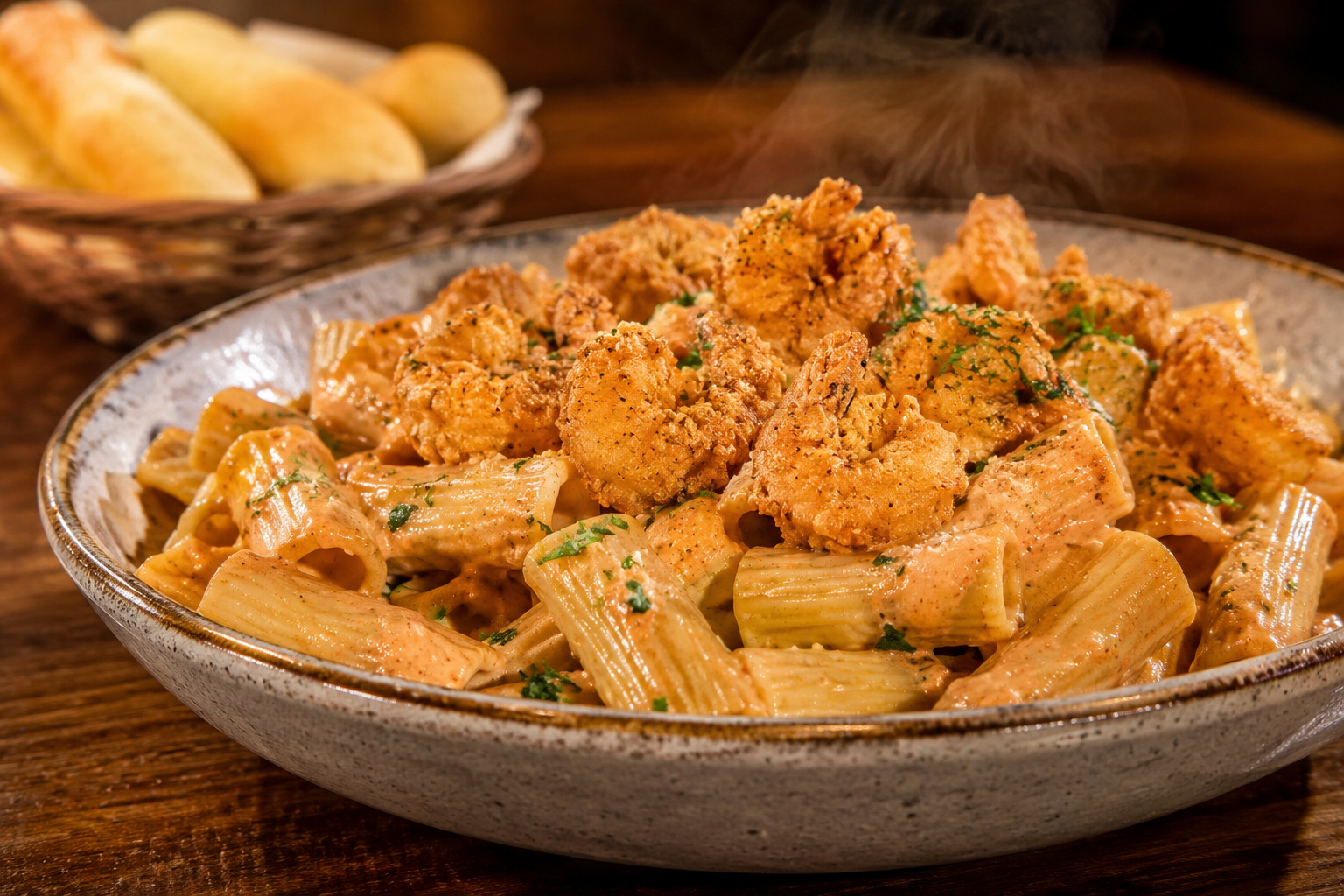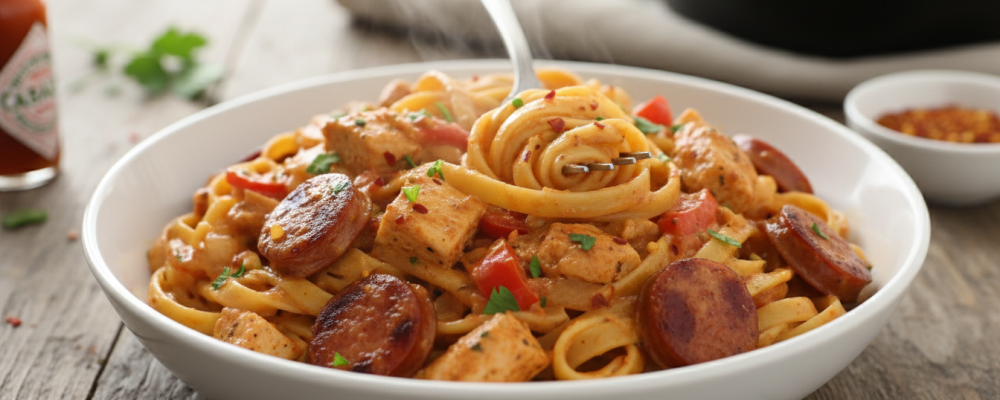

If you’ve ever sat down at a restaurant in Louisiana and ordered pasta, you already understand what this recipe is after. Cajun chicken pasta sits at the intersection of two great culinary traditions—the bold, spice-forward cooking of Louisiana’s Cajun country and the Italian-American love of a rich, cream-coated pasta—and the result is one of the most satisfying plates of food either culture has ever produced together. This version, built with both chicken and Cajun sausage, delivers that dual-protein depth in under thirty minutes from a single skillet. It is loud, it is rich, and it is exactly the kind of dinner that earns a standing request.
The sausage is the ingredient that separates this recipe from a standard Cajun chicken pasta. Where chicken alone produces a lean, clean flavor, adding Cajun sausage introduces smoke, heat, and a depth of spiced fat that enriches the entire dish from the first moment it hits the pan. Everything that cooks after it—the chicken, the onion, the bell pepper, the garlic—does so in an environment already flavored by the sausage’s rendered fat and seasoning. That cumulative layering is what gives this pasta its restaurant-quality depth, and it happens entirely without extra effort.
The cream sauce is built directly in the skillet after the proteins and vegetables are cooked—chicken broth and heavy cream deglaze the pan, lifting every bit of caramelized fond into the liquid and concentrating it into the sauce before the Parmesan is stirred in. By the time the fettuccine goes in to toss, the sauce has already absorbed the full character of everything cooked in that pan. That is what great one-pan pasta cooking looks like.
The Inspiration Behind This Recipe
This recipe draws from the same culinary territory as the Voodoo Pasta in this collection—the bold, Cajun-Creole-inspired pasta dishes that emerged from the Gulf Coast as Italian-American pasta culture and Louisiana spice tradition found common ground. But where Voodoo Pasta centers the shrimp and andouille combination, this recipe builds around the chicken-and-sausage pairing that is central to so much of Cajun cooking: jambalaya, gumbo, étouffée—all built on that foundational protein duo.
The bell pepper, onion, and garlic here are a direct reference to the Cajun “holy trinity” of aromatics that grounds virtually every dish in the Cajun tradition. Including them as full vegetable components rather than just a mirepoix base gives them presence in the finished dish and keeps the pasta feeling colorful and substantial rather than sauce-heavy.
A Brief History of Cajun Pasta
The emergence of Cajun pasta as a distinct American dish happened in the 1980s and 1990s, when the explosive popularity of Cajun cooking—driven by chefs like Paul Prudhomme and the national fascination with blackened fish and bold Southern spices—collided with the Italian-American pasta culture that had already become a cornerstone of casual American dining. Chefs along the Gulf Coast began applying Cajun seasonings and protein combinations to cream-sauced pasta dishes, creating a hybrid format that was uniquely American in character but drew from two distinct culinary heritages.
The result was dishes like this one—bold, spiced, richly sauced—that became a fixture of Southern casual dining and home cooking. Today, Cajun pasta is one of the most beloved regional American pasta styles, a dish that speaks fluently in both Italian and Louisiana flavors without owing complete allegiance to either.
Why This One-Skillet Method Delivers Superior Flavor
The one-skillet approach is not simply a convenience choice—it is a flavor choice. Every component cooked in that skillet contributes to the environment in which the next component cooks. The sausage renders fat and fond. The chicken browns in that fat. The vegetables soften in the combined drippings of both proteins. The broth deglazes all of that concentrated flavor from the pan bottom and carries it into the cream sauce.
This sequential layering is the fundamental technique of great Cajun cooking—building flavor through cumulative steps in a single vessel rather than developing each component separately and combining at the end. The finished sauce, by the time the pasta is tossed in, has absorbed the character of every ingredient that touched that skillet. That depth cannot be faked and cannot be shortcut. It is simply what happens when you cook with patience and sequence in a hot pan.
Flavor Profile: What to Expect
This pasta delivers a bold, layered flavor experience that builds from the first bite:
- Smoky, spiced Cajun sausage that defines the dish’s character and seasons the entire skillet from the moment it hits the pan
- Tender, well-seasoned chicken that provides satisfying, lean protein throughout the pasta
- Bold Cajun seasoning that distributes its heat, paprika, and herb complexity through every element of the sauce
- Sweet, caramelized bell pepper and onion that add color, freshness, and a gentle sweetness that balances the spice
- Aromatic garlic that blooms in the combined drippings and carries through the entire cream sauce
- Rich, silky cream sauce built from broth, heavy cream, and Parmesan that coats every strand of fettuccine in bold, cohesive flavor
- Fresh parsley that adds a clean, herbal finish that cuts through the richness at the last moment
The overall effect is bold, smoky, creamy, and deeply satisfying—a pasta that tastes like New Orleans in every forkful.
Tips for Making the Best Cajun Chicken Pasta with Sausage
Technique and timing make the difference here:
- Slice the chicken thin and even: Thin strips cook quickly and evenly alongside the sausage without requiring separate cook times.
- Don’t crowd the skillet: Cook the proteins with enough space for proper browning. Crowding produces steam rather than caramelization and dulls the flavor foundation.
- Season as you build: Add the Cajun seasoning with the proteins rather than at the end—early addition allows the spices to bloom in the fat and penetrate every component rather than sitting on the surface.
- Deglaze thoroughly: When the broth goes in, scrape every bit of the browned fond from the bottom of the skillet. That fond is the concentrated flavor backbone of the sauce.
- Add Parmesan off high heat: Reduce the simmer slightly before stirring in the cheese to ensure smooth, even melting rather than clumping.
- Taste the Cajun seasoning first: Brands vary significantly in heat and salt. Start with slightly less than you think you need and adjust before adding the pasta.
Serving Suggestions and Side Pairings
This pasta is a hearty, complete meal that needs very little alongside:
- Warm crusty bread or garlic bread to soak up the Cajun cream sauce
- A crisp green salad with a light lemon vinaigrette to cut through the richness
- Roasted or grilled corn on the cob to lean into the Southern spirit of the dish
- Steamed green beans or broccolini for a simple, clean vegetable contrast
- A simple cucumber salad or cold coleslaw for a refreshing, temperature-contrast side
Storage, Reheating, and Make-Ahead Tips
This pasta holds up well and reheats beautifully:
- Refrigerate leftovers in an airtight container for up to 3 days.
- Reheat gently in a skillet over low heat with a splash of cream or chicken broth stirred in to loosen the sauce. Avoid high heat, which can cause the cream sauce to separate and the chicken to toughen.
- The sauce can be made ahead and refrigerated for up to 2 days. Cook pasta fresh at mealtime and combine as directed for the best texture.
- Freeze the sauce and protein components separately from the pasta for up to 2 months. Thaw overnight and combine with freshly cooked pasta at mealtime.
Why This Recipe Deserves a Spot in Your Rotation
Quick & Easy Cajun Chicken Pasta with Sausage earns permanent rotation status by delivering the full depth and boldness of great Cajun cooking in under thirty minutes, from a single skillet, on any given weeknight. It’s the pasta you make when you want dinner to feel like an event without spending the evening in the kitchen—and it delivers that every time without exception. Once this one is in your regular lineup, it becomes the recipe you reach for whenever you want something genuinely exciting on the table fast.
Recommended Drink Pairing
A pasta this bold and spiced calls for something with enough brightness to cut through the richness and keep pace with the Cajun heat. A Hot Honey Margarita is a standout pairing—the citrus and honey balance the heat of the Cajun seasoning while the tequila’s warmth plays naturally against the sausage’s smoky depth. A cold, crisp lager or a dry Rosé works equally well for a more casual, crowd-friendly option.
For non-alcoholic options, a sparkling lemonade or a cold, lightly sweetened hibiscus tea provides the bright, refreshing contrast that makes a bold, spiced pasta even more enjoyable.
Quick & Easy Cajun Chicken Pasta with Sausage
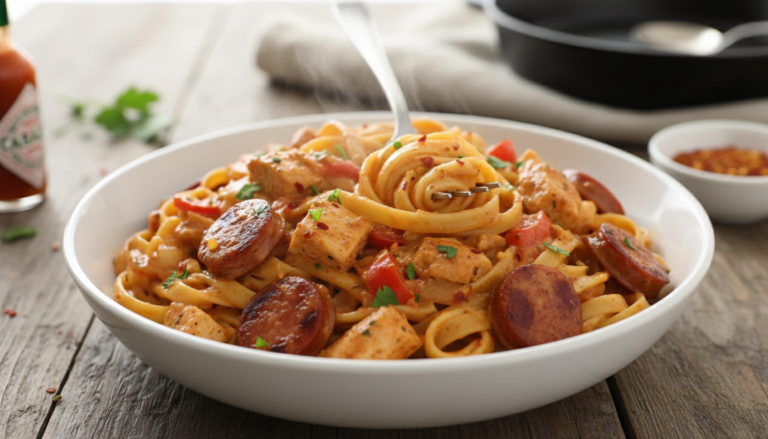
Quick & Easy Cajun Chicken Pasta with Sausage layers bold Cajun-seasoned chicken and sausage with bell pepper, garlic, and onion in a rich Parmesan cream sauce over fettuccine—deep, smoky, and ready in under 30 minutes.
4
servings10
minutes20
minutes650
kcal30
minutesIngredients
2 whole chicken breasts
2 links Cajun sausage
1 tablespoon olive oil
1 tablespoon Cajun seasoning
3 cups fettuccine pasta
1 cup heavy cream
1 cup chicken broth
1 cup Parmesan cheese, grated
1 medium bell pepper, sliced
2 cloves garlic, minced
1 teaspoon salt
1 teaspoon pepper
0.5 cup onion, chopped
2 tablespoons parsley, chopped
Directions
- Boil pasta according to package instructions; drain and set aside.
- Slice the chicken breasts into thin strips and slice the sausages.
- In a large skillet, heat olive oil over medium-high heat.
- Add chicken, sausage, Cajun seasoning, salt, and pepper; cook until chicken is browned.
- Add garlic, onion, and bell pepper to the skillet; cook until vegetables are tender.
- Pour in chicken broth and heavy cream; bring to a simmer.
- Stir in Parmesan cheese until melted and sauce thickens slightly.
- Add cooked pasta to skillet; toss to coat evenly with sauce.
- Garnish with parsley and serve hot.
Nutrition Facts
- Total number of serves: 4
- Calories: 650kcal
- Cholesterol: 0mg
- Sodium: 620mg
- Potassium: 400mg
- Sugar: 8g
- Protein: 6g
- Calcium: 60mg
- Iron: 2mg
About This Author

Benjamin Brown
Recipe Developer
Benjamin is our flavor engineer. A classically trained chef turned recipe developer, he’s obsessed with balancing taste, texture, and creativity. He ensures that every recipe we publish is not only delicious but also reliable, approachable, and repeatable — even for beginners.
Favorite dish: Slow-braised short ribs with red wine reduction.
Kitchen motto: “Cooking is part science, part soul.”