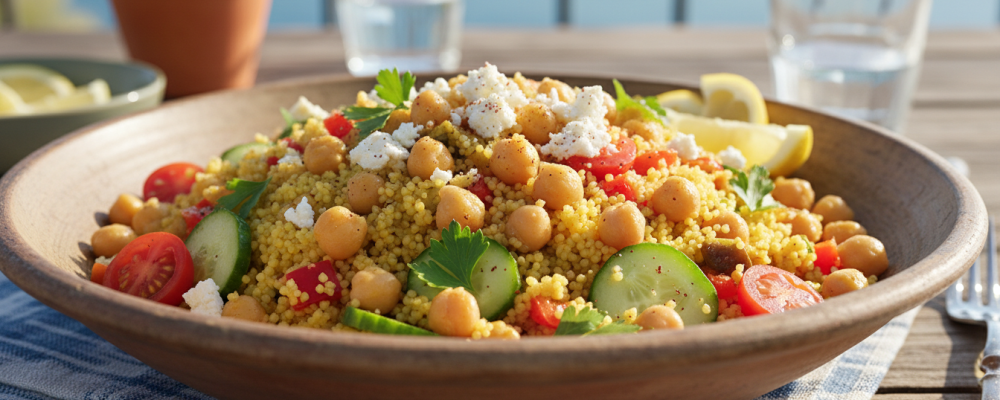

Let’s talk about the color situation in this bowl for a moment, because it genuinely deserves its own paragraph. You have the warm, golden ivory of the couscous. The deep, burnished gold of the chickpeas. The jewel-red of the halved cherry tomatoes. The cool, translucent green of the diced cucumber. The sharp violet of the red onion. And over all of it—scattered with complete abandon and maximum visual impact—a generous handful of bright, vivid, almost neon-green fresh parsley.
This is a bowl that photographs beautifully, serves beautifully, and, most importantly, tastes exactly as vibrant as it looks. The lemon-cumin vinaigrette ties everything together with a brightness that makes every component taste more like itself—sharper, cleaner, more present. And because the whole thing comes together without anything more than boiling water for the couscous and five minutes of chopping, there’s very little standing between you and a genuinely stunning meal prep lunch.
I’ve made a lot of grain salads in my career, and the ones I come back to again and again are the ones that improve with a night in the refrigerator rather than suffering from it. This Mediterranean Chickpea Couscous is exactly that kind of recipe. The dressing soaks deeper into the couscous and chickpeas overnight, the flavors meld into something more cohesive and complex than they are on day one, and the whole bowl somehow tastes more considered by Wednesday than it did on Sunday. That kind of reward for patience is, in my experience, one of cooking’s quieter pleasures.
─────────────────────────────────────────
The Inspiration Behind This Recipe
This recipe was inspired by a very specific and universal meal prep frustration: the grain salad that seems perfect when assembled—vibrant, fresh, beautifully dressed—and then arrives at lunch on Tuesday tasting flat, dry, and vaguely apologetic. Most grain salads fail at day two because their dressing is too delicate, their vegetables too moisture-sensitive, or their flavors too subtle to survive refrigeration. The goal here was to build a grain salad that was engineered from the ground up for the conditions of a full week in the fridge.
The lemon-cumin vinaigrette is the solution. Cumin is one of the most refrigerator-stable spices available—it doesn’t fade or turn sour over time the way fresh garlic or delicate herbs can. Lemon juice, when used in a dressing rather than applied as a fresh finish, mellows slightly in the cold but never loses its essential brightness. Together they create a dressing that is bold enough on day one and still characterful on day five—a genuinely rare quality in a vinaigrette intended for meal prep.
The choice to include chickpeas alongside the couscous was equally deliberate. Couscous alone, while wonderful, is a relatively light grain that can feel insubstantial as a standalone lunch after a couple of days. Chickpeas add protein, fiber, and a satisfying density that turns this from a side dish into a complete, sustaining meal. Their slightly firm texture also provides exactly the kind of structural contrast that keeps the overall bowl from feeling one-dimensionally soft—a detail that matters more than it might seem when you’re eating the same lunch four days in a row.
─────────────────────────────────────────
A Brief History of Mediterranean Grain Salads
The grain salad tradition of the Mediterranean is one of the oldest and most enduring in the world—rooted in the agricultural landscapes of North Africa, the Levant, and southern Europe, where grains, legumes, and fresh vegetables have been the foundation of everyday eating for millennia. Tabbouleh, perhaps the most famous expression of this tradition, is a Lebanese bulgur wheat salad dressed with lemon juice and olive oil and laden with fresh parsley—a dish with documented history stretching back hundreds of years and a flavor profile that maps remarkably closely onto this couscous bowl.
Couscous itself has deep roots in North African Berber cuisine, where it has been a dietary staple across Morocco, Algeria, Tunisia, and Libya for at least a thousand years. Traditionally steamed over a fragrant broth in a specialized pot called a couscoussier, it was served as both a celebratory dish and an everyday staple—its versatility and ease of preparation making it adaptable to any meal and any season. The quick-cooking couscous most of us use today is a modern convenience product that retains the grain’s essential character while reducing preparation time to a matter of minutes.
The combination of couscous with chickpeas is particularly well-rooted in North African and Levantine tradition, where legumes and grains have been paired together for centuries both for their complementary nutritional profiles and their deeply satisfying flavor compatibility. What contemporary meal prep has done is simply recognize what these food cultures understood intuitively long ago: that a bowl of seasoned couscous and chickpeas, properly dressed, is one of the most complete and pleasurable things you can eat—and that it only gets better when it’s had time to rest.
─────────────────────────────────────────
Why This Cooking Method Works for Meal Prep
Couscous is uniquely well-suited to meal prep for a structural reason that most other grains can’t match: it hydrates rather than cooks. Unlike rice or quinoa, which require sustained simmering and precise water ratios, couscous absorbs boiling water through passive hydration—covered, off heat, for a matter of minutes. This means the couscous never becomes waterlogged or overcooked, and it maintains a consistent, slightly toothsome texture through multiple days of refrigeration without the clumping or hardening that afflicts refrigerated rice.
Dressing the couscous while it’s still slightly warm—rather than fully cooled—is the key technique that elevates a good couscous salad into a great one. Warm couscous is more porous and receptive than cold couscous; the grains absorb the lemon-cumin vinaigrette as they cool, drawing the dressing into the interior of each grain rather than simply coating the surface. The result is couscous that tastes seasoned throughout rather than just dressed on the outside, and a salad that requires no additional dressing added later in the week to refresh its flavor.
The raw vegetables—cucumber, cherry tomatoes, red onion—are added after the dressed couscous has fully cooled rather than while it’s warm, which preserves their crisp texture and prevents the tomatoes from releasing excess juice into the base. This sequencing matters: warm couscous plus fresh tomatoes produces a diluted, slightly soggy dressing situation by day two. Cooled couscous plus fresh vegetables maintains the distinct texture of every component for significantly longer, which is the fundamental goal of any well-designed meal prep recipe.
─────────────────────────────────────────
Flavor Profile: What to Expect
This bowl is bright, herbaceous, and layered in a way that rewards attention—there’s more happening here than a simple grain salad has any obligation to deliver:
- Warm, earthy spice – Ground cumin runs through the entire dish as its foundational aromatic note, adding depth and warmth without heat and giving the dressing a complexity that lemon alone couldn’t achieve
- Clean citrus brightness – Lemon juice cuts through the density of the couscous and chickpeas with a vivid acidity that keeps every bite feeling fresh and alive
- Rich, grassy olive oil – A quality olive oil rounds the dressing with a fruity, slightly peppery richness that ties the acid and spice into a cohesive vinaigrette
- Sweet, juicy bursts – Cherry tomatoes provide concentrated pops of sweetness and juice that punctuate the more neutral grain base with welcome unpredictability
- Cool, refreshing crunch – Cucumber adds a hydrating, mild crispness that creates textural contrast and cools the warmth of the cumin
- Sharp, pungent bite – Red onion delivers a clean, assertive sharpness that mellows slightly in the dressing over time, becoming more savory and less aggressive by day two
- Herbal freshness – Fresh parsley provides a bright, slightly peppery green note at the surface that is the dish’s finishing signature and its most visually vibrant element
The flavor profile deepens measurably overnight as the dressing permeates the couscous and the components exchange flavor. Day two and day three are genuinely the peak of this bowl—a rare and satisfying quality in a meal prep recipe.
─────────────────────────────────────────
Tips for Making the Best Mediterranean Chickpea Couscous
The preparation here is simple enough that the small details have an outsized impact on the final result:
- Toast the dry couscous first – Before adding boiling water, toast the dry couscous in a dry skillet over medium heat for 2–3 minutes until fragrant and very lightly golden. This adds a nutty depth that plain hydrated couscous doesn’t have and is worth the extra step.
- Use boiling water, not simmering – The water needs to be at a full boil when it hits the couscous. Anything less and the grains hydrate unevenly, producing a texture that is simultaneously mushy in some spots and chalky in others.
- Fluff immediately, dress while warm – Use a fork to fluff the couscous as soon as it’s hydrated, separating every grain before they stick. Then pour the dressing over while still warm for maximum absorption.
- Rinse and dry the chickpeas well – Excess canning liquid dilutes the dressing and adds an off-flavor. Drain, rinse thoroughly, and pat dry with a paper towel before adding.
- Cut vegetables uniformly – Consistent dice on the cucumber and onion and consistent halving of the tomatoes means every forkful has a representative mix of every component. Uneven cuts produce uneven bites.
- Rest before serving – At minimum, let the assembled bowl rest for 30 minutes before eating. An overnight rest in the refrigerator is genuinely better. The improvement between freshly made and next-day is significant and worth planning around.
Optional: Crumbled feta stirred through the finished bowl adds a briny, creamy richness that pushes this from excellent to extraordinary—and keeps beautifully in the refrigerator alongside the other components for the full week.
─────────────────────────────────────────
Portioning and Container Suggestions
This recipe portions generously and evenly—a full batch divided into four containers produces satisfying lunch portions, or five slightly smaller ones for a full week of midday meals. Because every component stores together in the same dressed bowl, portioning requires no additional strategy beyond dividing the finished salad evenly and sealing each container tightly.
Wide, flat meal prep containers work best for this recipe, allowing the couscous to sit in a single, even layer rather than compressing under its own weight in a tall, narrow container. That even distribution means the dressing pools consistently across the entire portion rather than settling at the base, keeping every forkful as well-seasoned as the one before it.
For a visually beautiful presentation—because this bowl genuinely earns it—portion the couscous base first and then arrange a few halved cherry tomatoes, cucumber slices, and a pinch of fresh parsley deliberately on top before sealing. When the container is opened at lunch, it looks assembled with intention rather than tumbled in from a larger batch. It’s a thirty-second detail that makes the midday meal feel like a considered choice rather than a practical one—and that distinction, even on a Tuesday, is worth something.
─────────────────────────────────────────
Storage, Reheating, and Shelf Life Tips
- Refrigerator storage: Keeps beautifully in airtight containers for up to 5 days—one of the longest shelf lives in any meal prep collection. The flavors peak at days two and three and hold strong through day five.
- Freezer storage: Not recommended. The fresh vegetables—particularly cucumber and tomatoes—become watery and lose all textural integrity upon thawing. Couscous freezes adequately but is unnecessary given the generous refrigerator shelf life.
- No reheating required: This bowl is designed to be served cold or at room temperature and is at its best eaten straight from the refrigerator. If a warm version is preferred, a brief 60-second microwave warm works, though the fresh vegetable crunch is partially sacrificed.
- Refresh at serving: If the couscous has absorbed the dressing more thoroughly than expected by day four or five, a small drizzle of olive oil and an extra squeeze of lemon juice stirred through immediately refreshes the bowl to its original bright, dressed quality.
- Parsley tip: If garnishing individual containers, add fresh parsley at portioning time rather than at serving—it holds its color well in the refrigerator for 3–4 days and keeps the bowl looking vibrant all week.
- Transport: This bowl travels exceptionally well—no reheating required, no separate components to manage, and no risk of spilling a sauce. It is one of the most desk-lunch-friendly recipes in the entire collection.
─────────────────────────────────────────
Why This Recipe Deserves a Spot in Your Meal Prep Rotation
There are very few recipes in any meal prep collection that manage to be simultaneously this easy, this colorful, this flavorful, and this durable—and this Mediterranean Chickpea Couscous is one of them. It requires no cooking beyond boiling water. It takes under fifteen minutes of active time. It produces five generous, complete lunches that genuinely improve as the week goes on rather than declining. On a list of meal prep victories, that is a very full one.
It also brings something to a weekly rotation that is easy to underestimate until you’re eating it: the feeling of eating something beautiful. A lunch that is colorful and bright and tastes like somewhere warm and sun-drenched makes the middle of a busy week feel, briefly, like a small escape. And while meal prep is ultimately about practicality, it’s the recipes that deliver a little beauty alongside the efficiency that earn a permanent place on the Sunday prep list.
─────────────────────────────────────────
Meal Prep Pairing Suggestions
Mediterranean Chickpea Couscous fits most naturally into a lunch rotation alongside recipes that share its fresh, clean flavor ecosystem while offering genuine contrast in format and protein source. Our Zucchini Hummus Roll-Ups are a natural complement—both draw from the same Mediterranean pantry of olive oil, lemon, fresh herbs, and bright vegetables, but where the couscous bowl is substantial and grain-based, the roll-ups are light, cool, and vegetable-forward. Together they make a complete Mediterranean midday spread that covers both a main and a snack without any flavor conflict.
For a broader weekly spread, our Cilantro Lime Shrimp Rice Bowls provide a contrasting protein and flavor profile that gives the week’s lunches genuine variety—bold and Latin-inspired where the couscous is clean and Mediterranean, shrimp-anchored where this is plant-based. Alternating between the two across a week means every lunch is flavorful, complete, and visually distinct—the exact combination of variety and consistency that keeps a meal prep routine from feeling like a routine at all.
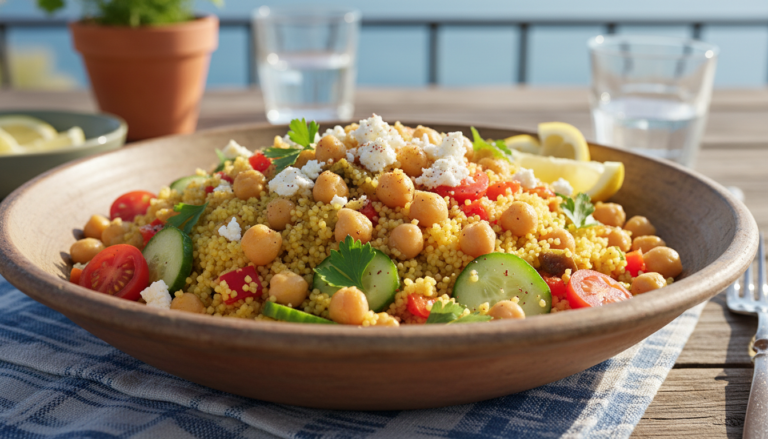
Mediterranean Chickpea Couscous
This Mediterranean Chickpea Couscous is a no-fuss, no-heat meal prep recipe that delivers a vibrant, herb-laced grain bowl full of color, texture, and bright lemon flavor—ready to portion and enjoy all week long.
4
servings10
minutes15
minutes380
kcal25
minutesIngredients
1 cup dry couscous
1 can chickpeas, drained and rinsed
1 cup cherry tomatoes, halved
1 cup cucumber, diced
1 small red onion, finely chopped
2 tablespoons olive oil
1 tablespoon lemon juice
2 tablespoons fresh parsley, chopped
1 teaspoon ground cumin
1 teaspoon salt
0.5 teaspoon black pepper
Directions
- Prepare couscous according to package instructions.
- In a large bowl, combine cooked couscous, chickpeas, cherry tomatoes, cucumber, and red onion.
- In a small bowl, whisk together olive oil, lemon juice, cumin, salt, and black pepper.
- Pour dressing over couscous mixture, tossing to coat well.
- Garnish with fresh parsley before serving.
Nutrition Facts
- Total number of serves: 4
- Calories: 380kcal
- Cholesterol: 0mg
- Sodium: 620mg
- Potassium: 400mg
- Sugar: 8g
- Protein: 6g
- Calcium: 60mg
- Iron: 2mg
About This Author

Aurora Wright
Pastry Chef & Dessert Editor
Aurora is the sweet side of Daily Dish. A trained pastry chef and dessert stylist, she’s responsible for our mouth-watering cakes, cookies, and confections. She brings precision, artistry, and a touch of whimsy to every recipe she creates — and taste-tests more chocolate than she’ll admit.
Favorite dish: Flourless dark chocolate torte.
Kitchen motto: “Life’s too short to skip dessert.”