
Steak seems like it should be the simplest thing to cook.
It’s one ingredient. It goes in a hot pan. You flip it. You eat it.
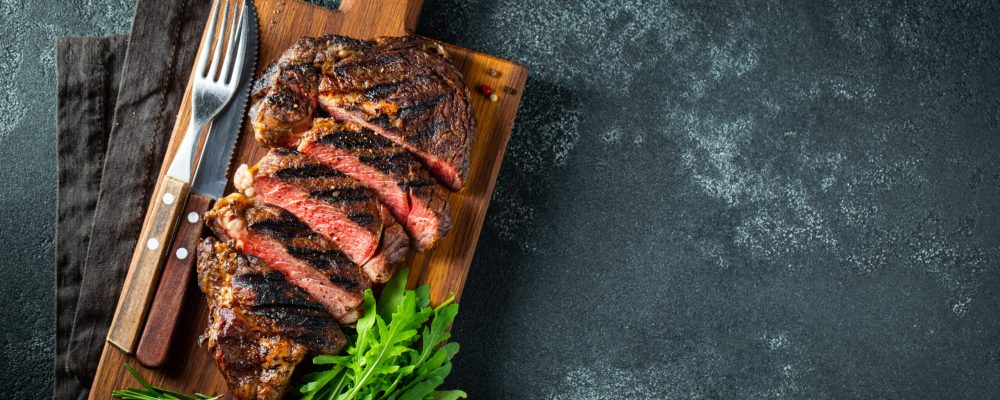
And yet the steak that arrives at a good steakhouse — crust so dark it’s nearly black in places, interior rosy and even from edge to edge, resting in its own juices with a finish that tastes like something beyond just beef — is a different experience entirely from what most home cooks produce.
The ingredient is the same. The process looks the same from the outside.
What’s happening underneath is not.
The Steak Has Been Seasoned Far Earlier Than You Think
Walk into a professional kitchen and you’ll find steaks that were salted yesterday. Sometimes the day before that.
This isn’t an accident or a scheduling convenience. It’s a deliberate technique with a specific purpose. When salt is applied to a raw steak and left to work over an extended period — a minimum of forty-five minutes, ideally several hours or overnight — something called dry brining occurs. The salt initially draws moisture to the surface. Then that moisture, now carrying dissolved proteins and salt, gets reabsorbed back into the meat.
The result is a steak that is seasoned all the way through, not just on the exterior. And the surface, having released and reabsorbed that moisture, is drier than a freshly salted steak — which means it will sear faster and more aggressively when it hits the pan.
Home cooks most commonly salt their steaks right before cooking, or worse, after. In both cases, the salt never has the opportunity to penetrate. It sits on the surface, pulls moisture out during cooking, and the steak steams slightly in that liquid rather than searing cleanly.
The fix costs nothing. It just requires planning a day ahead.
The Heat Source Is Working Much Harder Than Yours
A restaurant broiler runs at temperatures that a home stove cannot approach. A commercial flat-top or cast iron station holds heat with a consistency that a residential burner struggles to maintain. When a steak hits a professional cooking surface, the temperature of that surface barely drops — because there’s enough thermal mass and heat input to recover almost instantly.
At home, putting a cold steak into a pan — even a very hot one — drops the pan temperature significantly. The steak sits in a surface that is no longer at searing temperature, and the crust that forms is thinner, less developed, and less flavorful than what a restaurant produces.
The closest a home cook can get to a professional result involves two things: using the heaviest pan available — cast iron or carbon steel — and getting it genuinely, aggressively hot before the steak ever goes in. Not medium-high. Not until it looks ready. Hot enough that a drop of water evaporates on contact in under a second. Hot enough that the oil in the pan begins to shimmer and just barely smoke.
That level of heat feels extreme in a home kitchen. In a professional kitchen, it’s the baseline.
The Reverse Sear Is the Technique Steakhouses Don’t Advertise
There’s a method that high-end steakhouses and serious restaurant kitchens use for thick cuts that produces a result that a straight pan sear simply cannot match — and most home cooks have never heard of it.
It’s called the reverse sear, and the logic behind it inverts everything most people assume about cooking steak.
Instead of starting with high heat and finishing gently, the steak goes into a low oven first — around 250°F — and cooks slowly until it reaches an internal temperature just below the target doneness. Then it comes out, gets patted dry, and goes into the hottest possible pan for a final, aggressive sear.
What this produces is a steak that is cooked to a perfectly even temperature from edge to edge — not the gray gradient of overcooked outer meat surrounding a small pink center that a straight sear produces — with a crust that develops in sixty to ninety seconds of intense contact without any risk of overcooking the interior.
The interior is already done. The sear is purely about the exterior. And because the surface of the steak has had time to dry out during the low oven phase, the crust that forms is exceptional.
Fat Is Being Used as a Cooking Medium, Not Just a Lubricant
The finishing moment of a restaurant steak involves something that most home cooks either skip entirely or do halfheartedly: basting.
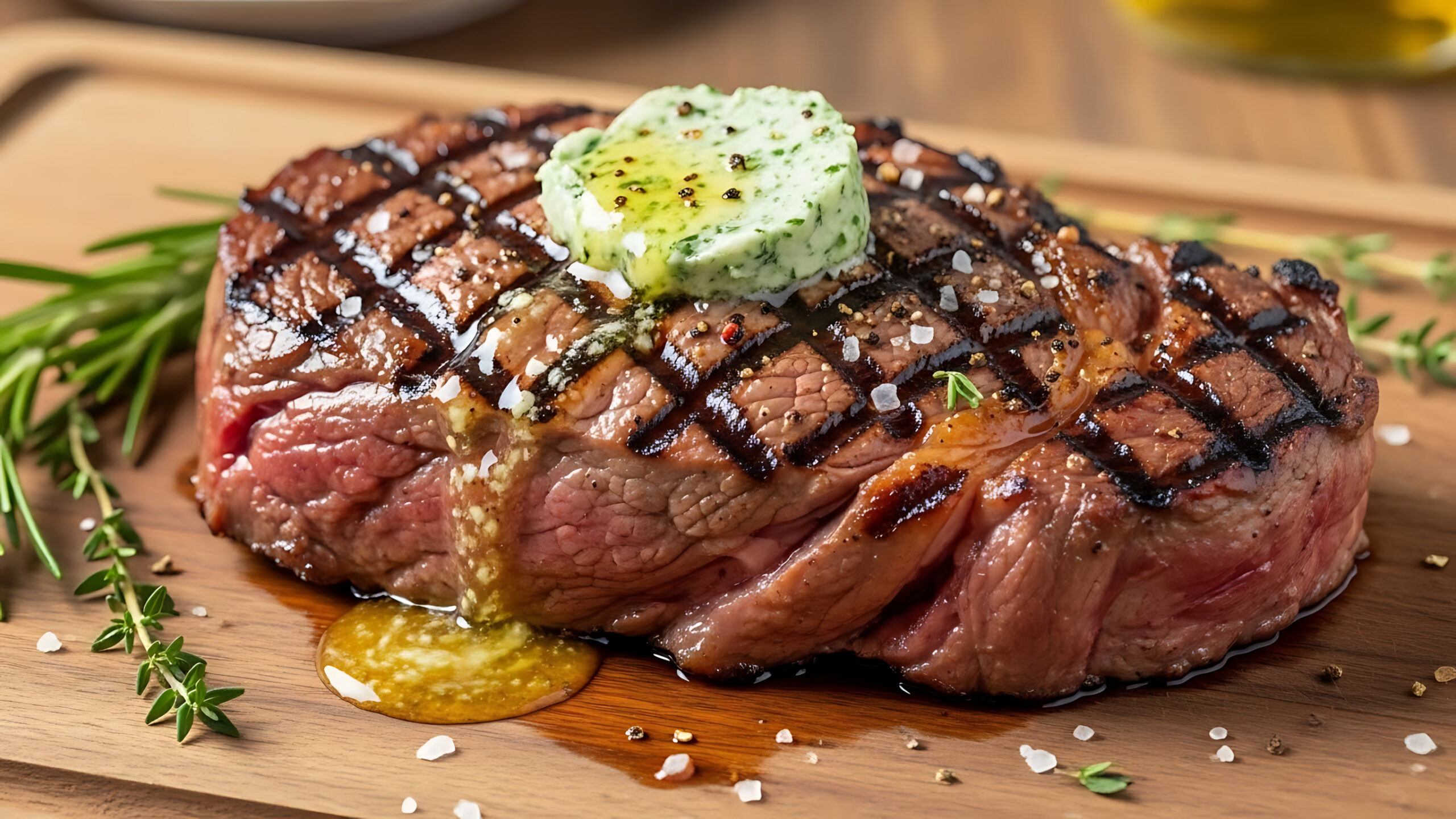
In the final sixty to ninety seconds of cooking, a professional cook adds a generous amount of butter to the pan along with aromatics — crushed garlic cloves, fresh thyme, rosemary — and tilts the pan continuously, spooning the foaming, herb-infused butter over the top of the steak in a constant stream.
This does several things. The butter browns as it cooks, developing nutty, complex flavors that transfer directly onto the crust of the steak. The herbs release their volatile oils into the hot fat, which carries those aromatics into every basted surface. And the continuous application of hot fat cooks the top of the steak gently without requiring a flip, ensuring even doneness.
The result is a steak with a crust that tastes like more than just seared beef — it tastes like the entire pan, the butter, the herbs, the rendered fat all working together.
The Rest Is Not a Suggestion
Every home cook has heard that steak should rest before cutting. Far fewer actually do it — or do it long enough.
The science behind resting is straightforward: during cooking, the heat drives moisture toward the center of the steak where it’s cooler. The muscle fibers contract and hold that liquid under pressure. Cut into the steak immediately and that pressurized moisture runs out onto the cutting board. Rest it, and the fibers relax, the temperature equalizes, and the moisture redistributes throughout the meat.
A restaurant steak rests for a minimum of five minutes. For thicker cuts, closer to ten. It rests uncovered — tenting with foil traps steam and softens the crust that took considerable effort to develop.
The steak that a restaurant plates has already done most of its work by the time it leaves the kitchen. The rest is the last step of cooking, not a pause before eating.
The Takeaway
A great steak at home is not out of reach. But it requires abandoning the idea that steak is a quick, spontaneous meal and treating it with the same intentionality a professional kitchen does.
Salt it the day before. Use your heaviest pan at the highest heat you can manage. Consider the reverse sear for anything over an inch thick. Baste aggressively at the finish. And let it rest long enough to actually do its job.
None of that is complicated. All of it makes a difference you will taste immediately.