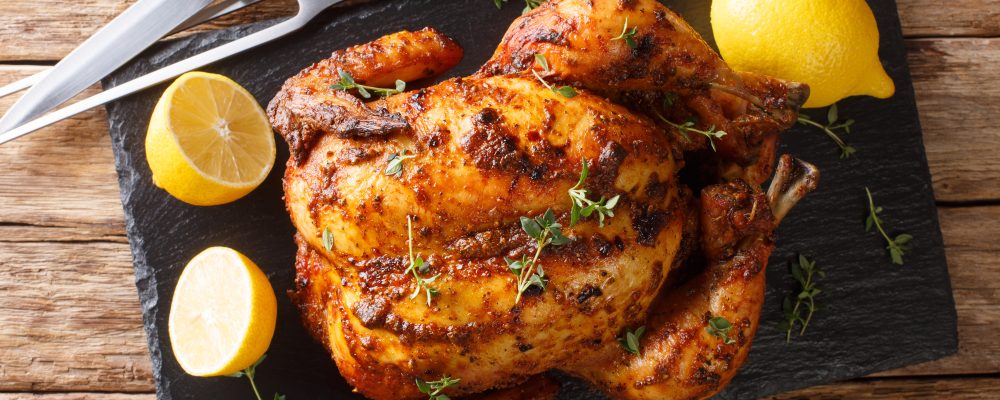

There’s a dish that almost every home cook has attempted. A dish that looks simple, that seems forgiving, that promises golden skin and juicy meat — and yet somehow, the version that comes out of a home oven rarely matches what you’d get at a good restaurant.
We’re talking about roast chicken.
It’s not the recipe. It’s not your oven. And it’s almost certainly not you.
It’s a few critical techniques that most home cooks never learn — because no one teaches them.
The Restaurant Isn’t Just Cooking It. They’re Preparing It.
At a restaurant, a roast chicken rarely goes straight from the refrigerator to the oven. The preparation begins hours — sometimes a full day — before service.
Professional kitchens dry brine their birds. This means the chicken gets salted generously and then left uncovered in the refrigerator overnight. What happens during that time is the difference between acceptable and exceptional.
The salt draws out a small amount of moisture, dissolves, and then gets reabsorbed back into the meat. This process seasons the chicken from the inside out. Not just the surface. Not just the skin. The actual flesh.
Equally important: leaving the bird uncovered allows the skin to dry out completely. And dry skin is the only path to truly crispy skin.
Most home cooks skip this step entirely — not because they don’t care, but because they don’t know it exists.
Temperature Is the Most Underrated Variable in Your Kitchen
Here’s a truth that professional kitchens treat as non-negotiable: cold meat doesn’t cook evenly.
When a chicken goes into the oven straight from the fridge, the outer layers cook faster than the interior can catch up. By the time the thighs reach a safe temperature, the breast meat has often gone too far. The result is a bird that’s either underdone in the middle or overdone on top.
Restaurants let their chicken rest at room temperature before roasting. Even thirty to forty-five minutes makes a measurable difference in how evenly the heat moves through the bird.
This is one of those adjustments that costs nothing — no special equipment, no extra ingredients — and yet produces a noticeably better result.
The Oven Is Only Part of the Story
Walk into a professional kitchen during dinner service and you’ll notice something: the roast chickens often start in one place and finish in another.
High heat at the start — or the finish — is a deliberate choice. Some chefs blast the bird at high temperature to set the skin before dropping the heat to finish gently. Others do the opposite, roasting low and slow and then cranking the heat at the end for the final color.
What home cooks typically do is choose one temperature and walk away.
Restaurants don’t walk away. They baste. They rotate. They watch.
Basting a roast chicken with its own rendered fat every fifteen to twenty minutes keeps the skin lacquered and helps develop the kind of deep golden color that looks like something out of a magazine. It adds time. It requires attention. And it’s worth both.
Resting Isn’t Optional — It’s the Last Step
This is perhaps the most frequently skipped moment in home cooking: the rest.
After a chicken comes out of the oven, the muscle fibers are tightly contracted from the heat. The juices are pressurized toward the center of the bird. If you cut into it immediately, those juices run straight out onto the cutting board.
Restaurants let their roast chicken rest — uncovered, in a warm spot — for a minimum of ten to fifteen minutes before carving. During that time, the muscle fibers relax and reabsorb the juices. What you get when you finally cut in is meat that’s moist throughout, not just in the places closest to the bone.
Cutting too early isn’t impatience. It’s not knowing what the rest is actually doing.
The Pan Drippings Are Not Waste
One final thing separates a restaurant roast chicken from a home version: what happens after the bird comes out of the pan.
At a professional level, those browned drippings at the bottom of the roasting pan are not something to be scrubbed away. They’re concentrated flavor — caramelized proteins, rendered fat, fond that took an hour to develop.
A quick deglaze with stock or wine, a little reduction, and those drippings become a pan sauce that ties the entire dish together. It doesn’t require a recipe. It doesn’t require culinary school. It just requires knowing that it’s possible.
The Takeaway
Roast chicken is one of the most honest dishes in cooking. It doesn’t hide behind heavy sauces or bold spices. Every technique decision you make shows up directly on the plate.
The good news is that every step the professionals use — dry brining, tempering, basting, resting, building a pan sauce — is completely accessible at home. None of it requires special equipment. All of it requires intention.
The gap between a good roast chicken and a great one isn’t talent.
It’s a few small decisions, made early, that most people never think to make.