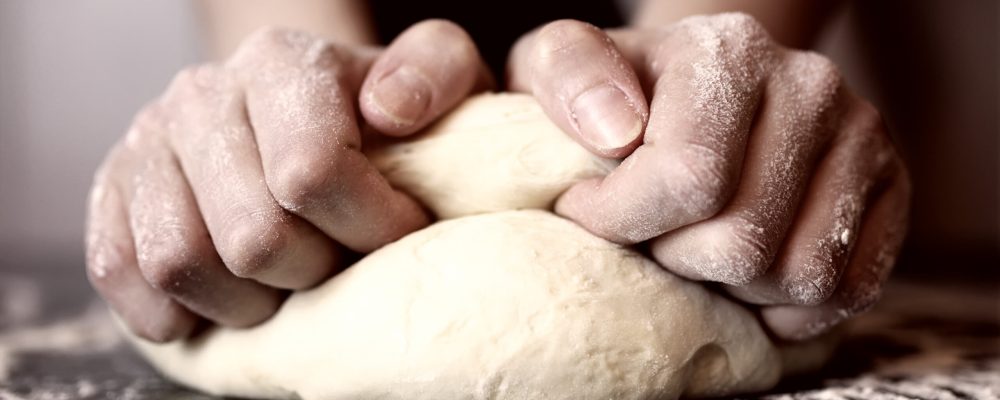

You make pizza dough from scratch.
Follow the recipe. Knead it properly. Let it rise. Roll it out and top it.
It bakes up fine. But when you bite into it, the crust is tough. Chewy in a bad way. It requires effort to tear through instead of yielding easily.
Restaurant pizza has crust that’s tender but structured. It has chew, but the good kind—not the rubber band kind.
You assumed it was the flour or the oven temperature or some ingredient you were missing.
Usually, it’s none of those things.
Tough pizza dough is almost always the result of how you’re handling it—specifically, what you’re doing when you shape it.
One common mistake that tightens the gluten and creates a crust that fights back instead of melts in your mouth.
You’re Using a Rolling Pin
This is the primary cause of tough pizza crust.
Rolling pins compress dough. They press out the air bubbles that formed during fermentation. They also stretch and align gluten strands, making them tighter and more structured.
The result is dense, flat, tough crust with no texture.
Chefs stretch pizza dough by hand. They use gravity, gentle pulling, and rotation to extend the dough without compressing it.
This preserves the air pockets. It keeps the gluten network loose and relaxed. The final crust is light, airy, and tender.
Home bakers reach for rolling pins because hand-stretching seems difficult or because they don’t know how.
But hand-stretching isn’t complicated. It just requires practice. And it’s the only way to get proper pizza texture.
The Dough Hasn’t Rested After Portioning
When you divide dough into individual portions, the gluten tightens from the handling.
If you try to stretch it immediately, it fights back. It springs back into a smaller shape. You have to force it, which further tightens the gluten.
The more you force it, the tougher the final crust becomes.
Chefs portion dough, then let it rest for 20 to 30 minutes before shaping. This gives the gluten time to relax.
After resting, the dough stretches easily without resistance. You’re working with the dough instead of fighting it.
Home bakers often portion dough and immediately try to shape it. The dough resists. They have to pull harder, creating tension that makes the crust tough.
Rest your portioned dough. Cover it loosely and give it time to relax. The difference in stretchability is dramatic.
You’re Overworking the Dough When Shaping
Even if you’re hand-stretching, handling dough too much develops the gluten excessively.
Each pull, each stretch, each manipulation aligns gluten strands and makes them stronger.
There’s a point where you’ve stretched the dough enough. Past that point, you’re just tightening the gluten and guaranteeing tough crust.
Chefs handle dough minimally. They stretch it to size quickly and efficiently, then stop. They don’t keep working it, adjusting it, perfecting the shape.
Close enough is good enough. Over-handling is worse than an imperfect shape.
Home bakers often fuss with dough endlessly—trying to get it perfectly round, perfectly even, perfectly centered on the peel.
All that handling creates tough crust. Accept an imperfect shape. Stop touching the dough once it’s roughly the right size.
The Dough Is Too Cold
Cold dough is stiff. The gluten is tight. It doesn’t stretch easily.
Trying to shape cold dough requires force. That force creates tension. Tension creates tough crust.
Chefs bring dough to room temperature before shaping—usually an hour or two out of the refrigerator, depending on the dough temperature.
Warm dough is pliable. It stretches without resistance. You can shape it gently without fighting it.
Home bakers often take dough straight from the refrigerator and try to shape it immediately. The dough is uncooperative. They force it. The crust ends up tough.
Plan ahead. Pull dough from the fridge well before you need it. Let it warm up. It’ll be dramatically easier to work with and will produce more tender crust.
You’re Not Using Enough Flour for Dusting
When dough sticks to the work surface or your hands, you have to manipulate it more to free it.
All that extra handling develops gluten and creates tough crust.
Adequate flour dusting prevents sticking. The dough moves freely. You can shape it with minimal handling.
Chefs dust liberally with flour while shaping. They’re not worried about adding a bit of extra flour to the dough. They’re worried about sticking, which causes handling problems.
Home bakers often try to use minimal flour, thinking too much will affect the dough. A light dusting isn’t enough. The dough sticks. Handling increases. Crust gets tough.
Use more flour for dusting than you think you need. Shake off excess before baking. It’s better to have slightly floury dough than dough that sticks and requires excessive handling.
The Dough Recipe Has Too Much Flour
If your dough is stiff from the start, you’ll have trouble shaping it without creating toughness.
Proper pizza dough should be soft, slightly sticky, and extensible. It should stretch easily.
Dough with too much flour is firm and resistant. You have to force it to stretch. That force creates tension and tough crust.
Chefs use high-hydration doughs—65% to 75% water relative to flour weight. These doughs are wetter, stickier, and harder to handle. But they produce much more tender crust.
Home bakers often use lower hydration doughs because they’re easier to work with. The trade-off is tougher crust.
If your dough feels stiff, reduce flour next time. Increase water slightly. You want dough that’s soft and pliable, even if it’s a bit sticky.
You’re Stretching in the Wrong Direction
Dough has a grain structure based on how gluten developed during kneading.
Stretching against the grain creates more resistance and tension than stretching with or across it.
This sounds esoteric, but it matters. Dough stretched the wrong way develops more tension and produces tougher crust.
Chefs rotate dough constantly while stretching. They’re not pulling in one direction—they’re working around the entire perimeter, stretching a little at a time.
This distributes tension evenly and prevents any one area from being overworked.
Home bakers often stretch dough in one or two pulls—grabbing opposite sides and pulling hard. This creates uneven tension and can toughen the dough.
Rotate while stretching. Work around the perimeter. Small, gentle pulls rather than large, forceful ones.
The Dough Wasn’t Kneaded Enough
Underdeveloped gluten creates dough that tears easily. When it tears, you have to manipulate it more to patch it, creating localized areas of toughness.
Properly kneaded dough stretches thin without tearing. You can work with it gently and efficiently.
Chefs knead until the dough is smooth, elastic, and passes the windowpane test. It should stretch thin enough to see light through it without breaking.
Home bakers sometimes under-knead, either because they’re tired or because they’re not sure when to stop.
Knead longer than you think you need to. The dough should be very smooth and very elastic. If it tears easily when stretched, it needs more kneading.
You’re Topping It While It’s on the Peel
Once dough is on the peel, you want to move it to the oven quickly.
If you take several minutes to add sauce and toppings, the dough absorbs moisture from the toppings and sticks to the peel.
When it sticks, you have to scrape and manipulate it to get it off. That handling can tighten the gluten in spots, creating uneven texture.
Chefs have toppings ready before shaping dough. They shape, transfer to peel, top quickly—30 to 60 seconds—and immediately slide it into the oven.
Home bakers often shape dough, put it on the peel, then slowly add sauce, cheese, and toppings. Several minutes pass. The dough sticks. Handling increases.
Have everything ready before shaping. Top quickly. Get it in the oven fast. Minimize the time dough sits on the peel.
The Dough Recipe Has Too Much Protein
High-protein bread flour creates chewier, tougher crust than moderate-protein all-purpose flour.
For New York-style pizza, that chew is desirable. For Neapolitan-style or thin-crust pizza, it’s too much.
Chefs choose flour based on what style of pizza they’re making. They know protein content determines chewiness.
Home bakers often just use whatever flour they have—usually bread flour because they think it’s best for all bread products.
For pizza, all-purpose flour or a 50/50 blend of all-purpose and bread flour often produces more tender crust than 100% bread flour.
Try reducing the protein content of your flour. The crust will be noticeably more tender.
You’re Baking at Too Low a Temperature
This doesn’t directly cause tough dough, but it contributes to chewiness.
Low oven temperatures mean longer baking times. Longer baking dries out the crust and makes it tougher.
High heat—450°F to 500°F or higher—cooks pizza quickly. The crust sets and browns before it has time to dry out and toughen.
Chefs bake pizza as hot as their ovens allow. They want fast cooking and minimal moisture loss.
Home bakers sometimes bake at 400°F or 425°F, thinking it’s “hot enough.” It’s not. The longer baking time dries and toughens the crust.
Bake as hot as your oven goes. Preheat thoroughly—45 minutes minimum. Get that oven screaming hot.
What You Should Do Next Time
Make dough at least 24 hours ahead. Let it ferment slowly in the refrigerator.
Bring dough to room temperature before shaping—at least an hour out of the fridge.
Portion dough, then let it rest covered for 20 to 30 minutes.
Stretch by hand, not with a rolling pin. Rotate constantly. Small, gentle pulls around the perimeter.
Stop handling the dough once it’s roughly the right size. Don’t fuss with it.
Have toppings ready. Top quickly. Get pizza in the oven immediately.
Bake at your oven’s maximum temperature—at least 475°F, preferably 500°F or higher.
That process produces tender crust instead of tough, chewy, resistant crust.
The Takeaway
Tough pizza dough isn’t about bad recipes or wrong ingredients.
It’s about how you handle the dough during shaping.
Rolling pins compress and tighten gluten. Overworking dough creates tension. Shaping cold dough requires force that makes it tough.
Restaurants serve tender pizza crust because they hand-stretch at room temperature, handle dough minimally, and let it rest between portioning and shaping.
Home bakers often do the opposite—rolling dough, working it excessively, shaping it cold.
But now you know what creates tenderness versus toughness.
Hand-stretch. Let dough rest and warm up. Handle minimally. Stop fussing with it.
Do that and your pizza crust will finally have the tender, airy texture it’s supposed to have.
Not tough. Not dense. Not chewy in a bad way.
Just tender, flavorful, perfect pizza crust.