
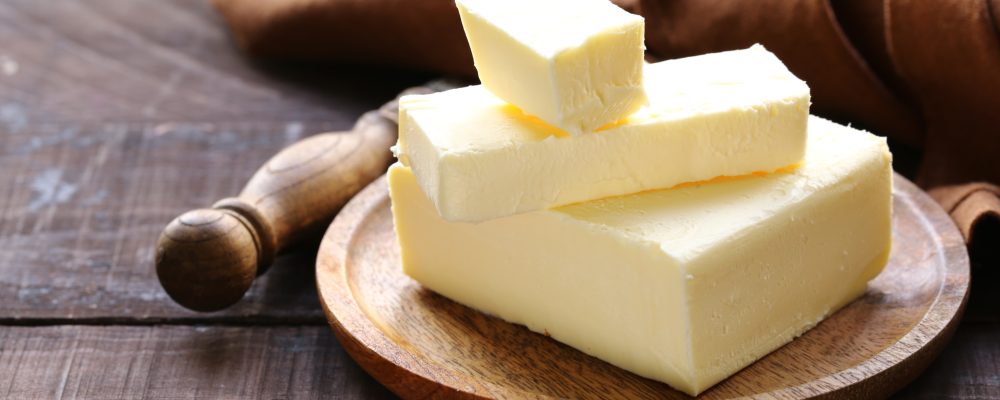

Butter is the most forgiving ingredient in a professional kitchen and the most misunderstood one in a home kitchen.
Home cooks use it. They melt it, spread it, brown it occasionally by accident. They swap it for oil when a recipe seems too rich and add more when something tastes flat. They treat it as a fat — a cooking medium, a flavor enhancer — and leave it at that.
Professional cooks treat butter as a sauce, a finish, a texture agent, and a temperature-sensitive ingredient that behaves completely differently depending on when and how it’s used. The gap between those two relationships with butter explains a significant portion of the flavor difference between restaurant food and home food.
Butter Is Not One Thing — It’s Several
Walk into a professional kitchen and you’ll find butter being used in at least three or four fundamentally different ways, each producing a different result and serving a different purpose.
There’s whole butter, used for finishing sauces and adding richness at the end of cooking. There’s clarified butter — butter with its milk solids and water removed — used for high-heat cooking where whole butter would burn. There’s brown butter, or beurre noisette, made by cooking butter past the point of melting until the milk solids caramelize into something nutty, complex, and deeply aromatic. And there’s cold butter, cut into cubes and whisked into a warm pan sauce at the last moment to create an emulsified, glossy finish.
Each of these is a distinct preparation with a distinct purpose. Home cooks almost exclusively use one: melted whole butter, applied at the beginning of cooking. The other three rarely make an appearance — not because they’re difficult, but because most home cooks don’t know they exist as separate tools.
Brown Butter Is the Most Underused Technique in the Home Kitchen
Of everything that professional cooks do with butter that home cooks don’t, browning it may be the single most impactful technique to learn.
When butter melts and continues cooking past the point where the water has evaporated, the milk solids in the butter undergo a Maillard reaction — the same browning process responsible for the crust on a seared steak or the top of a baked loaf of bread. The result is beurre noisette: butter that has transformed from a mild, creamy fat into something with deep notes of toasted hazelnut, caramel, and a savory complexity that is almost impossible to achieve any other way.
Professional cooks use brown butter constantly — finishing pasta, dressing roasted vegetables, building pan sauces, basting proteins, enriching cake batters and cookie doughs. It adds a dimension of flavor to nearly everything it touches that regular melted butter simply cannot.
The technique takes about four minutes and requires only attention. The butter goes into a light-colored pan — so the browning milk solids are visible — over medium heat. It melts, foams, subsides, and then begins to foam again as the milk solids start to color. The moment the foam breaks and the solids are a deep golden brown with a nutty aroma, the pan comes off the heat. Ten more seconds is the difference between brown butter and burned butter. Attention is the entire skill.
Cold Butter Finishes Sauces the Way Nothing Else Can
Here is a technique that appears in virtually every professional French-influenced kitchen and almost never in a home kitchen: mounting a sauce with cold butter.
When a pan sauce is nearly finished — after the fond has been deglazed, the liquid reduced, the flavors developed — cold butter cut into small cubes gets whisked in off the heat, one piece at a time. This process, called monter au beurre, emulsifies the fat into the sauce rather than simply melting it in. The result is a sauce with a glossy sheen, a velvety body, and a richness that feels luxurious without being heavy.
The cold temperature of the butter is essential. Warm or room-temperature butter breaks the emulsion rather than building it. The sauce needs to be hot but not boiling — too much heat and the emulsion breaks; not enough and the butter doesn’t incorporate. Professional cooks feel this intuitively after repetition. At home, the starting point is: sauce off the heat, cold butter, constant whisking, one piece at a time.
This is the move that makes a simple pan sauce taste like it came from a restaurant kitchen. It costs one extra step and a tablespoon of cold butter.
Butter Burns Because of the Milk Solids, Not the Fat
One of the most common butter frustrations in a home kitchen is burning — reaching for the pan a moment too late to find blackened, bitter butter and a ruined dish. Understanding why butter burns, and what to do about it, is something professional kitchens have a clear answer for.
Butter is roughly eighty percent fat, eighteen percent water, and two percent milk solids. The fat itself has a very high smoke point and can handle significant heat. The milk solids — proteins and sugars — are the component that burns, and they do so at a relatively modest temperature.
This is why clarified butter exists. By gently melting butter and skimming or straining away the milk solids and water, what remains is nearly pure butterfat with a smoke point well above what any standard cooking application requires. It can be used for high-heat searing, sautéing, and pan-frying without any risk of burning while still delivering the richness and flavor that butter provides.
Ghee — clarified butter taken slightly further, with the remaining moisture cooked out — is the same principle applied with more patience, producing a shelf-stable, deeply flavored fat that professional kitchens in many culinary traditions have relied on for centuries.
Timing Determines Everything
The most important thing professional cooks understand about butter that home cooks don’t is this: when butter goes into the dish is as consequential as how much goes in.
Butter added at the beginning of cooking, before aromatics are softened, does one job — it carries heat and begins to flavor the base of the dish. Butter added in the middle of cooking does another — it adds richness and helps build body. Butter added at the very end, off the heat, does something else entirely — it finishes and enriches without cooking further, adding a brightness and roundness that cooked butter cannot replicate.
Restaurant dishes often use butter at two or three of these moments — building flavor at the start, enriching during, finishing at the end. The butter at each stage is doing something different. Treating them all as the same addition, at the same stage, produces a flatter result than using each moment with intention.
The Takeaway
Butter is not just a fat. In a professional kitchen, it’s a toolkit — brown it for depth, clarify it for high heat, mount it cold for gloss and body, time it deliberately for maximum impact.
None of these techniques require special equipment or professional training. They require understanding that butter is capable of far more than most home cooks have ever asked of it.
Start with brown butter. Make it once, on anything. The rest of the techniques will start to make sense from there.














