

There are moments in food history that look, from a distance, like they should be unremarkable.
A spice travels from one part of the world to another. A crop is introduced to a continent that has never seen it. A preservation technique moves along a trade route and arrives in a kitchen where it has never been used before.
These moments don’t look like history in the making. They look like trade. Like agriculture. Like the ordinary movement of goods and knowledge between people who needed things the other had.
And then, slowly or sometimes suddenly, everything changes.
The cuisine of an entire region transforms around a single new ingredient. An economy rises or collapses based on the control of a spice route. A crop introduced to new soil feeds a population that was struggling and then, when it fails, produces one of the most catastrophic famines in modern history. A single plant, carried across an ocean, rewrites the flavor profile of cuisines that had existed for thousands of years without it.
Food history is full of these moments. The ingredients that changed the world did so not by being exotic curiosities but by being useful, flavorful, and transferable — qualities that made them irresistible to everyone who encountered them.
The Spice That Started an Age of Exploration
It is difficult to overstate how valuable pepper was in medieval Europe.
Black pepper — Piper nigrum, native to the Malabar Coast of southwestern India — was so prized in medieval Europe that it was used as currency, accepted as rent payment, and demanded as ransom. The phrase “peppercorn rent” — used today to describe a nominal payment — derives from a time when peppercorns were anything but nominal. A pound of pepper was worth a pound of silver in some medieval European markets.
The reason for this value was practical as much as culinary. Before reliable refrigeration, the preservation and flavoring of meat — which spoiled quickly and was often consumed well past its prime — was a matter of daily necessity for much of the population. Pepper and other spices masked the flavor of spoiled meat, preserved food through antimicrobial properties, and added flavor to a diet that was often monotonous and bland.
The Arab merchants who controlled the overland spice trade from Asia to Europe understood their leverage and used it — keeping the sources of their spices deliberately mysterious, maintaining a monopoly that kept prices extraordinarily high throughout the medieval period.
It was this monopoly — and the desire to break it — that motivated the European age of exploration. Vasco da Gama’s voyage around the Cape of Good Hope to India in 1498 was not primarily about discovery. It was about finding a sea route to the pepper trade that bypassed the Arab middlemen. Christopher Columbus sailing west to find a new route to Asia — and finding the Americas instead — was, in its original intention, also about spices.
A desire for pepper reshaped the map of the world.
The Fruit That Rewrote European Cuisine
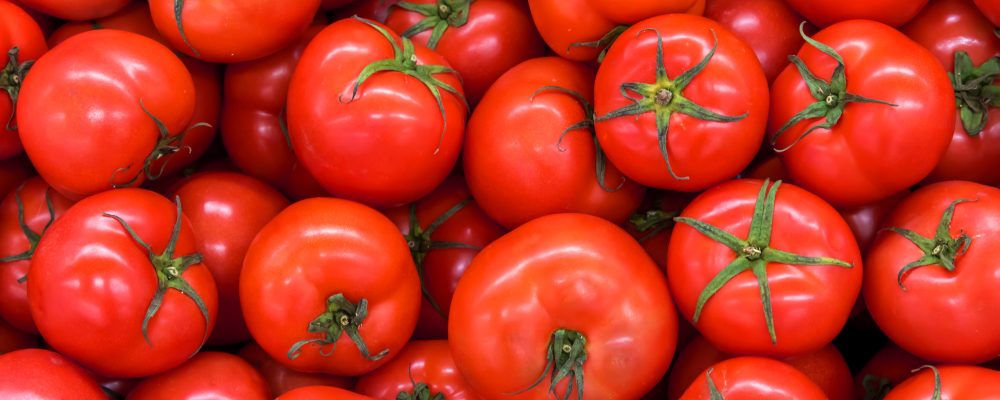
In the sixteenth century, the tomato arrived in Europe from the Americas.
It was greeted, initially, with suspicion and even fear. The tomato is a member of the nightshade family — a family that includes several genuinely toxic plants — and its ornamental red fruit was regarded by many Europeans as beautiful but potentially poisonous. For much of the sixteenth and seventeenth centuries, the tomato was grown in European gardens as a decorative plant rather than a food.
And then, gradually, it was eaten.
What followed was one of the most dramatic culinary transformations in recorded history. The cuisines of southern Europe — Italian, Spanish, Portuguese, Greek — which had existed for thousands of years without the tomato, reorganized themselves around it with a thoroughness that makes it almost impossible now to imagine those cuisines in their pre-tomato form. The tomato sauce that is inseparable from Italian cooking. The sofrito — the cooked base of tomato, onion, and garlic — that underlies Spanish cooking. The shakshuka, the braised dishes, the preserved passatas.
None of it existed before the sixteenth century. All of it now feels ancient and essential.
The tomato took two hundred years to fully integrate into European cooking. It then became so central to those cuisines that its absence would be unrecognizable. Few ingredients in history have made so complete a transformation of their adopted culinary traditions.
The Crop That Fed and Failed
The potato arrived in Europe from the Andes at roughly the same time as the tomato — and its story is simultaneously one of the most important agricultural successes and most catastrophic agricultural failures in modern history.
The potato offered something that few crops in European agriculture could match: extraordinary caloric density per acre of cultivated land, adaptability to poor soils and cold climates, and a nutritional profile — containing significant amounts of vitamin C, potassium, and B vitamins — that made it genuinely sustaining as a near-sole dietary staple.
In Ireland, these qualities made the potato the foundation of the diet for the rural poor over the course of the eighteenth and early nineteenth centuries. A single variety — the Irish Lumper — came to dominate Irish potato cultivation because of its high yield and adaptability to Irish soils. By the 1840s, a significant portion of the Irish rural population was dependent on this single crop variety for the majority of their caloric intake.
When Phytophthora infestans — a water mold that causes late blight — arrived in Ireland in 1845 and destroyed the potato harvest, the genetic uniformity of the Irish Lumper meant there was no resistant variety to fall back on. The blight destroyed successive harvests through the late 1840s. The famine that followed killed approximately one million people and drove another million or more to emigrate within five years, permanently altering the demographic character of Ireland and of the countries — particularly the United States — that received its emigrants.
The potato fed Europe. Its monoculture nearly destroyed Ireland. Both consequences flowed from the same qualities that made it so valuable.
The Bean That Built Global Trade
Coffee is, after water, the most widely consumed beverage in the world — and its rise from an obscure plant in the Ethiopian highlands to a globally traded commodity worth hundreds of billions of dollars annually is one of the more unlikely stories in food history.
The coffee plant — Coffea arabica — grows wild in the highland forests of Ethiopia, where its cherries have been eaten and its leaves brewed for centuries. The practice of roasting the seeds and brewing them in hot water — the form of coffee consumption that would spread across the world — appears to have developed in Yemen in the fifteenth century, from where it spread rapidly through the Islamic world.
Coffeehouses — qahveh khaneh — became centers of intellectual and social life across the Ottoman Empire, Persia, and the Arab world within decades of coffee’s introduction. When coffee reached Europe in the seventeenth century, the coffeehouse followed — and the European coffeehouse became, similarly, a center of intellectual exchange, political discussion, and commercial activity.
Lloyd’s of London — the insurance market that would become one of the most important financial institutions in the world — began as a coffeehouse. The London Stock Exchange grew from coffeehouse culture. The American Revolution was, in part, plotted in coffeehouses. The social space created by coffee — a gathering place built around a stimulating, non-alcoholic beverage — shaped the intellectual and commercial culture of modernity in ways that extend far beyond anything that could be attributed to a single agricultural product.
The Preserved Fish That Shaped Civilizations
Long before refrigeration, the ability to preserve protein was one of the most consequential technological advantages a civilization could possess — and among the most important preserved proteins in history was salt cod.
Salted and dried cod — bacalhau in Portuguese, bacalà in Italian, bacalao in Spanish — was produced from the abundant cod stocks of the North Atlantic and became one of the most important food commodities in the pre-modern world. It was cheap, durable, required no refrigeration, traveled well, and provided substantial protein to populations that needed it.
The Catholic Church’s prohibition on eating meat on Fridays and during Lent created a massive and reliable demand for preserved fish across Catholic Europe — a demand that salt cod was uniquely positioned to supply. The cod trade became one of the most economically significant fisheries in Atlantic history, driving European exploration of North American waters and creating commercial relationships between Europe, the Americas, and West Africa that shaped the Atlantic economy for centuries.
Portugal’s relationship with salt cod is so deep that the Portuguese are said to have a different bacalhau recipe for every day of the year. A preserved fish product created by necessity became a culinary tradition so central to Portuguese identity that it outlasted both the necessity and the abundance of cod that made it possible.
The Takeaway
The ingredients that changed the world did so because they met needs — for flavor, for preservation, for calories, for stimulation — with a completeness that made their spread inevitable once they were introduced.
They also reveal something about food that no recipe or technique can fully capture: that what we eat is not just a matter of preference or tradition but of history, of trade, of accident, of catastrophe, and of the particular moment in time when a plant or an animal or a technique encountered a population that was ready for it.
The food on the plate has a history that extends far beyond the kitchen.
Understanding that history is part of understanding what food actually is.














