

There is a specific kind of shopping that happens in the final weeks of summer — not the casual, opportunistic shopping of the peak season, when the abundance makes every market visit productive without particular urgency, but the deliberate, intentional shopping of a cook who understands that what is available right now will not be available next month and who wants to carry as much of the season forward as possible.
This is the summer’s end pantry project — the deliberate stocking of preserved, pickled, frozen, and shelf-stable summer ingredients that will make the cooking of October and November and February significantly better than it would be without them.
It is not a large or complicated project. It does not require special equipment beyond what most kitchens already contain. It requires primarily the recognition that the window is closing and that the thirty minutes spent this weekend on the right preparations will produce dividends across the next six months of cooking.
What the Summer’s End Pantry Actually Is
The summer’s end pantry is not a collection of finished products — not meals made and frozen, not complex preparations that will be pulled out and eaten as-is. It is a collection of building blocks — preserved and concentrated and frozen forms of the season’s best ingredients that will function as components in the cooking of the months ahead.
The roasted tomatoes stored in olive oil. The frozen corn kernels from peak-season ears. The herb butters wrapped in the freezer. The fermented peppers developing in the jar on the counter. The pesto made from the basil that was about to bolt. The peach jam in the refrigerator. The dried herbs from the garden.
Each of these is a flavor resource — an ingredient that carries the specific quality of August produce into the months when August produce is unavailable. Not as a perfect substitute for the fresh ingredient, but as a genuinely excellent ingredient in its own right that elevates the winter cooking it enters.
The Tomato Preparations Worth Making This Week
The tomato is the most urgent summer’s end pantry project — because the peak-season tomato’s window is closing fastest and because the tomato is the ingredient whose preserved forms are most broadly useful across the widest range of winter cooking.
The roasted tomato in olive oil: tomatoes halved and roasted slowly at 300°F for three to four hours until collapsed and concentrated, then packed into jars and covered completely with good olive oil. These tomatoes — pulled from the refrigerator in January and added to a pasta or a braise or spread on toast — carry a concentration and a sweetness that fresh winter tomatoes cannot approach. They keep for two weeks in the refrigerator or indefinitely in the freezer.
The tomato passata — the simplest possible tomato sauce, made from nothing but peak-season tomatoes cooked down until thick and concentrated, passed through a food mill to remove skins and seeds, seasoned with salt and frozen in portions — is the winter pasta sauce that makes summer’s abundance available in February. Each frozen portion, thawed and heated with good olive oil and a few torn basil leaves from the freezer’s herb supply, produces a pasta sauce that tastes specifically of August.
The tomato conserva — the deeply reduced, intensely concentrated tomato paste made from cooking down kilograms of tomatoes over several hours until thick and almost dark — is the most potent preserved tomato preparation available, usable by the tablespoon to add depth and umami to winter braises and soups and sauces.
The Herb Preparations That Last
The herbs that are most productive right now — the basil before it bolts, the tarragon at its most fragrant, the parsley and the chives and the oregano — are the herbs most worth preserving in forms that carry their specific flavors into the months when they are less vivid.
The pesto: the preparation that most completely captures peak-season basil flavor in a form that lasts. Made in quantity this week from the most vivid basil available, frozen in portions covered with olive oil, it provides months of excellent pasta and pizza and soup finishing from a single afternoon’s work.
The herb oil: blanched herbs — blanched briefly in boiling water and immediately shocked in ice water to set their vivid green color — blended with neutral oil until completely smooth and strained through a fine mesh strainer. The resulting oil carries the specific color and the specific flavor of the fresh herb in a form that holds for weeks in the refrigerator and months in the freezer.
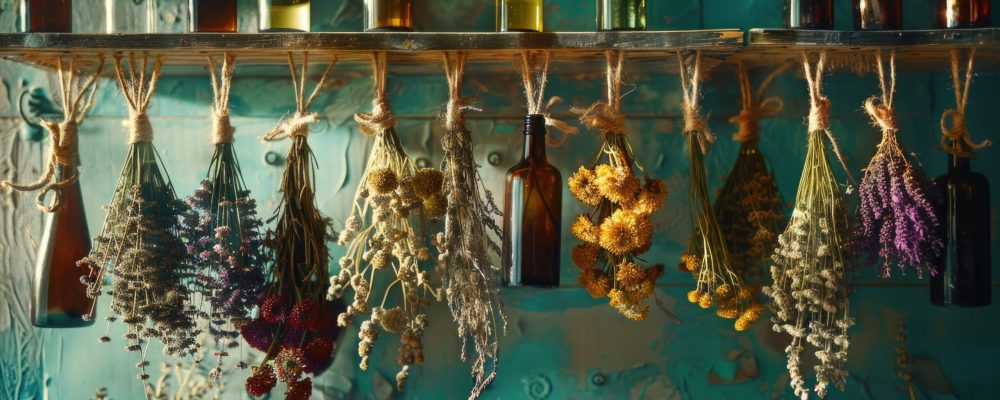
The dried herbs from the garden: the thyme and the oregano and the rosemary that dry well — tied in small bunches and hung in a warm, ventilated space for a week, then stripped from their stems and stored in jars. The home-dried herb from a peak-season plant is categorically more flavorful than the commercially dried alternative that has been sitting in a jar for an indeterminate period.
The Frozen Fruit That Serves Winter
The stone fruit and the berries that are at their peak right now — the peaches, the plums, the blueberries, the blackberries — freeze better than their reputation suggests and serve the winter kitchen far better than the out-of-season fresh alternatives they replace.
The frozen peach: sliced, tossed with a small amount of lemon juice to prevent browning, spread on a sheet pan to freeze individually before being packed into bags. Used in smoothies, in baked goods, in sauces, in any preparation where the texture of fresh peach is less important than its flavor.
The frozen berry: spread on a sheet pan and frozen individually before packing — the same technique that prevents the solid mass that makes commercially frozen berries difficult to use in small quantities. Available through the winter for smoothies, for yogurt, for the pancakes and the muffins that are better with a handful of peak-season frozen blueberries than with anything the grocery store offers in January.
The stone fruit jam: the refrigerator jam that holds for a month, or the properly processed preserve that holds indefinitely — each a direct translation of peak-season flavor into a form that serves the morning toast and the cheese board and the yogurt of the months ahead.
The Pickled and Fermented Things
The pickled and fermented preparations that use August’s abundance of cucumbers and peppers and beans and green tomatoes are the summer’s end pantry items that provide the most texture and the most versatility across the widest range of cooking applications.
The half-sour pickles that have been fermenting on the counter — moved to the refrigerator now to slow the fermentation and hold them at their current stage. The fermented peppers that will be blended into hot sauce when they have reached the right level of sourness. The quick-pickled red onions that take ten minutes to make and that provide the acid counterpoint that salads and grain bowls and tacos need through the months ahead.
And the green tomato pickle — made from the tomatoes that will not ripen before the first frost, pickled in a vinegar brine with garlic and spices — is one of the most specifically end-of-season preparations available, converting what would otherwise be lost to the cold into a condiment that provides acid and brightness and the specific flavor of a summer tomato in an unexpected preserved form.
The Pantry Audit That Reveals What’s Missing
Before the shopping and the cooking of the summer’s end pantry project begins, the specific audit of what is already there is worth conducting — because the summer’s end pantry is most useful when it fills the gaps in the winter cooking rather than duplicating what is already available.
The cook who has frozen corn but no frozen tomato has a different priority than the cook who has passata but no pesto. The cook whose freezer already contains compound butters from earlier in the summer needs more fermented peppers rather than more herb butter. The cook whose refrigerator currently holds three varieties of jam needs frozen fruit rather than more jam.
The specific question: what does the winter cooking most regularly require that the summer’s abundance could provide?
For the cook who makes soup through the winter: the tomato preparations and the corn stock and the frozen aromatics that base soups depend on.
For the cook who uses pasta frequently: the pesto and the passata and the roasted tomatoes that produce excellent weeknight pasta from pantry ingredients.
For the cook who entertains: the pickled things and the compound butters and the preserved fruits that complete cheese boards and grain salads and appetizer spreads.
The summer’s end pantry that is built with the winter cooking’s specific needs in mind is a pantry that earns its investment throughout the months that follow.
The Weekend That Makes the Difference
The summer’s end pantry project need not be a large undertaking. The single weekend afternoon — Saturday or Sunday, three to four hours in the kitchen — that is dedicated to the most urgent and most valuable preparations is sufficient to stock the pantry with the resources that will make a meaningful difference through the winter.
The specific priorities for that afternoon: the tomato passata that uses the most urgent produce. The pesto from the basil that is about to bolt. The frozen corn from this week’s market ears. The herb butter log that goes into the freezer.
These four preparations, made in a single afternoon from the peak-season ingredients available right now, produce more winter cooking value than any amount of shopping in February for the inferior alternatives that commercial supply chains provide.
The window for making them is the same window as the season itself.
It is closing.
The Takeaway
The summer’s end pantry is not a project for later. It is a project for this weekend — for the specific window of peak-season availability that is measurably shorter this week than it was last week.
Roast the tomatoes. Make the pesto. Freeze the corn. Roll the herb butter.
The winter kitchen that benefits from this afternoon’s work will be a better kitchen than the one that didn’t stock it.
And the cook who made the investment will know it every time they reach into the freezer in January and find something that tastes like August.














