
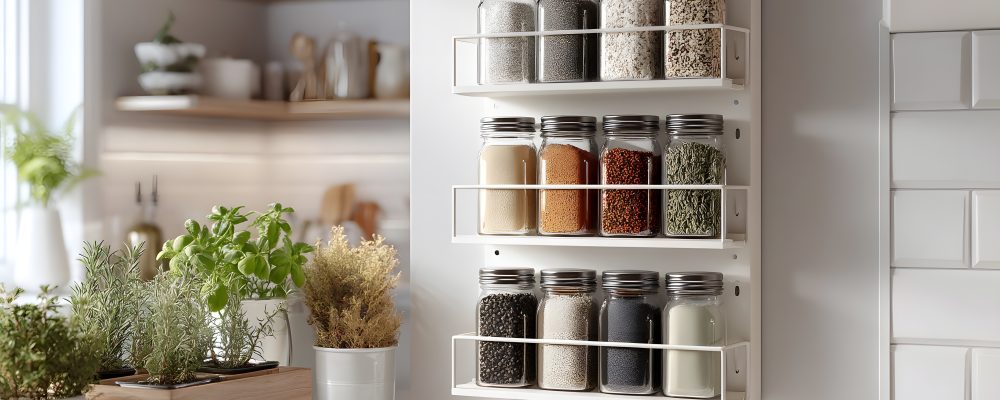

There is a shelf in most home kitchens that represents one of the greatest untapped resources in the entire cooking space.
The spice rack.
It is usually well-stocked. Often lovingly assembled over years of recipe-driven purchases — a jar bought for one dish, another acquired for a cuisine explored briefly and then set aside. The labels are faded on some of them. The dates, if there are dates, don’t bear close examination. The contents range from things used weekly to things used once and forgotten.
And almost all of them are being used in ways that leave most of their potential completely unrealized.
Spices are not pantry staples in the way that salt or oil or flour are pantry staples. They are volatile, perishable, and technique-dependent in ways that most home cooks have never been fully shown. The difference between a spice used well and the same spice used poorly is not subtle — it is the difference between a dish with depth and dimension and one that tastes like it has spice in it, which is an entirely different and significantly less interesting thing.
The Enemy of Every Spice on Your Shelf
Before technique, before application, before any discussion of which spice does what — there is the question of whether the spices being used are capable of doing anything at all.
Spices degrade. Not gradually and imperceptibly, but significantly and relatively quickly. The volatile aromatic compounds responsible for the flavor and fragrance of a spice — the compounds that give cumin its earthy warmth, cinnamon its sweet heat, cardamom its floral complexity — are, by definition, volatile. They evaporate. They oxidize. They break down in the presence of heat, light, moisture, and time.
A jar of ground cumin that has been sitting in a cabinet above the stove for three years is not cumin in any meaningful culinary sense. It is brown powder with a faint memory of cumin that will add color to a dish and almost nothing else. The same is true of ground coriander, paprika, chili powder, turmeric, and virtually every other ground spice in the average home spice rack.
The professional standard for ground spices is six months to a year from the date of grinding — and many serious cooks work with whole spices that they grind fresh, which extends the useful life significantly because the volatile compounds are protected inside the whole seed or pod until the moment of grinding.
The practical test is simple: open the jar and smell it. A spice with life left in it is immediately, recognizably fragrant. A spice that has lost its potency produces little or no smell — and if it produces little smell, it will produce little flavor. Replace it, buy smaller quantities more frequently, and store away from heat and light rather than next to the stove where most spice racks live.
Fat Is How Spice Flavor Travels
Here is the piece of information that changes how a cook relates to spices more fundamentally than any other: spice flavor compounds are fat-soluble, not water-soluble.
This means that the flavor in a spice does not fully release into a water-based liquid — a broth, a sauce, a stew — in the way that salt does. It releases into fat. The fat then carries the flavor compounds throughout the dish, distributing them in a way that water cannot.
This is the scientific basis for one of the most important spice techniques in professional and traditional cooking: blooming spices in fat before any liquid is added.
When ground spices are added to hot oil or butter at the beginning of cooking — before the aromatics, before any liquid, in fat that is hot enough to sizzle — the heat drives the fat-soluble compounds out of the spice and into the fat, which then carries them through every element of the dish that follows. The spice flavor becomes part of the dish’s foundation rather than an addition floating on top of it.
The difference between a curry made with spices bloomed in oil at the beginning and a curry made with the same spices stirred in at the end is dramatic — not because more spice was used, but because the fat-mediated extraction produced flavor compounds that the water-based liquid never could.
This single technique — bloom in fat, early in the process — is responsible for more of the depth and complexity in spiced dishes than any other variable except the freshness of the spices themselves.
Whole Versus Ground Is Not a Preference — It Is a Different Ingredient
Many home cooks treat whole and ground spices as interchangeable — buying ground cumin when a recipe calls for cumin seeds because it seems like the same thing in a more convenient form.
It is not the same thing. Whole and ground spices behave differently, taste different, and serve different functions in a dish.
Whole spices — seeds, pods, bark, dried chilis — release their flavor slowly and incompletely. When added to a hot pan, they toast and crack, releasing aromatic compounds gradually throughout the cooking process. When bitten into in a finished dish, they deliver an intense, localized burst of flavor that ground spice cannot replicate. In a long braise or a slow-cooked curry, whole spices infuse the cooking liquid over hours, producing a more subtle and integrated flavor than ground spices added at the beginning would.
Ground spices release their flavor immediately and completely. They are appropriate when a uniform distribution of spice flavor through a dish is the goal — when the spice should be everywhere, in every bite, without interruption. They bloom quickly in fat and integrate rapidly into sauces and dishes with shorter cooking times.
Toasting whole spices before grinding — in a dry pan over medium heat until fragrant, then cooling before processing — produces a depth of flavor in the ground spice that pre-ground versions cannot match. The heat drives off surface moisture and triggers Maillard reactions on the surface of the seed, producing toasted, complex flavor compounds that aren’t present in the raw spice.
This is why freshly toasted and ground spices taste so dramatically different from their pre-ground counterparts — and why the extra step, which takes four minutes, produces a result that no amount of pre-ground spice can replicate.
The Layering Principle
Professional cooks who work extensively with spices — in Indian, Middle Eastern, North African, Mexican, and other spice-forward culinary traditions — rarely add all of their spices at one moment in the cooking process.
They layer. Whole spices go in first — into the hot fat, before aromatics, where they can begin releasing their flavor into the oil. Ground spices follow, bloomed in the oil that has already been infused by the whole spices. Fresh aromatics — garlic, ginger, onion — go in and cook with the spiced fat, absorbing its flavor. Finishing spices — a pinch of a volatile ground spice like garam masala, or a fresh spice element like lime zest or fresh chili — go in at the very end, where their volatile compounds haven’t had time to cook off.
This layering produces a spice flavor that has multiple dimensions — the base notes of the whole spices, the mid-range of the bloomed grounds, the brightness of the finishing element — that a single addition of spice at a single moment cannot replicate.
It also prevents the common problem of a dish that tastes spiced but not flavorful — where the spice registers as a single, undifferentiated note rather than as a complex, layered presence. Layering creates depth. Single-point addition creates intensity without complexity.
The Spice Combinations Worth Understanding
There is one final dimension of spice use that separates cooks who use spices fluently from those who don’t: the understanding of which spices work together and why — not as a matter of memorized combinations, but as a matter of understanding flavor families.
Warm spices — cinnamon, clove, allspice, nutmeg — share aromatic compounds that make them naturally complementary. They appear together in the spice blends of multiple culinary traditions not because those traditions copied each other but because the chemistry of the compounds makes their combination naturally pleasing.
Earthy spices — cumin, coriander, turmeric — form a different family, sharing the terpenoid compounds that give them their characteristic earthiness and making them natural partners in the spice bases of South Asian and Middle Eastern cooking.
Bright spices — cardamom, fennel, anise — have aromatic profiles dominated by compounds that register as fresh and slightly sweet, making them useful as counterpoints to heavier, earthier combinations and as bridges between savory and sweet applications.
Understanding these families — not as rules but as tendencies — gives a cook the ability to improvise with spices rather than depending on specific combinations. The cook who knows that cumin and coriander belong to the same flavor family can substitute one for the other in a pinch and know roughly what will happen. The cook who only knows that a recipe calls for both has no framework for working without the recipe.
The Takeaway
The spice rack is one of the most powerful tools in any kitchen — and one of the most consistently underused.
Freshness is the foundation. Fat is the medium. Blooming is the technique. Whole spices are a different ingredient from ground. Layering creates depth that single additions cannot. And understanding flavor families gives the cook the freedom to work with spices rather than just following instructions about them.
The spices on the shelf are capable of far more than most home cooks have asked of them.
They just need to be treated with the same attention as every other ingredient in the kitchen.














