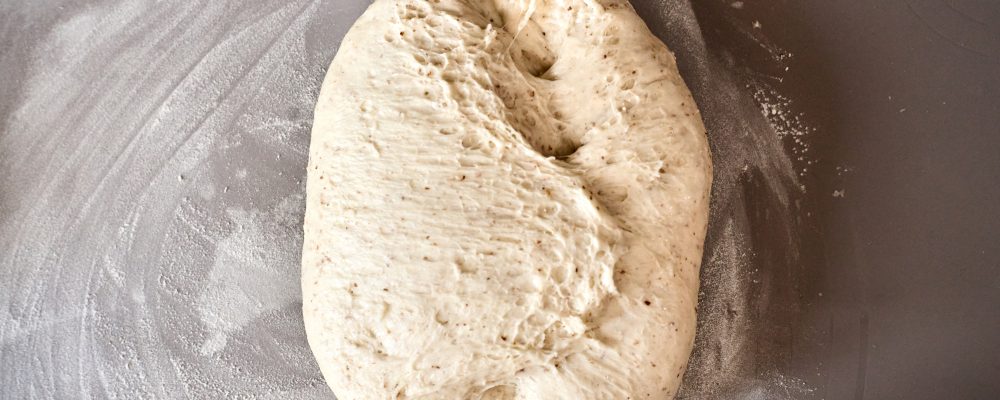

Most people who bake bread know they’re supposed to let the dough rest. Far fewer know why — which is exactly why so many loaves come out dense, tight, or strangely tough.
Resting isn’t downtime. It’s one of the most active parts of the entire process, even though nothing looks like it’s happening.
What’s Actually Happening During “Nothing”
When dough sits, gluten — the stretchy protein network formed when flour meets water — relaxes after being worked by mixing or kneading.
That relaxation matters more than it sounds like it should. Gluten strands tighten and resist stretching every time dough gets handled. Without a rest, that tension fights back against shaping, causing dough to spring back, tear, or bake up tough and chewy in the wrong way.
Rest allows the structure to loosen just enough to become workable again.
Why Yeast Isn’t the Whole Story
Most people assume resting is entirely about yeast producing gas and making dough rise. That’s part of it, but not the whole picture.
Fermentation is happening the entire time dough rests, and it’s doing more than adding air. Enzymes break down starches into sugars, which feeds yeast and also builds flavor that a fast, unrested dough simply doesn’t have time to develop.
This is why a same-day loaf and a dough that’s rested overnight in the fridge can taste like two different breads, even using identical ingredients.
The Mistake That Ruins Texture
Rushing dough doesn’t just affect rise — it changes the entire texture of the finished bread.
Underrested dough tends to bake up dense and tight, with small, uneven air pockets. It can also taste slightly flat, missing the deeper, slightly tangy notes that develop during a longer rest.
The fix isn’t more yeast or more kneading. It’s almost always more time.
Why Cold, Slow Resting Often Beats Warm, Fast Resting
A warm kitchen speeds up rising, so it feels like the “correct” way to get dough ready faster. But speed and quality aren’t the same thing here.
Slower fermentation, especially in the fridge overnight, gives enzymes more time to break down starches and build flavor before the yeast finishes its job. It also gives gluten more time to relax fully, which usually means better texture, not just better taste.
Patience produces flavor here. Heat mostly just produces speed.
How to Actually Judge a Rested Dough
Timers are a guideline, not a rule. Dough tells you more than a clock does.
A few signs it’s ready:
It’s noticeably puffier, not just “a little bigger”
Pressing a finger in gently leaves a small indent that slowly springs back
It feels relaxed and stretchy rather than tight and resistant
It smells faintly yeasty or slightly tangy, not flat
These cues matter more than hitting an exact number on a timer, since kitchen temperature and humidity change how fast dough moves.
The Takeaway
Bread dough isn’t resting because it’s tired. It’s working, just quietly and without anything visible happening on the surface.
Every extra bit of time spent resting is time spent building flavor and structure that can’t be rushed back in later.
The next time a recipe says “let rest,” it’s worth treating that instruction with the same seriousness as any active step — because in bread, waiting is baking.