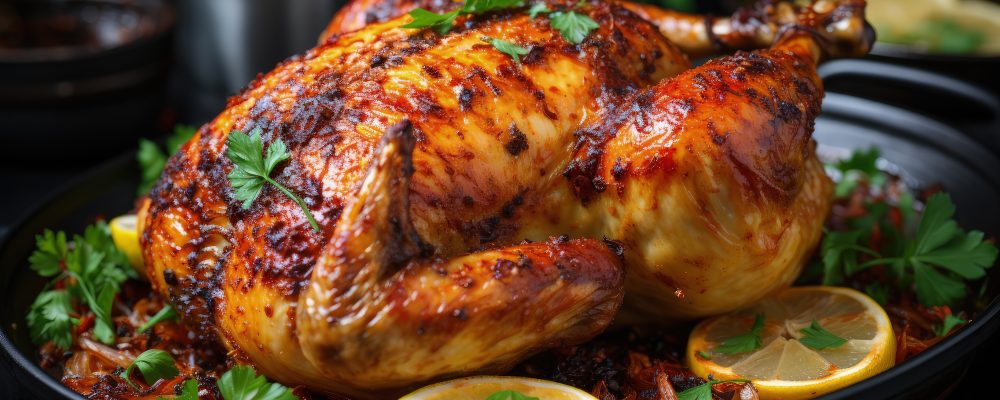
crispy and juicy roasted chicken on a plate

The One Step Missing From Your Roast Chicken

Healthy Fact of the Day

Dry-brining not only improves flavor and texture but also allows you to use less salt overall than a wet brine, since the seasoning penetrates the meat directly instead of diluting into liquid — and pairing roast chicken with roasted lemon halves adds vitamin C, which helps your body absorb iron from the meat more efficiently.

Ask any line cook what separates a good roast chicken from a forgettable one, and almost none of them will mention the oven.

They’ll mention the day before.

The Step Most Recipes Skip Entirely

Restaurants dry-brine. Home cooks usually don’t.

Dry-brining is simple: salt the chicken generously, then let it sit uncovered in the fridge for anywhere from a few hours to overnight. No liquid, no bag, no marinade. Just salt and time.

It looks like nothing is happening. That’s the point.

What’s Actually Going On Under the Skin

Salt pulls moisture out of the chicken at first. Then something interesting happens — that moisture, now seasoned, gets reabsorbed back into the meat.

The result is a bird that’s seasoned all the way through, not just on the surface. And because the skin has spent hours drying out in the fridge, it crisps in the oven instead of steaming.

That’s the crackling skin you get at a restaurant and almost never get at home.

Why Home Cooks Season Too Late

Most people season chicken right before it goes in the oven. It feels intuitive — cook, then season, right before the heat hits.

But surface seasoning only flavors the surface. By the time heat sets the outside, the inside is still bland.

Restaurants build seasoning in stages, starting long before the pan ever gets hot. Salt early. Salt often. Let time do the rest.

The Myth of the Basting Brush

Basting feels productive. It’s mostly theater.

Every time the oven door opens, heat escapes and cook time stretches. Basting also mostly just re-wets skin that’s trying to crisp, working against the very thing you’re going for.

Skip it. Let the chicken sit undisturbed. Trust the process instead of babysitting it.

What This Means for Your Next Chicken

You don’t need a brine bag, a smoker, or a special rub.

You need:

Salt
Time
A fridge shelf
Patience

Salt the chicken the night before. Leave it uncovered on a rack. Roast it hot and don’t open the door. That’s the whole secret.

The Takeaway

The best roast chicken isn’t about a fancy technique in the oven — it’s about a decision made a full day earlier.

Restaurants don’t have a secret ingredient. They have a head start.

Give your chicken the same thing, and the oven will do the rest.

Recent Recipes

Stuffed Italian Meatloaf

  • August 27, 2026
  • 6 min read

Why You’re Supposed to Let Meat Rest

  • August 27, 2026
  • 4 min read

French Onion Steak Pinwheels

  • August 27, 2026
  • 13 min read

Slow Cooker Chicken Shawarma

  • August 27, 2026
  • 6 min read

Most Olive Oil Labels Are Telling You

  • August 27, 2026
  • 4 min read

Air Fryer Coconut Shrimp Tacos

  • August 27, 2026
  • 11 min read

One Pot Beef & Noodles

  • August 27, 2026
  • 5 min read

The Dish You Make When You Don’t

  • August 27, 2026
  • 4 min read

Loaded Taco Deviled Eggs

  • August 27, 2026
  • 13 min read

Baked Queso Chicken

  • August 27, 2026
  • 6 min read

Tip of the Day

“Always let your meat rest before slicing.”

Whether you're roasting a chicken, grilling steak, or baking pork tenderloin, letting cooked meat rest for 5–10 minutes before slicing allows the juices to redistribute evenly. This simple step keeps your meat juicy and tender, ensuring every bite is flavorful and moist. Bonus: It gives you a moment to plate your sides or garnish for a perfect presentation!

Our Latest Recipes

Entrees
Benjamin Brown

Stuffed Italian Meatloaf

Spinach adds iron, fiber, and vitamins to this dish, sneaking in extra nutrition without changing the comforting, cheesy flavor everyone loves.

Read More »
Blog
Daily Disher

Why You’re Supposed to Let Meat Rest (And What Happens If You Don’t)

Letting meat rest before slicing helps retain more of its natural juices, which also means retaining more of the B vitamins and minerals like iron and zinc that would otherwise be lost onto the cutting board — and resting meat away from direct heat also reduces the formation of certain compounds linked to prolonged high-heat exposure.

Read More »
Entrees
Amelia Grace

French Onion Steak Pinwheels

Flank steak is a naturally lean cut rich in protein, iron, and zinc—caramelized onions develop deep sweetness without any added sugar, making this an indulgent-tasting dish that’s more nutritious than it appears.

Read More »

Get your daily dose of delicious!

Skip to content













