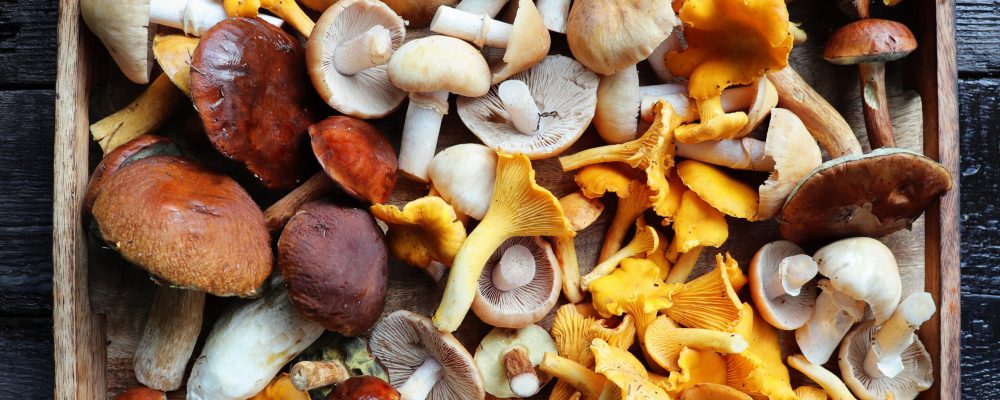

There is an ingredient that occupies a category entirely its own.
Not a vegetable, though it is treated as one in most culinary contexts. Not a plant — it produces no chlorophyll, requires no sunlight, and belongs to a kingdom of life that is, genetically, closer to animals than to the plants it is so often grouped with. Not a protein, though it provides meaningful amounts of one. Not a condiment, though it functions like one in certain applications.
The mushroom exists in a culinary category that it defines alone — one whose specific qualities have made it indispensable in virtually every serious culinary tradition in the world and whose range, from the button mushroom of the supermarket to the truffle of the Périgord, encompasses some of the most humble and some of the most expensive ingredients available in any kitchen.
The mushroom’s specific qualities — its umami concentration, its ability to absorb and carry flavors, its range of textures from delicate to meaty, its specific behavior under heat — make it one of the most versatile and most culinarily interesting ingredients available. And its biological reality — the visible mushroom being merely the fruiting body of an organism whose main structure exists as a vast underground network — makes it one of the most fascinating subjects in the natural world that cooking brings to the table.
What a Mushroom Actually Is
The mushroom that appears on the plate is not the organism. It is the organism’s reproductive structure — the fruiting body produced by the mycelium, the network of thread-like filaments that constitutes the actual living fungus and that may extend through the soil or the wood or the substrate it inhabits for distances that dwarf the visible mushroom above.
The mycelium is the fungus. The mushroom is the mycelium’s reproductive event — the structure produced to release spores, visible above the substrate for the brief window of its reproductive purpose, and then gone.
This biological reality has several practical implications for the cook. The mushroom must be harvested at the right moment — the window between emergence and spore release, after which the mushroom deteriorates rapidly. The quality of the mushroom reflects the health and the specific conditions of the mycelium that produced it — which is why wild mushrooms from specific environments have flavors that cultivated mushrooms cannot replicate, because the mycelium’s relationship with its specific substrate and its specific ecosystem produces flavor compounds that the controlled cultivation environment does not.
And the mycelium’s relationship with other organisms — particularly trees, with which many mushrooms form symbiotic mycorrhizal relationships — is part of why certain mushrooms cannot be cultivated at all. The truffle, the chanterelle, the porcini — each depends on a specific relationship with specific tree species that the laboratory or the farm cannot replicate. They exist only where they grow naturally, which is part of what makes them extraordinary and part of what makes them expensive.
The Umami Engine
The mushroom’s most significant culinary contribution — the quality that has made it indispensable in culinary traditions as different as Japanese, French, Chinese, and Italian cooking — is its exceptional concentration of umami compounds.
Mushrooms are among the richest dietary sources of glutamate — the amino acid that activates the umami taste receptor and produces the specific savory depth that umami contributes to any dish it enters. They are also rich in guanylate — one of the nucleotides that synergizes with glutamate to produce an umami response several times more powerful than either compound alone.
The specific combination of glutamate and guanylate in mushrooms — particularly in dried mushrooms, where the drying process concentrates these compounds dramatically — produces one of the most potent umami sources available in any kitchen. A handful of dried porcini or dried shiitake added to a braise or a soup or a sauce adds a depth that no other single ingredient provides in the same way, because the mushroom’s specific combination of compounds activates the umami receptor with an intensity that few other ingredients match.
This is why the mushroom appears as a flavor builder rather than a primary ingredient in so many professional kitchen preparations — the mushroom stock that forms the base of vegetarian cooking, the dried mushroom that goes into a meat braise to add depth without adding mushroom flavor per se, the mushroom powder that is sprinkled into sauces as an invisible umami enhancer.
The mushroom is, in this application, functioning as a flavor amplifier — raising the perceived intensity and complexity of everything around it through the specific chemistry of umami synergy.
The Fresh Mushroom and Its Range
The range of fresh mushrooms available to the home cook — at farmers markets, at specialty grocery stores, at the expanding section of well-stocked supermarkets — has expanded dramatically over the past two decades, and understanding what different varieties offer is worth the knowledge for any cook who uses mushrooms regularly.
The button mushroom — the Agaricus bisporus in its white or cremini form, the most widely available and most widely used mushroom in Western cooking — is the baseline against which others are measured. Its flavor is mild, its texture is firm, and its umami content, while real, is significantly lower than the more intensely flavored wild or specialty cultivated varieties. The button mushroom’s primary virtue is its availability and its affordability — it is present year-round, costs little, and performs reliably in a wide range of preparations.
The portobello — the same species as the button and cremini, simply allowed to mature fully — demonstrates what aging does to mushroom flavor. The larger size and the more open cap produce a more concentrated, more intensely flavored mushroom with a meatier texture that makes it useful in preparations where the mushroom is the primary ingredient rather than a supporting one.
The shiitake — the most widely cultivated specialty mushroom, with its specific combination of rich, savory flavor and a slightly chewy texture that holds up well to cooking — is the gateway mushroom for cooks who want more flavor complexity than the button provides. Its dried form is among the most umami-rich ingredients available in any pantry, and its fresh form has a specific character — woodsy, slightly smoky, deeply savory — that makes it genuinely excellent in a wide range of preparations.
The oyster mushroom — delicate, quickly cooked, with a specific sweetness and a texture that is the most tender of the commonly available varieties — is the mushroom for preparations where subtlety and quick cooking are the goal. Sautéed briefly in butter until just golden, the oyster mushroom is the most immediately satisfying of the fresh mushrooms — its sweetness and its tenderness producing a result in five minutes that more robust varieties require longer to achieve.
The maitake — the hen of the woods, with its frilly, layered structure and its deeply earthy, complex flavor — is the fresh mushroom with the most complex flavor profile available in the cultivated range, approaching the character of the wild porcini without requiring the foraging or the expense. Its specific structure, which separates into irregular fronds that develop individual crispy edges when roasted at high heat, produces a texture that no other mushroom variety achieves.
The Dried Mushroom: A Different Ingredient
The dried mushroom is not the fresh mushroom preserved. It is a genuinely different ingredient — one whose specific flavor compounds have been concentrated by the drying process into something more intense and more complex than the fresh version, and whose behavior in cooking is fundamentally different from the fresh mushroom in ways that make it useful in different applications.
The dried porcini — the Italian king of dried mushrooms, with its specific combination of deep earthiness and concentrated umami — is the dried mushroom most worth knowing in the context of European cooking. A small handful of dried porcini soaked in warm water produces both the rehydrated mushroom, which can be chopped and used in the dish, and the soaking liquid, which is one of the most flavorful and most useful liquids available in any kitchen. This liquid — strained carefully to remove any grit — is the mushroom stock that goes into braises and risottos and pasta sauces, adding a depth that no other single ingredient provides.
The dried shiitake — the Asian equivalent of the dried porcini in terms of its culinary importance — contains the highest concentration of guanylate of any commonly available dried mushroom, making it the most powerful umami synergist available in the pantry. A single dried shiitake added to a pot of soup or a braising liquid elevates the entire preparation through the specific chemistry of guanylate’s interaction with the glutamates already present.
The dried mushroom’s storage advantage — it keeps indefinitely in a sealed container at room temperature — makes it the mushroom most worth stocking in quantity. A pantry with several varieties of dried mushroom is a pantry with access to one of the most powerful flavor-building tools in any culinary tradition, available at any time regardless of what is fresh at the market.
The Heat That Transforms
The specific way that mushrooms respond to heat — and the specific techniques that produce the best results from different mushroom varieties — is worth understanding in some detail, because the difference between a properly cooked mushroom and an improperly cooked one is significant and entirely preventable.
The most common mushroom cooking failure is steaming rather than searing — the result of adding too many mushrooms to a pan that is too small or not hot enough, producing an environment in which the mushrooms’ released moisture cannot evaporate quickly enough and the mushrooms steam in their own liquid rather than making contact with the hot surface.
The mushroom that steams rather than sears is the grey, rubbery, flavorless mushroom that gives mushrooms a bad reputation. The mushroom that sears — that makes direct contact with a genuinely hot surface with enough space between pieces to allow its released moisture to evaporate immediately — develops the specific golden-brown crust that the Maillard reaction produces, with a concentrated, deeply savory flavor and a texture that is firm rather than rubbery.
The specific technique: the pan must be genuinely hot before the mushrooms go in. The mushrooms must be dry — any surface moisture will immediately lower the pan temperature and initiate steaming. The pan must not be crowded — a single layer with space between pieces is the minimum requirement. And the mushrooms must not be stirred constantly — they need sustained contact with the hot surface to develop the color and the crust that makes them excellent.
Salt goes in at the end, not the beginning — because salt draws moisture from the mushroom’s cells, and moisture added early in the cooking process is moisture that must be evaporated before browning can begin.
The Mushroom as Meat
The mushroom’s specific qualities — its texture, its umami concentration, its ability to absorb flavors deeply, its substantial presence on the plate — make it the most genuinely satisfying plant-based meat alternative available in any kitchen.
Not a processed substitute for meat. The actual mushroom, treated with the specific techniques that reveal its best qualities, producing a result that satisfies the craving for something substantial and savory through the mushroom’s own specific properties rather than through imitation.
The roasted portobello — marinated briefly in olive oil and balsamic and garlic, roasted at high heat until collapsed and caramelized — produces a result that is satisfying in the specific way that a piece of protein is satisfying, because the mushroom’s texture and umami concentration provide the substantiality that the meal requires.
The maitake seared at high heat until its fronds are individually crispy — seasoned aggressively with salt and finished with butter and thyme — produces a result that is more interesting in texture and more complex in flavor than most meat preparations of equivalent simplicity.
And the mushroom braise — mixed varieties cooked low and slow in a flavorful liquid until completely tender and deeply saturated with the braising liquid’s flavor — is the mushroom preparation that most directly demonstrates the ingredient’s capacity for the specific depth and richness that long, slow cooking produces.
The Wild Mushroom and Its Limits
The wild mushroom — the chanterelle, the morel, the porcini, the black trumpet, the hen of the woods gathered from the forest floor rather than cultivated on a substrate — is the mushroom at its most specific and its most unreproducible.
Each wild mushroom is the product of a specific ecological relationship — the mycelium’s partnership with specific trees, specific soil conditions, specific climatic factors — that the cultivated mushroom cannot replicate. The specific flavor of a chanterelle gathered from a pacific northwest forest in October, or a morel collected from a Michigan hillside in April, or a porcini found under a Tuscan oak in September — these are flavors that are not just more intense versions of their cultivated counterparts. They are different flavors, produced by different ecological conditions, available only in specific places at specific moments in the year.
The home cook who has access to genuine wild mushrooms — through foraging, through a trusted farmers market vendor, through a specialty retailer with reliable sourcing — has access to one of the most specifically seasonal and most specifically place-based flavor experiences available in any ingredient category.
And the home cook who does not has the dried mushroom as the closest available approximation — the concentrated, shelf-stable form of wild mushroom character that, while different from the fresh wild mushroom, is closer to it in flavor intensity than any cultivated fresh alternative.
The Takeaway
The mushroom is one of the most versatile, most culinarily interesting, and most underestimated ingredients in any kitchen — not a vegetable and not a meat substitute but a category entirely its own, with specific qualities that no other ingredient provides in the same form.
Learn the varieties. Understand the technique — hot pan, dry mushroom, no crowding, salt at the end. Stock the dried varieties in the pantry as the permanent umami resource they are. Seek out the specialty fresh varieties at the farmers market when they appear. And use the soaking liquid from dried mushrooms as the flavor infrastructure it is.
The mushroom underground is vast and strange and extraordinary.
What it produces for the kitchen is worth understanding completely.