
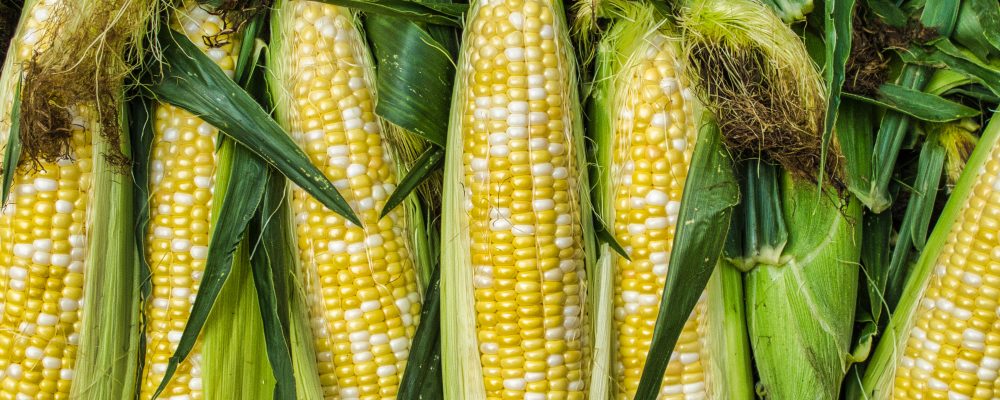

There is a vegetable whose season is measured not in weeks but in days.
Not in the sense that it disappears from grocery stores — the grocery store will have corn through October, corn that was grown far away and harvested days ago and that shares a name with the corn at the farmers market without sharing its most important quality.
In the sense that the corn that is worth eating — the corn that justifies the specific reverence that people who have eaten it at its actual peak extend to it — is available for a window so narrow that the cook who is not paying attention misses it entirely and the cook who is paying attention treats the window with a specific urgency that other ingredients rarely require.
The specific quality that makes peak-season local corn extraordinary — the sweetness that is the product of sugars that begin converting to starch the moment the ear is picked — is not a quality that survives the supply chain. The corn that was harvested this morning at a farm within fifty miles is a different ingredient from the corn that was harvested three days ago and transported across several states. The difference is not subtle. It is the difference between eating the thing at its best and eating the memory of it.
Why Corn Is Unlike Anything Else
The sugar-to-starch conversion that makes corn’s peak window so narrow is one of the most rapid and most consequential post-harvest transformations available in any produce category.
At room temperature, sweet corn can lose fifty percent of its sugar content within twenty-four hours of harvest. The specific sweetness that makes a peak-season ear extraordinary — the sweetness that seems almost implausible in a vegetable, that requires no butter or salt to be apparent — is a quality that is actively disappearing from the moment the ear leaves the plant.
This is why the farmers market vendor who says the corn was picked this morning is providing information with direct culinary significance — not marketing language but a statement about the specific quality of the ingredient at the specific moment of purchase.
And this is why the most important thing the corn cook can do is to cook and eat the corn the day it is purchased — not tomorrow, not in two days, but today, while the conversion that began at harvest has been proceeding for the shortest possible time.
The Preparations That Honor the Peak Ear
The corn at its genuine peak is the corn that needs the least done to it — the corn whose raw sweetness is so complete that cooking is almost an imposition, something to be done briefly and gently rather than thoroughly.
The raw corn — kernels cut from the cob of a genuinely peak-season ear — is one of the most vivid eating experiences available in any vegetable category. Sweet, crunchy, slightly milky when the kernel is pressed between the teeth, releasing the concentrated juice that the kernel contains. Eaten directly from the cut cob is one form of this experience. Cut into a summer salad — the raw kernels combined with peak tomatoes and cucumber and a sharp vinaigrette — is another. The specific sweetness of the raw corn provides the counterpoint to the tomato’s acidity and the cucumber’s freshness that no cooked corn quite replicates.
The boiled corn — placed in boiling water for three to four minutes, no longer, pulled and eaten immediately — is the preparation that most people know and that, from a genuinely peak-season ear, requires nothing added. Not butter, not salt, though both are excellent. The peak-season ear boiled correctly and eaten immediately is self-sufficient in its sweetness and its flavor.
The grilled corn — in the husk, placed directly on the grill grates over medium heat, turned occasionally for fifteen to twenty minutes until the husk is charred and the steam inside has cooked the kernels through — produces the specific combination of steaming and charring that grilling in the husk enables. The husk protects the kernels from direct flame while the heat produces a light char on the outermost husk layers that perfumes the corn with a specific smokiness. The corn that emerges — pulled from the charred husk at the table, eaten immediately — has a specific character that boiling cannot produce.
And the corn off the cob — the kernels cut from the cooked or raw cob and used as a component in preparations ranging from succotash to soup to pasta to grain salads — is the preparation that most extends the usefulness of the season’s abundance beyond the simple ear. The corn soup made from the stripped cobs’ stock with the cut kernels added at the finish. The corn succotash with summer beans and peppers and herbs. The corn pasta with butter and basil and Parmigiano. Each of these is a preparation that exists specifically in August and that cannot be made from any other month’s corn.
The Corn Stock: The Preparation Nobody Makes
There is a preparation that every corn cook should make and that almost none do — one that converts the stripped cob from waste into one of the most flavorful stocks available from any vegetable source.
The stripped corn cob — the structure that remains after the kernels have been cut away — is saturated with corn flavor. The sugars and the aromatic compounds that make the kernel extraordinary are concentrated in the cob’s liquid and in the remaining bits of kernel attached to the structure. Simmered in water for thirty minutes with a small amount of salt, the stripped cob produces a stock of remarkable sweetness and depth — a liquid that tastes intensely and specifically of corn in a way that water or vegetable stock or chicken stock never could.
This corn stock — produced in thirty minutes from what would otherwise be discarded — is the foundation of the corn chowder that has genuine depth rather than manufactured sweetness. It is the cooking liquid for the polenta that tastes specifically of corn rather than generically of grain. It is the base for the corn soup that is one of the most satisfying single-vegetable soups available in any season.
The preparation: stripped cobs placed in a pot with cold water to cover, brought to a simmer, cooked for thirty minutes, strained. The resulting liquid is corn stock — usable immediately or stored in the refrigerator for three days or frozen for months.
The Last Ear and What It Deserves
At some point in August — the specific date varying by region and by year — there is a last trip to the farmers market before the corn vendor’s table changes. The varieties that have been at the front of the table all summer are replaced by smaller quantities of late-season varieties, or by empty space where the corn used to be, or by the first apples of the season that signal the transition.
This last ear of genuinely peak-season corn deserves the treatment that any extraordinary and finite thing deserves: direct attention, minimal interference, genuine presence at the moment of eating.
Boiled or grilled or eaten raw from the cob — whatever preparation most directly honors the specific quality of the corn at this specific moment — the last ear is worth eating without distraction. Without a screen. Without a conversation that requires more attention than the ear of corn does.
This is the corn at its best. It will not be available in this form until next August.
Eat it like that.
The Corn Preserved for Later
The corn that cannot all be eaten immediately — the surplus that the season’s abundance produces — deserves preservation that captures the specific quality of peak ripeness rather than simply extending the ingredient’s availability.
The frozen corn — kernels cut from the cob of peak-season ears, blanched briefly in boiling water, cooled in ice water, dried thoroughly, and frozen in a single layer before being packed into bags — is the preservation that most directly carries August corn flavor into the winter months. The blanching stops the enzymatic activity that would continue the sugar-to-starch conversion even in the freezer. The individually frozen kernels provide the convenience of using small quantities without thawing a solid mass.
This frozen corn, used through October and November and December in soups and succotashes and grain bowls, is a different and better ingredient than the frozen corn purchased commercially — because it was frozen at actual peak ripeness from a locally grown ear rather than from a commercially processed crop optimized for yield rather than flavor.
The corn relish — kernels cooked briefly with onion and pepper and vinegar and sugar — is the preserved corn product that produces the most versatile and most immediately useful condiment from the season’s surplus. Served alongside grilled proteins, stirred into grain salads, used as a topping for tacos or grain bowls, the corn relish carries summer corn flavor in a form that is shelf-stable and broadly applicable.
The Takeaway
The last corn of summer is the corn that most specifically rewards the attention the season deserves.
Buy it the day of eating. Cook it simply. Use the stripped cob for stock. Freeze the surplus from peak-season ears. Make the relish from what remains.
And when the farmers market corn table changes — when the extraordinary ear of August gives way to the first signs of autumn — acknowledge the transition with the specific gratitude that something excellent and brief deserves.
The corn was worth it.
Next August, it will be worth it again.














