

There is a meal that happens in the best home kitchens several times a week.
It has no recipe. It was not planned in advance. It does not appear in any cookbook and has never been made in exactly this form before and will not be made in exactly this form again.
It is the dinner assembled from what is there — from the specific combination of ingredients that inhabit the refrigerator and the pantry on a specific Tuesday evening, combined by a cook who knows how to look at what is available and see a meal in it rather than an obstacle to one.
This meal — the improvised dinner, the dinner without a recipe, the dinner that is the product of the cook’s accumulated knowledge applied to whatever the kitchen contains — is one of the most satisfying cooking experiences available. Not because it always produces something extraordinary. Because the specific pleasure of finding the meal that was already there, of converting apparent scarcity into genuine abundance through the application of knowledge and instinct and whatever pantry resources are at hand, is a pleasure that the recipe-followed meal rarely produces in the same form.
It is also, for many home cooks, the meal that is most anxiety-producing — because it depends on a form of confidence that recipe-following specifically bypasses.
The Anxiety of the Empty Counter
The home cook who stands at the refrigerator on a Tuesday evening, assessing its contents with the specific hope that a meal will suggest itself, is engaging in one of the most genuinely creative acts available in domestic life.
And one of the most genuinely anxiety-producing — because the creativity is not optional. Dinner must appear. The counter is not a blank canvas that can remain blank until inspiration arrives. The hunger of the people who will eat is real and present and uninterested in the cook’s creative process.
This specific anxiety — the anxiety of the unmarked Tuesday, the anxiety of having to produce something good from what is actually there rather than from what was planned — is the anxiety that most separates the confident cook from the one who is not yet confident.
The confident cook looks at the refrigerator and sees not scarcity but possibility. Not the absence of a specific ingredient but the presence of ingredients that can become something. Not the problem of what to make but the interesting question of what wants to be made from what is there.
This confidence is not innate. It is the product of accumulated experience — of having converted apparent scarcity into meals enough times that the pattern becomes recognizable and the anxiety diminishes.
But it is also the product of understanding the specific principles that make the improvised dinner possible — the mental frameworks that allow any cook to look at a collection of ingredients and see the meal that is already in them.
The Framework That Reveals the Meal
The improvised dinner is not random. It is not the result of combining everything in the refrigerator and hoping for the best. It is the product of applying a specific framework — a set of questions that any cook can learn to ask — to whatever is available.
The first question: what is the protein? The ingredient that will provide substance and satiety — the egg, the bean, the canned fish, the leftover roast chicken, the piece of fresh protein that has been in the refrigerator for two days and must be used tonight. This is almost always present in some form, and identifying it is the first organizational step of the improvised dinner.
The second question: what is the vegetable? The ingredient that provides freshness and bulk and the specific quality of something that grew in a field rather than a factory — the wilting herbs, the half-used zucchini, the tomatoes on the counter, the frozen corn from last week’s market trip. This is almost always present in multiple forms, which means the question is not whether there is a vegetable but which vegetable to prioritize.
The third question: what is the starch? The ingredient that provides the foundation that makes the meal substantial — the pasta, the rice, the bread, the cooked grain in the container in the refrigerator, the potato that has been sitting in the pantry for a week. This is almost always present in the pantry in some dried or shelf-stable form even when the refrigerator appears empty.
And the fourth question: what ties it together? The pantry ingredient that provides the flavor infrastructure — the olive oil, the vinegar, the soy sauce, the canned tomatoes, the miso, the anchovy, the dried chili — that converts a collection of ingredients into a coherent dish with a point of view.
The meal is almost always already there. The framework reveals it.
The Specific Meals That Emerge From Nothing
The improvised dinner that the late August refrigerator and pantry most reliably produce is not a single preparation but a range — and knowing which preparation best suits what is available is the specific knowledge that improvised cooking most depends on.
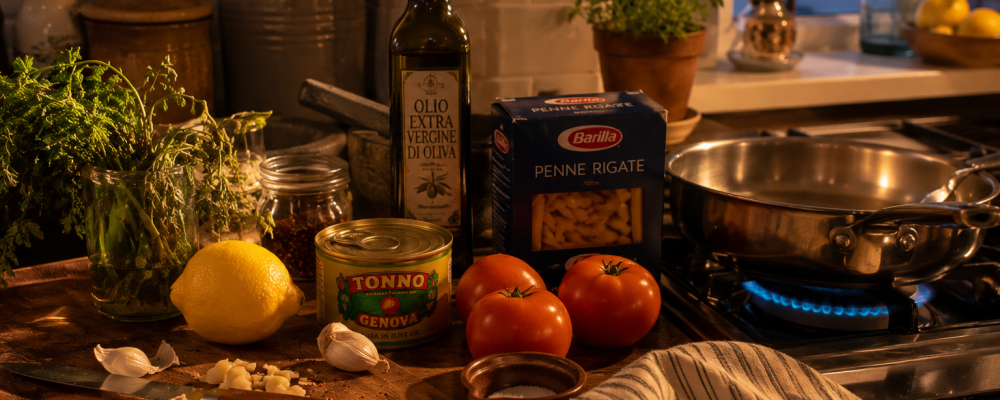
The pasta from nothing: the aglio e olio or the cacio e pepe or the pasta al tonno that uses the pantry ingredients — olive oil, garlic, dried chili, canned tuna, capers, anchovies — to produce a complete pasta sauce without fresh ingredients. The pasta that is always available when everything else appears to have run out.
The frittata: the egg-based preparation that uses whatever vegetables and cheese are in the refrigerator — the wilting herbs, the half-used pepper, the leftover potato, the end of the Parmesan — in a preparation that is simultaneously the egg dish and the vegetable dish and the starch. The frittata is the improvised dinner’s most specifically versatile format: it accommodates almost any combination of available ingredients and produces something that is genuinely excellent rather than merely adequate.
The grain bowl: the cooked grain from the Sunday cook session assembled with whatever protein and vegetable and acid are available. The farro with roasted vegetables and a fried egg and the vinaigrette made from whatever vinegar is in the pantry. This is the improvised dinner that requires the least cooking and the most assembly — and that is often better for it.
The quick braise: the protein that needs to be used tonight cooked briefly in a pan with whatever aromatics are available, a splash of wine or stock or water, the can of tomatoes that is always in the pantry, herbs from the garden or the windowsill. Twenty minutes of gentle cooking produces a preparation that tastes more considered and more developed than the time and the ingredients suggest it should.
The Pantry That Makes Improvisation Possible
The improvised dinner is only as good as the pantry that supports it — and the cook who wants to improvise reliably must maintain the specific pantry infrastructure that makes improvisation possible.
This has been discussed in these pages before, in the context of the Sunday cook and the summer’s end pantry project. But it deserves specific restatement in the context of the improvised dinner: the pantry that enables excellent improvised cooking is not large or complicated. It is specific.
Dried pasta in several shapes. Canned tomatoes of good quality. Canned beans in two or three varieties. Good olive oil. Several vinegars. The fermented condiments — soy sauce, fish sauce, miso — that provide umami depth without fresh ingredients. Dried grains. Dried lentils. Anchovy packed in oil. Capers. Good canned tuna.
With these pantry ingredients and whatever fresh ingredients remain in the refrigerator — the wilting herbs, the last egg, the half-used vegetable — the improvised dinner is always possible. The question is not whether there is food to cook but which food to cook and how.
The Meal Worth Remembering
There is a specific quality that the best improvised dinners have — a quality that the planned and recipe-followed dinner less consistently achieves.
Specificity.
The improvised dinner is specific to this evening — to these ingredients, this cook, this specific combination of what was there and what wanted to be made from it. It cannot be recreated exactly because the conditions that produced it will not recur in exactly the same form.
This specificity is what makes the improvised dinner occasionally extraordinary in a way that the planned dinner rarely achieves — because the planned dinner is a reproduction of something that already exists, while the improvised dinner is an original.
The meal that was made from what was there, that turned out to be exactly right for the evening, that produced the specific satisfaction of having found the answer to the question of what to make — this is the meal that the cook who improvises regularly has experienced and that the cook who only follows recipes has not.
It is worth developing the confidence to pursue it.
The Takeaway
The dinner that didn’t need a recipe is available every Tuesday evening to any cook who has the pantry and the framework to find it.
Ask the four questions. Identify the protein, the vegetable, the starch, and the thing that ties them together. Reach into the pantry for the infrastructure that converts the combination into a dish.
The meal is already there.
The cook’s job is to see it.














