
Something has changed about the way we eat together.
Not the food. Not the cooking. Not the availability of ingredients or the skill of the people preparing them or the variety of cuisines accessible to anyone with a decent grocery store and an internet connection.
Something about what happens when people sit down together. About the quality of presence at the table. About what gets talked about and what gets attended to and what gets missed entirely because attention has been distributed across too many surfaces and devices and demands to settle, fully, on the people in the room.
The dinner table has always been more than a place to eat. It has been, across virtually every human culture and throughout recorded history, one of the primary sites of transmission — of knowledge, of values, of story, of the particular understanding of the world that a family or a community passes from one generation to the next.
What gets transmitted at the table is not just food. It is a way of being together. And something about that transmission has become harder, less reliable, and less complete than it once was.
What the Table Used to Do
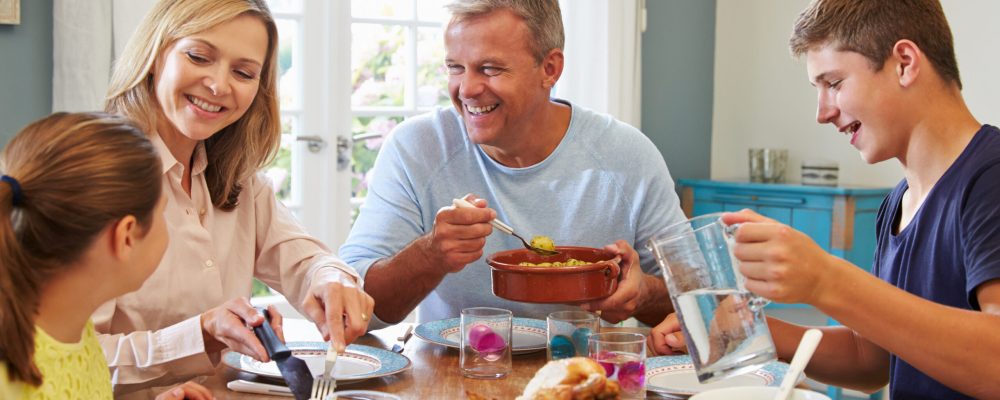
For most of human history, the shared meal was one of the few occasions in daily life when people who worked separately came together in the same physical space with no other immediate task than to eat and to be present with each other.
The work was paused. The fields, the shop, the domestic labor — all of it stopped for the duration of the meal. The table was a designated space of togetherness that the rest of the day’s activities didn’t provide.
In that space, things happened that couldn’t happen elsewhere. Children heard adults talking about the world — about politics, about neighbors, about money, about difficulty, about joy — in ways that were not curated for their consumption but that they absorbed nonetheless. Adults maintained the connective tissue of relationships that the busyness of daily life otherwise frayed. Elders transmitted knowledge — about the food on the table, about the family history, about how things were done and why — that existed nowhere else.
The anthropologist Robin Dunbar has written about the role of shared meals in social bonding among early humans — the idea that eating together, with the particular combination of physical proximity, shared focus, and relaxed attention that a meal produces, is one of the oldest and most effective mechanisms of social cohesion that our species has developed.
The dinner table, in this view, was not just a place to eat. It was a technology of connection — one that human societies developed and refined over thousands of years because it worked, because it produced the social bonds and the transmission of knowledge that communities needed to function.
What Changed
The change happened gradually enough that it is difficult to identify a single moment when the dinner table became something different from what it had been.
Television arrived in the dining room. Then the portable device arrived at the individual place setting. The family meal became increasingly optional as schedules diverged — as work hours extended, as after-school activities multiplied, as the logistics of gathering everyone in the same place at the same time became a project that required deliberate planning rather than the simple default of daily life.
When the meal did happen, the full presence it once required was no longer assumed. A screen on the table, or in a pocket where it could be checked between bites, redistributed attention in ways that previous generations of diners didn’t have to navigate. The conversation that would have filled the meal had a competitor — multiple competitors — that were specifically engineered to capture and hold attention more effectively than the person sitting across the table.
The result is not that family meals disappeared. Research suggests that they still happen in most households with some regularity. The result is that the quality of what happens at those meals — the depth of conversation, the quality of attention, the amount of information that moves between the people at the table — has changed in ways that are difficult to measure but that many people feel when they stop to consider it.
The Conversations That Happened at the Table
There are specific categories of conversation that happened, reliably, at family dinner tables in ways that happen less reliably now — and whose decline represents a real loss of something that the table was uniquely positioned to provide.
Stories. The family story — the account of where people came from, what they did, how they came to be in the particular place and circumstances they occupy — was transmitted primarily at the table. Not in formal settings, not in deliberate acts of storytelling, but in the casual, ongoing narrative that a family builds around shared meals. The grandparent who mentioned, between bites, what life was like in another country or another era. The parent who connected the food on the table to a memory from their own childhood. The accumulated story of who a family was, told incrementally over thousands of meals, that gave the younger members of the table a sense of their own context and continuity.
Research by Marshall Duke and Robyn Fivush at Emory University found that children who knew more about their family history — who could answer questions about where their grandparents grew up, what difficult events their family had survived, what the family’s values and traditions were — showed significantly higher resilience, better mental health outcomes, and stronger sense of identity than those who knew less. The mechanism of transmission for most of this knowledge was the dinner table. And the dinner table is where it is most at risk of being lost.
Disagreement. The table was one of the places where people who disagreed with each other — about politics, about values, about how to handle a difficult situation — were required to remain in the conversation rather than leaving it. The shared meal created a container for productive disagreement: people who needed to eat together had a practical reason to maintain the relationship through the difficulty, which made the disagreement more likely to be navigated than abandoned.
The capacity for productive disagreement — for holding a relationship through a difference of view — is a skill that requires practice. The dinner table provided that practice in a context where the stakes were high enough to matter and low enough to survive. The dinner table conversation about a political disagreement between a parent and a teenager is not the same as the public disagreement that happens elsewhere — it is bounded, it is relational, and it is survivable in a way that produces the skill of navigating disagreement without the catastrophic stakes of getting it wrong in a higher-stakes context.
The Food as the Occasion
There is one dimension of the dinner table conversation that is underappreciated even in discussions of what has been lost.
The food itself — what was on the table, where it came from, how it was made, what it meant — was once a primary subject of table conversation in ways that are now largely absent.
The grandmother who explained, while serving, where this recipe came from and who taught it to her. The parent who connected the vegetable on the table to the season, the farm, the specific circumstances of how food reached the kitchen. The conversation about what a dish was supposed to taste like and why it did or didn’t on a given evening — the evaluation of the meal as an ongoing practice of developing taste and judgment.
This food conversation served multiple purposes simultaneously. It transmitted cooking knowledge and food culture from one generation to the next. It connected the meal to a broader context of tradition, season, and place. And it gave the act of eating a reflective dimension — an attention to what was being consumed and what it meant — that eating in silence or in front of a screen cannot provide.
The food on the table is not just sustenance. It is a subject. And treating it as a subject — asking about it, discussing it, connecting it to memory and tradition and curiosity — is a practice that makes the meal richer without changing what is on the plate.
How to Bring It Back
The dinner table conversation that has been lost is not gone. It is available — to any household willing to create the conditions that make it possible.
Those conditions are not complicated. They are, in fact, simple enough to feel almost embarrassingly obvious when stated directly.
Eat together. Not every night — the logistics of modern life make that genuinely difficult for many households — but with enough regularity that the table becomes a reliable occasion rather than a rare event.
Remove the screens. Not as a moral statement but as a practical recognition that full presence at the table requires removing the things that compete with it. A phone on the table, even face down, distributes attention in ways that change the quality of conversation. Its absence changes it back.
Ask about the food. Where did this come from? How was it made? What does it remind you of? What would make it better? These questions are not just food conversation — they are a practice of attention and reflection that makes the meal a different kind of event than eating without them.
Tell the stories. Not in a formal or deliberate way, but in the casual, ongoing, incremental way that real family storytelling happens — a memory triggered by a flavor, an association sparked by a conversation, a piece of family history attached to a dish that appears on the table.
And stay at the table after the eating is done. The best table conversations often happen when the food is finished and there is no longer any practical reason to remain — when the only reason to still be there is the conversation itself.
That’s when the table does its best work.
The Takeaway
The dinner table has always been more than a place to eat. It has been a technology of connection, of transmission, of the particular kind of presence that humans need from each other and that the busyness of daily life otherwise makes difficult to find.
What happens at the table — what gets talked about, what gets remembered, what gets passed from one generation to the next in the casual, ongoing narrative of shared meals — matters in ways that extend far beyond the food.
The table is still there.
The question is what we bring to it.