
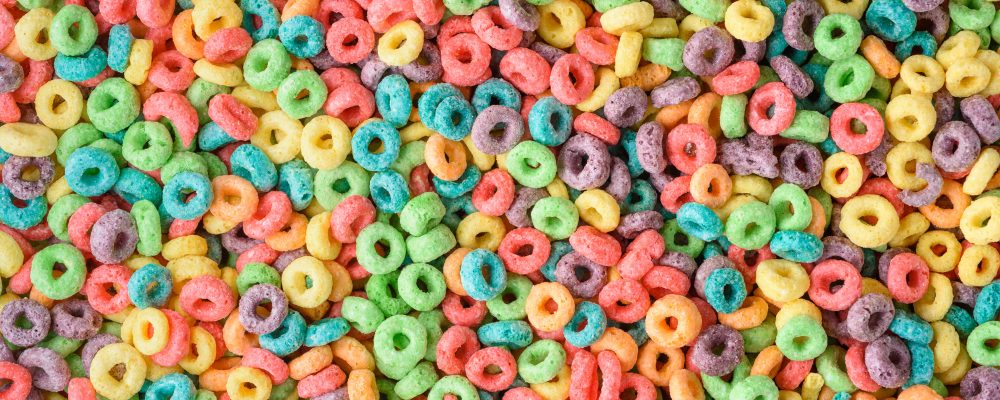

The cereal aisle at Target is about to look very different.
Target made the announcement on February 27, 2026, that it will become one of the first national retailers to only carry breakfast cereals made without certified synthetic colors. By the end of May 2026, every cereal sold in Target stores and online must meet the new standard — or it won’t be on shelves at all.
That puts several iconic, brightly colored cereals at risk, including Froot Loops, Apple Jacks, Lucky Charms, and Captain Crunch, all of which currently contain certified synthetic dyes in their formulations.
What Are Certified Synthetic Colors?
The term “certified synthetic colors” refers to a specific category of artificial, petroleum-based food dyes that are manufactured in a lab and batch-certified by the FDA.
Common examples include:
- Red No. 40
- Yellow No. 5
- Yellow No. 6
- Blue No. 1
These dyes are widely used in brightly colored foods — particularly cereals marketed to children — to achieve vibrant hues that don’t occur naturally. They have been the subject of growing scrutiny from health advocates, regulators, and consumers in recent years over concerns about their potential health effects.
Which Cereals Are at Risk?
Target has not released an explicit list of cereals that will be removed from shelves. However, based on their current ingredient formulations, several popular name-brand cereals could be affected:
- Froot Loops (WK Kellogg) — contains Red 40, Yellow 5, Yellow 6, Blue 1
- Apple Jacks (WK Kellogg) — contains Yellow 5, Blue 1
- Lucky Charms (General Mills) — currently contains Red 40, Yellow 5, Yellow 6, Blue 1, though a reformulation is planned
- Cap’n Crunch (Quaker/PepsiCo) — contains Yellow 5, Yellow 6
Target has confirmed that some cereals — including Trix and Lucky Charms, both made by General Mills — will have updated formulations rather than being pulled. Target also stated it will no longer carry brands that don’t reformulate, without naming specific brands.
Cereals already free of synthetic dyes — including Cheerios, Honey Nut Cheerios, and Cascadian Farm — are not affected.
Where Does Each Brand Stand?
The brands behind the at-risk cereals are at very different stages of reformulation, and that gap is significant.
General Mills has already removed synthetic dyes from 85% of its U.S. retail portfolio and has committed to removing them from all U.S. cereals by this summer. The company stated it does not anticipate Target halting sales of any of its products.
WK Kellogg, which makes Froot Loops, Apple Jacks, and other dye-containing cereals, has pledged to remove artificial dyes by the end of 2027 — well after Target’s May 2026 deadline. That timeline mismatch puts Kellogg’s most colorful products in direct conflict with Target’s new policy, and the retailer has not clarified how it will handle brands that don’t meet the May deadline.
Why Is Target Doing This?
The move is being driven by two converging forces: consumer demand and federal pressure.
Target’s guest insights and long-term sales data show a sustained shift toward foods made without artificial additives, particularly for the products families buy for their children.
At the same time, the regulatory environment is shifting. The FDA banned Red 3, a petroleum-based dye, in January 2025. The Trump administration subsequently urged food makers to phase out petroleum-based artificial colors by the end of 2026 as part of its “Make America Healthy Again” initiative. The FDA is currently reviewing additional dyes including Red No. 40 and Yellow No. 5.
Target is acting ahead of most of the industry. The FDA’s food industry tracker shows few companies have fully completed dye removal pledges, with most on multi-year phaseouts extending through 2027.
Target isn’t the first retailer to draw this line — Whole Foods has never allowed products with artificial colors since its founding in 1980, and Trader Joe’s also does not use synthetic colors in its products. But Target’s scale makes this announcement significantly more impactful. Compelling national brands to reformulate or lose shelf space at one of the country’s largest retailers is a different kind of leverage entirely.
What This Means for Shoppers
For most Target shoppers, the practical impact will be minimal — 85% of the cereals Target sells are already free of synthetic dyes. The remaining 15% is where the changes will be felt.
Families who regularly buy brightly colored cereals — particularly those made by WK Kellogg — should be aware that those products may disappear from Target shelves by the end of May if reformulated versions aren’t ready in time.
For shoppers who have been trying to reduce artificial dyes in their family’s diet, Target’s new policy effectively does the filtering for them.
The Bottom Line
Target will stop carrying any breakfast cereal containing certified synthetic colors by the end of May 2026, putting popular dye-containing cereals from WK Kellogg, Quaker, and others at risk of losing shelf space. General Mills has committed to reformulating its full cereal lineup by summer, but WK Kellogg’s 2027 timeline creates a direct conflict with Target’s deadline.
The cereal aisle is changing — and Target is moving faster than most to get there.














