
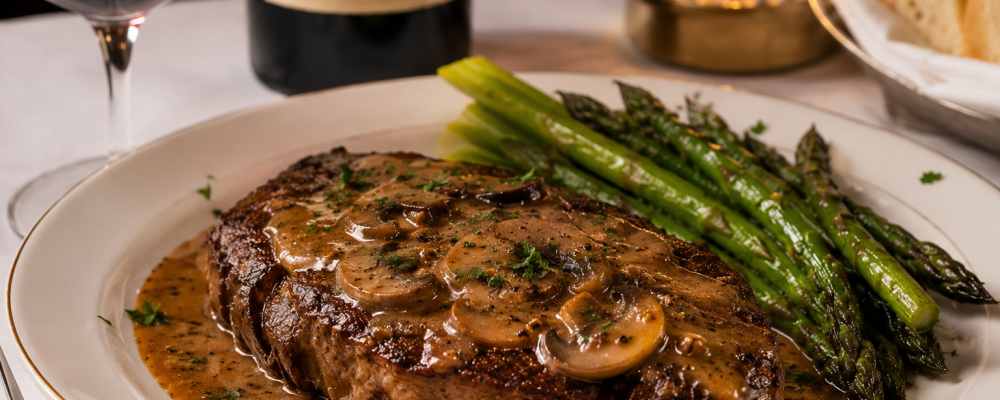

Steak Diane occupies a fascinating place in culinary history—a dish that was simultaneously haute cuisine and tableside theater, born in the grand hotel restaurants and supper clubs of mid-20th century America and Europe where captains would prepare it dramatically at the table, flambéing cognac in chafing dishes while diners watched with genuine delight. That theatrical tradition has faded somewhat, but the underlying dish—its sauce, its technique, its fundamental intelligence—remains as compelling as ever. Understanding what makes Steak Diane work is understanding something important about how great pan sauces function.
The sauce is where this recipe reveals its genius. Each ingredient serves a specific, irreplaceable purpose. Worcestershire sauce contributes layered complexity—fermented tamarind, anchovies, vinegar, molasses, and spices that took centuries of culinary evolution to assemble—providing umami depth that beef stock alone cannot achieve. Dijon mustard adds bright, sharp acidity and acts as an emulsifier, helping bind the sauce’s fat and liquid components while contributing peppery, aromatic complexity. The mustard’s emulsifying properties are particularly valuable; they help the cream and stock form a cohesive, clingy sauce rather than a separated, greasy one. Garlic, sautéed briefly in the steak’s residual butter, adds aromatic sweetness. And the cream provides the silky body that ties everything together, mellowing the Worcestershire’s intensity while creating that luxurious mouthfeel that defines great pan sauces.
What makes this preparation particularly interesting from a technical standpoint is the fond—those caramelized proteins and sugars left in the pan after searing the steak. Every drop of liquid added subsequently dissolves a bit more of that concentrated flavor, incorporating it into the sauce. By the time the cream is added, you’ve essentially transferred the steak’s flavor impression into liquid form, creating a sauce that’s intimately connected to the protein it accompanies. This is why pan sauces built in the same vessel as the protein always taste more complete than separately made sauces—they share a flavor history.
The asparagus plays a supporting but crucial role here. Its clean, slightly grassy, vegetal character provides necessary contrast to the sauce’s richness, refreshing the palate between bites of cream-coated steak. The color contrast—bright green against the mahogany sauce—adds visual elegance that matters on a plate this classic. From a wine pairing standpoint, the asparagus introduces a slight challenge: it contains asparagusic acid, which can make certain wines taste metallic or vegetal. The solution is to choose wines with enough fruit and body that those compounds don’t dominate the pairing—bold reds that overwhelm rather than amplify the asparagus’s chemical compounds.
─────────
The Inspiration Behind This Recipe
Steak Diane emerged in the supper club culture of the 1950s and 60s, when tableside preparation was both a culinary technique and a form of entertainment for affluent diners. The dish is named after Diana, the Roman goddess of the hunt—a reference to the venison preparations that may have inspired the sauce. Various New York and London restaurants claim its invention, though the dish likely evolved from European hotel cooking traditions where flambéed preparations were fashionable demonstrations of culinary skill. Julia Child, Craig Claiborne, and other food luminaries of the era championed the dish, cementing its status as American fine dining’s most glamorous steak preparation. This version captures the essential technique—the pan sauce built from fond, Worcestershire, mustard, and cream—while making it entirely achievable without a chafing dish or a dining room audience.
─────────
A Brief History of Classic Pan Sauces
The technique of building sauces from pan drippings dates to the foundations of French classical cuisine, codified by Escoffier in the late 19th century but practiced for centuries before. The principle is elegant: searing protein creates caramelized flavor compounds adhered to the cooking vessel; adding liquid dissolves those compounds, creating a sauce with inherent connection to the protein it accompanies. Sauce Diane specifically belongs to the tradition of enriched pan sauces (sauces à la poêle)—those finished with cream and built on reduced stock and aromatics. The American mid-century addition of Worcestershire sauce reflects the New World’s love of bottled condiments as flavor amplifiers, creating a hybridized preparation that’s neither strictly French nor purely American but possesses the best qualities of both traditions. This culinary fusion represents exactly how cooking evolves—through cultural exchange, practical adaptation, and the continuous pursuit of better flavor.
─────────
Why This Cooking Method Works
The science behind the technique:
- Butter and olive oil combination: Butter provides flavor and browning compounds; olive oil raises the smoke point, preventing butter from burning at searing temperatures
- High-heat searing: Creates Maillard reaction, developing hundreds of flavor compounds in the steak’s exterior that transfer partially to the pan fond
- Resting the steak: Allows muscle fibers to relax and juices to redistribute, preventing moisture loss when sliced
- Garlic in residual butter: Fat-soluble garlic compounds release into the cooking fat, distributing throughout subsequent sauce
- Fond dissolution: Each liquid addition (stock, Worcestershire) dissolves additional caramelized protein compounds from the pan surface
- Worcestershire complexity: Fermented, aged condiment contributes layered umami that fresh ingredients cannot replicate
- Dijon emulsification: Mustard’s lecithin content helps bind fat and liquid into cohesive sauce
- Cream reduction: Gentle simmering concentrates cream’s flavor while evaporating water, increasing viscosity
- Returning steak to sauce: Brief warming allows sauce to penetrate the steak’s surface while coating the exterior
- Asparagus steaming: Preserves color, texture, and nutritional content without adding competing flavors
─────────
Flavor Profile: What to Expect
Bold • Complex • Savory • Tangy • Luxurious
Steak Diane delivers sophisticated, layered flavors anchored by exceptional sauce complexity. The steak itself provides savory, caramelized depth with a properly seared exterior giving way to juicy, tender interior. The Diane sauce is where the dish earns its reputation—deeply savory from Worcestershire’s fermented complexity, bright and sharp from Dijon’s mustard character, rounded and silky from heavy cream, and aromatic from garlic. There’s a fascinating balance between richness and brightness: the cream provides luxury while the mustard and Worcestershire provide acidity and punch that prevent the sauce from becoming cloying. Asparagus contributes clean, grassy freshness that refreshes the palate between bites. Fresh parsley adds herbaceous brightness that lifts the entire plate. It’s mid-century elegance that still tastes completely contemporary.
─────────
Tips for Making the Best Steak Diane with Asparagus
Steak selection and preparation:
- Traditional Steak Diane uses thin-cut sirloin or tenderloin (about ¾-1 inch thick)
- Thinner cuts cook quickly and work better for pan sauce timing
- Pound to even thickness if necessary for consistent cooking
- Pat completely dry—moisture prevents proper searing
- Season generously just before cooking, not in advance
- Room temperature beef (30 minutes out of refrigerator) sears more evenly
Achieving the perfect sear:
- Pan must be very hot before adding butter-oil mixture—test with a drop of water
- Don’t overcrowd—cook one or two steaks at a time depending on pan size
- 3-4 minutes per side creates medium-rare to medium in thin steaks
- Resist moving steaks once placed—let the crust develop undisturbed
- Use a meat thermometer: 130°F medium-rare, 135-140°F medium
- Remove steaks and rest on a warm plate loosely tented with foil
Building the Diane sauce:
- Don’t clean the pan—all those caramelized bits are flavor
- Reduce heat to medium before adding garlic—burnt garlic is bitter
- 30 seconds is sufficient for garlic; it continues cooking as liquids are added
- Add stock and Worcestershire together, scraping up every bit of fond
- Let liquids reduce by about one-third before adding cream
- Dijon should be stirred in thoroughly—it needs to fully incorporate
- Simmer cream gently; don’t boil aggressively or it can break
- Taste constantly and adjust—this sauce should sing with complexity
Asparagus preparation:
- Choose medium-thickness spears—too thin overcook quickly, too thick undercook
- Snap woody ends off naturally (they break where tenderness begins)
- Steam 3-5 minutes until bright green and tender-crisp
- Season with salt immediately after cooking while hot
- Time asparagus to finish as sauce is completing
Sauce consistency:
The sauce should coat a spoon and flow slowly—not watery but not gluey. If too thin, simmer longer. If too thick, add a splash of stock. Returning the steak to the sauce for 1-2 minutes both warms the steak and allows the sauce to glaze the surface.
─────────
Wine Pairing Guide
Perfect pairings for Steak Diane with Asparagus:
Cabernet Sauvignon (Napa or Bordeaux) ★ Best Match
Full-bodied with blackcurrant, cedar, and tobacco notes that stand alongside the Diane sauce’s complexity without being overwhelmed. The wine’s substantial tannins grip the beef beautifully while its dark fruit provides contrast to the Worcestershire’s fermented character. Napa versions offer riper fruit; Bordeaux provides more restraint and earthy complexity—both are excellent choices for this classic preparation.
Bordeaux Blend (Left Bank)
The ultimate classic pairing for a classic dish. Cabernet Sauvignon-dominant blends from Médoc or Pessac-Léognan offer elegance, structure, and the herbaceous, cedar complexity that perfectly complements Dijon mustard’s character in the sauce. If you want the most historically authentic pairing, look to Bordeaux.
Malbec (High-Altitude Argentina)
Plush dark fruit, velvety tannins, and enough body to stand up to the sauce’s richness. Premium high-altitude Malbec from Mendoza offers more structure and complexity than basic versions, with mineral notes that provide interesting contrast to the Worcestershire’s umami depth.
Syrah (Northern Rhône)
Crozes-Hermitage or Saint-Joseph offer dark fruit, white pepper, and meaty, savory notes that create remarkable resonance with both the seared steak and the Worcestershire sauce’s complex character. The wine’s peppery quality echoes the Dijon beautifully.
Châteauneuf-du-Pape
Full-bodied Grenache-based blend with dark fruit, herbal notes, and enough structure for the richness of the cream sauce. The wine’s complexity matches the sauce’s layered character while its fruit depth complements the beef.
Alternative pairing: For those who favor elegant over powerful, a Premier Cru Burgundy Pinot Noir offers sufficient body and complexity for the sauce while its earthy, mushroom character creates unexpected resonance with the dish’s savory depth—a more refined, contemplative pairing.
─────────
Serving Suggestions and Side Pairings
Beautiful presentations:
- Classic supper club: Steak centered on a warmed white plate, sauce spooned generously over and around, asparagus fanned alongside, parsley scattered
- Modern plating: Steak sliced on the bias, fanned over sauce swoosh, asparagus spears crossing at angles
- Tableside theater: Bring the pan to the table and spoon sauce over steaks dramatically—honor the dish’s theatrical tradition
Ideal side dishes:
- Garlic Rosemary Focaccia Muffins: Essential for capturing the Diane sauce that inevitably pools on the plate
- Creamy mashed potatoes: Classic steakhouse pairing that absorbs sauce beautifully
- Roasted fingerling potatoes: Crispy exterior contrasts sauce’s silkiness
- Creamed spinach: Classic steakhouse accompaniment that complements the dish’s mid-century character
- Portobello Mushrooms with Wine and Thyme: Earthy mushrooms create natural resonance with the Worcestershire sauce
For a complete Wine Wednesday spread:
Create a classic steakhouse experience at home: begin with Garlic Parmesan Roasted Shrimp or oysters, serve Steak Diane as the dramatic centerpiece with mashed potatoes and asparagus, and finish with a classic chocolate soufflé or crème brûlée. Open wine early—let it breathe before the steak arrives. Offer both a Cabernet and a Bordeaux blend to explore how subtle differences in wine structure interact with the sauce’s complexity.
─────────
Storage, Reheating, and Make-Ahead Tips
Storage:
- Refrigerate steak and sauce separately in airtight containers for up to 2 days
- Sauce stores better than steak—steak’s doneness changes with refrigeration
- Asparagus stores separately; best made fresh
Reheating:
- Steak: Bring to room temperature, warm gently in sauce over low heat 2-3 minutes per side
- Oven method: 250°F for 10-12 minutes just until warmed through, then add to sauce
- Sauce: Reheat gently in a pan over low heat, whisking and adding splash of stock if too thick
- Never microwave steak—it continues cooking and dramatically changes texture and doneness
- Asparagus: Steam fresh when serving; reheated asparagus loses its color and texture
Make-ahead strategies:
- Sauce can be made completely up to 1 day ahead—reheat gently and add fresh-cooked steak
- This is primarily a cook-and-serve dish; the steak is best made fresh
- For entertaining, prep all ingredients in advance (mince garlic, measure liquids, trim asparagus) so cooking is purely execution
- The actual cooking takes only 20 minutes—manageable even for dinner parties if properly prepped
Pro entertaining tip:
Make the sauce base (through stock and Worcestershire reduction) ahead, then finish with cream and steak when guests are seated. This reduces active cooking time at service to under 10 minutes while maintaining freshness.
─────────
Why This Recipe Deserves a Spot in Your Wine Wednesday Rotation
Steak Diane represents something important in cooking history—a moment when restaurant dining was genuinely theatrical, when the preparation of food was considered worthy of an audience, when technique was celebrated rather than hidden in the kitchen. Bringing this dish into your home isn’t just cooking a good meal; it’s connecting with that tradition, honoring the cooks and restaurateurs who developed these techniques, and proving that the elegance of mid-century fine dining belongs in anyone’s kitchen who’s willing to learn the method.
What makes this particularly compelling for Wine Wednesday is how the Diane sauce creates a remarkable bridge between food and wine. The Worcestershire’s fermented complexity, the mustard’s brightness, the cream’s richness—these are flavors that bold red wines were built to engage. A proper Cabernet Sauvignon doesn’t just accompany this sauce; it converses with it, with the wine’s tannins providing structure that the cream-enriched sauce needs and the wine’s dark fruit offering contrast to the Worcestershire’s savory depth. This is pairing that feels intellectually satisfying as well as delicious.
The technique here also represents genuine skills worth developing. Learning to build a proper pan sauce—respecting the fond, understanding how each ingredient contributes, knowing when the sauce has reached proper consistency—is knowledge that transfers across dozens of other preparations. Master Steak Diane and you’ve unlocked a category of cooking that will serve you throughout your culinary life.
Most importantly, this dish reminds us that cooking can be genuinely exciting—that the sizzle of steak hitting a hot pan, the dramatic reduction of stock and Worcestershire into something concentrated and complex, the final swirl of cream creating a sauce that clings to the beef with exactly the right consistency—these moments have genuine drama and deserve to be appreciated. Pour something worthy, cook with full attention, and serve this classic with the pride it deserves.
Here’s to the great dishes of the past, to the techniques that made them memorable, and to Wine Wednesday evenings that feel like genuine occasions worth dressing up for.
Santé!
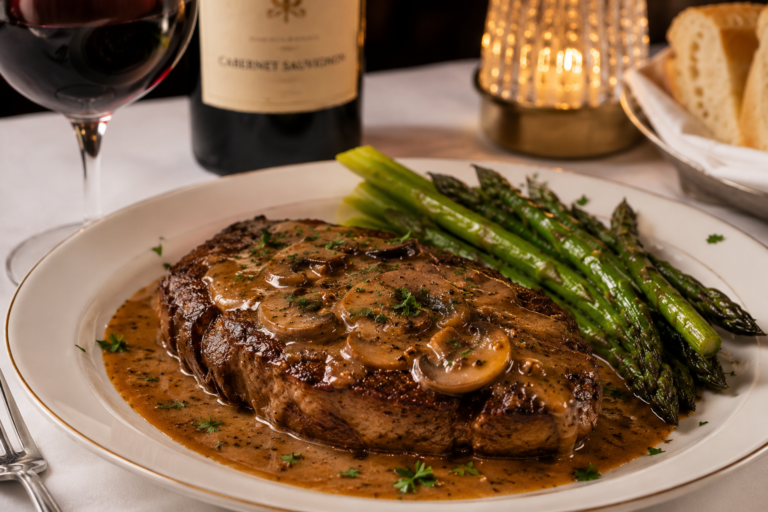
Steak Diane with Asparagus
Tender steaks bathed in a rich, tangy Worcestershire-Dijon cream sauce—classic mid-century elegance that demands your finest red wine.
4
servings10
minutes25
minutes520
kcal35
minutesIngredients
- For the Steak:
4 pieces 4 beef sirloin or tenderloin steaks (6 oz each, about ¾ inch thick)
2 tablespoon butter
1 tablespoon olive oil
to taste salt & pepper
- For the Diane Sauce:
3 cloves garlic
0.5 cup beef stock
1 tablespoon Dijon mustard
0.5 cup heavy cream
2 tablespoon fresh parsley, chopped
- For the Asparagus:
1 pound asparagus, trimmed
to taste salt
Directions
- Season steaks generously with salt and pepper on both sides.
- Heat butter and olive oil in a large pan over medium-high heat until butter is foaming.
- Cook steaks 3-4 minutes per side for medium-rare. Remove from pan and rest on a warm plate tented loosely with foil.
- Reduce heat to medium. Add garlic to the same pan and sauté for 30 seconds until fragrant.
- Stir in beef stock and Worcestershire sauce, scraping up all browned bits from the pan. Simmer until reduced by one-third, about 3-4 minutes.
- Whisk in Dijon mustard until fully incorporated.
- Add heavy cream and simmer gently, stirring frequently, until sauce thickens enough to coat a spoon, about 3-4 minutes.
- Return steaks to the pan and coat with sauce, warming for 1-2 minutes.
- Meanwhile, steam asparagus 3-5 minutes until bright green and tender-crisp. Season with salt.
- Serve steaks with asparagus alongside, spooning extra sauce generously over the top and garnishing with fresh parsley.
Nutrition Facts
- Total number of serves: 4
- Calories: 520kcal
About This Author

Benjamin Brown
Recipe Developer
Benjamin is our flavor engineer. A classically trained chef turned recipe developer, he’s obsessed with balancing taste, texture, and creativity. He ensures that every recipe we publish is not only delicious but also reliable, approachable, and repeatable — even for beginners.
Favorite dish: Slow-braised short ribs with red wine reduction.
Kitchen motto: “Cooking is part science, part soul.”















