
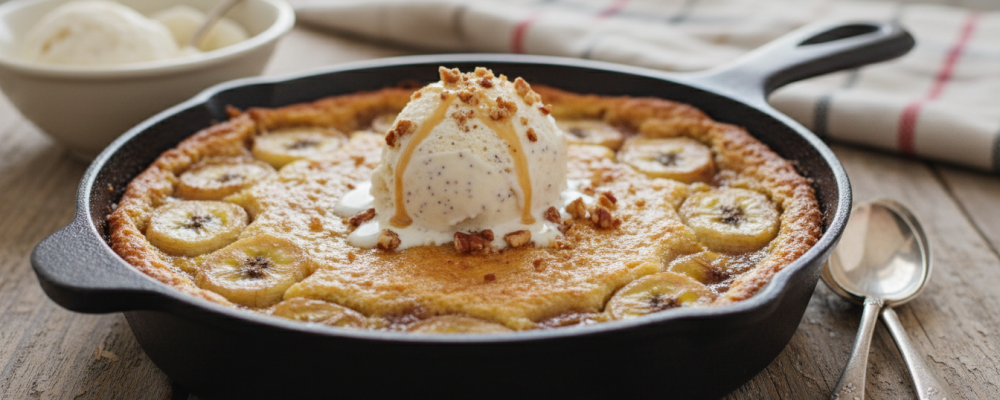

Southern Banana Cobbler is one of those recipes that fascinates me from a pastry science perspective because it completely violates everything we’re taught about proper mixing and technique—and yet it produces absolutely spectacular results. The “don’t stir” instruction isn’t laziness or old-fashioned superstition; it’s actually brilliant chemistry. By keeping the butter, batter, and fruit in distinct layers, you create conditions where density, heat, and buoyancy can work their magic, resulting in multiple textures from a single pan: crispy edges, cake-like top, gooey middle, and custardy bottom.
What makes this cobbler genuinely exciting is watching the transformation during baking. When you pour thin batter over melted butter without stirring, physics takes over. The butter, being less dense than the batter and becoming even more fluid as it heats, rises up through the batter along the edges where there’s less resistance. This creates those gorgeous golden, almost fried edges that are everyone’s favorite part. Meanwhile, the bananas release moisture as they cook, which seeps down into the batter, creating pockets of concentrated banana flavor and preventing the bottom from becoming too dry. The baking powder creates lift in the batter, developing that cake-like structure on top while the bottom remains custard-like from all the butter and banana moisture.
I love this recipe because it demonstrates that great desserts don’t always require precision and technique—sometimes they require understanding how ingredients behave and trusting the process even when it seems counterintuitive. This is rustic Southern baking at its finest: simple ingredients, minimal technique, maximum deliciousness. It’s the dessert I make when I want something sweet without the fuss of measuring perfectly or worrying about proper folding technique. It’s forgiving, reliable, and produces that perfect combination of textures that keeps you going back for just one more bite.
─────────
The Inspiration Behind This Recipe
Southern Banana Cobbler belongs to a fascinating category of “self-saucing” or “impossible” desserts where the final product seems to defy the preparation method. These recipes emerged from Southern and rural American cooking traditions where resourcefulness and efficiency were prized. Home cooks needed desserts that could be assembled quickly with basic ingredients and that would bake reliably in wood-fired ovens or temperamental stoves without constant monitoring.
The specific technique of pouring batter over melted butter creates a dessert where the components rearrange themselves during baking based on density and temperature. It’s essentially controlled separation—the fat rises, the flour-based batter develops structure and lift from leavening, and any moisture from fruit seeps downward. Understanding this physical process helps explain why the “don’t stir” instruction is so crucial: stirring would emulsify the butter into the batter, preventing it from rising independently and creating those characteristic crispy edges.
From a flavor perspective, using very ripe bananas is essential. Overripe bananas have converted more of their starch into sugar, making them sweeter and more aromatic. They’re also softer, which means they break down slightly during baking and release moisture more readily. This isn’t just about using up bananas before they go bad (though that’s certainly practical)—it’s about choosing the right stage of ripeness for optimal flavor and texture in the final dessert.
─────────
A Brief History of Southern Cobblers & Dump Desserts
Cobblers emerged in early American cooking as adaptations of British puddings and pies, modified to work with available ingredients and frontier cooking conditions. The term “cobbler” appears in American cookbooks as early as the 1850s, referring to fruit desserts with various toppings—biscuit dough, batter, or pastry—baked until the fruit bubbled and the topping browned.
Southern cobblers developed their own distinctive characteristics: they tend to be sweeter than their Northern counterparts, often incorporate more butter for richness, and sometimes use innovative layering techniques like this butter-batter-fruit method. These techniques weren’t just creative—they were practical solutions to real challenges like uneven oven temperatures, limited equipment, and the need to feed large groups efficiently.
The “dump” or “pour” method represents peak efficiency in dessert making. Rather than creaming butter and sugar, folding in flour carefully, or worrying about proper mixing technique, these recipes trust that basic ingredients combined simply and baked properly will produce excellent results. This approach reflects both the resourcefulness of Southern cooks and an intuitive understanding of how ingredients behave with heat.
Bananas became part of Southern baking traditions in the late 19th and early 20th centuries as steamship trade made them affordable and widely available. Southern port cities like New Orleans became major banana importers, and the fruit quickly integrated into regional cuisine. Banana pudding became the most famous Southern banana dessert, but variations like this cobbler showcase how Southern bakers adapted traditional formats to incorporate new ingredients.
─────────
Why This “Don’t Stir” Method Works Perfectly
Density separation drives the texture development. When you pour batter over melted butter without stirring, you create a system with distinct density layers. The butter (pure fat, less dense than water) wants to rise. The batter (flour, sugar, milk—denser and more viscous) resists sinking but doesn’t rise as readily as fat. During baking, as everything heats and changes viscosity, the butter migrates upward along the path of least resistance (the edges), creating those golden, crispy sections.
The batter’s consistency is calibrated for this method. This batter is deliberately thin—more like pancake batter than cake batter. The lower viscosity allows two things to happen: first, it spreads easily over the butter without mixing; second, it allows butter to rise through it during baking. A thicker batter would trap the butter underneath, preventing the characteristic texture development.
Baking powder creates structure in the upper layer. As the batter heats, the baking powder releases carbon dioxide, creating bubbles that make the batter rise and develop a cake-like structure on top. Because the butter has risen along the edges, those sections become crispy and golden (essentially shallow-fried in butter), while the center remains more cake-like. This creates natural textural variation without any additional technique.
Bananas function as moisture reservoirs. Bananas are about 75% water. As they bake, they release moisture gradually, which seeps into the batter below, preventing the bottom from becoming too dry or cakey. This moisture also helps create that characteristic custardy bottom layer. The bananas’ natural pectin contributes to the slightly gel-like consistency that develops in the gooey middle section.
Sugar concentration affects browning and texture. The sugar in the batter (plus the natural sugars from overripe bananas) contributes to Maillard browning on exposed surfaces and caramelization where sugars concentrate. This creates flavor complexity beyond just “sweet”—you get caramel notes, toasted flavors, and deeper color that make the dessert more interesting.
The baking temperature and time are calibrated for complete transformation. At 350°F for 45 minutes, the cobbler has time to undergo all necessary physical and chemical changes: the butter rises, the batter develops structure, the bananas cook down and release moisture, and the top browns beautifully. Rushing this process produces underdeveloped texture; extending it can dry out the dessert.
The melted butter creates a non-stick base. That initial layer of melted butter on the bottom serves a practical purpose: it prevents sticking and makes serving easier. It also contributes to the rich, buttery flavor that permeates the entire dessert.
─────────
Flavor Profile: What to Expect
Intense, concentrated banana flavor dominates—using very ripe bananas and baking them until soft creates deep, genuine banana taste. It’s not subtle or artificial; it’s full-bodied and unmistakably banana. The heat intensifies the fruit’s natural sugars and aromatic compounds, creating that characteristic baked banana flavor that’s richer and more complex than raw banana.
Buttery richness appears throughout, especially in those golden edges where butter has risen and caramelized. The butter provides essential fat richness and a slightly salty note that balances the sweetness. Those crispy, butter-soaked edges are often the most sought-after bites—they’re almost cookie-like in texture with intense buttery flavor.
Simple sweetness from the batter creates the cake-like foundation. The granulated sugar provides straightforward sweetness that doesn’t compete with the banana or butter—it’s there to balance and support rather than dominate. Some sugar caramelizes on the exposed top surface, adding depth and color.
Vanilla adds warmth and rounds out flavors. The vanilla doesn’t call attention to itself but works behind the scenes to enhance the banana and create a more cohesive flavor profile. It adds aromatic complexity without being identifiable as a separate flavor.
Multiple textures create interest. Crispy, almost fried edges where butter pooled and rose. Cake-like sections on top that are tender and sweet. Gooey, custard-like middle that’s rich and soft. Tender banana pieces that have broken down slightly from baking. Every bite is textually different, which makes this dessert addictive—you keep eating because the experience varies depending on where you scoop from.
The overall experience is pure comfort. This isn’t refined or sophisticated—it’s honest, straightforward deliciousness. It tastes like home, like someone’s grandmother’s recipe, like all the best parts of Southern baking traditions. It’s sweet, warm, buttery, satisfying, and completely unpretentious.
─────────
Tips for Making the Best Southern Banana Cobbler
Choosing Bananas:
- Use very ripe bananas—brown-spotted or even mostly brown is ideal. The starches have converted to sugars, making them sweeter and more flavorful.
- Overripe bananas release more moisture during baking, which is essential for creating that gooey middle section.
- You’ll need 3-4 medium bananas to adequately cover a 9×13 inch pan.
- Slice evenly (¼-inch thick) for uniform cooking—too thin and they disappear, too thick and they don’t cook through properly.
Preparing the Baking Dish:
- Melt butter in the baking dish in the preheating oven—this ensures the butter is completely melted and hot when you add the batter.
- Watch carefully—you want the butter melted and just starting to sizzle, but not browned or burned.
- Use a 9×13 inch metal or glass baking dish—both work well, though metal conducts heat more evenly.
Making the Batter:
- The batter should be thin—more liquid than typical cake batter. This is correct and essential for the technique to work.
- Don’t overmix—stir just until combined with no dry flour visible. Overmixing develops gluten unnecessarily.
- Room temperature milk incorporates more smoothly than cold milk.
- Measure flour correctly by spooning into the measuring cup and leveling off—scooping can pack flour and throw off ratios.
The Critical “Don’t Stir” Rule:
- Pour batter slowly and evenly over the melted butter, starting from the center and working outward.
- Do not stir, swirl, or mix—this is absolutely essential. The layers must remain distinct for proper texture development.
- The butter will pool around the edges—this is correct. It will rise through the batter during baking.
- Some butter visible around the edges is normal and desired—don’t try to cover it with batter.
Adding Bananas:
- Distribute banana slices evenly across the entire surface for banana in every bite.
- Slight overlap is fine but avoid clumping all the bananas in one area.
- Press bananas lightly into the batter so they make contact but don’t sink completely to the bottom.
- Edge bananas will caramelize beautifully and develop the most concentrated flavor.
Baking to Perfection:
- Don’t open the oven for at least 30 minutes—temperature fluctuations can disrupt the butter rising through the batter.
- Look for golden-brown color on top with darker edges as signs of proper doneness.
- The center should be set but still slightly jiggly—it will firm as it cools slightly.
- Bubbling around the edges indicates the butter is active and the cobbler is cooking properly.
- Some butter pooling at the edges when finished is normal and delicious—that’s where the best crispy bits are.
Serving Temperature:
- Let cool 10-15 minutes before serving—this allows the structure to set slightly while keeping it warm.
- Serve warm, not piping hot—the flavors and textures are optimal when warm but not scalding.
- Vanilla ice cream is traditional and the cold-hot contrast is sublime.
- Scoop rather than slice—this is a rustic dessert with intentional textural variation, not a neat cake.
─────────
Serving Suggestions and Presentation Ideas
Classic Southern Comfort: Scoop generous portions into bowls and top with vanilla ice cream melting down the sides. The warm cobbler melts the ice cream, creating a delicious vanilla sauce that mingles with the gooey cobbler. Serve with spoons and napkins—this is wonderfully messy eating.
Whipped Cream Alternative: For a lighter option, top warm cobbler with freshly whipped cream (lightly sweetened, perhaps with a hint of vanilla or cinnamon). This provides richness without the heaviness of ice cream. Dust with cinnamon or nutmeg for aromatic complexity.
Caramel-Pecan Indulgence: Serve warm cobbler with ice cream, drizzle with warm caramel sauce, and sprinkle with toasted pecans for textural contrast. This over-the-top presentation is perfect for special occasions when restraint is unnecessary.
Family-Style Casual: Bring the entire baking dish to the table with a large serving spoon and let everyone help themselves. Keep ice cream and whipped cream available for self-service. This no-fuss presentation is perfect for family gatherings or casual entertaining.
Individual Ramekin Portions: For more controlled portions or elegant presentation, bake in 6-ounce ramekins (adjust baking time to 30-35 minutes). Place each ramekin on a small plate with ice cream on the side. This works beautifully for dinner parties or when you want to showcase individual servings.
Breakfast Twist: Serve at room temperature or slightly warm for brunch with Greek yogurt instead of ice cream and a drizzle of honey. The tangy yogurt balances the sweet cobbler, and it feels more appropriate for morning service.
─────────
Storage, Reheating, and Make-Ahead Tips
Storage:
- Room Temperature: Cover tightly and store at room temperature for up to 2 days—the butter content and lack of dairy frosting make this stable for short-term storage.
- Refrigerator: Store covered for up to 4 days. The texture firms up when cold but reheating restores much of the original gooeyness.
- Freezer: Freeze portions wrapped tightly for up to 2 months. Thaw in refrigerator overnight, then reheat before serving.
Reheating: This cobbler reheats beautifully:
- Microwave: Heat individual portions for 45-60 seconds until warm and gooey
- Oven: Cover with foil and reheat at 325°F for 15-20 minutes until warmed through
- The gooey center becomes molten when reheated—almost as good as fresh from the oven
Make-Ahead Strategy: While this cobbler is easy enough to make last-minute:
- Mix dry ingredients ahead and store in an airtight container
- Slice bananas 1-2 hours ahead (toss with lemon juice if concerned about browning)
- Bake up to 1 day ahead and reheat before serving—it reheats exceptionally well
Best Within: This cobbler is best the day it’s made, especially served warm from the oven when the textural contrasts are most pronounced. However, it remains delicious for several days and some people prefer it after the flavors have mellowed.
Texture Evolution:
- Day 1 warm: Crispy edges, gooey center, multiple distinct textures—peak experience
- Day 1 cooled: Firmer overall but still delicious, textures meld slightly
- Day 2-3: More uniform texture throughout, still tasty especially when reheated
- Reheated any day: Gooey center returns, though edges may be less crispy
─────────
Why This Recipe Deserves a Spot in Your Rotation
Southern Banana Cobbler fascinates me because it represents a completely different approach to dessert making than most of what I do in professional pastry. There’s no precision, no complicated technique, no worrying about proper folding or tempering or achieving the perfect consistency. Instead, it’s about understanding how ingredients behave with heat and trusting that simple combinations of fat, flour, sugar, and fruit will transform into something spectacular with minimal intervention.
From a pastry science perspective, this recipe is genuinely clever. The “don’t stir” instruction isn’t laziness—it’s engineered to create specific textural outcomes through density separation and heat-driven migration of ingredients. The thin batter consistency, the melted butter foundation, the strategic placement of moisture-rich fruit—these are all calculated to produce that characteristic cobbler texture. It’s rustic Southern wisdom backed by solid chemistry.
The complete lack of fussiness is genuinely freeing. As a pastry chef, I spend a lot of time on precise measurements, proper technique, and achieving consistent results. This cobbler throws all that out the window and still produces something delicious every single time. There’s a lesson in that: sometimes less really is more, and sometimes the best results come from restraint rather than intervention.
The textural variety from a single pan is remarkable. You get crispy, almost fried edges from butter that’s risen and caramelized. Cake-like top sections from properly leavened batter. Gooey, custard-like middle from banana moisture and butter. Tender fruit throughout. All from one simple assembly and one baking process. That kind of complexity from simplicity is what great desserts are all about.
This recipe also demonstrates the value of ripeness. Using overripe bananas isn’t just practical (preventing waste)—it’s essential for optimal flavor and texture. Those brown-spotted bananas have converted starch to sugar, developed aromatic compounds, and softened to the point where they’ll release moisture readily during baking. This is a reminder that in baking, choosing the right ingredients at the right stage is often more important than technique.
If you’re looking for a dessert that delivers comfort without complexity, that uses basic ingredients to create remarkable textures, that’s forgiving and reliable regardless of skill level, that demonstrates smart technique disguised as simplicity—this is it. Southern Banana Cobbler proves that great desserts don’t always require pastry school training; sometimes they just require understanding how ingredients work and trusting them to do their thing.
─────────
Recommended Drink Pairing
Cold Milk – Whole or 2%: Ice-cold milk is the traditional, perfect pairing—there’s something about cold milk with warm, sweet desserts that hits the comfort food sweet spot. The milk cuts through the richness and butter while complementing the banana flavor. This pairing is nostalgic and appropriate for all ages.
Coffee – Strong and Hot: A strong cup of hot coffee provides bitter contrast that balances the sweet cobbler while the warmth creates a cozy temperature harmony. Black coffee cuts through the richness best, but coffee with cream echoes the ice cream if you’re serving it that way. This pairing feels like the perfect end to a Southern meal.
Bourbon – Neat or On the Rocks: For adults, good Kentucky bourbon served neat or over ice creates a sophisticated pairing that honors Southern traditions. The bourbon’s caramel, vanilla, and oak notes complement the cobbler’s flavors while adding complexity and warmth. This turns a simple dessert into something more celebratory.
Sweet Tea – Cold and Classic: Southern sweet tea provides cold refreshment that balances the warm, rich cobbler. The tea’s tannins cut through the butter while the sweetness harmonizes with the dessert. This is the culturally authentic Southern pairing—what would be served at church suppers and family gatherings.
Vanilla Cream Soda: For a fun, nostalgic pairing, cream soda provides vanilla sweetness and carbonation that refresh the palate between bites. The bubbles cut through richness while the vanilla complements the banana. This feels playful and appropriate for casual family desserts.
Southern Banana Cobbler
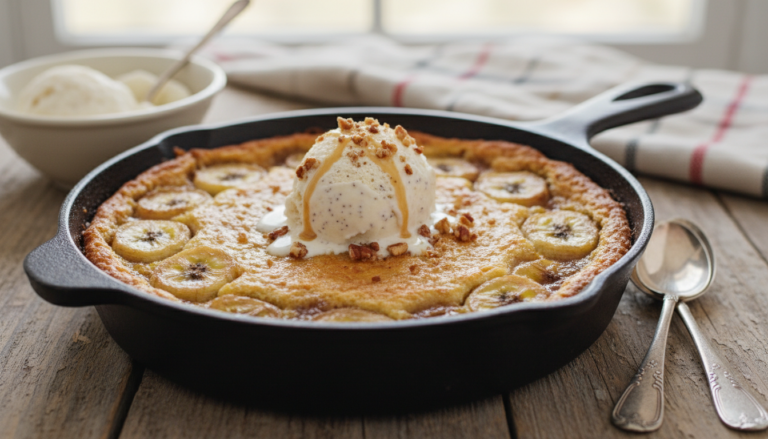
Southern Banana Cobbler is magic disguised as simplicity—pour batter over melted butter, top with banana slices, and watch as the oven transforms it into a golden, gooey dessert with cake-like top and custard-like bottom that tastes like pure comfort.
8
servings20
minutes45
minutes310
kcal1
hour5
minutesIngredients
5 medium bananas
1 cup granulated sugar
1 cup all-purpose flour
1 cup milk
1/2 cup unsalted butter
2 teaspoons baking powder
1/4 teaspoon salt
1 teaspoon vanilla extract
Directions
- Preheat your oven to 350°F (175°C).
- Melt the butter in a 9×13 inch baking dish in the preheated oven.
- In a large mixing bowl, combine flour, sugar, baking powder, and salt.
- Stir in milk and vanilla to form a batter.
- Pour the batter over the melted butter in the baking dish, but do not stir.
- Peel and slice the bananas, then distribute them evenly over the batter.
- Bake for 45 minutes or until the top is golden and set.
Nutrition Facts
- Total number of serves: 4
- Calories: 310kcal
- Cholesterol: 0mg
- Sodium: 620mg
- Potassium: 400mg
- Sugar: 8g
- Protein: 6g
- Calcium: 60mg
- Iron: 2mg
About This Author

Aurora Wright
Pastry Chef & Dessert Editor
Aurora is the sweet side of Daily Dish. A trained pastry chef and dessert stylist, she’s responsible for our mouth-watering cakes, cookies, and confections. She brings precision, artistry, and a touch of whimsy to every recipe she creates — and taste-tests more chocolate than she’ll admit.
Favorite dish: Flourless dark chocolate torte.
Kitchen motto: “Life’s too short to skip dessert.”















