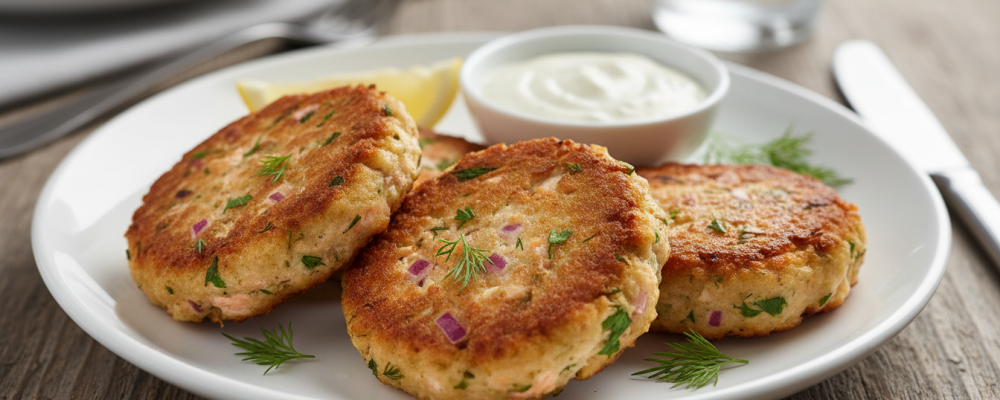

Some recipes feel like they belong to a specific person, a specific kitchen, a specific time of life—and salmon patties are one of those recipes for me. They’re the kind of dish that shows up in memories before they show up on menus: a grandmother’s cast iron skillet, the smell of something golden and savory filling the house on a weeknight, a dinner that was simple but never felt small. That is the spirit this recipe carries, and it’s exactly the spirit I want to bring to your table.
Salmon patties have been a staple of American home cooking for generations, built on the pantry convenience of canned salmon and the timeless technique of binding, shaping, and pan-frying. But what I love about this recipe is how much it delivers beyond the sum of its humble parts. The lemon juice brightens the salmon and keeps the interior from tasting flat. The fresh parsley adds color and a clean, herbal note. The egg and breadcrumbs bind everything into a patty that holds its shape in the skillet, develops a genuinely golden, crispy crust on the outside, and stays moist and tender at the center. It’s a recipe that rewards the people who make it with something that tastes far more considered than the effort involved.
What keeps me coming back to salmon patties is their complete versatility. They work at breakfast alongside scrambled eggs, at lunch on a toasted bun with a smear of tartar sauce, and at dinner plated alongside roasted vegetables and a simple salad. Few recipes earn a place at every meal of the day quite so gracefully.
The Inspiration Behind This Recipe
This recipe is a straightforward tribute to the kind of everyday American cooking that rarely gets celebrated but absolutely should be. Salmon patties don’t need reinvention—they need respect. My goal was to develop a version that honors the simplicity and accessibility of the original while making sure every detail that affects the finished result is handled correctly: the right ratio of binder to fish, the right seasoning level, the right heat for a crust that is golden and crisp without burning before the interior cooks through.
Fresh parsley and lemon juice are the small upgrades that make a meaningful difference here. They lift the salmon’s natural flavor and keep the patties tasting vibrant and fresh rather than heavy or fishy—two details that separate a great salmon patty from a forgettable one.
A Brief History of Salmon Patties
Salmon patties became a fixture of American home cooking in the early-to-mid 20th century, when canned salmon was an affordable, widely available pantry staple. During the Great Depression and World War II rationing era, canned salmon provided economical, high-protein protein for families across the country, and the patty format—stretching a single can to feed a family of four or more—became a household standard.
The dish has roots in earlier fish cake traditions found across British, Scandinavian, and New England cooking, where fresh or salt-preserved fish was combined with breadcrumbs or potatoes and pan-fried as a practical, satisfying meal. In America, canned salmon democratized the format and made it accessible to kitchens from coast to coast. Today, salmon patties carry the warm, unpretentious character of that legacy—a recipe that has always been more about nourishment and practicality than occasion, and that delivers on both counts every time.
Why Pan-Frying Is the Right Method
Pan-frying is the technique that gives salmon patties their defining characteristic: a golden, slightly crispy exterior crust that contrasts with the tender, moist interior. Baking produces a softer result that, while acceptable, lacks the textural interest that makes a great pan-fried patty so satisfying. The vegetable oil in a hot skillet creates the direct, conductive heat needed to set the exterior quickly and produce that characteristic browning without cooking the interior so fast that it dries out.
The key is temperature management: medium heat, not high. Too hot and the outside burns before the interior warms through. Too low and the patties absorb oil and steam rather than crisping. Three to four minutes per side at a steady medium heat produces a crust that is golden, slightly firm, and deeply flavorful—the result of the Maillard reaction working on the egg and breadcrumb binder while the salmon inside stays moist and perfectly cooked.
Flavor Profile: What to Expect
These patties deliver a clean, satisfying flavor experience built on a few well-chosen elements:
- Rich, savory salmon that provides the backbone of every bite with a mild, oceanic depth
- Bright lemon juice that cuts through the richness of the fish and keeps the overall flavor feeling fresh and vibrant
- Clean, herbal parsley that adds color and a gentle green note that lifts the entire patty
- Mild, sweet onion that softens into the mixture and provides a quiet aromatic base
- Golden, slightly crispy crust from the pan-fry that adds textural contrast and a toasted, savory exterior flavor
- Tender, moist interior that stays soft and cohesive thanks to the egg and breadcrumb binder
The overall effect is clean, satisfying, and comforting—a patty that tastes honest and genuinely good.
Tips for Making the Best Salmon Patties
A few details make all the difference between a good patty and a great one:
- Drain the salmon very well: Excess moisture is the primary cause of patties that fall apart in the skillet. Press the salmon firmly in a strainer or between paper towels before mixing.
- Don’t overwork the mixture: Mix only until the ingredients are just combined. Overworking compacts the mixture and produces dense, heavy patties.
- Chill before cooking: Refrigerating the shaped patties for 15–20 minutes before frying helps them hold their shape in the skillet and reduces the risk of cracking or falling apart.
- Don’t crowd the pan: Cook in batches if necessary. Overcrowding lowers the pan temperature and causes steaming rather than crisping.
- Resist the urge to move them: Let the patties cook undisturbed for the full three to four minutes per side. Moving them too early breaks the crust before it has set.
- Taste the mixture before shaping: Adjust seasoning at this stage—once the patties are cooked, it’s too late to correct the interior flavor.
Serving Suggestions and Side Pairings
Salmon patties are remarkably versatile in how they can be served:
- On toasted burger buns with tartar sauce, lettuce, and tomato for a classic salmon burger experience
- Alongside creamy mashed potatoes and roasted green beans for a traditional, comfort food dinner plate
- Over a simple arugula salad with lemon vinaigrette for a lighter, more refined presentation
- With scrambled eggs and toast for a satisfying protein-forward breakfast
- Alongside coleslaw and a squeeze of lemon for a casual, summer-cookout-style plate
Storage, Reheating, and Make-Ahead Tips
Salmon patties are an excellent make-ahead option that holds up beautifully:
- Refrigerate cooked patties in an airtight container for up to 3 days.
- Reheat in a skillet over medium heat for two to three minutes per side to restore the crust. Avoid the microwave, which softens the exterior and can make the interior rubbery.
- Freeze cooked patties for up to 2 months. Thaw overnight in the refrigerator and reheat in the skillet as directed.
- Make ahead by shaping the uncooked patties, placing them on a parchment-lined sheet, and refrigerating for up to 24 hours before frying fresh at mealtime.
Why This Recipe Deserves a Spot in Your Rotation
Salmon patties are the kind of recipe that proves great cooking doesn’t require expensive ingredients or complicated techniques—it requires care and good judgment. This is a dish that feeds a family affordably, comes together in under thirty minutes, and produces something genuinely satisfying at every meal of the day. Once it’s in your regular lineup, it becomes one of those instinctive, reach-for-it recipes that you stop thinking about and just make—and the people at your table are always glad you did.
Recommended Drink Pairing
The clean, bright flavors of these patties call for something equally fresh and citrus-forward. A Strawberry Lemonade Whiskey Sour brings a bright, fruit-forward acidity that complements the lemon in the patties beautifully while adding a slightly playful, refreshing character. A crisp Sauvignon Blanc or a light Pinot Grigio is the natural wine pairing—clean and citrusy enough to let the salmon’s delicate flavor shine.
For non-alcoholic options, sparkling water with lemon and fresh mint or a lightly sweetened cucumber lemonade keeps the palate refreshed alongside the clean, savory flavor of the patties.
Salmon Patties
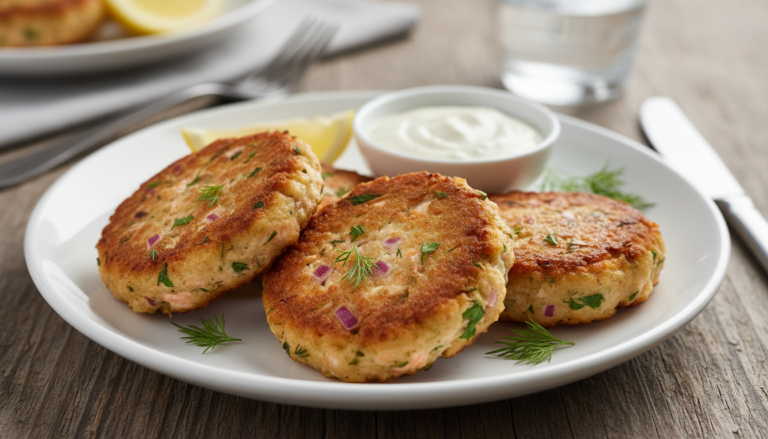
Salmon Patties are golden on the outside, tender on the inside, and seasoned with lemon, parsley, and onion for a simple, satisfying dinner that’s been earning its place on family tables for generations—and for very good reason.
4
servings15
minutes10
minutes300
kcal25
minutesIngredients
2 cans salmon, drained and flaked
0.5 cup breadcrumbs
2 eggs, beaten
0.25 cup onion, finely chopped
2 tablespoons parsley, chopped
1 tablespoon lemon juice
0.5 teaspoon salt
0.25 teaspoon black pepper
2 tablespoons vegetable oil
Directions
- In a large bowl, combine the salmon, breadcrumbs, eggs, onion, parsley, lemon juice, salt, and pepper.
- Mix until well combined.
- Shape the mixture into 8 patties.
- Heat oil in a skillet over medium heat.
- Cook patties for 3-4 minutes on each side until golden brown.
- Serve immediately, enjoy!
Nutrition Facts
- Total number of serves: 4
- Calories: 300kcal
- Cholesterol: 0mg
- Sodium: 620mg
- Potassium: 400mg
- Sugar: 8g
- Protein: 6g
- Calcium: 60mg
- Iron: 2mg
About This Author

Amelia Grace
Editor-in-Chief & Culinary Director
The heart and guiding voice of Daily Dish, Amelia leads our editorial vision and recipe development. With a background in food journalism and over a decade spent in professional kitchens, she has a knack for blending gourmet technique with real-world accessibility. Her goal? To make every reader feel like a confident cook, one dish at a time.
Favorite dish: Creamy lemon risotto with a sprinkle of fresh thyme.
Kitchen motto: “Good food doesn’t have to be complicated — it just has to be made with heart.”