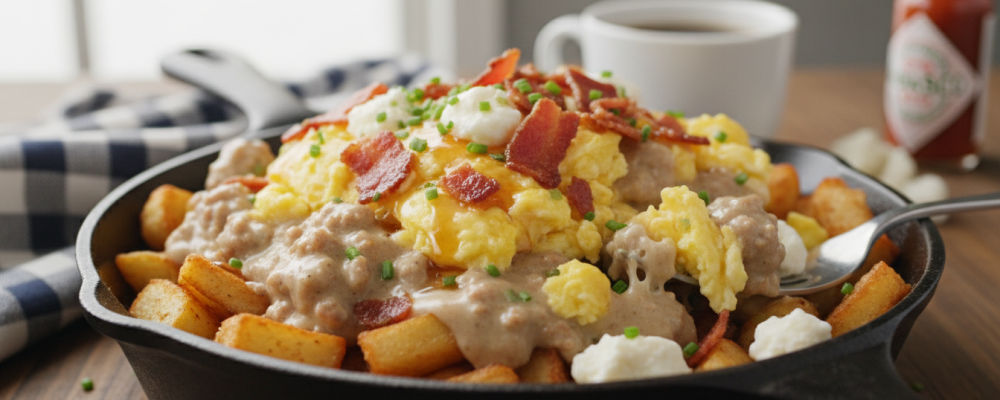

Breakfast poutine represents successful culinary fusion—taking an established dish (Quebec’s iconic poutine) and adapting it to a different meal context while maintaining the elements that made the original compelling. Traditional poutine consists of french fries, cheese curds, and gravy. This breakfast version substitutes hash browns for fries and adds eggs, creating something that honors the source material while functioning appropriately for morning consumption. The fundamental appeal remains: crispy potato, melted cheese, rich gravy, with the eggs adding protein and making it unmistakably breakfast.
What makes this dish successful is understanding how each component contributes to the final experience. The hash browns need to be genuinely crispy—not just cooked through—to provide textural contrast against the gravy and melted cheese. The cheese curds must be authentic (not shredded cheese), as their characteristic squeak and melting properties are essential to proper poutine. The gravy should be hot enough to melt the curds but not so abundant that it makes everything soggy. The eggs, cooked to preference, add richness and allow customization based on individual taste.
I appreciate how this recipe demonstrates that fusion cooking works best when you understand why the original dish succeeds and thoughtfully adapt rather than arbitrarily combine. This isn’t just “eggs on poutine”—it’s a considered breakfast adaptation that maintains poutine’s essential character while making it appropriate and appealing for morning meals. The technique is straightforward, but the conceptual thinking behind it is what elevates it beyond novelty into something genuinely worthwhile.
─────────
The Inspiration Behind This Recipe
This recipe emerged from analyzing what makes poutine so satisfying and recognizing that those same elements—crispy starch, melted cheese, rich gravy—work beautifully in breakfast contexts. Traditional poutine became popular precisely because it combines textures and flavors people crave: the crunch of fried potatoes, the salty richness of gravy, the squeaky-melty quality of fresh cheese curds. By substituting hash browns for fries and adding eggs, you maintain that fundamental appeal while creating something appropriate for brunch service.
The decision to use hash browns rather than fries was deliberate. Hash browns have stronger breakfast associations than french fries, making the dish immediately register as morning food rather than late-night comfort eating. They also crisp differently than fries—creating a more uniform golden surface that holds up well under toppings. The eggs transform it from snack food into a complete breakfast, adding protein and visual appeal while allowing diners to customize based on their preferences (runny yolk lovers versus those who prefer fully set eggs).
What I wanted to create was a dish that captured poutine’s indulgent comfort while being recognizable as breakfast. It needed to honor Canadian culinary tradition without being gimmicky or disrespectful to the original. This version achieves that balance—it’s clearly poutine-inspired, unmistakably breakfast, and genuinely delicious rather than just conceptually interesting. That’s the goal with any fusion dish: creating something that stands on its own merits rather than relying solely on novelty.
─────────
A Brief History of Poutine
Poutine originated in rural Quebec in the late 1950s, though multiple towns claim to be its birthplace. The dish emerged from Quebec’s casse-croûte (snack bar) culture, where various combinations of fries, gravy, and cheese were served. The specific combination of fries, cheese curds, and brown gravy coalesced into what we now recognize as poutine, with the name possibly derived from Quebec slang for “mess” or a similar regional term.
Initially dismissed as lowbrow fast food, poutine gained cultural significance throughout the 1980s and 90s as Quebec identity and cuisine received broader recognition. The dish spread beyond Quebec to the rest of Canada and eventually internationally, becoming an iconic symbol of Canadian cuisine. Fine dining restaurants began offering elevated versions, while fast food chains added it to their menus, cementing poutine’s place in North American food culture.
The breakfast poutine variation represents recent innovation, emerging in the 2010s as brunch culture exploded and chefs experimented with applying poutine’s fundamental formula to different meal contexts. Restaurants in Montreal, Toronto, and other Canadian cities began featuring breakfast versions, which then spread to American brunch spots seeking distinctive menu items. This evolution demonstrates how beloved regional dishes continue adapting while maintaining their essential character—the same progression that’s allowed poutine itself to evolve from Quebec snack food to international comfort food icon.
─────────
Why This Cooking Method Works
Baking the hash browns at high temperature rather than pan-frying ensures even crisping across all pieces simultaneously. The 425°F heat provides rapid moisture evaporation from the potato surface, creating crispiness while allowing the interior to cook through properly. This method is more reliable than stovetop cooking, where uneven heat distribution can result in some pieces burning while others remain soft. The oven’s consistent heat also means you can prepare a larger quantity without constant attention—essential when coordinating multiple components.
Cooking the eggs separately in a skillet allows precise control over doneness. Different diners prefer different egg preparations—some want runny yolks to mingle with the gravy, others prefer fully set eggs. By cooking eggs individually or in small batches, you can accommodate these preferences without compromising the assembly timing. The butter adds flavor and prevents sticking while contributing richness that complements the other components.
Heating the gravy separately and pouring it hot ensures it melts the cheese curds properly. This is crucial—room temperature or merely warm gravy won’t melt the curds adequately, and you’ll miss the characteristic texture transformation that defines poutine. The hot gravy also slightly softens the top layer of hash browns while leaving the bottom crispy, creating that desirable textural variation. Assembling everything quickly and serving immediately is essential; this dish degrades rapidly as components cool and the crispy elements absorb moisture and lose their textural appeal.
─────────
Flavor Profile: What to Expect
This dish delivers indulgent, savory complexity with satisfying richness:
- Crispy hash browns – Golden, crunchy potato with concentrated starchy flavor
- Squeaky cheese curds – Fresh, mild dairy flavor that becomes gooey and stringy when melted
- Rich gravy – Savory, umami-packed sauce with deep meaty or roasted notes
- Egg richness – Runny yolk (if cooked that way) adds creamy, velvety texture
- Butter notes – From cooking the eggs, adding subtle dairy richness
- Black pepper heat – Provides gentle spice that lifts the other flavors
- Fresh chive brightness – Mild onion flavor and herbal freshness that cuts through richness
The overall experience is unapologetically indulgent—this is comfort food that doesn’t pretend to be anything else. The combination of crispy, creamy, rich, and savory creates satisfaction on multiple levels. When you break the egg yolk and it mingles with the gravy and melted cheese, you get this incredible sauce that coats the hash browns and makes every forkful rich and delicious. It’s messy, decadent, and exactly the kind of breakfast you want when you’re not counting calories or worrying about elegance.
─────────
Tips for Making the Best Breakfast Poutine
Use authentic cheese curds if possible—they’re fresher, squeakier, and melt differently than shredded mozzarella or other substitutes.
- Spread hash browns in single layer – Crowding prevents proper crisping; use two pans if necessary
- Make hash browns extra crispy – They need to withstand gravy without immediately becoming soggy
- Use quality gravy – Homemade or good jarred gravy makes a significant difference in final flavor
- Keep gravy very hot – It must be hot enough to melt the cheese curds on contact
- Don’t drown the dish – Use enough gravy to coat and melt cheese, but not so much it becomes soup
- Time the eggs carefully – Cook them last so they’re hot when assembling
- Serve immediately – This dish doesn’t hold well; crispy elements soften quickly
- Customize toppings – Hot sauce, crispy bacon, or green onions all work beautifully
For authenticity, seek out fresh cheese curds from cheese shops or specialty stores. If unavailable, torn fresh mozzarella is the best substitute, though it won’t provide the characteristic squeak.
─────────
Serving Suggestions and Side Pairings
This dish is substantial enough to be a complete breakfast on its own, particularly given its richness and calorie density. However, lighter sides that provide contrast make the meal more balanced. A simple green salad with vinaigrette cuts through the richness and adds freshness. Fresh fruit—particularly citrus segments or berries—provides bright acidity and palate cleansing between bites. Sliced tomatoes with salt offer juicy, acidic contrast that complements the savory elements.
For beverage pairings, strong coffee provides essential bitterness to balance the rich, gravy-laden dish. Mimosas or Bloody Marys work well if serving at brunch—the acidity and effervescence help cut through the heaviness. Fresh orange juice offers similar acidic brightness in non-alcoholic form. For authentic Canadian experience, serve with Canadian beer—though this feels more appropriate for late brunch rather than early morning.
This dish excels at casual gatherings where hearty, indulgent food is appropriate—game day brunches, après-ski meals, hangover recovery breakfasts, or anytime you want something that feels celebratory and special rather than everyday healthy eating. It’s conversation-starting food that brings people together through shared indulgence and the universal appeal of crispy potatoes with melted cheese.
─────────
Storage, Reheating, and Make-Ahead Tips
- Bake hash browns ahead: Crisp them up to 2 hours early, keep at room temperature uncovered
- Prepare gravy early: Make or heat gravy ahead, keep warm in a small pot over lowest heat
- Portion cheese curds: Measure out servings ahead of time for quick assembly
- Cook eggs to order: These must be prepared immediately before serving
- Don’t assemble ahead: This dish degrades rapidly; always assemble fresh
- Leftovers don’t store well: The crispy elements become soggy; eat immediately or discard
- Reheat components separately: If you must reheat, crisp hash browns in oven, heat gravy separately
- Best served fresh: This is genuinely a “make and serve immediately” dish
The nature of poutine—combining crispy and wet elements—means it doesn’t lend itself to advance preparation or storage. This is food meant to be enjoyed immediately at peak texture, which is part of its appeal. The ephemeral quality creates urgency and makes the eating experience more special.
─────────
Why This Recipe Deserves a Spot in Your Rotation
This recipe earns its place because it delivers genuine excitement and satisfaction when you want breakfast to feel indulgent and special. It’s not everyday food—it’s weekend food, celebration food, “we’re treating ourselves” food. That distinction is important; having recipes for different occasions and moods makes your cooking repertoire more valuable and useful. These are the mornings when healthy eating can wait, when you want something that tastes amazing and makes everyone at the table happy.
Beyond the indulgence factor, breakfast poutine demonstrates successful fusion cooking that respects its source material while creating something new. It introduces non-Canadians to poutine’s appeal while giving Canadians a novel way to enjoy their iconic dish. The technique is straightforward enough that anyone can make it successfully, while the combination is interesting enough to feel creative and special. Food that brings joy, starts conversations, and creates memorable meals is always worth having in your collection, and breakfast poutine accomplishes all of that while tasting absolutely delicious.
─────────
Recommended Drink Pairing
The rich, gravy-laden nature of breakfast poutine demands beverages that can either cut through the heaviness or complement the savory depth. Strong black coffee is essential—the bitterness and caffeine provide counterbalance to the rich cheese and gravy while helping with digestion. A dark roast with bold flavor stands up to the dish without being overwhelmed. For something lighter, café au lait adds milk’s creaminess, though it feels less refreshing against the already-rich food.
For alcoholic options appropriate to brunch, Caesar cocktails (Canada’s version of the Bloody Mary, made with clamato juice) create perfect cultural and flavor harmony—the savory, spicy cocktail complements the dish’s richness while the acidity cuts through the gravy. Regular Bloody Marys work similarly for non-Canadian contexts. Mimosas provide sparkling refreshment and citrus brightness that cleanses the palate, though champagne’s elegance contrasts oddly with poutine’s comfort-food nature. Light beer—particularly Canadian lagers—offers traditional pairing that many consider essential to authentic poutine experience, though beer at breakfast requires appropriate context and company.
For non-alcoholic options, fresh-squeezed orange juice provides essential acidity and vitamin C that balance the heavy dish. Sparkling water with lemon offers palate-cleansing refreshment without adding calories or competing flavors. Tomato juice brings savory umami notes that complement rather than contrast, creating flavor harmony if you enjoy tomato with breakfast. Cold milk works for those who want simple, traditional breakfast beverage, though it doesn’t provide the cutting acidity that makes richer drinks more effective. Whatever you choose, the key is something with enough character—bitter, acidic, or effervescent—to stand up to and balance poutine’s unabashed richness.
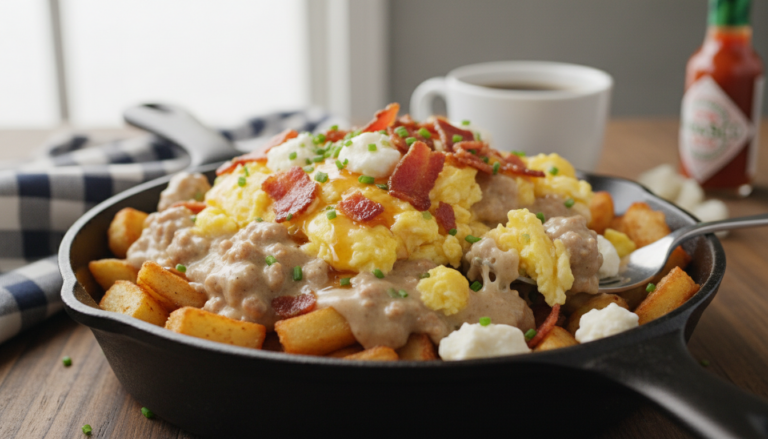
Breakfast Poutine
This Breakfast Poutine takes Canada’s beloved comfort food and reimagines it for morning appetites—crispy hash browns topped with squeaky cheese curds, rich gravy, and eggs cooked your way for an outrageously satisfying brunch dish.
4
servings15
minutes30
minutes500
kcal45
minutesIngredients
4 large eggs
2 cups frozen hash browns
1 cup gravy
1 cup cheese curds
2 tablespoons butter
1 teaspoon salt
0.5 teaspoon pepper
2 tablespoons chopped chives
Directions
- Preheat oven to 425°F (220°C).
- Spread hash browns on a baking sheet and bake for 20 minutes or until golden brown.
- In a skillet, melt butter over medium heat, cook the eggs to your desired doneness.
- Heat gravy in a small saucepan over low heat.
- Layer the baked hash browns on a serving plate.
- Top with cheese curds.
- Pour hot gravy over the curds to melt them.
- Gently place cooked eggs on top.
- Season with salt and pepper.
- Garnish with chopped chives and serve immediately.
Nutrition Facts
- Total number of serves: 4
- Calories: 500kcal
- Cholesterol: 0mg
- Sodium: 620mg
- Potassium: 400mg
- Sugar: 8g
- Protein: 6g
- Calcium: 60mg
- Iron: 2mg
About This Author

Benjamin Brown
Recipe Developer
Benjamin is our flavor engineer. A classically trained chef turned recipe developer, he’s obsessed with balancing taste, texture, and creativity. He ensures that every recipe we publish is not only delicious but also reliable, approachable, and repeatable — even for beginners.
Favorite dish: Slow-braised short ribs with red wine reduction.
Kitchen motto: “Cooking is part science, part soul.”