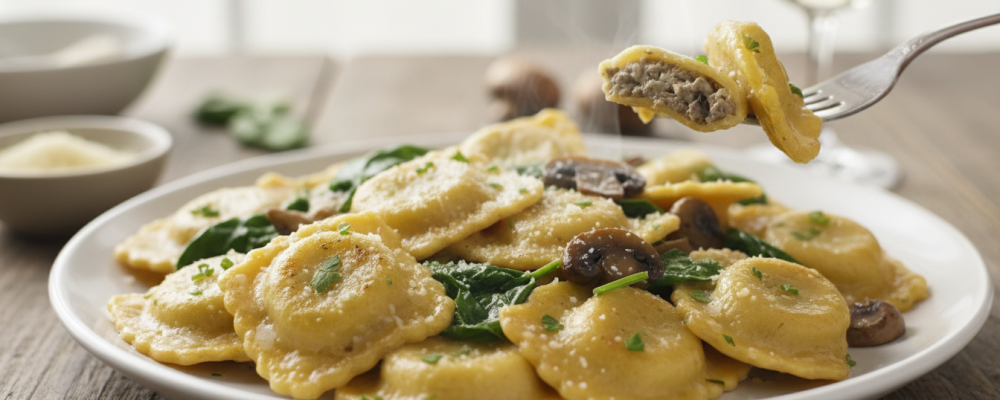

There are evenings when dinner needs to feel like a genuine occasion without asking anything close to occasion-level effort, and this Mushroom Ravioli with Spinach was built for exactly those moments. Pillowy mushroom ravioli, warmed through in a silky garlic and Parmesan cream sauce with wilted fresh spinach—it’s the kind of pasta that tastes like it came from a restaurant kitchen and comes together in under twenty minutes from a single pan. It is, in the most satisfying possible way, more than the sum of its parts.
The cream sauce here is deliberately restrained—garlic, heavy cream, Parmesan, salt, and pepper—because the mushroom ravioli is already doing the heavy flavor lifting. That restraint is the right call. A bolder, more complex sauce would compete with the earthy, savory filling inside the pasta rather than complementing it. What the cream sauce does instead is create a silky, cohesive environment for the ravioli to finish cooking in, absorbing a little of the garlic and Parmesan as it warms through, while the spinach wilts into soft, dark green ribbons that add color, nutrition, and a gentle vegetable counterpoint to all that richness.
What I love most about this recipe is that it meets you wherever you are. It’s elegant enough for a dinner party starter, substantial enough as a weeknight main, and simple enough that you can make it perfectly the very first time. Once it’s in your repertoire, it becomes the pasta you reach for when you want dinner to feel special—quickly and without compromise.
The Inspiration Behind This Recipe
This recipe was inspired by the Italian philosophy of letting the pasta do the work. In Italian cooking, stuffed pasta—ravioli, tortellini, agnolotti—is treated as a complete expression of flavor in itself. The sauce is a companion, not a competitor: something that enhances and unifies rather than overshadows. This spinach cream sauce follows that principle exactly. It is simple enough to let the mushroom filling come forward, and rich enough to make the entire dish feel genuinely indulgent.
The spinach addition was partly practical—it adds color, freshness, and nutritional value with zero additional effort—and partly culinary. The slight earthiness of wilted spinach has a natural affinity for mushroom flavor that makes the finished dish taste more cohesive than a cream sauce alone would.
A Brief History of Stuffed Pasta and Cream Sauces
Stuffed pasta has been central to Italian regional cooking for centuries, with each region claiming its own distinctive shapes, fillings, and traditional sauces. Ravioli—from the Ligurian and Emilian traditions—is among the oldest and most beloved stuffed pasta formats, appearing in Italian cooking manuscripts as far back as the 14th century. Mushroom fillings, in particular, draw from the Italian tradition of using foraged fungi—porcini, chanterelle, ovoli—to create intensely savory, earthy pasta fillings that required no meat to feel substantial.
Cream sauces became associated with stuffed pasta particularly in northern Italy, where the dairy-rich cooking of regions like Piedmont and Lombardy produced buttery, cream-enriched sauces that complemented the delicate flavors of filled pasta without masking them. The garlic and Parmesan cream used here is a simplified, American-Italian interpretation of that northern Italian tradition—accessible, deeply flavorful, and perfectly suited to a store-bought mushroom ravioli that deserves a sauce worthy of its filling.
Why This Simple Sauce Works So Well
The restraint of this sauce is its greatest strength, and it’s worth understanding the technique logic behind it. Sautéing the garlic in olive oil before the cream goes in allows the aromatic compounds to bloom in fat—a process that mellows the garlic’s sharpness into something sweet and fragrant that carries through the entire sauce. Adding cream to the garlic oil rather than plain butter creates a sauce with a slightly lighter body that coats the ravioli without overwhelming it.
Parmesan stirred in at the end—off direct high heat—melts smoothly into the sauce and adds salt, umami depth, and a slightly grainy richness that gives the cream sauce its character. The spinach, added before the cream and allowed to wilt fully, releases a small amount of liquid that becomes part of the sauce, adding a subtle vegetable note that keeps the dish from feeling too rich or one-dimensional.
Flavor Profile: What to Expect
This dish delivers a beautifully layered, comforting flavor experience:
- Earthy, savory mushroom ravioli that anchors the dish with deep, umami-rich flavor from the filling out
- Silky, aromatic cream sauce built on bloomed garlic and melted Parmesan that coats every piece of pasta in rich, cohesive flavor
- Tender wilted spinach that adds a gentle, slightly earthy vegetable note and a soft texture that contrasts beautifully with the pillowy pasta
- Sharp, nutty Parmesan both in the sauce and on top that adds concentrated, salty depth throughout
- Fragrant garlic that perfumes the entire dish and carries through every bite of pasta and sauce
The overall effect is rich, earthy, silky, and deeply satisfying—a pasta that feels genuinely indulgent without ever tipping into heaviness.
Tips for Making the Best Mushroom Ravioli with Spinach
A few careful details will ensure consistently excellent results:
- Don’t overcook the ravioli: Follow the package instructions closely and pull the ravioli al dente—they’ll continue warming in the cream sauce. Overcooked ravioli breaks apart and loses its filling.
- Reserve pasta water: A splash of starchy pasta cooking water helps the cream sauce emulsify and cling to the ravioli more effectively. Keep a cup on hand before draining.
- Wilt the spinach before the cream: Adding the cream to raw spinach produces excess moisture that thins the sauce. Fully wilting the spinach first removes that water and keeps the sauce at the right consistency.
- Add Parmesan off the heat: Direct high heat can cause the cheese to clump rather than melt smoothly. Remove the pan from the burner before stirring in the Parmesan for the silkiest result.
- Serve immediately: Cream sauces thicken quickly as they cool. Have everything ready before the ravioli goes in and serve the moment it’s warmed through.
- Use good quality ravioli: The sauce is simple by design—a well-filled, flavorful ravioli is what makes this dish exceptional.
Serving Suggestions and Side Pairings
This pasta is elegant enough to need very little alongside it:
- Warm garlic bread or a crusty baguette to mop up the cream sauce
- A simple arugula salad with shaved Parmesan and lemon vinaigrette for a bright, peppery contrast
- Roasted asparagus or broccolini for a clean, slightly bitter vegetable side
- A classic Caesar salad for a more substantial accompaniment
- A small bowl of extra grated Parmesan at the table for finishing
Storage, Reheating, and Make-Ahead Tips
Cream-based pasta with stuffed pasta is best enjoyed fresh, but a few notes for practical storage:
- Refrigerate leftovers in an airtight container for up to 2 days. Stuffed pasta can become soft and fragile after refrigeration.
- Reheat gently in a skillet over low heat with a splash of cream or broth stirred in to loosen the sauce. Avoid the microwave if possible—it heats unevenly and can cause the ravioli to burst.
- The sauce can be made ahead and refrigerated for up to 2 days—cook the ravioli and combine fresh at mealtime for the best result.
- This dish does not freeze well due to the cream sauce and the delicate nature of stuffed pasta after freezing and thawing.
Why This Recipe Deserves a Spot in Your Rotation
Mushroom Ravioli with Spinach earns its place as the elegant weeknight pasta that requires almost nothing from you and delivers something genuinely special in return. It’s vegetarian-friendly, ready in under twenty minutes, and produces a finished plate that looks and tastes far more considered than its ingredient count suggests. Whether it’s a quiet dinner for two or a quick, impressive weeknight main, this recipe is the answer whenever you want dinner to feel like a treat without the work that usually requires.
Recommended Drink Pairing
The earthy mushroom filling and silky Parmesan cream call for a wine with enough body to complement the richness and enough acidity to keep the sauce from feeling heavy. A Pinot Noir is the ideal companion—its earthiness mirrors the mushroom notes beautifully while its bright acidity cuts cleanly through the cream. A white Burgundy or a Vermentino works equally well if you prefer white wine with pasta.
For cocktails, a Maple Bourbon Espresso Martini brings warm, roasted depth that plays surprisingly beautifully alongside earthy mushroom and Parmesan cream—bold enough to hold its own alongside a rich pasta without overpowering the delicate filling. For non-alcoholic options, sparkling water with lemon or a light, earthy mushroom broth tea brings a complementary, grounding note to this deeply satisfying dish.
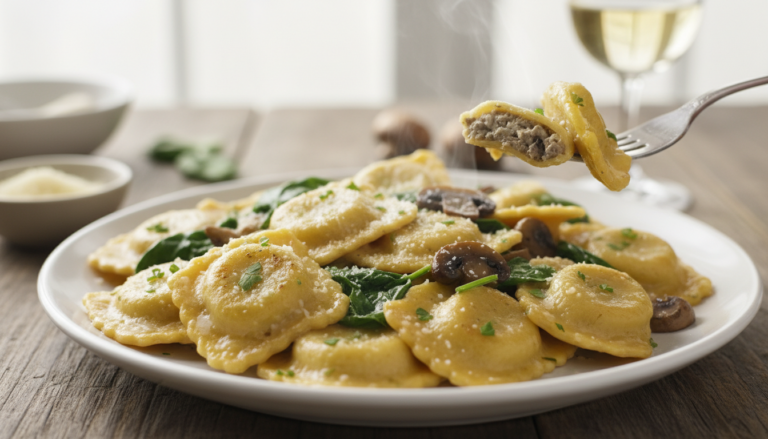
Mushroom Ravioli with Spinach
Mushroom Ravioli with Spinach wraps store-bought mushroom ravioli in a silky garlic Parmesan cream sauce with wilted fresh spinach for a deeply satisfying, restaurant-quality pasta dinner ready in under 20 minutes.
4
servings30
minutes20
minutes450
kcal50
minutesIngredients
400 g mushroom ravioli
200 g fresh spinach
2 tbsp olive oil
1 clove garlic, minced
100 ml heavy cream
50 g Parmesan cheese, grated
1 tsp salt
0.5 tsp black pepper
Directions
- Boil the mushroom ravioli according to package instructions and set aside.
- Heat olive oil in a pan over medium heat. Add minced garlic and sauté until fragrant.
- Add fresh spinach to the pan and cook until wilted.
- Pour in the heavy cream and stir until combined.
- Add Parmesan cheese, salt, and black pepper to the sauce.
- Stir the cooked ravioli into the spinach cream sauce and heat through.
- Serve hot, garnished with additional Parmesan if desired.
Nutrition Facts
- Total number of serves: 4
- Calories: 450kcal
- Cholesterol: 0mg
- Sodium: 620mg
- Potassium: 400mg
- Sugar: 8g
- Protein: 6g
- Calcium: 60mg
- Iron: 2mg
About This Author

Amelia Grace
Editor-in-Chief & Culinary Director
The heart and guiding voice of Daily Dish, Amelia leads our editorial vision and recipe development. With a background in food journalism and over a decade spent in professional kitchens, she has a knack for blending gourmet technique with real-world accessibility. Her goal? To make every reader feel like a confident cook, one dish at a time.
Favorite dish: Creamy lemon risotto with a sprinkle of fresh thyme.
Kitchen motto: “Good food doesn’t have to be complicated — it just has to be made with heart.”