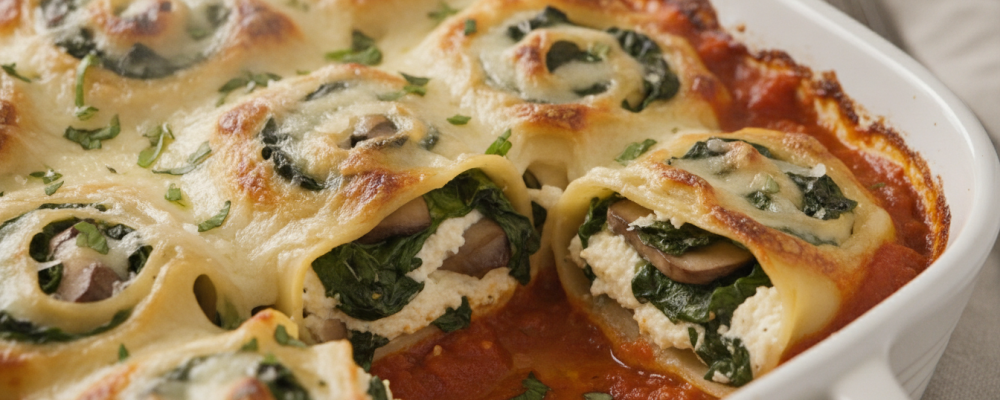

There’s something satisfying about taking a classic dish and reworking it into a more refined presentation, and these Mushroom and Spinach Lasagna Rolls do exactly that. Instead of layering everything into one large dish, each portion is individually rolled, giving you the same comforting flavors of a traditional lasagna with a cleaner, more controlled technique.
I started developing this recipe after wanting a lasagna that was easier to portion and serve without sacrificing any of the flavor. Rolling the noodles individually solves that problem elegantly, and it also means every single roll gets an even distribution of the mushroom-spinach ricotta filling rather than relying on chance layering. Once I nailed the filling ratio and roll technique, this became a dish I trust for both weeknight dinners and dinner parties.
What makes this dish stand out is the way the earthy mushrooms and wilted spinach balance the richness of the ricotta, creating a filling that feels lighter than a traditional meat lasagna while still delivering serious comfort.
The Inspiration Behind This Recipe
This recipe grew out of my interest in reworking classic Italian-American comfort food into something a little more technique-driven and precise. Lasagna rolls solve a practical problem—uneven layering and messy serving—while still delivering all the flavor of a traditional baked lasagna.
Mushrooms and spinach felt like the right filling to build around, since their earthy, slightly savory qualities complement ricotta without needing meat to feel satisfying. Sautéing them together before mixing with the cheese ensures the filling has real depth, rather than tasting like plain ricotta with vegetables added as an afterthought.
This is the kind of recipe that rewards a little extra care in the rolling process with a dish that’s both visually impressive and genuinely delicious.
Why This Cooking Method Works
Sautéing the mushrooms and spinach before mixing them into the ricotta is a crucial step, since it removes excess moisture that would otherwise make the filling watery once baked. Cooking the mushrooms until they’ve released and reabsorbed their liquid concentrates their flavor, while wilting the spinach separately ensures it doesn’t turn stringy or bitter in the final dish.
Rolling the noodles individually, rather than layering them flat, allows each portion to hold a consistent amount of filling and bake evenly, since the rolls are more uniform in thickness than a traditional layered lasagna. Placing them seam-side down helps them hold their shape in the oven.
Topping the rolls generously with sauce and cheese before baking ensures they stay moist throughout the cook time, while the cheese on top browns and bubbles for that classic golden lasagna finish.
Flavor Profile: What to Expect
This dish delivers a rich, earthy, and well-balanced flavor profile:
Savory depth from sautéed mushrooms
Fresh, slightly mineral notes from wilted spinach
Creamy richness from the ricotta filling
Bright acidity from the tomato sauce
Sharp, salty finish from Parmesan and melted mozzarella
The result is a dish that feels comforting and hearty, but lighter than a traditional meat-based lasagna, with plenty of savory depth from the vegetables.
Tips for Making the Best Lasagna Rolls
A few technical details will help you get the best results:
Cook noodles just shy of al dente: This prevents them from tearing when rolled and softening too much during baking.
Squeeze excess moisture from the spinach: This keeps the filling from becoming watery.
Don’t overfill the noodles: A thin, even layer of filling makes rolling easier and prevents overflow during baking.
Roll tightly but gently: This keeps the filling in place without tearing the noodle.
Cover with foil if the cheese browns too quickly: This protects the top layer while the inside finishes heating through.
If you want extra flavor, mixing a spoonful of Parmesan directly into the ricotta filling before rolling adds another layer of savory depth.
Serving Suggestions and Side Pairings
These lasagna rolls are satisfying enough to serve on their own, but a few sides round out the meal nicely:
A simple arugula salad with lemon vinaigrette to cut through the richness
Garlic bread or a crusty loaf for soaking up extra sauce
Roasted vegetables like zucchini or bell peppers for a seasonal touch
A light minestrone soup as a starter
Leftovers also reheat well for a quick, satisfying lunch the next day.
Storage, Reheating, and Make-Ahead Tips
This dish stores and reheats beautifully, making it a great option for planning ahead.
Refrigerate in an airtight container for up to 4 days.
Reheat gently in the oven, covered, or in the microwave until heated through.
Freezing is possible for up to 2 months; thaw overnight in the fridge before reheating.
You can assemble the rolls a day in advance and refrigerate unbaked, adding a few extra minutes to the bake time to account for the chill.
Why This Recipe Deserves a Spot in Your Rotation
This is a dish that proves a little extra technique can elevate a familiar favorite. It’s comforting, visually impressive, and easier to portion than a traditional lasagna, making it just as suitable for a casual dinner as it is for entertaining. Once you’ve mastered the rolling technique, this becomes a go-to whenever you want lasagna without the mess.
Recommended Drink Pairing
The earthy, savory flavors of this dish pair well with a Prosecco Margarita, whose bright acidity cuts through the richness of the ricotta and cheese. A crisp Pinot Grigio or Sauvignon Blanc also works beautifully, echoing the tomato sauce’s brightness while balancing the dish’s richness.
For a non-alcoholic option, a sparkling water with a splash of cranberry juice or a simple herbal iced tea rounds out the meal nicely.
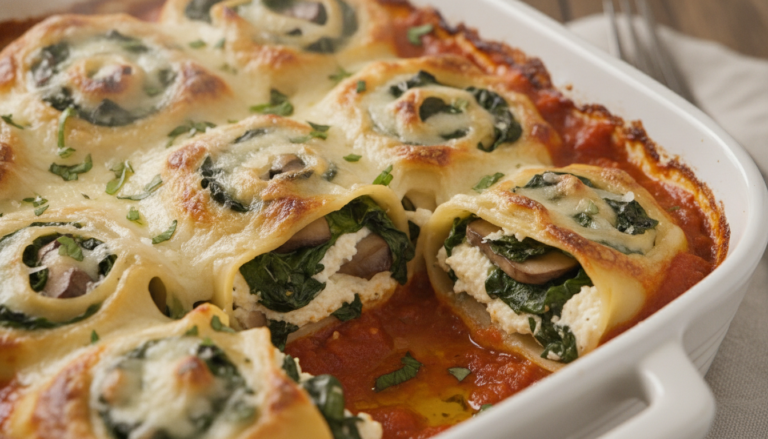
Mushroom and Spinach Lasagna Rolls
Mushroom and Spinach Lasagna Rolls wrap a creamy ricotta filling in tender noodles, topped with sauce and melted cheese for a comforting, veggie-forward dinner.
4
servings25
minutes40
minutes320
kcal1
hour5
minutesIngredients
8 sheets lasagna noodles
2 cups mushrooms, chopped
1 cup spinach, chopped
1 cup ricotta cheese
1 cup mozzarella cheese, shredded
1/4 cup Parmesan cheese, grated
1 tbsp olive oil
1 clove garlic, minced
1 cup tomato sauce
1/2 tsp salt
1/4 tsp black pepper
Directions
- Preheat the oven to 375°F (190°C).
- Cook lasagna noodles according to package instructions. Drain and set aside.
- Heat olive oil in a pan over medium heat. Add garlic and saute until fragrant.
- Add mushrooms and cook until soft. Stir in spinach and cook until wilted.
- In a bowl, mix ricotta, salt, and pepper. Add mushroom mixture and combine well.
- Spread a thin layer of tomato sauce in a baking dish.
- Lay out noodles and spread the ricotta mixture over each.
- Roll up noodles carefully and place seam side down in the baking dish.
- Top lasagna rolls with remaining tomato sauce, mozzarella, and Parmesan cheese.
- Bake in the preheated oven for 30 minutes until cheese is golden and bubbly.
Nutrition Facts
- Total number of serves: 4
- Calories: 320kcal
About This Author

Benjamin Brown
Recipe Developer
Benjamin is our flavor engineer. A classically trained chef turned recipe developer, he’s obsessed with balancing taste, texture, and creativity. He ensures that every recipe we publish is not only delicious but also reliable, approachable, and repeatable — even for beginners.
Favorite dish: Slow-braised short ribs with red wine reduction.
Kitchen motto: “Cooking is part science, part soul.”