
Mexican Martini

Mexican Martini

Healthy Fact of the Day

Use fresh-squeezed juices for more nutrients and less added sugar. Opt for a lighter pour of simple syrup or skip it altogether for a tangier, lower-calorie sip.
Mexican Martini

Mexican Martini

Recipe by Daily Disher

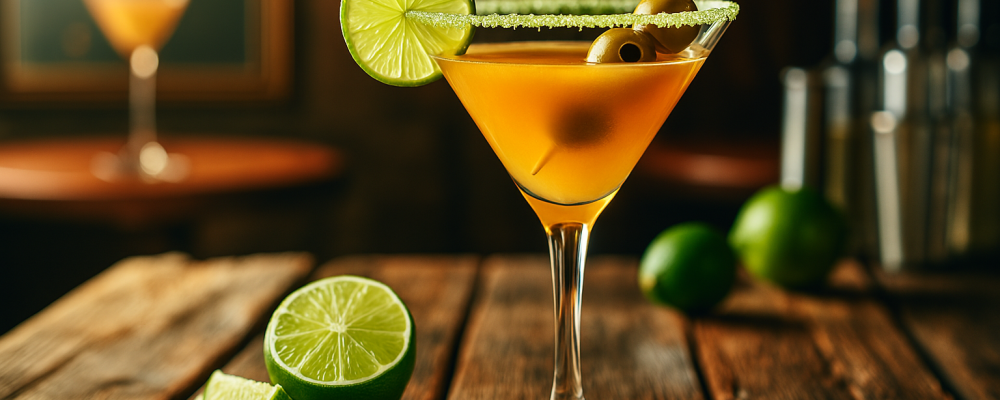
The Mexican Martini is a bold, savory-sweet cocktail that blends tequila, citrus, and olive brine for a zesty, upscale twist on a margarita.

Course: CocktailCuisine: Tex-MexDifficulty: Easy
2.8 from 10 votes
Servings

4

servings
Prep time

30

minutes
Cooking time

40

minutes
Calories

300

kcal
Total time

1

hour 

10

minutes

    Ingredients

    • 3 oz tequila

    • 2 oz Cointreau or triple sec

    • 1 oz fresh lime juice

    • 2 oz fresh orange juice

    • 1 oz olive brine

    • 1 oz simple syrup

    • 1 slice lime for garnish

    • 4 pieces olives for garnish

    • 0.25 teaspoon kosher salt for rimming glass

    Directions

    • Begin by rimming four martini glasses with kosher salt by using a lime slice to wet the rims, then dip them in salt.
    • In a cocktail shaker filled with ice, combine tequila, Cointreau, lime juice, orange juice, olive brine, and simple syrup.
    • Shake thoroughly for around 20-30 seconds until the mixture is well-chilled and evenly combined.
    • Strain the liquid and carefully divide it into the prepared martini glasses to ensure it reaches each serving evenly.
    • Garnish each glass with a slice of lime and a couple of olives on a cocktail stick, served instantly.

    Nutrition Facts

    • Total number of serves: 4
    • Calories: 250kcal
    • Cholesterol: 0mg
    • Sodium: 620mg
    • Potassium: 400mg
    • Sugar: 8g
    • Protein: 6g
    • Calcium: 60mg
    • Iron: 2mg

    The Mexican Martini elevates the classic margarita with a sophisticated mix of tequila, orange liqueur, citrus juices, olive brine, and a touch of sweetness. Served in a salt-rimmed martini glass and garnished with olives and lime, this refreshing cocktail delivers the perfect balance of salty, sweet, and tangy flavors.


    2.8 from 10 votes

    Recent Recipes

    The Kitchen in July: What to Cook

    • July 1, 2026
    • 11 min read

    Slow Cooker Garlic Butter Beef

    • July 1, 2026
    • 13 min read

    Gochujang Potato Salad

    • July 1, 2026
    • 8 min read

    Crumbl’s Fourth of July Lineup Is Here

    • June 30, 2026
    • 4 min read

    The Table We Set for Ourselves

    • June 30, 2026
    • 9 min read

    Fish Tacos with 7UP Batter

    • June 30, 2026
    • 10 min read

    Bang Bang Salmon Salad

    • June 30, 2026
    • 8 min read

    Taco Bell Quietly Brought Back the Enchirito

    • June 29, 2026
    • 4 min read

    The Meal at the End of the

    • June 29, 2026
    • 9 min read

    Taco Cream Cheese Pinwheels

    • June 29, 2026
    • 11 min read

    Tip of the Day

    “Always let your meat rest before slicing.”

    Whether you're roasting a chicken, grilling steak, or baking pork tenderloin, letting cooked meat rest for 5–10 minutes before slicing allows the juices to redistribute evenly. This simple step keeps your meat juicy and tender, ensuring every bite is flavorful and moist. Bonus: It gives you a moment to plate your sides or garnish for a perfect presentation!

    Our Latest Recipes

    Blog
    Daily Disher

    The Kitchen in July: What to Cook When It’s Too Hot to Cook

    Raw and minimally cooked vegetables — the foundation of summer no-cook meals, cold soups, and composed salads — retain significantly higher concentrations of heat-sensitive vitamins including vitamin C, folate, and certain B vitamins than their cooked equivalents. Peak-season summer produce is at its highest nutritional density at the moment of harvest, and consuming it raw or with minimal processing preserves that density in ways that cooking diminishes. The July instinct to eat more salads, more raw fruit, more cold preparations is not just a response to heat — it is, nutritionally, one of the best seasonal eating patterns available.

    Read More »
    Entrees
    Amelia Grace

    Slow Cooker Garlic Butter Beef

    Chuck roast is rich in protein, iron, and zinc—skim the fat from the braising liquid before serving and use unsalted butter to control sodium while maintaining the dish’s rich, satisfying character.

    Read More »
    Asian
    Benjamin Brown

    Gochujang Potato Salad

    Gochujang contains capsaicin from Korean red peppers, which has been linked to anti-inflammatory benefits and metabolic support, as well as beneficial compounds from the fermentation process that may support gut health. Potatoes are a naturally fiber-rich, potassium-packed vegetable, and using a modest amount of mayonnaise balanced with rice vinegar keeps this dressing lighter than a traditional heavy mayo potato salad.

    Read More »

    Get your daily dose of delicious!

    Skip to content












