

If you’ve ever finished a Kinder Bueno bar and immediately wanted a larger, colder version of the same thing, your wish has been granted.
Kinder Bueno Frozen Dessert Cones are available now at grocery stores and retailers nationwide — a broader retail distribution launched in spring 2026 following an initial rollout to convenience distributors — and the reviews from early fans have been overwhelming. The product has been spotted at Target, Kroger, and Costco, where a 10-pack runs approximately $9.99.
What Makes This Different From Every Other Candy-Bar Ice Cream
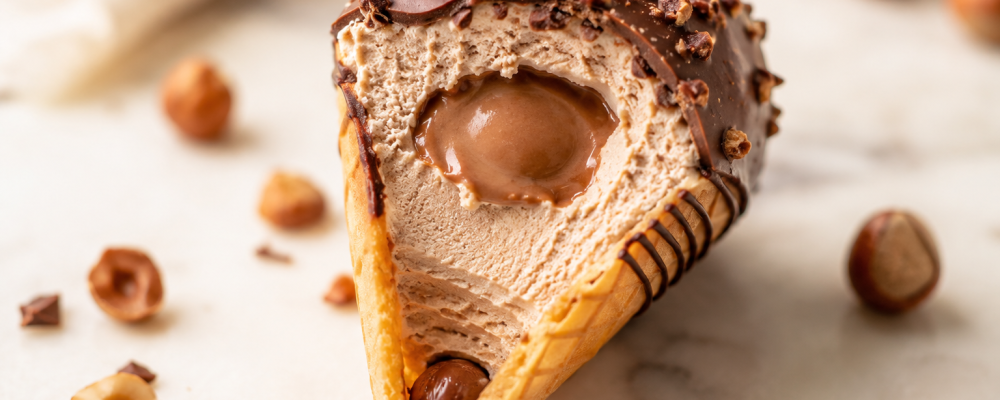
The frozen dessert landscape is full of candy-branded novelties that don’t quite live up to the original. Kinder Bueno Cones are made to deliver sensational taste with every bite: a crispy sugar waffle cone with a creamy hazelnut center, rich hazelnut core, topped with a melt-in-your-mouth hazelnut disc.
Breaking it down layer by layer:
The top: A hazelnut disc sprinkled with cocoa crunchies that melts into the frozen dessert below. Best enjoyed after waiting a minute or two for it to soften slightly.
The frozen center: A creamy hazelnut-flavored frozen dairy dessert — technically not ice cream by FDA definition, but noticeably rich and not overly sweet. The hazelnut flavor is present but not overwhelming.
The core: A hazelnut compound core runs through the middle of the frozen dessert — the “surprise within a treat” that mirrors the wafer-and-cream interior of the candy bar itself.
The cone: A thin, crispy sugar waffle cone that mimics the wafer shell of the original Kinder Bueno. Thinner than a standard sugar cone, with a hazelnut and cocoa-coated tip at the bottom that keeps the dessert from melting out — and delivers one last hazelnut bite at the very end.
Who Makes It
The product is made by Wells Enterprises, which has a century of ice cream expertise. The Iowa-based company — best known as the maker of Blue Bunny ice cream — partnered with Ferrero, the Italian confectionery giant behind Kinder Bueno, Nutella, and Ferrero Rocher, to bring the candy’s flavor profile into the frozen aisle. Kinder Bueno testing showed strong consumer results, with 92 percent of participants rating the cone top two-box for overall liking, 94 percent for unique taste, and 85 percent calling it a one-of-a-kind product.
The Pint Format Is Also Available
Beyond the individual cones, Kinder Bueno Frozen Dessert is also available in 14-fluid-ounce pints at select retailers. The pint format is ideal for anyone who wants to scoop rather than unwrap — though most reviewers point to the cone as the more complete experience since it replicates the candy bar’s layered texture more closely.
Where to Find Them
Kinder Bueno Cones are available now at major retailers nationwide, including Target, Kroger, and Costco. At Costco, a 10-count box of 3.04-ounce cones is priced at $9.99 and has been seen at nearly 500 locations. The single-serve cones are also available at Target in the novelty ice cream freezer section, typically in multipacks.
Each cone is 220 calories, 13 grams of fat, and 16 grams of added sugar — a reasonable footprint for a premium ice cream novelty.
The Bottom Line
Kinder Bueno Frozen Dessert Cones are available now at Target, Kroger, Costco, and other major retailers nationwide. If you love the hazelnut-chocolate combination of the candy bar, this is the frozen version worth tracking down this summer — one of the more faithful candy-to-ice-cream translations in recent memory.














