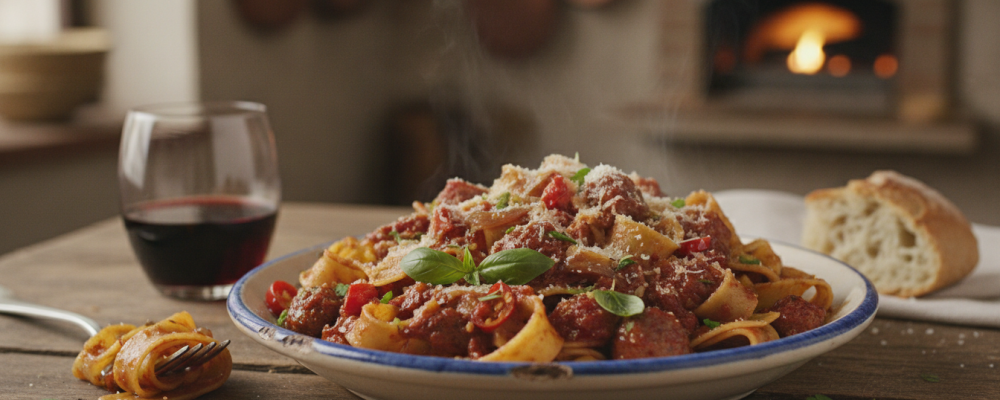

Some recipes earn their place at the table simply by being the kind of meal everyone wants seconds of, and Italian Drunken Noodles is one of those dishes for me. It’s hearty, saucy, and full of flavor, but it comes together in one pan with none of the fuss you’d expect from something that tastes this good.
I first put this recipe together on a night when I wanted pasta but didn’t want to commit to a long-simmered sauce. Italian sausage brought instant flavor, and a splash of white wine deglazing the pan turned into the backbone of a sauce that tasted like it had been simmering for hours. By the time the noodles were tossed in and the basil was folded through, I knew this was a recipe I’d be making on repeat.
What I love most about this dish is the way every element pulls its weight—the sausage brings richness, the wine adds brightness, and the broth ties it all together into a sauce that clings to every noodle. It’s comforting in the best way, without feeling heavy.
The Inspiration Behind This Recipe
This dish came from wanting to bring the bold, saucy appeal of drunken noodles—a dish traditionally associated with Thai cooking—into an Italian kitchen. The name “drunken noodles” usually refers to dishes built around a punchy, wine- or spirit-infused sauce, and I wanted to see what that idea looked like filtered through Italian ingredients and technique.
Swapping in Italian sausage, garlic, cherry tomatoes, and white wine felt like a natural fit. The result is a dish that borrows the spirit of drunken noodles while leaning fully into classic Italian flavors—rich, garlicky, and deeply savory.
It’s become one of those recipes that feels familiar and new at the same time, which is exactly what makes it fun to cook and to share.
A Brief History of Wine-Deglazed Pasta Sauces
Deglazing a pan with wine is a technique rooted deeply in Italian and French cooking traditions. After browning meat, the flavorful browned bits left in the pan—often called fond—are lifted and dissolved using wine, creating an instant, deeply flavorful base for a sauce.
This technique has long been used in Italian kitchens to build quick, flavorful pasta sauces without needing hours of simmering. Adding broth after the wine reduces further stretches that sauce while keeping the flavor concentrated, a method that’s been passed down through generations of home cooks looking to maximize flavor with minimal ingredients.
This recipe leans on that same tradition, using the sausage drippings and a wine reduction to build a sauce that tastes far more complex than the short cook time would suggest.
Why This Cooking Method Works
Building this dish in stages is what makes it so flavorful despite the quick cooking time. Browning the sausage first develops deep, savory flavor and leaves behind browned bits that become the foundation of the sauce. Deglazing with wine lifts all of that flavor off the bottom of the pan, while the reduction concentrates it into something rich and slightly tangy.
Adding chicken broth after the wine has reduced stretches the sauce just enough to coat the noodles without diluting the flavor. Tossing the noodles directly in the pan, rather than serving the sauce over them, ensures every strand is coated evenly.
Folding in the basil at the very end preserves its bright, fresh flavor, keeping the dish from tasting one-note despite its rich base.
Flavor Profile: What to Expect
This dish offers a well-rounded, satisfying flavor profile:
Savory richness from browned Italian sausage
Bright acidity from the white wine reduction
Sweetness from softened cherry tomatoes
Aromatic depth from garlic and onion
Fresh, herbal lift from basil stirred in at the end
The result is a sauce that’s rich but not heavy, with just enough brightness to keep every bite interesting.
Tips for Making the Best Italian Drunken Noodles
A few small details help this dish come together perfectly:
Don’t skip the deglazing step: Scraping up the browned bits is where most of the flavor comes from.
Let the wine reduce fully: This mellows the alcohol and concentrates the flavor before adding broth.
Cook noodles just shy of al dente: They’ll finish cooking slightly as they absorb the sauce in the pan.
Add basil at the very end: This keeps its flavor fresh and vibrant instead of muted.
Taste before serving: Sausage varies in seasoning, so adjust salt and pepper accordingly.
If you want a little extra richness, a pat of butter stirred in at the end takes the sauce over the top.
Serving Suggestions and Side Pairings
This dish is satisfying enough to serve on its own, but a few sides round it out nicely:
A simple green salad with a light vinaigrette to balance the richness
Garlic bread or a crusty loaf for soaking up extra sauce
Roasted vegetables like zucchini or asparagus for a seasonal touch
A sprinkle of extra Parmesan for serving
Leftovers also reheat beautifully for a quick, satisfying lunch the next day.
Storage, Reheating, and Make-Ahead Tips
This recipe stores and reheats well, making it a great option for meal prep.
Refrigerate in an airtight container for up to 4 days.
Reheat gently on the stovetop with a splash of broth or water to loosen the sauce.
Freezing is possible, though the noodles may soften slightly upon thawing.
The flavors deepen overnight, making this a dish that’s just as good, if not better, the next day.
Why This Recipe Deserves a Spot in Your Rotation
This is a dish that proves comfort food can still feel a little elevated. It’s rich, satisfying, and easy enough for a weeknight, but flavorful enough to serve when you’re hosting. Once you make it, it tends to become the recipe you reach for whenever you want pasta that feels a little more special than the usual weeknight standby.
Recommended Drink Pairing
Since this dish is built on a white wine reduction, staying in that same lane makes for an easy pairing—a crisp Pinot Grigio or Sauvignon Blanc echoes the wine in the sauce while cutting through the richness of the sausage. A Prosecco Margarita also works beautifully if you want something a little more festive.
For a non-alcoholic option, a sparkling white grape juice or a basil-infused lemonade complements the herbal notes in the dish without competing with the savory sauce.
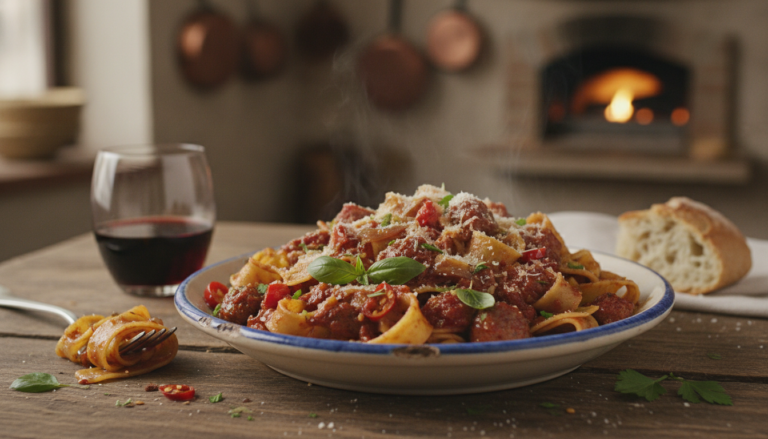
Italian Drunken Noodles
Italian Drunken Noodles bring together browned sausage, a white wine reduction, and fresh basil for a rich, saucy pasta dinner made in one pan.
4
servings15
minutes25
minutes650
kcal40
minutesIngredients
12 oz Italian sausage
12 oz egg noodles
2 tbsp olive oil
1 medium onion, sliced
2 cloves garlic, minced
1 cup cherry tomatoes, halved
1 cup white wine
1 cup chicken broth
1 cup fresh basil leaves
to taste salt
to taste black pepper
Directions
- Boil water and cook noodles according to package instructions.
- In a large pan, heat olive oil over medium heat.
- Add sliced onion and sauté until translucent.
- Add minced garlic and cook for 1 more minute.
- Crumble sausage into the pan and cook until browned.
- Stir in cherry tomatoes and cook until soft.
- Pour in white wine, scraping any browned bits from the bottom.
- Let the wine reduce by half, then add chicken broth.
- Simmer for 5 minutes, allowing flavors to meld.
- Add cooked noodles to the pan and toss to combine.
- Season with salt and pepper to taste.
- Fold in fresh basil before serving warm.
Nutrition Facts
- Total number of serves: 4
- Calories: 650kcal
- Cholesterol: 0mg
- Potassium: 400mg
- Sugar: 8g
- Protein: 6g
- Calcium: 60mg
- Iron: 2mg
About This Author

Amelia Grace
Editor-in-Chief & Culinary Director
The heart and guiding voice of Daily Dish, Amelia leads our editorial vision and recipe development. With a background in food journalism and over a decade spent in professional kitchens, she has a knack for blending gourmet technique with real-world accessibility. Her goal? To make every reader feel like a confident cook, one dish at a time.
Favorite dish: Creamy lemon risotto with a sprinkle of fresh thyme.
Kitchen motto: “Good food doesn’t have to be complicated — it just has to be made with heart.”