
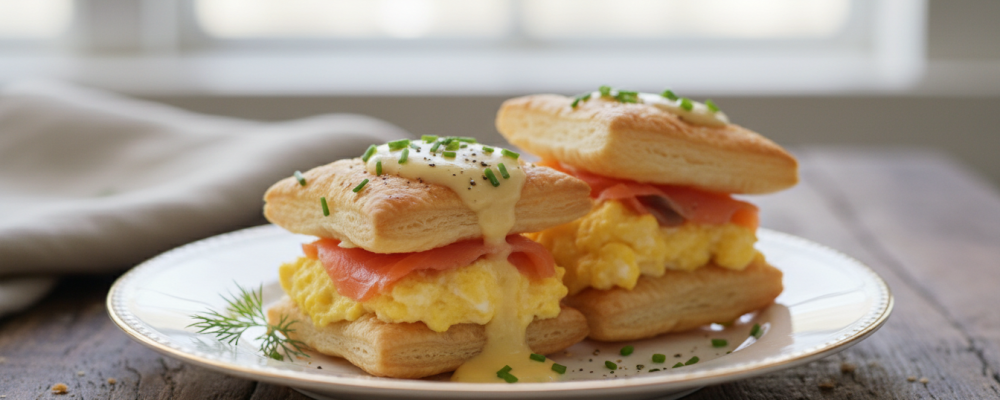

Eggs Napoleon—often called Eggs Benedict—is one of those dishes that intimidates home cooks unnecessarily. The truth is, this classic brunch staple relies on just a handful of techniques, none of which are particularly difficult once you understand the fundamentals. What you’re creating here is a study in contrasts: crispy toast against silky sauce, firm whites against molten yolks, salty ham against rich butter. Each component plays a specific role, and when they come together, the result is something truly special.
The key to success lies in understanding your timing and temperature. Poached eggs need gentle heat and confidence. Hollandaise requires warmth but not direct flame if you’re holding it. The English muffins must be toasted enough to provide structural integrity without becoming brittle. These aren’t mysterious culinary secrets—they’re simply techniques that respond well to attention and practice.
What I appreciate most about this recipe is its efficiency. You’re not spending an hour on elaborate preparation or juggling ten different components. Instead, you’re executing three straightforward tasks—toast, fry, poach—and assembling them with confidence. It’s the kind of recipe that rewards repetition. Make it once and you’ll understand the rhythm. Make it three times and you’ll own it completely.
─────────
The Inspiration Behind This Recipe
This simplified version emerged from years of making traditional Eggs Benedict and recognizing where home cooks consistently struggled. The original dish, with its precise poaching requirements and temperamental hollandaise, creates unnecessary anxiety. By using store-bought hollandaise (or a reliable recipe prepared ahead), we eliminate one major stress point without sacrificing the essential character of the dish.
The focus shifts to what matters most: achieving perfectly poached eggs with set whites and liquid yolks, and ensuring every component is properly warmed and seasoned. I wanted a recipe that delivered the same luxurious eating experience while being realistic about what’s achievable on a busy weekend morning. The result maintains all the textural contrast and rich flavors that make Eggs Napoleon memorable, but removes the technical barriers that keep people from making it regularly.
This approach honors the classic while acknowledging modern realities. Not everyone wants to whisk hollandaise at 7 a.m., and that’s perfectly reasonable. What matters is the final experience on the plate—the way the yolk breaks and mingles with the sauce, the interplay of crispy and creamy, the satisfaction of a well-executed brunch dish.
─────────
A Brief History of Eggs Benedict
The origins of Eggs Benedict remain disputed, with multiple New York establishments claiming credit for its invention in the late 19th century. The most widely accepted story attributes the dish to Delmonico’s Restaurant, where it was supposedly created for a regular patron named Mrs. LeGrand Benedict who requested something new for lunch. Another account credits the Waldorf Hotel and a Wall Street broker named Lemuel Benedict who ordered toast, poached eggs, bacon, and hollandaise as a hangover cure in 1894.
Regardless of its true origins, Eggs Benedict became a staple of American hotel dining rooms and upscale brunch menus by the early 20th century. The dish represents a particular moment in culinary history when French technique (hollandaise sauce, poached eggs) merged with American ingredients and dining preferences. It embodied sophistication and luxury, requiring both skill and attention to execute properly.
The name “Napoleon” appears in various regional variations, though it’s essentially the same dish. What remains constant across all versions is the fundamental structure: a toasted base, protein (usually ham or Canadian bacon), poached eggs, and hollandaise sauce. This formula has proven remarkably durable, spawning countless variations while the original remains a benchmark of brunch cooking.
─────────
Why This Cooking Method Works
Toasting the English muffins until golden brown serves multiple purposes beyond flavor. The Maillard reaction creates complex, nutty notes that complement the rich sauce, while the crispy texture provides essential structural support. A properly toasted muffin won’t become soggy immediately when you add the wet components—it maintains enough integrity to be cut with a fork while absorbing just enough sauce and yolk to become tender where it matters.
Frying the ham in butter rather than simply warming it adds a crucial layer of flavor. The butter browns slightly, coating the ham and creating caramelized edges that provide savory depth. This step takes only a few minutes but transforms the ham from a cold deli product into something that tastes intentional and carefully prepared. The rendered fat also adds richness that ties into the hollandaise.
Poaching eggs in simmering—not boiling—water is essential for achieving that perfect set white with liquid yolk. Water at 180-190°F coagulates the egg whites gently and evenly without toughening them or cooking the yolk prematurely. The three-to-four-minute timing isn’t arbitrary; it’s the precise window where whites firm up completely while yolks remain fluid. This texture contrast is what makes the dish work—when you cut into it, the yolk should flow out and combine with the hollandaise to create a unified sauce.
─────────
Flavor Profile: What to Expect
This dish delivers a masterclass in balanced richness:
- Buttery hollandaise – Smooth, lemony, and luxuriously fatty with just enough acidity to cut through the richness
- Liquid egg yolk – Creamy, mild, and velvety when it breaks and mingles with the sauce
- Salty ham – Provides essential savory counterpoint and textural variety
- Toasted English muffin – Nutty, slightly yeasty, with crispy edges and tender interior
- Black pepper heat – Subtle spice that lifts the other flavors without dominating
- Butter-fried edges – Caramelized notes from the ham add depth and complexity
The overall experience is one of indulgent comfort balanced by technique. Each bite should include all components—the crunch of toast, the tender ham, the silky sauce, and that moment when your fork breaks the yolk and it all comes together. It’s rich without being heavy, elegant without being fussy, satisfying without being overwhelming.
─────────
Tips for Making the Best Easy Eggs Napoleon
Master your poaching technique by creating a gentle whirlpool in the simmering water before adding eggs—this helps the whites wrap around the yolk for a neater presentation.
- Use fresh eggs – Older eggs have thinner whites that spread in the water; fresh eggs hold together better
- Toast the muffins thoroughly – They need to be crispy enough to support the weight of everything on top
- Warm your hollandaise gently – If using store-bought, heat it slowly over low heat or in a double boiler to prevent breaking
- Keep ham warm – Fry it just before assembly so everything comes together hot
- Season at the end – Wait until just before serving to add salt and pepper for maximum impact
- Work in batches – If making multiple servings, poach eggs in groups and keep warm in a bowl of hot water
- Have everything ready – This dish requires quick assembly while components are hot
For the cleanest presentation, trim any wispy egg white strands with kitchen scissors before plating. A light sprinkle of paprika or cayenne adds visual appeal and a subtle kick that complements the hollandaise beautifully.
─────────
Serving Suggestions and Side Pairings
Eggs Napoleon is substantial enough to be the centerpiece of your brunch plate, but it benefits from lighter accompaniments that provide contrast. A simple arugula salad dressed with lemon and olive oil cuts through the richness while adding peppery freshness. Roasted asparagus with sea salt brings seasonal elegance and a slight bitterness that balances the buttery hollandaise. Fresh fruit—particularly citrus segments or berries—offers palate-cleansing acidity between bites.
For a more complete brunch spread, consider hash browns or breakfast potatoes cooked until crispy. The starchy component adds substance without competing with the eggs’ richness. Alternatively, sliced tomatoes seasoned with salt and pepper provide juicy acidity that enhances every component. If you’re serving a crowd, a light cucumber salad or simple mixed greens round out the plate without overwhelming the star attraction.
This dish demands to be eaten immediately. The poached eggs won’t wait, the hollandaise will cool, and the English muffins will lose their textural contrast if you delay. Plate directly and serve without hesitation—this is food that rewards prompt execution and immediate consumption.
─────────
Storage, Reheating, and Make-Ahead Tips
- Prep hollandaise ahead: Make (or buy) hollandaise sauce up to 2 days ahead; reheat gently in a double boiler
- Toast English muffins: Can be toasted 5 minutes ahead and kept warm in a low oven
- Fry ham in advance: Cook ham up to 15 minutes ahead and keep warm, covered
- Poach eggs ahead: Poach eggs up to 2 hours early, store in ice water, then reheat in simmering water for 30 seconds before serving
- Leftover hollandaise: Store covered in the refrigerator for up to 2 days; reheat very gently with a splash of warm water
- Not recommended for freezing: This dish doesn’t freeze well due to the delicate nature of poached eggs and hollandaise
The beauty of this recipe is that it’s designed for immediate consumption. While some components can be prepped slightly ahead, the final assembly must happen quickly. For serving multiple people, set up a production line: toast all muffins, fry all ham, then poach eggs in batches while assembling plates in sequence.
─────────
Why This Recipe Deserves a Spot in Your Rotation
This recipe earns its place because it demystifies what many consider an intimidating dish. Once you master the basic techniques—particularly poaching eggs—you’ll have a impressive brunch option that takes less time than waiting in line at a restaurant. The ability to create restaurant-quality results at home builds confidence and expands your cooking repertoire in meaningful ways.
Beyond the practical benefits, Eggs Napoleon simply delivers exceptional flavor and textural contrast. The combination of crispy, creamy, salty, and rich elements creates a complete eating experience that feels special without requiring exotic ingredients or complex preparation. It’s the kind of dish that transforms an ordinary weekend morning into something memorable, whether you’re cooking for yourself or impressing guests.
─────────
Recommended Drink Pairing
The richness of Eggs Napoleon calls for beverages with enough acidity and brightness to cut through the butter and egg yolk. A classic mimosa made with good champagne and fresh orange juice provides effervescence and citrus notes that cleanse the palate between bites. The bubbles literally lift the fat from your tongue, resetting your taste buds for the next forkful.
For coffee drinkers, a bright, acidic medium roast works better than dark, heavy varieties. The natural acidity in coffee mirrors the lemon in the hollandaise while providing a bitter contrast to the rich sauce. If you prefer something non-alcoholic beyond coffee, fresh-squeezed grapefruit juice offers similar palate-cleansing properties with its tart, slightly bitter profile. For a more indulgent option, a Bloody Mary brings savory complexity and spice that complement the ham without competing with the eggs. The tomato’s umami notes and the drink’s seasoning create an interesting dialogue with the dish’s buttery richness.
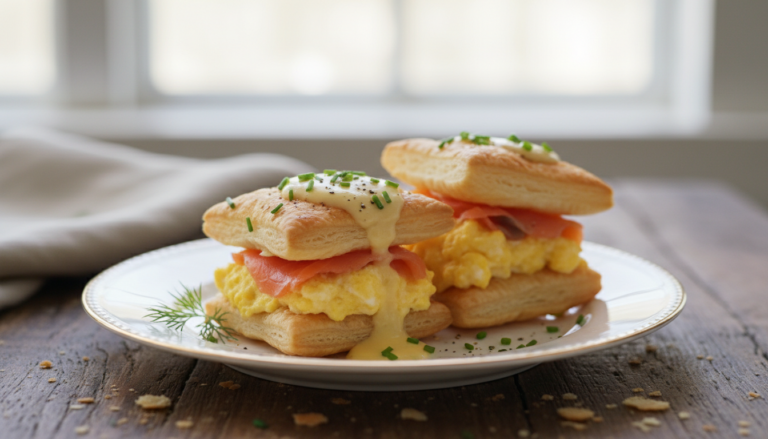
Easy Eggs Napoleon
This streamlined take on Eggs Benedict layers crispy English muffins, savory ham, perfectly poached eggs, and silky hollandaise into an elegant breakfast that’s surprisingly simple to master.
4
servings10
minutes15
minutes250
kcal25
minutesIngredients
4 whole eggs
2 whole English muffins
1/4 cup butter
1/2 cup hollandaise sauce
8 slices ham
1/4 teaspoon salt
1/8 teaspoon black pepper
Directions
- Begin by splitting and toasting the English muffins until golden brown. Place them on serving plates once done.
- In a pan, melt butter over medium heat. Add ham slices and fry until they are lightly browned on each side.
- Poach the eggs in simmering water until the whites are fully set and the yolks are still runny, for about 3 to 4 minutes.
- Place two slices of ham on each half of the toasted English muffins, then top with the poached eggs.
- Pour warm hollandaise sauce over the eggs and sprinkle with salt and black pepper for seasoning.
- Serve immediately while the dish is warm to enjoy the best taste.
Nutrition Facts
- Total number of serves: 4
- Calories: 250kcal
- Cholesterol: 0mg
- Sodium: 620mg
- Potassium: 400mg
- Sugar: 8g
- Protein: 6g
- Calcium: 60mg
- Iron: 2mg
About This Author

Benjamin Brown
Recipe Developer
Benjamin is our flavor engineer. A classically trained chef turned recipe developer, he’s obsessed with balancing taste, texture, and creativity. He ensures that every recipe we publish is not only delicious but also reliable, approachable, and repeatable — even for beginners.
Favorite dish: Slow-braised short ribs with red wine reduction.
Kitchen motto: “Cooking is part science, part soul.”















