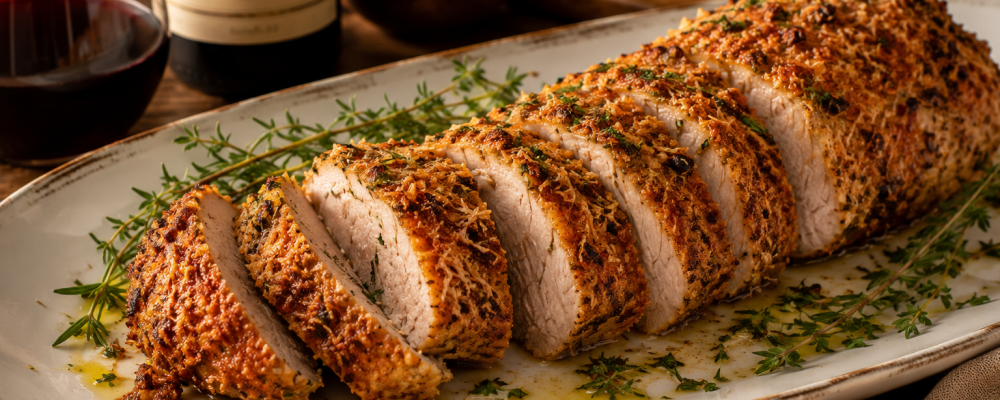

Pork tenderloin is one of those ingredients I think people underestimate—they walk right past it at the butcher counter in favor of chicken or beef without realizing what an extraordinary canvas it provides. It’s lean, tender, quick-cooking, and receptive to flavors in a way that more assertive cuts simply aren’t. Dress it properly, as we do here with a garlic-infused Parmesan and panko crust, and it becomes something genuinely special—the kind of main course that makes guests ask for the recipe before they’ve even finished their first slice.
What I love about this preparation is how the crust does double duty. It creates that satisfying crunch you want when you cut into a beautifully cooked protein, but it also acts as a flavor delivery system—garlic, oregano, paprika, and Parmesan pressed directly onto the surface, searing into the meat and creating a coating that’s aromatic and complex. Every slice comes with that perfect ratio of juicy pork interior and crunchy, cheesy, garlicky exterior, and every bite makes you appreciate how much thought went into something that actually took very little time to assemble.
The technique here is wonderfully forgiving—sear on the stovetop to set the crust and develop color, then finish in the oven where gentle, even heat cooks the tenderloin through without any of the risk of burning that stovetop-only cooking can bring. Pork tenderloin cooks quickly, which means you spend more time enjoying wine and conversation than you do watching the clock. That kind of practical elegance is exactly what Wine Wednesday cooking should deliver.
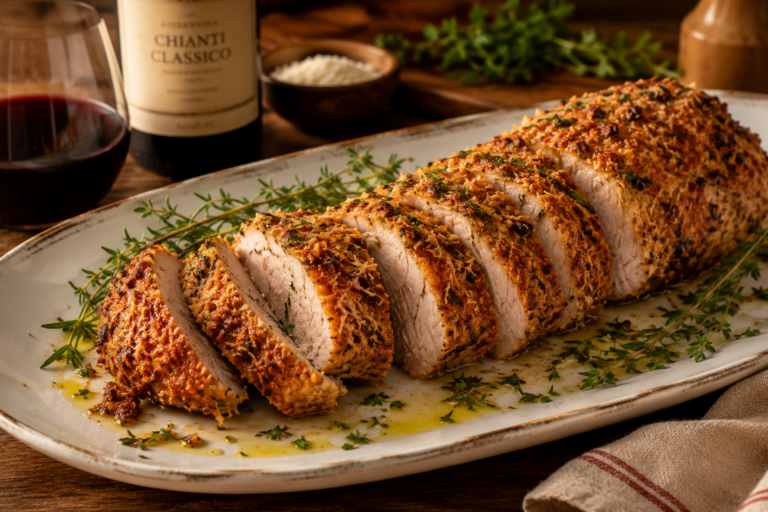
When you slice it at the table and that gorgeous crust crackles slightly, revealing perfectly cooked, blush-pink pork inside, you’ll understand why this recipe earns its place in your regular rotation. It looks like you tried very hard. The truth is, you mostly just trusted good ingredients to do what good ingredients do—taste wonderful together.
─────────
The Inspiration Behind This Recipe
This recipe draws from Italian filetto di maiale—pork tenderloin preparations beloved throughout Italy for their simplicity and elegance. The Parmesan-panko crust reflects Italian-American cooking traditions where cheese and breadcrumbs transform the exterior of proteins into something crispy and deeply flavorful. Panko breadcrumbs, while Japanese in origin, have been embraced enthusiastically in Italian-American cooking for their superior crunch—lighter and crispier than traditional breadcrumbs, they create a coating that stays genuinely crispy longer. The addition of paprika nods to Spanish and Hungarian culinary traditions where pork and paprika are natural companions, adding a subtle warmth and beautiful color to the crust. Together these influences create something that feels coherently Italian-American while drawing from a broader European pantry.
─────────
A Brief History of Crusted Pork Preparations
The practice of coating pork in seasoned breadcrumbs before cooking has roots throughout European cuisine—Italian cotoletta, Austrian schnitzel, and Spanish milanesa all feature breaded pork preparations that achieve similar results through similar techniques. The underlying principle in each tradition is the same: a seasoned coating creates textural contrast with tender meat while carrying aromatics and flavor directly onto the protein’s surface. Pork tenderloin specifically emerged as a popular cut in American cooking during the late 20th century as consumers sought leaner proteins without sacrificing tenderness. Its mild flavor profile makes it ideal for bold coatings like this Parmesan-panko crust, which delivers the flavor intensity the cut might otherwise lack. The sear-then-bake method used here represents modern home cooking intelligence—achieving stovetop browning and oven evenness in a single cohesive preparation.
─────────
Why This Cooking Method Works
The science behind the technique:
- Patting pork dry: Removes surface moisture that would prevent proper browning and cause coating to steam rather than crisp
- Garlic sauté in oil: Releases fat-soluble garlic compounds into the oil, which then carries those flavors into the coating when pressed onto the pork
- Parmesan in the crust: Low moisture content crisps without burning; glutamates add umami depth; fat promotes browning
- Panko over regular breadcrumbs: Larger, drier flakes create more surface area for crispiness and brown more evenly
- Paprika contribution: Adds color through carotenoid pigments and subtle sweetness that complements pork’s mild character
- Pressing coating firmly: Ensures adhesion; a well-pressed crust won’t fall off during searing or slicing
- Stovetop searing first: Creates Maillard reaction browning on all sides, setting the crust before oven finishing
- Oven finishing at 400°F: Provides even heat that cooks through gently without burning the Parmesan crust
- Resting before slicing: Allows juices to redistribute throughout the meat; cutting immediately causes moisture loss
- Internal temperature target: Pork tenderloin is perfect at 145°F—slightly pink, juicy, and safe
─────────
Flavor Profile: What to Expect
Crispy • Savory • Nutty • Garlicky • Elegant
This pork tenderloin delivers satisfying contrast between textures and complementary flavors throughout. The exterior crust is genuinely crispy with nutty Parmesan character, aromatic garlic depth, herbal oregano notes, and a subtle warmth from paprika that contributes beautiful color. The pork itself is lean and tender—mild enough that the crust’s bold character takes center stage without competition. Each slice reveals a clean cross-section of golden crust and pale, juicy interior that’s as visually appealing as it is delicious. The overall flavor impression is Italian-American comfort with enough sophistication to feel special—bold yet balanced, rich yet not heavy, impressive yet entirely achievable.
─────────
Tips for Making the Best Crispy Garlic Parmesan Pork Tenderloin
Pork preparation:
- Remove the silverskin (the shiny, tough membrane) from the tenderloin before coating—it doesn’t break down during cooking and makes slicing difficult
- To remove: slip a knife under the silverskin and run it along the membrane while pulling it away
- Pat completely dry with paper towels before seasoning
- Season with salt and pepper before coating—the seasoning needs to reach the meat itself, not just the crust
- Bring pork to room temperature (20-30 minutes) for more even cooking
Creating and applying the crust:
- Use freshly grated Parmesan—pre-grated has anti-caking agents that affect texture and browning
- Mix dry ingredients thoroughly before applying so every surface gets even coverage of each element
- Sauté garlic in oil first, then use that garlic-infused oil to help the coating adhere—this is the key to maximum garlic flavor in the crust
- Press firmly and thoroughly on all sides—don’t just sprinkle, actually press the mixture in
- Let coated pork rest 5 minutes before searing so coating sets and adheres better
Searing without losing the crust:
- Heat skillet until oil shimmers before adding pork
- Turn pork gently and infrequently—every turn risks dislodging crust
- If crust sticks to the pan, wait—it will release when properly browned
- Sear all sides including the ends for complete coverage
- Work quickly; you’re setting the crust, not cooking through
Oven finishing:
- Use a meat thermometer—145°F internal temperature is the modern safe standard for pork
- At this temperature, pork will have a slight blush of pink—this is correct and desirable
- Check temperature at 18 minutes; tenderloins vary in size
- If crust begins browning too quickly, tent loosely with foil
Resting and slicing:
- Rest at least 5-8 minutes before slicing—this is non-negotiable for juicy results
- Slice on a slight bias (diagonal) for more elegant presentation and more crust per slice
- Use a sharp knife for clean cuts that don’t drag through the crust
─────────
Wine Pairing Guide
Perfect pairings for Crispy Garlic Parmesan Pork Tenderloin:
Pinot Noir (Oregon or Burgundy) ★ Best Match
Light to medium-bodied with cherry fruit, earthy notes, and enough elegance to complement pork’s mild character without overwhelming it. The wine’s subtle earthiness echoes the oregano and garlic while its soft tannins don’t clash with the Parmesan crust. Oregon Pinot brings riper fruit; Burgundy offers more restraint and terroir complexity. Both feel genuinely appropriate with this preparation.
Chardonnay (Lightly Oaked)
Medium to full-bodied with enough weight for the Parmesan crust while maintaining the acidity that keeps the pairing lively. Subtle butter and hazelnut notes echo the cheese’s nuttiness beautifully. Choose restrained oak rather than heavily oaked styles—the goal is harmony with the crust’s flavors, not competition.
Vermentino
Italian white with herbal notes, citrus brightness, and saline minerality that complements oregano and garlic while cutting through the Parmesan’s richness. The wine’s Mediterranean character feels authentic with Italian-American flavors and provides refreshing contrast to the crust’s richness.
Barbera d’Alba
Italian red with high acidity, low tannins, and bright cherry fruit that makes it exceptionally food-friendly with pork. The wine’s juicy character cuts through the Parmesan crust while its Italian origin creates genuine pairing authenticity. A wonderful choice for those who want red wine without heavy tannins.
Grenache/Garnacha
Medium-bodied with red fruit, herbal notes, and soft tannins that complement pork beautifully. The wine’s naturally higher alcohol and fruit sweetness work well with the paprika’s subtle warmth while its medium body doesn’t overpower the tenderloin’s delicacy.
Alternative pairing: A dry Rosé (Provence or Spanish) bridges white and red wine territory beautifully—crisp acidity handles the Parmesan while delicate fruit complements the pork. Elegant, versatile, and genuinely food-friendly.
─────────
Serving Suggestions and Side Pairings
Beautiful presentations:
- Elegant slicing: Cut on the bias into ¾-inch medallions, fan on a platter showing the crust and interior contrast
- Family-style: Present whole tenderloin on a wooden board, slice tableside for drama
- Individual plates: Three to four slices fanned with sides arranged around, drizzle of good olive oil
Ideal side dishes:
- Garlic Rosemary Focaccia Muffins: Perfect alongside for soaking up any olive oil and pan juices
- Creamy Gouda Mashed Potatoes: Rich, indulgent base that complements the crispy crust beautifully
- Roasted asparagus: Classic pairing that adds color and freshness to the plate
- Spinach Mushroom Orzo: Earthy, creamy side that complements Italian flavors
- Simple arugula salad: Peppery greens with lemon vinaigrette and shaved Parmesan provide bright contrast
- Roasted cherry tomatoes: Burst of acidity and sweetness that cuts through the Parmesan richness
For a complete Wine Wednesday spread:
Create an Italian-American feast: start with Garlic Parmesan Roasted Shrimp as an appetizer that continues the Parmesan theme, serve this pork tenderloin as the impressive main course with elegant sides, and finish with tiramisu or panna cotta. Offer both Pinot Noir and a lightly oaked Chardonnay to let guests explore how red and white wines interact differently with the same Parmesan crust.
─────────
Storage, Reheating, and Make-Ahead Tips
Storage:
- Refrigerate sliced or whole pork in an airtight container for up to 3 days
- Store separately from any sides to maintain best texture
- The crust softens when stored—this is expected and doesn’t affect flavor
Reheating:
- Oven (best method): Reheat slices at 375°F on a wire rack for 8-10 minutes—the rack allows air circulation that helps restore some crispiness
- Avoid microwave—it makes the crust soggy and can dry out the lean pork
- Stovetop: Warm slices in a dry pan over medium heat, 1-2 minutes per side to re-crisp the exterior
- Don’t overheat—pork dries out quickly when internal temperature exceeds serving temperature
Make-ahead strategies:
- Remove silverskin and prepare pork up to 1 day ahead; refrigerate uncovered to dry the surface further
- Mix the Parmesan crust mixture up to 2 days ahead; store in an airtight container
- Coat pork up to 4 hours ahead; refrigerate uncovered—air circulation keeps the coating dry and adhesion strong
- Bring coated pork to room temperature 20 minutes before cooking
- For entertaining, coat pork ahead and sear just before guests arrive, finishing in the oven while everyone enjoys appetizers and wine
Leftover ideas:
- Pork sandwiches: Slice thin and layer on ciabatta with arugula, roasted peppers, and aioli
- Salad topping: Slice cold over arugula with shaved Parmesan and lemon vinaigrette
- Pasta addition: Dice and toss with pasta, olive oil, and roasted cherry tomatoes
- Grain bowls: Serve over farro or quinoa with roasted vegetables and a drizzle of balsamic
─────────
Why This Recipe Deserves a Spot in Your Wine Wednesday Rotation
Crispy Garlic Parmesan Pork Tenderloin is the kind of recipe that makes you genuinely excited about weeknight cooking again. It’s the dish you pull out when you want to impress without stress, when you want something that looks restaurant-worthy but requires only straightforward technique and ingredients you can find anywhere. That combination—impressive presentation, accessible execution—is the sweet spot every home cook should have in their repertoire.
What makes this particularly wonderful for Wine Wednesday is how the Parmesan crust creates natural bridges to both white and red wine. The cheese’s nuttiness connects to Chardonnay’s hazelnut character; the garlic and oregano echo in wines with herbal notes; the paprika’s warmth harmonizes with fruit-forward reds. This is a dish that doesn’t demand a specific wine so much as it welcomes the conversation, making it ideal for exploring different pairings across multiple Wine Wednesday evenings.
The recipe also embodies something I care deeply about in cooking—respecting beautiful ingredients by treating them thoughtfully. Pork tenderloin is elegant and delicate; it deserves a coating that complements rather than masks, that adds texture and flavor without obscuring the meat’s natural character. This Parmesan crust does exactly that—it announces itself confidently in the first bite, then steps back to let the tender, juicy pork share the spotlight. That’s balance, and balance is what makes a dish genuinely memorable.
Most importantly, this is cooking that gives you your Wednesday evening back. A brief assembly, a quick sear, twenty minutes in the oven, a glass of wine while it rests—and then you’re sitting at a properly set table with something beautiful in front of you, feeling like you’ve treated yourself and anyone lucky enough to join you exactly as well as you all deserve.
So press that crust on firmly, trust the oven to do its work, and pour something that makes the evening feel worth celebrating. Because Wednesday evenings with food this good and wine this well-chosen are always worth celebrating.
Buon appetito!
Crispy Garlic Parmesan Pork Tenderloin
Pork tenderloin coated in crispy Parmesan and panko with garlic, oregano, and paprika—impressive enough for company, easy enough for Wednesday.
4
servings20
minutes30
minutes400
kcal50
minutesIngredients
1 lb pork tenderloin
3 cloves garlic, minced
1/2 cup grated Parmesan cheese
1 tsp dried oregano
1 tsp salt
1/2 tsp black pepper
2 tbsp olive oil
1/4 cup panko breadcrumbs
1 tsp paprika
Directions
- Preheat oven to 400°F (200°C).
- Pat pork dry and season with salt and pepper.
- Heat oil in a skillet over medium heat.
- Add garlic, sauté until fragrant.
- Mix Parmesan, oregano, paprika, and breadcrumbs.
- Press the mix onto pork to coat.
- Sear pork on all sides in skillet.
- Transfer to oven; bake for 20 minutes.
- Let rest before slicing and serving.
Nutrition Facts
- Total number of serves: 4
- Calories: 400kcal
- Cholesterol: 0mg
- Potassium: 400mg
- Sugar: 8g
- Protein: 6g
- Calcium: 60mg
- Iron: 2mg
About This Author

Amelia Grace
Editor-in-Chief & Culinary Director
The heart and guiding voice of Daily Dish, Amelia leads our editorial vision and recipe development. With a background in food journalism and over a decade spent in professional kitchens, she has a knack for blending gourmet technique with real-world accessibility. Her goal? To make every reader feel like a confident cook, one dish at a time.
Favorite dish: Creamy lemon risotto with a sprinkle of fresh thyme.
Kitchen motto: “Good food doesn’t have to be complicated — it just has to be made with heart.”