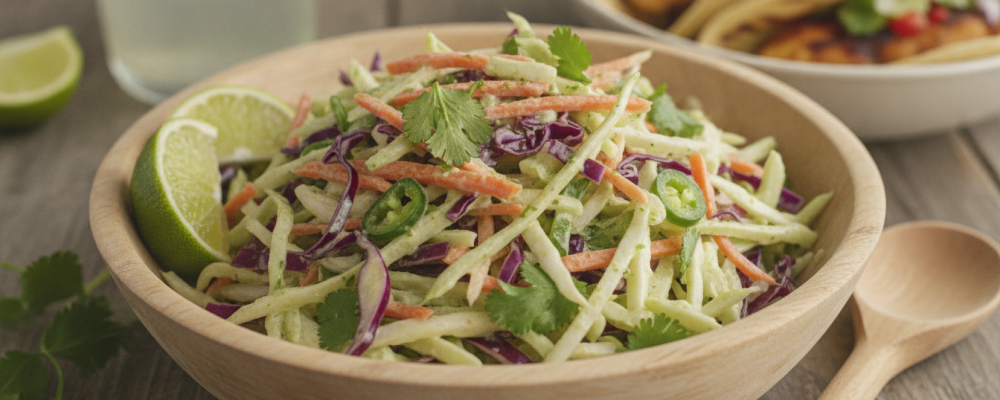

A well-constructed slaw is one of the most technically underappreciated components in the taco ecosystem. Home cooks often treat it as an afterthought—shredded cabbage dumped in a bowl with whatever dressing is convenient—without recognizing that a thoughtfully engineered slaw can functionally transform every taco it accompanies. This Cilantro Lime Slaw isn’t just a side dish. It’s a precision instrument designed to provide crunch, acid, freshness, and visual appeal simultaneously, and understanding the technical principles behind its construction will help you use it more effectively and adapt it intelligently.
Let’s begin with the vegetable selection and its structural implications. Cabbage is the ideal slaw base because its cell walls contain exceptionally strong cellulose, which maintains crunch even after extended contact with acidic dressing—unlike lettuce, which wilts rapidly, or spinach, which collapses entirely. The cabbage’s natural mild bitterness also provides a flavor base that’s assertive enough to stand up to bold taco proteins without becoming the dominant flavor. Carrots contribute two things: sweetness that balances the dressing’s acidity, and additional textural contrast from their denser cell structure, which stays firmer longer than cabbage. The color contrast—pale green-white cabbage against orange carrot—also creates visual appeal that makes the slaw look intentional and appetizing rather than merely functional.
The dressing is where the precision engineering happens. This is a vinaigrette-style dressing rather than a mayo-based one, which creates a fundamentally different slaw with different applications and advantages. The base formula follows vinaigrette logic: fat, acid, sweetener, seasoning. Olive oil provides the fat that carries fat-soluble flavor compounds and creates a thin coating on the vegetable surfaces that helps the dressing adhere rather than pool at the bottom of the bowl. Lime juice provides citric acid—sharper and more aromatic than white wine vinegar, creating a distinctly Mexican flavor profile. Honey provides sweetness that balances the acid; it also contains fructose, which is sweeter than sucrose by weight, meaning you need less sweetener to achieve the same level of balance. Cumin is the critical spice decision—its earthy terpenoid compounds bridge the dressing and the taco proteins it’s meant to accompany, creating flavor coherence across the entire plate.
The 30-minute minimum refrigeration period is scientifically purposeful rather than arbitrary patience-building. During this time, osmosis occurs: the salt in the dressing draws moisture from the cabbage cells through the cell walls, which simultaneously seasons the vegetable from the outside in and slightly softens the texture from crisp to what I’d describe as “crisp-tender”—maintaining structural integrity while becoming more pliable and better integrated with the dressing. The lime juice’s acidity also continues working on the vegetable surfaces during this time, further flavor integration. The result after 30 minutes is meaningfully better than immediately after dressing—this is a slaw that rewards patience with noticeable quality improvement.
─────────
The Inspiration Behind This Recipe
This slaw draws directly from the Baja California fish taco tradition, where shredded cabbage has been an essential component since the format’s earliest iterations. Traditional Baja slaw is typically minimalist—raw cabbage, perhaps a squeeze of lime, nothing more—relying on the cabbage’s natural crunch and freshness to provide contrast to fried fish. This recipe builds on that foundation while adding complexity through the cumin-honey-olive oil vinaigrette, creating something more nuanced than the traditional preparation without losing its essential character. The cilantro addition brings it firmly into Mexican flavor territory, and the honey-lime balance reflects the region’s appreciation for flavors that are simultaneously sweet and bright. It’s the evolution of a traditional preparation—more complex and integrated than its ancestor while remaining true to the same principles of freshness and crunch that made cabbage slaw a Baja staple in the first place.
─────────
A Brief History of Slaw as a Taco Component
Cabbage’s role in Mexican and Tex-Mex cuisine reflects both its practical virtues and its flavor compatibility with Mexican spice profiles. Cabbage is hardy, inexpensive, and widely available throughout Mexico, making it a practical choice for street food preparations where cost and convenience matter. Its crunch provides textural contrast to both fried and braised proteins, and its mild flavor doesn’t compete with the bold seasonings that define Mexican cooking. The specific tradition of cabbage slaw with fish tacos in Baja California likely developed organically among fishing communities where fresh catches needed accompaniments that were quick, available, and didn’t require cooking. As Baja fish tacos spread north into California and then throughout the United States in the 1980s and 1990s, the cabbage slaw component came with them—and American food culture proceeded to expand and elaborate on it, introducing mayo-based dressings, additional vegetables, and more complex seasonings. This recipe represents the thoughtful middle ground between traditional Baja minimalism and American elaboration.
─────────
Why This Preparation Method Works
Vinaigrette instead of mayo creates versatility — An oil-and-acid dressing is lighter, brighter, and more compatible with a wider range of taco proteins than a mayo-based dressing. It doesn’t compete with rich proteins; it complements and cuts through them.
Whisking the dressing separately ensures emulsification — Combining oil and acid in a separate bowl and whisking vigorously creates a temporary emulsion that distributes evenly across the vegetables, preventing pools of dressing at the bottom.
Cumin bridges slaw and taco — Adding cumin to the slaw dressing creates flavor coherence with the cumin that appears in most taco spice profiles, making the slaw feel like an integrated component rather than a separate element.
Honey prevents harsh acidity — Without sweetener, a lime-forward vinaigrette can taste sharp and one-dimensional. Honey’s complex sugars round the edges, creating a dressing that’s bright without being aggressive.
Resting allows osmosis — The 30-minute minimum rest period allows salt to draw moisture from the cabbage, seasoning it internally while slightly softening its texture to crisp-tender—better for eating in tacos than the initial raw crunch.
No cooking preserves nutrients — Unlike cooked vegetable preparations, this raw slaw retains all of the cabbage’s and carrot’s vitamins, minerals, and fiber content intact.
─────────
Flavor Profile: What to Expect
Bright, clean, and precisely balanced — this slaw delivers mild, slightly bitter cabbage as its structural foundation, sweetened by carrot’s natural sugars and honey’s gentle complexity. The lime juice dressing provides vibrant citrus acidity that’s immediately refreshing, modulated by olive oil’s subtle fruitiness that prevents sharpness. Cumin’s earthy warmth adds depth and Mexican character that bridges the slaw with taco proteins. Fresh cilantro contributes herbal brightness and citrus undertones that amplify the lime’s effect. Salt and pepper provide structural seasoning that makes all other flavors more pronounced. The texture after proper resting is crisp-tender—maintaining satisfying crunch while being pliable enough for easy taco eating. It’s a slaw that announces itself clearly without overpowering—designed to enhance rather than dominate.
─────────
Tips for Making the Best Cilantro Lime Slaw
Shred cabbage thinly — Use a sharp knife, mandoline, or food processor shredding attachment. Thin shreds integrate better into tacos and have more surface area for dressing contact. Thick chunks are difficult to eat and don’t dress evenly.
Squeeze limes fresh — The aromatic oils in fresh lime peel and the brightness of fresh juice are significantly better than bottled. This simple step makes a noticeable difference.
Whisk dressing until emulsified — The oil and lime juice will naturally separate. Whisk vigorously for 30-60 seconds until the dressing looks slightly cloudy and unified. It will re-separate if it sits, so whisk again just before pouring.
Season after resting — Taste the slaw after its 30-minute rest and adjust salt, lime, and honey. The flavors change significantly as the vegetables release moisture and absorb dressing.
Don’t overdress — Pour about two-thirds of the dressing, toss, and assess. You want the vegetables lightly coated, not swimming. Add remaining dressing as needed.
Use fresh cilantro only — Dried cilantro has none of the aromatic volatile compounds that make fresh cilantro distinctive. There’s no substitute here.
Massage if making far ahead — If making more than 2 hours ahead, massage the cabbage briefly with salt before adding dressing to pre-soften it, preventing it from becoming too watery as it sits.
Taste the cumin level — Cumin intensity varies by brand and freshness. Start with the stated amount, taste after tossing, and add more if the earthy depth isn’t pronounced enough.
─────────
Serving Suggestions and Applications
As a taco topping, particularly excellent with:
- Fish Tacos with 7UP Batter — Classic Baja combination where slaw provides essential freshness
- Bang Bang Shrimp Tacos — Cool crunch against the rich, spicy sauce
- Fish Tacos with Mango Salsa — Adds textural contrast to the soft fish and juicy salsa
- Smoky Brisket Tacos — Acid and crunch cut through the rich braised beef
- Crockpot Carnitas Pork Tacos — Brightness against slow-cooked pork richness
- Chili Lime Steak Tacos — Fresh contrast to the grilled, spiced beef
Beyond tacos:
- Pulled pork sandwiches — Classic American application where the slaw’s acidity complements rich pork
- Fish and chip accompaniment — Bright contrast to fried fish
- Grain bowl topping — Adds crunch and freshness to rice or quinoa bowls
- Burger topping — Replaces traditional lettuce with more flavor and crunch
- Standalone side salad — Substantial enough to serve alongside grilled proteins independently
Building a complete Taco Tuesday spread:
Serve this slaw in a large bowl at the center of the table as a communal topping that works with every taco option, reducing the number of individual components you need to prepare while increasing the cohesion of the overall spread.
─────────
Storage and Make-Ahead Tips
Storage:
- Store dressed slaw in an airtight container in the refrigerator for up to 3 days
- The slaw actually improves through day 2 as flavors continue to meld and integrate
- After day 3, the cabbage begins losing crunch and the cilantro darkens
Make-Ahead:
- This is an ideal make-ahead recipe—prepare the morning of or even the night before
- The 30-minute minimum rest can extend to 24 hours with improved results
- Add a small handful of fresh cilantro just before serving to restore herbal brightness if made far ahead
Dressing storage:
- Store extra dressing separately in a sealed jar for up to 1 week
- Shake or whisk vigorously before using—oil and acid will have separated during storage
- Use extra dressing on salads, grain bowls, or as a marinade for chicken or fish
Refreshing leftovers:
- Add a fresh squeeze of lime juice and pinch of salt to day-old slaw to brighten flavors
- Toss in a small amount of fresh cabbage if the original has softened too much
- Fresh cilantro restores herbal character that fades during storage
Freezing:
- Not recommended under any circumstances
- Cabbage and carrot lose all texture when frozen and thawed, becoming completely waterlogged
- Always make fresh; the recipe is quick enough that advance freezing provides no meaningful benefit
─────────
Why This Recipe Deserves a Spot in Your Taco Tuesday Rotation
Because the best Taco Tuesday spreads have a slaw, and this one is built with the kind of intentionality that makes it genuinely useful across the entire table rather than suited to just one taco. The vinaigrette format means it works with fish, shrimp, beef, pork, and vegetarian options equally well—it never fights with the protein, only enhances it. The cumin creates flavor coherence across the spread. The make-ahead nature means it’s done before you start cooking anything else, reducing last-minute workload when you’re managing multiple components simultaneously. And it keeps well, meaning leftovers are just as good the next day tossed over a grain bowl or piled onto a sandwich. From a practical standpoint, this slaw is one of the highest-value recipes in the rotation: maximum impact, minimum effort, universal compatibility. That combination is precisely what makes a recipe indispensable rather than merely useful.
─────────
Recommended Pairing
Universally compatible with:
- Classic Lime Margarita — The citrus in both creates harmony; the tequila’s agave notes complement the cumin’s earthiness
- Beergarita — Light, refreshing, and perfectly casual—matches the slaw’s easygoing versatility
- Mexican lager with lime — The quintessential pairing for anything with Baja heritage
- Sparkling water with lime — Lets the slaw’s clean, bright flavors speak for themselves
Complete Taco Tuesday accompaniment strategy:
Position this Cilantro Lime Slaw alongside Corn Salsa and Black Bean Dip as part of a three-component foundation that provides freshness, sweetness, and richness respectively—a trio of sides that works with every taco on the table and eliminates the need for extensive additional preparation.
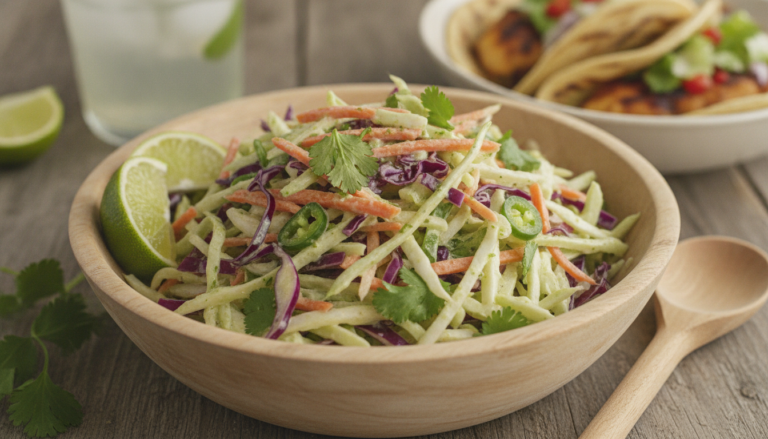
Cilantro Lime Slaw
Cilantro Lime Slaw combines shredded cabbage and carrot with fresh cilantro in a bright, cumin-kissed lime and honey vinaigrette—a clean, dairy-free slaw that delivers crunch, freshness, and versatility to every taco it touches.
4
servings30
minutes40
minutes300
kcal1
hour10
minutesIngredients
4 cups shredded cabbage
1 cup shredded carrots
0.5 cup fresh cilantro leaves, chopped
0.25 cup lime juice
2 tablespoons olive oil
1 tablespoon honey
1 teaspoon ground cumin
1 teaspoon salt
0.5 teaspoon black pepper
Directions
- In a large bowl, combine the shredded cabbage, shredded carrots, and chopped cilantro.
- In a separate small bowl, whisk together the lime juice, olive oil, honey, ground cumin, salt, and pepper.
- Pour the dressing over the cabbage mixture and toss well to combine.
- Refrigerate for at least 30 minutes before serving for best flavor.
Nutrition Facts
- Total number of serves: 4
- Calories: 120kcal
About This Author

Benjamin Brown
Recipe Developer
Benjamin is our flavor engineer. A classically trained chef turned recipe developer, he’s obsessed with balancing taste, texture, and creativity. He ensures that every recipe we publish is not only delicious but also reliable, approachable, and repeatable — even for beginners.
Favorite dish: Slow-braised short ribs with red wine reduction.
Kitchen motto: “Cooking is part science, part soul.”