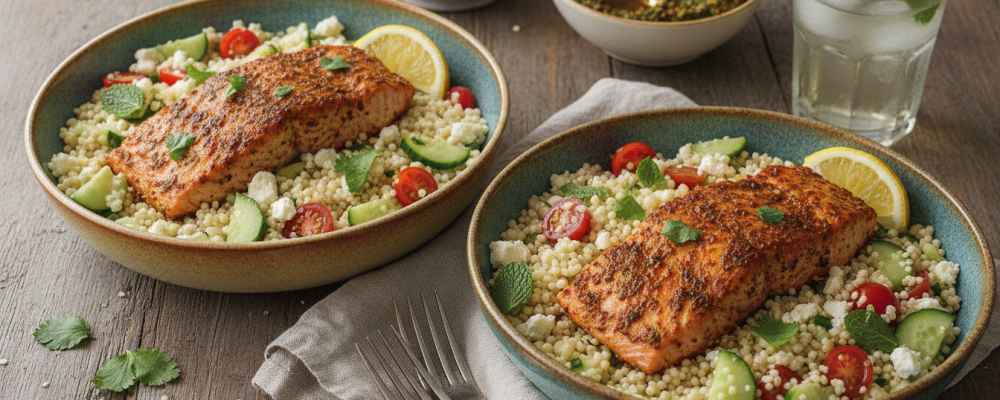

Chermoula is a North African herb and spice paste—parsley, cilantro, garlic, lemon, cumin, paprika, cayenne, coriander, and olive oil blended together—that has been used as a marinade, a sauce, and a cooking medium for fish and meat across Morocco, Algeria, Tunisia, and Libya for centuries. It is one of the most compositionally sophisticated condiments in any culinary tradition, and understanding why it works the way it does on salmon specifically requires understanding what each phase of the paste is doing.
The olive oil is the paste’s fat phase, and it is doing three simultaneous jobs. It is the extraction medium for the fat-soluble aromatic compounds in every spice in the paste—cumin’s terpenoids, paprika’s carotenoids, cayenne’s capsaicin, coriander’s linalool, paprika’s piperine—dissolving them out of the dried plant material and holding them in suspension in a form that can transfer directly to the salmon’s surface during marinating and roasting. It is the heat conductor that allows the paste’s surface-applied layer to reach caramelization temperature on the salmon without the fish’s own surface drying out before browning can occur. And it is the moisture barrier—a fat coating that slows water evaporation from the salmon’s surface during roasting, keeping the flesh beneath moist while the paste above develops its crust.
The food processor is the correct tool for this paste specifically because of what it does to the garlic. Garlic’s allicin—its primary aromatic compound—is produced by an enzymatic reaction that only occurs when the garlic cell walls are mechanically disrupted. A food processor disrupts those walls far more completely and more uniformly than a knife or a mortar, producing a garlic paste whose allicin is fully activated and distributed through the oil phase before the salmon ever encounters it. The paste applied with a mortar contains incompletely disrupted garlic cells with partially activated allicin; the processor-blended paste contains fully active allicin distributed uniformly through the fat phase. The flavor difference is immediately perceptible.
─────────────────────────────────────────
The Inspiration Behind This Recipe
The design challenge this recipe was built around is one of the most persistent in seafood meal prep: how to produce roasted salmon that is as deeply and specifically flavored on day three as it is on day one. Plain seasoned salmon deteriorates quickly in the refrigerator—the volatile aromatic compounds in simple herb and salt seasonings dissipate within hours, and the fish itself loses the freshness character that makes it worth eating by the time Wednesday arrives. A paste-based preparation changes this trajectory entirely.
Chermoula was the solution for two specific reasons. First, its olive-oil-based fat phase encapsulates the aromatic compounds of every herb and spice in the paste—parsley’s and cilantro’s terpenes, cumin’s earthy warmth, paprika’s smoke—within an emulsified medium that significantly slows their volatilization during both roasting and subsequent refrigeration. The aromatics dissolved in the olive oil phase are more durable than those in a water-based sauce, and a salmon coated in chermoula retains its specific, complex flavor character through four days of refrigerator storage in a way that salmon coated in a vinaigrette or a simple herb rub cannot match.
Second, chermoula contains lemon juice—an acid component that, in combination with the salt used to season the salmon, initiates a mild osmotic exchange at the salmon’s surface during the brief pre-roasting rest. This exchange draws the paste’s flavor compounds inward as it draws surface moisture outward, producing a salmon whose chermoula character penetrates the outer layers of the fillet rather than simply coating them. The roasting then sets this penetrated flavor into the fish’s protein structure, creating a flavor distribution that survives slicing, refrigeration, and reheating in a way that surface-only applications do not.
─────────────────────────────────────────
A Brief History of Chermoula
Chermoula is one of the oldest and most geographically embedded condiments in North African culinary history, with documented use in the coastal and mountain cooking of Morocco, Algeria, Tunisia, and Libya stretching back centuries through the written culinary records of the Arab-Berber and later Ottoman-influenced kitchens of the Maghreb region. Its name derives from the Moroccan Arabic sharmoula, meaning broadly a seasoned mixture or marinade, and it appears in historical culinary texts as a preparation specifically associated with fish—reflecting the coastal geography of the North African Mediterranean, where fresh seafood and an abundance of aromatic herbs and spice-trade ingredients converged into a culinary tradition of exceptional sophistication.
The specific spice combination in chermoula—cumin, coriander, paprika, cayenne—reflects the Maghreb’s position at the intersection of multiple trade routes: the trans-Saharan spice trade that brought cumin and coriander from East Africa and the Arabian Peninsula; the Mediterranean trade networks that distributed paprika westward from its Ottoman-controlled eastern Mediterranean origin after chili peppers arrived in Europe from the Americas in the 16th century; and the Silk Road connections that made coriander and other Levantine spices regular fixtures in North African pantries long before European contact. Chermoula is, in its ingredient composition, a map of the trade routes that shaped North African civilization.
The herb component—fresh parsley and cilantro in approximately equal proportion—reflects the specific flavor identity of Moroccan cooking within the broader Maghreb tradition. Moroccan chermoula typically uses both herbs; Tunisian versions sometimes favor parsley alone; Algerian preparations may emphasize cilantro more heavily. The combination in this recipe follows the Moroccan convention, which produces the most aromatic and the most internationally recognized version of the paste and pairs most effectively with the salmon’s fatty, rich flavor profile.
─────────────────────────────────────────
Why This Cooking Method Works for Meal Prep
Roasting at 400°F for twelve to fifteen minutes is the cooking window that produces the optimal chermoula crust without overcooking the salmon beneath it. At this temperature, the paste’s olive oil fat phase reaches the temperature range in which the Maillard reaction occurs at the paste’s surface—the garlic’s amino acids and reduced sugars reacting with the cumin’s and paprika’s surface compounds to produce complex, deeply savory browning products that are the defining quality of a properly cooked chermoula crust. Below 375°F, this browning occurs too slowly to develop fully before the salmon’s interior is cooked through; above 425°F, the paste’s herb components begin to char rather than caramelize, producing bitterness rather than depth.
The twelve-to-fifteen-minute range is calibrated for a standard salmon fillet of approximately one inch thickness. The target internal temperature for meal-prep-stable salmon is 125 to 130°F—slightly below the USDA recommended 145°F—because salmon cooked to 145°F has expelled a significant portion of its internal moisture during cooking, leaving a drier fillet that loses additional moisture during refrigeration. At 125 to 130°F, the salmon retains its internal moisture more completely, remaining tender through four days of storage and reheating rather than becoming progressively drier. The chermoula crust’s fat layer further protects this moisture during both the initial roasting and subsequent refrigerator storage.
The couscous preparation—hot salted water poured over dry couscous and covered for five minutes off heat—is not a simplified version of the correct method; it is the correct method. Couscous is pre-cooked semolina grain that requires hydration rather than cooking—exposing it to sustained heat produces an over-softened, mushy result, while the five-minute passive steam hydration produces individual grains that are tender but retain a slight resistance. This grain texture is specifically what makes the couscous function well as a meal prep base: hydrated-but-not-overcooked couscous loosens easily when reheated with a small amount of added liquid, while overcooked couscous has no structural recovery.
─────────────────────────────────────────
Flavor Profile: What to Expect
This bowl is aromatic, warmly complex, and deeply satisfying—a flavor profile that reflects the sophistication of a spice tradition refined over centuries:
- Fragrant, layered chermoula crust – The bowl’s defining character: the simultaneous presence of fresh herb brightness from the parsley and cilantro, earthy warmth from the cumin and coriander, the smoky depth of paprika, and the building heat of cayenne—unified in the olive oil fat phase and deepened by the Maillard browning of the oven’s heat
- Garlic and lemon brightness – The aromatic sharpness that cuts through the spice’s warmth and the salmon’s richness, providing the acid and allium edge that keeps every bite tasting vivid and complete rather than heavy
- Rich, fatty salmon – The protein beneath the chermoula crust: rich, buttery, and carrying the fat-soluble aromatic compounds of the paste through its own fat phase in a way that distributes the chermoula’s flavor through the fillet’s surface rather than concentrating it only at the crust
- Mild, neutral couscous – The grain base that carries the bowl’s other flavors without competing with them: slightly nutty, perfectly neutral, and specifically well-suited to receiving the chermoula drippings that fall from the salmon during plating and reheating
- Cumulative spice warmth – The cayenne’s heat building slowly through the eating experience, present as a pleasant warmth that arrives after the herb and citrus notes and persists at the palate’s finish
The chermoula’s fat-soluble flavor compounds continue distributing through the salmon’s fat during refrigerator storage. Day-two salmon is noticeably more deeply and more evenly chermoula-flavored than the freshly roasted version — the paste having had time to permeate beyond the immediate surface into the fillet’s outer layers.
─────────────────────────────────────────
Tips for Making the Best Chermoula Roasted Salmon & Couscous Bowls
Several specific technique decisions significantly affect the bowl’s quality across the storage window:
- Blend until the paste is genuinely smooth – Visible herb pieces in the chermoula indicate incomplete cell wall disruption and partial allicin activation. A truly smooth paste—requiring sixty to ninety seconds of processor time—produces maximum flavor extraction and a more cohesive, more durable paste that adheres to the salmon more uniformly during roasting.
- Apply the chermoula generously and evenly – The paste is performing the dual function of flavor delivery and moisture protection; a thin or uneven application leaves areas of the salmon surface unprotected during roasting, producing drier patches in the finished fillet. Cover the entire top and sides of the fillet completely.
- Rest the salmon with chermoula applied for 10 minutes before roasting – Even a brief rest allows the paste’s lemon acid and salt to begin the osmotic flavor exchange at the surface. A ten-minute room-temperature rest produces measurably deeper flavor penetration than immediate-to-oven placement.
- Use boiling water for the couscous — not simmering** – The five-minute passive hydration requires the water to be at a full boil when poured over the couscous. Below-boiling water does not create the steam environment inside the covered bowl that produces properly hydrated grains; the couscous will be unevenly soft.
- Store salmon and couscous separately – The chermoula’s lemon acid and the salmon’s released moisture both affect couscous texture in prolonged contact. Stored separately and combined fresh at serving, both components maintain their intended quality through the full week.
- Reheat salmon gently – Salmon proteins are among the most sensitive to reheating temperatures; aggressive microwave heat produces a tight, dry, unappealing texture in seconds. Low-power, short-duration microwave reheating—or a very brief covered skillet warm—preserves the texture that makes this salmon worth eating on day three.
Optional: A small spoonful of additional blended chermoula applied cold over the plated bowl at serving restores the fresh herb character that the roasting process deepens and transforms — providing a bright, green, freshly-blended aromatic layer over the deeper, caramelized roasted chermoula beneath. The two applications—roasted and fresh—produce a flavor complexity that neither alone achieves.
─────────────────────────────────────────
Portioning and Container Suggestions
This recipe produces four generous bowls from a single batch — one per day across a four-day lunch or dinner rotation. A two-container system per serving works most efficiently: the couscous in one flat, wide container and the chermoula salmon in a second. The couscous container should be wide enough to accommodate the grain in a single layer — compressed couscous reheats less evenly than a flat layer, and the grain’s delicate individual structure is better preserved without stacking pressure.
The chermoula salmon’s appearance in storage — the deep orange-red of the spice crust visible against the salmon’s pink interior, occasionally with a slightly darkened edge where the chermoula’s herbs caramelized against the roasting pan — is one of the more visually compelling protein components in the collection. A glass container allows this visual to remain visible through the storage window, which is both a practical orientation tool and a genuinely appealing refrigerator presence.
For a complete grab-and-go setup, combine the individual daily couscous and salmon containers with a small wedge of lemon or a pinch of additional fresh parsley in a separate small bag. The lemon squeeze at serving — applied to the assembled bowl rather than stored on the salmon — provides the bright acid note that reheating can slightly mellow, restoring the bowl’s full aromatic profile at the moment of eating.
─────────────────────────────────────────
Storage, Reheating, and Shelf Life Tips
- Chermoula salmon storage: Keeps in an airtight container for up to 3–4 days in the refrigerator. The chermoula’s flavor penetrates more deeply through day two and three; consume within four days for the best texture and flavor quality.
- Couscous storage: Keeps for 4–5 days refrigerated. Add 1–2 tablespoons of water before reheating — couscous absorbs ambient moisture during storage and reheats most evenly with a small additional water addition.
- Freezer storage: Chermoula salmon freezes adequately for up to 1 month — the fat-soluble aromatic compounds are preserved in the fat phase through freezing, though some textural change in the salmon is expected after thawing. Couscous freezes well for up to 2 months in portioned bags. Thaw both overnight in the refrigerator before reheating.
- Reheating salmon (preferred method): Place in a covered skillet over low heat with a tablespoon of water for 2–3 minutes. The steam environment preserves the salmon’s moisture and re-activates the chermoula’s aromatics without the uneven heating that microwave reheating can produce.
- Reheating salmon (microwave): Microwave at 30–40% power for 60–90 seconds. This is the most temperature-sensitive reheating instruction in the collection — salmon at full microwave power for sixty seconds is overcooked salmon. Low power and close monitoring produce the only acceptable microwave result.
- Reheating couscous: Add the water, cover loosely, and microwave at full power for 45–60 seconds, fluffing with a fork immediately after. Couscous reheats faster than any other grain in the collection — sixty seconds is usually sufficient.
- Fresh element refresh: A squeeze of fresh lemon and a few additional leaves of flat-leaf parsley over the assembled bowl at serving restores the bright, herbal freshness that roasting and storage deepens into something richer but less vivid. Both the roasted character and the fresh character are worth having; apply the fresh elements at serving for the most complete version of the bowl’s aromatic profile.
─────────────────────────────────────────
Why This Recipe Deserves a Spot in Your Meal Prep Rotation
The practical argument for this bowl is among the strongest in the seafood category: a paste preparation that does three jobs simultaneously — flavor, moisture protection, and surface caramelization — requiring only a food processor and twelve minutes of oven time to produce a salmon that holds its quality across four days. The chermoula’s fat-phase encapsulation of every aromatic compound in the paste is what makes this possible — it is the mechanism that keeps the bowl tasting specifically and complexly of chermoula rather than generically of cooked fish by day three, and it is what distinguishes this bowl from simpler salmon preparations whose flavor advantage diminishes rapidly in storage.
The deeper argument is that chermoula represents a spice tradition of exceptional sophistication — a paste whose composition reflects the converging trade routes of North Africa and whose flavor logic has been refined over centuries into something that is simultaneously more complex and more accessible than any of its individual components would suggest. A meal prep rotation that includes this bowl has access to that tradition at desk, at lunch, on a Wednesday — the specific warmth and fragrance of North African spice applied to one of the best proteins available in a format that requires under thirty minutes of Sunday effort. That is, by any reasonable assessment, a genuinely excellent return on a modest preparation investment, and it earns a permanent place on any prep list that values quality alongside efficiency.
─────────────────────────────────────────
Meal Prep Pairing Suggestions
Chermoula Roasted Salmon & Couscous Bowls pair most naturally with other North African and Mediterranean grain bowls that offer genuine protein and spice contrast across the week. Our Harissa Chicken & Roasted Cauliflower Grain Bowls are the natural rotation partner — both draw from the same North African spice tradition, both feature a boldly seasoned protein over a grain base, but harissa’s smoky, paprika-forward chili paste applied to chicken and quinoa is a completely distinct preparation from chermoula’s herb-and-spice-forward salmon over couscous. Alternating between them across the week delivers two different North African flavor expressions that share a culinary heritage without repeating a technique, a protein, or a grain.
For a complete three-bowl weekly spread, our Za’atar Roasted Chicken & Bulgur Bowls round out the rotation with a Middle Eastern herb tradition that covers the same broadly regional culinary space — herb-forward, grain-based, warmly spiced — from a completely different spice-blend and grain-base angle. Three bowls covering Moroccan, North African chili, and Middle Eastern herb spice traditions, three different proteins, and three different grains: a weekly rotation with genuine culinary breadth assembled from a single Sunday session and delivering the most geographically specific and the most aromatically varied grain bowl spread in the collection.
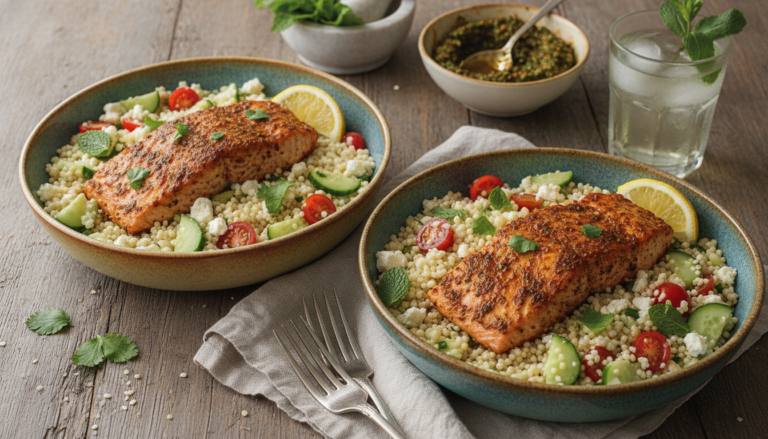
Chermoula Roasted Salmon & Couscous Bowls
These Chermoula Roasted Salmon & Couscous Bowls are a deeply flavored, North African-inspired meal prep bowl built around chermoula—the ancient herb and spice paste of Morocco and the Maghreb—spread over salmon before roasting into a fragrant, golden crust that transforms every bowl it appears in.
4
servings20
minutes15
minutes590
kcal35
minutesIngredients
1 pound salmon fillet
1 cup couscous
1 cup water
1 tablespoon olive oil
1 teaspoon salt
1 cup fresh parsley
0.5 cup fresh cilantro
3 cloves garlic
1 tablespoon lemon juice
1 teaspoon ground cumin
1 teaspoon paprika
0.5 teaspoon cayenne pepper
1 teaspoon ground coriander
0.5 teaspoon ground black pepper
Directions
- Preheat oven to 400°F (200°C).
- Prepare the chermoula by blending parsley, cilantro, garlic, olive oil, lemon juice, cumin, paprika, cayenne pepper, coriander, and black pepper in a food processor to a smooth paste.
- Season salmon fillet with salt and evenly spread chermoula over the top.
- Roast salmon in the oven for 12-15 minutes, or until cooked through.
- Meanwhile, bring water and salt to a boil, then add couscous and cover. Remove from heat and let it sit for 5 minutes, then fluff with a fork.
- Serve roasted salmon over couscous, garnished with extra parsley if desired.
Nutrition Facts
- Total number of serves: 4
- Calories: 590kcal
About This Author

Benjamin Brown
Recipe Developer
Benjamin is our flavor engineer. A classically trained chef turned recipe developer, he’s obsessed with balancing taste, texture, and creativity. He ensures that every recipe we publish is not only delicious but also reliable, approachable, and repeatable — even for beginners.
Favorite dish: Slow-braised short ribs with red wine reduction.
Kitchen motto: “Cooking is part science, part soul.”