
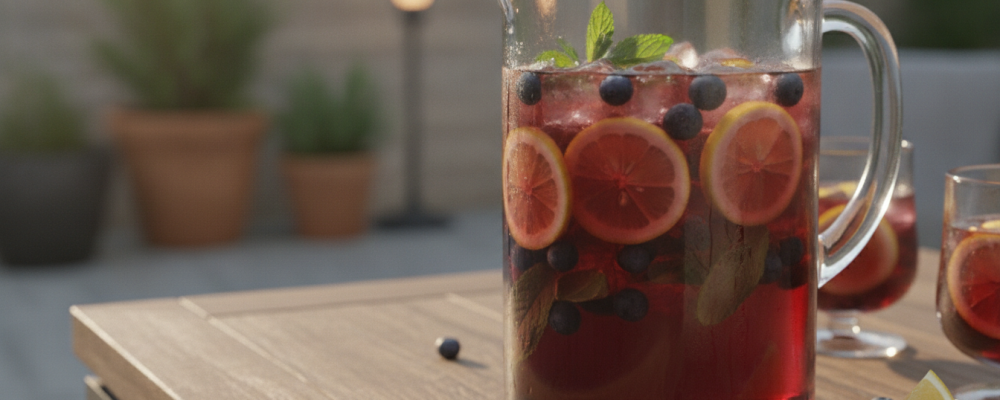

There’s a particular kind of entertaining magic that happens when a drink looks stunning, tastes exceptional, and requires almost no effort at the moment of serving. Blueberry Lemon Sangria is that drink. You make it hours ahead, let the flavors meld and develop in the refrigerator, add bubbles right before your guests arrive, and suddenly you have something that looks like it came from a restaurant’s brunch menu sitting beautifully in your own pitcher. That’s the sangria promise — and this version delivers on it completely.
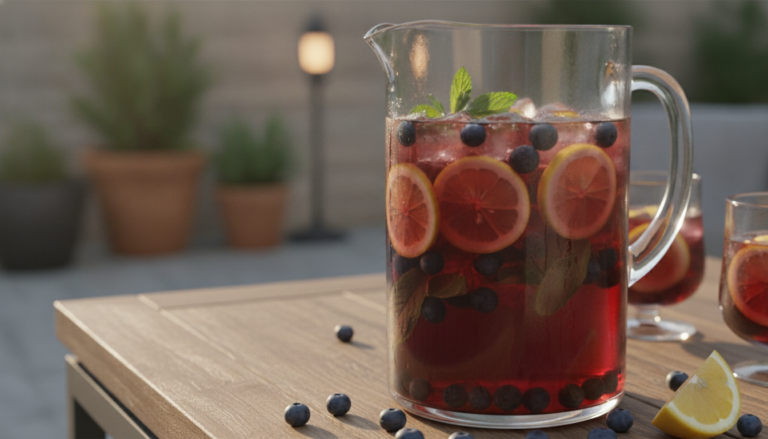
What makes this particular sangria so special is the color transformation that happens during refrigeration. Fresh blueberries slowly release their gorgeous purple-blue pigment into the white wine, creating a drink that shifts from pale gold to deep lavender as it steeps. By the time you’re ready to serve, the sangria has developed this beautiful, jewel-toned hue that photographs magnificently and tastes even better than it looks. The lemon slices infuse brightness and citrus aromatics throughout, while the blueberries themselves plump slightly in the wine, becoming little flavor bombs that guests love discovering at the bottom of their glasses.
I make this sangria for virtually every warm-weather gathering because it checks every box: it can be made well in advance, it serves a crowd without individual preparation, it looks sophisticated without effort, and it appeals to virtually everyone. When friends ask for the recipe — and they always do — I love watching their surprise at how simple it actually is.
─────────
The Inspiration Behind This Recipe
This sangria emerged from a late spring afternoon when I had a carton of blueberries that needed using, half a bottle of white wine left from the night before, and friends arriving in a few hours. Sangria seemed like the obvious solution — it’s forgiving, flexible, and improves with time. The question was which flavors to pair with blueberry.
Lemon was the immediate answer. Blueberry and lemon is one of those flavor pairings that exists in perfect harmony — you see it in muffins, tarts, cheesecakes, and jams for good reason. The brightness of lemon cuts through blueberry’s jammy sweetness, creating contrast that makes both flavors more vibrant and interesting. In liquid form, with wine as the base, this pairing translates beautifully — the lemon juice provides the acidity that white wine sangria needs, while lemon slices add visual appeal and ongoing citrus infusion.
The triple sec addition came from understanding what makes sangria complex versus flat. Plain wine with fruit can taste watered down and one-dimensional. Triple sec adds orange liqueur depth that fills in the middle of the flavor profile, creating richness between the wine’s foundation and the fruit’s brightness. The simple syrup adjusts sweetness to balance lemon’s tartness. Club soda at the end lifts everything with effervescence. The result felt inevitable — like these ingredients had always been meant to share a pitcher.
─────────
A Brief History of Sangria and Wine Punches
Sangria has ancient roots in the Iberian Peninsula, with wine-based punches made from local grapes, fruits, and spices dating back to Roman times. The word “sangria” likely derives from “sangre” (blood) referring to the drink’s characteristic deep red color, though white wine versions — called sangría blanca — have equal historical precedent. Traditional Spanish sangria was a practical drink: it used wine that might be too rough to drink on its own, softened and flavored with fruit, brandy, and sugar to create something more palatable and festive.
Sangria gained international popularity following Spain’s participation in the 1964 World’s Fair in New York, where it was served at the Spanish pavilion. American visitors fell in love with the fruity, wine-based punch, and it quickly became a staple of casual entertaining in the United States. However, early American versions were often overly sweet, relying on pre-made mixes that bore little resemblance to authentic Spanish preparations.
The craft cocktail movement brought renewed appreciation for quality sangria made with good wine and fresh fruit. Modern sangria celebrates regional and seasonal variations — white wine sangrias with stone fruits or citrus, rosé versions with strawberries, and innovative combinations like this Blueberry Lemon Sangria that honor the tradition while bringing contemporary flavor sensibility. The essential principles remain: good wine, fresh fruit, time for infusion, and balance between sweet, tart, and fruity.
─────────
Why This Mixing Method Works
The refrigeration period is the most important step in this recipe — it’s not optional convenience but essential technique. When blueberries and lemon slices sit in wine, triple sec, and lemon juice for at least an hour (ideally longer), several important things happen simultaneously. The blueberries’ anthocyanin pigments slowly leach into the wine, creating that beautiful color transformation. The fruit cells begin releasing their juices and aromatic compounds, adding complexity and depth to the liquid. The alcohol and citrus act as mild macerating agents, softening the fruit and drawing out flavor.
This maceration process is what separates great sangria from mediocre sangria. Freshly mixed sangria tastes like wine with fruit floating in it — the flavors haven’t integrated. After several hours of refrigeration, the same drink tastes cohesive and complex, with wine, fruit, and liqueur speaking as one harmonious whole. The cold temperature slows this process compared to room temperature maceration, which is actually desirable — a slow, cold infusion extracts flavor gradually without over-extracting bitter compounds from the fruit skins.
Adding club soda immediately before serving rather than during preparation preserves carbonation that would otherwise dissipate during the refrigeration period. The bubbles serve multiple functions: they carry aromatic compounds to the surface, they add textural lightness that prevents the sangria from feeling heavy or syrupy, and they create visual effervescence that makes the drink feel celebratory. This final addition transforms the drink from a still wine punch into something more dynamic and refreshing.
─────────
Flavor Profile: What to Expect
Blueberry Lemon Sangria delivers a refined, fruit-forward taste experience:
- Jammy Blueberry Richness: Infused blueberry flavor that’s deep and fruity without being heavy or artificial
- Bright Lemon Acidity: Fresh citrus that cuts through the wine’s body and prevents the sangria from being one-dimensionally sweet
- Crisp White Wine Foundation: The wine’s natural acidity, fruit character, and lightness form the drink’s backbone
- Orange Liqueur Depth: Triple sec fills in the middle of the flavor profile with orange complexity
- Balanced Sweetness: Simple syrup rounds out lemon’s tartness without making the sangria sugary
- Effervescent Lift: Club soda adds refreshing bubbles that make each glass feel lively
- Evolving Character: Flavors deepen and integrate with longer refrigeration time
The overall experience is elegant and refreshing — sophisticated enough for discerning guests but approachable enough for casual entertaining. Each glass tastes slightly different as the fruit continues to infuse.
─────────
Tips for Making the Best Blueberry Lemon Sangria
Create the most elegant pitcher sangria with these essential techniques:
- Choose the right white wine: Crisp, dry whites work best — Pinot Grigio, Sauvignon Blanc, or Albariño all perform beautifully. Avoid oaky Chardonnay, which becomes heavy and bitter after maceration. You don’t need expensive wine — mid-range bottles ($12-18) are ideal.
- Use fresh blueberries: Fresh blueberries release color and flavor gradually during refrigeration, creating better results than frozen. They also look more attractive in the pitcher.
- Fresh lemon juice is essential: Bottled lemon juice tastes flat and artificial. Always squeeze fresh lemons for the juice component.
- Slice lemons thinly: Thin lemon slices infuse the wine more efficiently than thick ones and look more elegant in the pitcher.
- Give it time: One hour is the minimum; 3-4 hours is better; overnight is best (add soda the next day). The difference in flavor between one-hour and four-hour sangria is dramatic.
- Quality triple sec matters: Cointreau provides the best orange flavor. Grand Marnier adds cognac richness. Quality triple sec works well at more accessible prices.
- Add club soda right before serving: Never add it during preparation — you’ll lose all the bubbles during refrigeration.
For extra blueberry flavor, lightly muddle a small handful of blueberries before adding them to the pitcher, leaving the rest whole for visual appeal.
─────────
Serving Suggestions and Garnish Ideas
Blueberry Lemon Sangria looks most beautiful served in clear glass pitchers that showcase the jewel-toned purple-blue color and floating fruit. Wide-mouth pitchers allow easy pouring of fruit-studded liquid without blockage. For serving, use large wine glasses, balloon glasses, or stemless wine glasses that showcase the color beautifully. The sangria should be poured generously — fill glasses about two-thirds full and ensure each serving contains some blueberries and a lemon slice.
Garnishing individual glasses with additional fresh blueberries and a thin lemon wheel elevates the presentation beautifully. A small sprig of fresh mint adds aromatic contrast and visual freshness against the purple tones. Some hosts like to add edible flowers — violets or pansies work particularly well with the purple color scheme — for an especially elegant touch. For outdoor entertaining, consider freezing blueberries and lemon zest in ice cubes ahead of time — these themed ice cubes melt slowly and add visual interest as they do.
This sangria is perfect for bridal showers, baby showers, garden parties, Mother’s Day celebrations, summer dinner parties, or any occasion where you want something elegant that serves a crowd effortlessly. The make-ahead nature makes it particularly ideal for events where you want to be present with guests rather than behind the bar. It also works beautifully for Sunday brunch — the combination of white wine’s lower alcohol content and refreshing fruit flavors makes it appropriate for daytime drinking.
─────────
Storage and Make-Ahead Tips
- Make it the day before: This sangria improves dramatically with overnight refrigeration. Make it the evening before your event and add club soda right before serving.
- Maximum maceration time: Don’t let it sit longer than 24 hours — beyond that, the lemon pith can begin imparting bitterness.
- Store covered: Keep the pitcher covered with plastic wrap or a lid during refrigeration to prevent the wine from absorbing refrigerator odors.
- White wine storage: Once opened for sangria, use the entire bottle — don’t try to save partial bottles for drinking separately after the sangria has been made.
- Fresh lemon juice: Squeeze juice before assembling the sangria; it will be fine refrigerated within the drink for up to 24 hours.
- Leftover sangria: Without club soda, leftover base keeps for 24 hours refrigerated. Add fresh club soda when ready to serve remaining portions.
- Scaling: This recipe doubles and triples beautifully for larger crowds — just maintain the same ratios and use a larger pitcher or punch bowl.
Never freeze assembled sangria — freezing destroys the wine’s character and the fruit’s texture.
─────────
Why This Recipe Deserves a Spot in Your Rotation
Blueberry Lemon Sangria has earned permanent status in my entertaining repertoire because it solves the host’s fundamental challenge: how do you serve something impressive without sacrificing your ability to actually enjoy your own party? The make-ahead format means all the work happens hours before guests arrive, leaving you free to focus on conversation, food, and creating a beautiful atmosphere rather than tending bar.
Beyond its practical virtues, this sangria is genuinely delicious in a way that rewards quality ingredients and patience. The depth of flavor that develops during maceration cannot be rushed or shortcut — it requires time, which means planning ahead. But that investment of foresight pays dividends in a drink that tastes complex, balanced, and far more sophisticated than its simple ingredient list suggests. Guests always assume it’s more complicated than it is, which is exactly what the best recipes do.
─────────
Recommended Food Pairing
Blueberry Lemon Sangria’s bright, fruity character pairs beautifully with a wide range of foods, making it one of the most versatile cocktails for entertaining. Fresh cheese boards are an ideal companion — soft cheeses like brie, camembert, chèvre, and burrata all work wonderfully alongside the sangria’s fruity acidity. Add fresh blueberries, lemon-infused honey, and thin crackers or sliced baguette for a pairing that echoes the drink’s flavor profile.
For savory pairings, consider light chicken dishes with lemon or herb preparations — chicken piccata, lemon herb roasted chicken, or simple grilled chicken with fresh herbs all work beautifully. Seafood is another excellent companion: grilled salmon with lemon butter, shrimp with citrus marinade, or crab cakes with lemon aioli create harmonious connections with the sangria’s citrus thread.
For a complete entertaining spread, this sangria anchors beautifully alongside brunch foods — lemon ricotta pancakes, blueberry scones, fruit salads with lemon-honey dressing, or avocado toast with microgreens. The white wine base makes it appropriate for daytime entertaining in a way that stronger cocktails aren’t. Dessert pairings are equally successful: lemon tart, blueberry cheesecake, lemon panna cotta, or mixed berry pavlova all create delightful flavor harmonies where drink and dessert share core ingredients. The key is choosing foods that feel fresh, seasonal, and slightly elegant — foods that match the sangria’s effortless sophistication rather than competing with its delicate beauty.
Blueberry Lemon Sangria
This gorgeous sangria combines white wine with fresh blueberries, lemon, and triple sec — fruity, effervescent, and perfect for sharing.
4
servings30
minutes40
minutes300
kcal1
hour10
minutesIngredients
1 cup blueberries
1 cup lemon slices
1/4 cup fresh lemon juice
750 ml white wine
1/4 cup triple sec
1/4 cup simple syrup
1 cup club soda
Directions
- In a large pitcher, combine blueberries and lemon slices.
- Add fresh lemon juice, white wine, triple sec, and simple syrup.
- Stir well to combine all ingredients.
- Refrigerate for at least 1 hour to allow flavors to meld.
- Before serving, add club soda for a refreshing fizz.
- Serve chilled over ice, garnished with additional blueberries and lemon slices if desired.
Nutrition Facts
- Total number of serves: 4
- Calories: 165kcal
- Cholesterol: 0mg
- Sodium: 620mg
- Potassium: 400mg
- Sugar: 8g
- Protein: 6g
- Calcium: 60mg
- Iron: 2mg
About This Author

Amelia Grace
Editor-in-Chief & Culinary Director
The heart and guiding voice of Daily Dish, Amelia leads our editorial vision and recipe development. With a background in food journalism and over a decade spent in professional kitchens, she has a knack for blending gourmet technique with real-world accessibility. Her goal? To make every reader feel like a confident cook, one dish at a time.
Favorite dish: Creamy lemon risotto with a sprinkle of fresh thyme.
Kitchen motto: “Good food doesn’t have to be complicated — it just has to be made with heart.”















