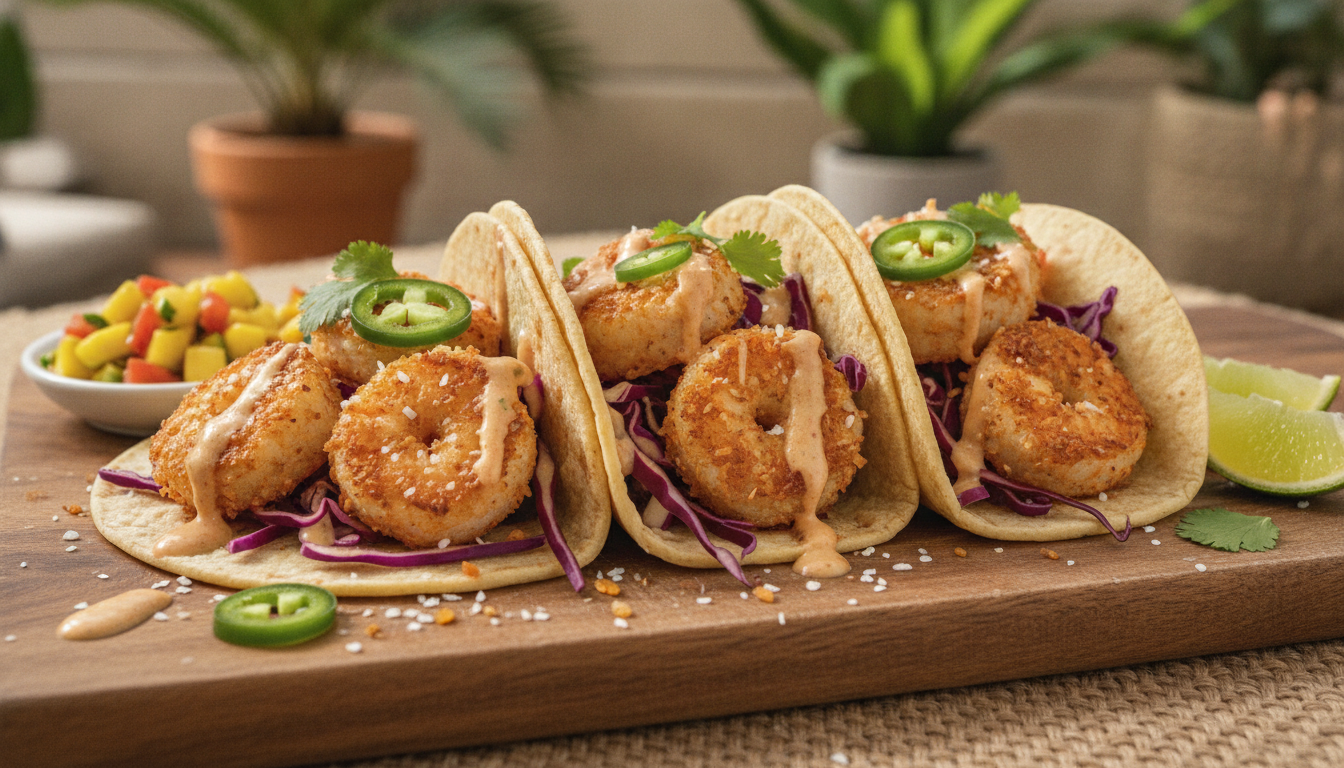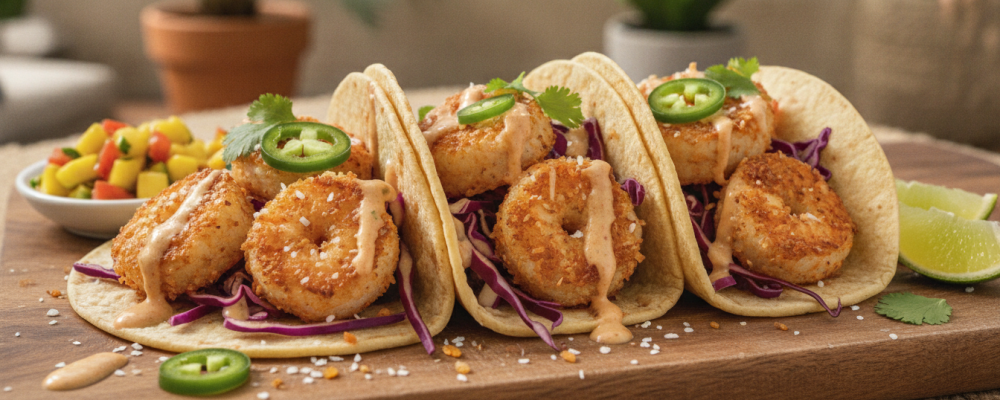

Coconut shrimp occupies an interesting position in American food culture—beloved enough to appear on nearly every casual dining menu in the country, yet rarely attempted at home because the traditional deep-frying preparation seems intimidating and messy. The air fryer fundamentally changes that calculus, and understanding why requires examining what’s actually happening during the cooking process.
Traditional deep frying works through a mechanism called convective heat transfer: the shrimp is surrounded on all sides by oil at 350-375°F, which transfers heat extremely efficiently because liquid conducts heat far better than air. The coating crisps because the moisture in the batter or breading rapidly evaporates when it contacts the hot oil, creating steam that escapes outward while the exterior sets into a rigid, crispy structure. The oil also contributes flavor through absorption—up to 20% of a fried food’s final weight can be absorbed oil.
The air fryer replicates this process through a different mechanism: a powerful heating element combined with a high-speed fan creates rapidly circulating hot air that surrounds the food and transfers heat convectively, though less efficiently than oil. The key insight is that the coconut-panko coating in this recipe is specifically well-suited to air frying because it contains shredded coconut’s natural oils. As the air fryer heats the coconut, those oils render and essentially fry the coating from within—a self-basting effect that compensates for the absence of external oil. This is why coconut shrimp specifically works so well in an air fryer compared to, say, a wet batter (which lacks internal fat and requires oil to set properly).
The breading architecture deserves careful analysis. The three-stage process—flour, egg, coconut-panko—is a classic breading system with specific technical purposes. The flour layer creates a dry, slightly tacky surface on the shrimp that gives the egg wash something to adhere to; without it, egg slides off the shrimp’s smooth, wet surface. The egg wash then acts as the glue that bonds the coconut-panko mixture to the shrimp. The coconut-panko combination is more effective than either ingredient alone: panko’s irregular, flaky structure creates air pockets that enhance crispiness, while shredded coconut’s fiber network adds additional texture and the natural oils that aid browning.
The slaw here is minimal by design—cabbage, radishes, cilantro, mayo, lime, salt—because the coconut shrimp is already assertively flavored. A more complex slaw would compete. The radishes are the specific technical choice worth noting: their high water content and firm cell structure provides crunch that doesn’t soften as quickly as carrot or additional cabbage, and their mild peppery character provides subtle complexity without introducing flavors that would fight the coconut.
─────────
The Inspiration Behind This Recipe
This recipe draws from two beloved culinary traditions simultaneously. Coconut shrimp has deep roots in Caribbean and Pacific Island cooking, where coconut and seafood have coexisted as natural partners for centuries—the ocean provides the shrimp, the land provides the coconut, and the combination makes immediate geographic and culinary sense. The taco format brings in Mexican coastal tradition, where seafood tacos have been a staple in Baja California and throughout Mexico’s Pacific coast for generations. Combining these traditions creates fusion that feels natural rather than forced: both celebrate fresh seafood, tropical ingredients, and casual, handheld eating. The air fryer is the modern adaptation that makes this fusion accessible for home cooks on a Tuesday evening rather than just at beachside restaurants with commercial deep fryers. It’s tradition made practical, flavor made accessible.
─────────
A Brief History of Coconut Shrimp
Coconut shrimp as a distinct dish likely emerged from Caribbean cuisine in the mid-20th century, where coconut-coated fried seafood had been a regional preparation for generations. Florida’s proximity to Caribbean culinary culture brought coconut shrimp into American restaurant consciousness, and the dish spread nationally through casual dining chains beginning in the 1980s and 1990s. Outback Steakhouse’s coconut shrimp appetizer is often credited with bringing the preparation to mainstream American attention. The dish’s appeal is straightforward: the coconut’s sweetness contrasts the shrimp’s savory brininess, the crispy coating provides textural satisfaction, and the tropical character feels celebratory and vacation-adjacent. As air fryers became standard kitchen equipment in the 2010s, home cooks discovered that the appliance handled coconut shrimp particularly well due to the coating’s natural fat content, democratizing a preparation that had previously required either a restaurant or a commitment to deep frying at home.
─────────
Why This Cooking Method Works
Coconut’s natural oils enable air frying — Shredded coconut contains significant fat that renders during air frying, essentially creating a self-basting effect that crisps the coating without requiring external oil.
Three-stage breading creates adhesion — Flour provides a tacky base, egg wash acts as glue, and coconut-panko provides the final textural layer. Each stage enables the next, creating a coating that stays intact through cooking.
Panko creates superior crispiness — Unlike regular breadcrumbs, panko’s irregular, flaky structure contains more air pockets that crisp independently, creating a lighter, crunchier coating.
375°F is the optimal air fryer temperature — Hot enough to crisp the coconut-panko quickly without burning the delicate coconut’s natural sugars, while cooking the shrimp through in exactly 10 minutes.
Single layer is essential — Air fryers work through circulating air, not submerged heat. Overlapping shrimp blocks airflow and creates steam rather than crispiness on the covered surfaces.
Minimal slaw prevents flavor competition — The coconut coating has strong, distinctive flavor. A simple mayo-lime slaw provides creamy, acidic contrast without introducing flavors that would fight the coconut’s tropical character.
─────────
Flavor Profile: What to Expect
Tropical, crispy, and satisfyingly complex — these tacos open with the coconut-panko crust’s toasted sweetness and shatteringly crispy texture, giving way to tender, sweet shrimp with briny oceanic notes. The coconut’s tropical character is immediately identifiable—nutty, slightly sweet, and fragrant with the particular warmth that toasted coconut develops. The simple slaw provides creamy contrast from the mayo dressing, bright lime acidity that cuts through the richness, crunchy cabbage texture, peppery radish bite, and herbal cilantro freshness. The warm tortilla provides soft, slightly sweet foundation that allows the coconut shrimp to be the clear star. It’s a taco that delivers tropical vacation energy—celebratory, slightly indulgent, and impossible to eat just one of.
─────────
Tips for Making the Best Air Fryer Coconut Shrimp Tacos
Use large shrimp (21-25 count) — Larger shrimp provide a better ratio of coating to protein and are easier to bread. Smaller shrimp get overwhelmed by the coconut crust.
Pat shrimp completely dry — Moisture prevents the flour from adhering properly, which cascades into poor egg adhesion and coating that falls off during cooking. Thorough patting is essential.
Use unsweetened shredded coconut — Sweetened coconut can burn in the air fryer before the shrimp cooks through, and the added sugar makes the coating cloying rather than subtly sweet.
Press coating firmly — After dipping in the coconut-panko mixture, press gently but firmly to ensure maximum adhesion. Don’t just roll the shrimp—actively pack the coating on.
Don’t overcrowd the basket — Work in batches if necessary. A single layer with space between each shrimp ensures all sides get proper airflow and crisp evenly.
Flip halfway through — At the 5-minute mark, carefully flip each shrimp. This ensures even golden color on both sides rather than a crispy top and pale bottom.
Watch the last 2 minutes — Coconut browns quickly once it starts. Check at 8 minutes and every minute thereafter to prevent burning.
Make slaw first — Let it rest while you bread and cook the shrimp. Even 10-15 minutes of resting improves the slaw’s integration and flavor.
Serve immediately — Coconut shrimp loses crispness within minutes of cooking. Have everything assembled and ready before the shrimp finishes cooking.
─────────
Serving Suggestions and Side Pairings
These tropical coconut shrimp tacos pair beautifully with:
- Cilantro Lime Slaw as an additional or alternative slaw option
- Corn Salsa for sweet, fresh tropical contrast
- Mango salsa or pineapple salsa for complementary tropical fruit pairing
- Black Bean Dip with tortilla chips as a hearty starter
- Coconut rice for leaning fully into the tropical theme
- Cucumber salad with lime and mint for cooling contrast
- Sweet chili dipping sauce on the side for those who want more sweet heat
- Lime wedges for additional citrus at the table
Sauce variations:
- Sweet chili aioli — Mix mayo with sweet chili sauce and lime for a bang bang-adjacent dipping sauce
- Mango habanero sauce — For those who want tropical heat alongside the tropical sweetness
- Honey lime drizzle — Simply honey thinned with lime juice for a straightforward sweet-acidic finish
- Sriracha mayo — Creamy heat that complements the coconut’s sweetness
─────────
Storage, Reheating, and Make-Ahead Tips
Storage:
- Store cooked coconut shrimp and slaw separately in airtight containers for up to 2 days
- Shrimp will lose crispness when stored; reheating restores some but not all of the original texture
- Slaw keeps well for up to 2 days; drain any accumulated liquid before serving
Reheating:
- Best method: Return to air fryer at 375°F for 3-4 minutes—restores significant crispness
- Oven at 400°F on a wire rack for 5-6 minutes also works well
- Avoid microwaving—the coconut coating becomes soft and chewy rather than crispy
- Always reheat shrimp before assembling; serve slaw cold for temperature contrast
Make-Ahead Tips:
- Bread the shrimp up to 4 hours ahead; refrigerate on a parchment-lined plate uncovered
- Make slaw up to 4 hours ahead; refrigerate covered
- Set up the three-stage breading station before guests arrive for efficient batch cooking
- Prep all toppings (slice radishes, chop cilantro) the day before
Freezing:
- Freeze breaded, uncooked shrimp in a single layer until solid; transfer to freezer bags for up to 2 months
- Cook directly from frozen in the air fryer at 375°F for 12-14 minutes, flipping halfway
- Do not freeze cooked shrimp or assembled tacos
- Do not freeze slaw—cabbage and radish lose all texture when thawed
Batch cooking strategy:
- Keep cooked batches warm in a 250°F oven on a wire rack while completing remaining batches
- This maintains reasonable crispness for up to 15 minutes without significant quality loss
─────────
Why This Recipe Deserves a Spot in Your Taco Tuesday Rotation
Because this recipe solves a specific and common problem: wanting something impressive and tropical without committing to deep frying on a Tuesday night. The air fryer makes coconut shrimp genuinely achievable as a weeknight preparation—no thermometer management, no oil disposal, no splatter, no dedicated equipment beyond an appliance that’s likely already sitting on your counter. The result is coconut shrimp that’s legitimately crispy and golden, not a pale compromise, because the coconut’s natural oils do the work that oil would otherwise provide. These tacos also fill a specific rotation role that’s hard to replicate: the tropical option, the one that brings genuine island energy to the table and makes Tuesday feel like a mini-vacation. They’re impressive enough for guests, approachable enough for weeknights, and distinctive enough that no other recipe in the rotation duplicates what they do. When an air fryer recipe delivers restaurant-quality results while eliminating the most intimidating part of the preparation, it earns permanent rotation status on technique alone—before you even factor in how good the tacos actually taste.
─────────
Recommended Drink Pairing
Classic Lime Margarita — The citrus brightness cuts through the coconut coating’s richness while tequila’s agave notes complement the tropical shrimp character.
Beergarita — Light, refreshing, and slightly sweet, the lemon-lime base mirrors the tropical flavors while providing effervescent contrast to the crispy coating.
Piña colada (frozen or on the rocks) — Lean fully into the tropical theme with rum, coconut cream, and pineapple that echo and amplify the coconut shrimp’s character.
Mexican lager with lime (Pacifico, Corona) — The quintessential coastal pairing—crisp, clean beer that refreshes without competing with the coconut’s distinctive flavor.
Sparkling water with pineapple and lime — For a non-alcoholic option that stays on tropical theme, the pineapple’s sweetness and lime’s brightness mirror the taco’s key flavors while cleansing the palate between bites.
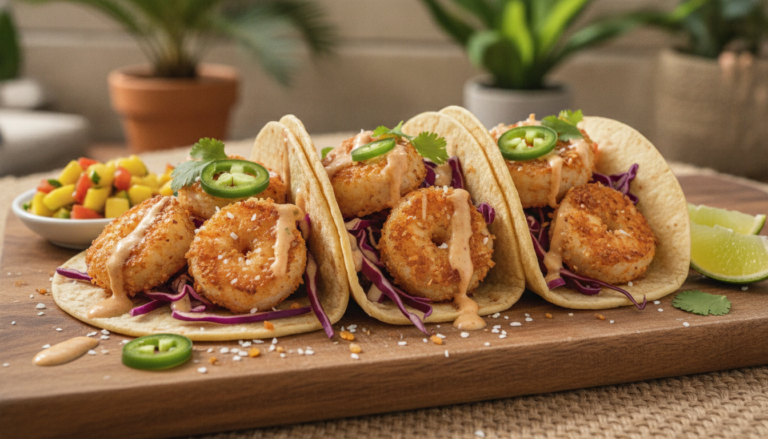
Air Fryer Coconut Shrimp Tacos
Air Fryer Coconut Shrimp Tacos feature golden, shatteringly crispy coconut-panko crusted shrimp cooked without deep frying, paired with a bright lime-mayo slaw of cabbage, radish, and cilantro for a tropical taco that delivers maximum crunch with minimum effort.
4
servings20
minutes10
minutes450
kcal30
minutesIngredients
1 lb shrimp, peeled and deveined
1 cup shredded coconut
0.5 cup panko breadcrumbs
2 units eggs
0.25 cup all-purpose flour
1 cup shredded cabbage
0.5 cup sliced radishes
0.25 cup cilantro leaves
0.25 cup mayonnaise
1 tbsp lime juice
1 tsp salt
8 small tortillas
Directions
- In a bowl, mix shredded coconut and panko breadcrumbs.
- In another bowl, beat the eggs.
- Dust shrimp with flour, dip in beaten eggs, and coat with coconut mixture.
- Place shrimp in the air fryer basket in a single layer; cook at 375°F (190°C) for 10 minutes until golden.
- In a bowl, combine shredded cabbage, radishes, cilantro, mayonnaise, lime juice, and salt for slaw.
- Warm tortillas in the microwave or on a skillet for a few seconds each side.
- Assemble tacos by placing slaw and shrimp on each tortilla, serve immediately.
Nutrition Facts
- Total number of serves: 4
- Calories: 450kcal
About This Author

Benjamin Brown
Recipe Developer
Benjamin is our flavor engineer. A classically trained chef turned recipe developer, he’s obsessed with balancing taste, texture, and creativity. He ensures that every recipe we publish is not only delicious but also reliable, approachable, and repeatable — even for beginners.
Favorite dish: Slow-braised short ribs with red wine reduction.
Kitchen motto: “Cooking is part science, part soul.”