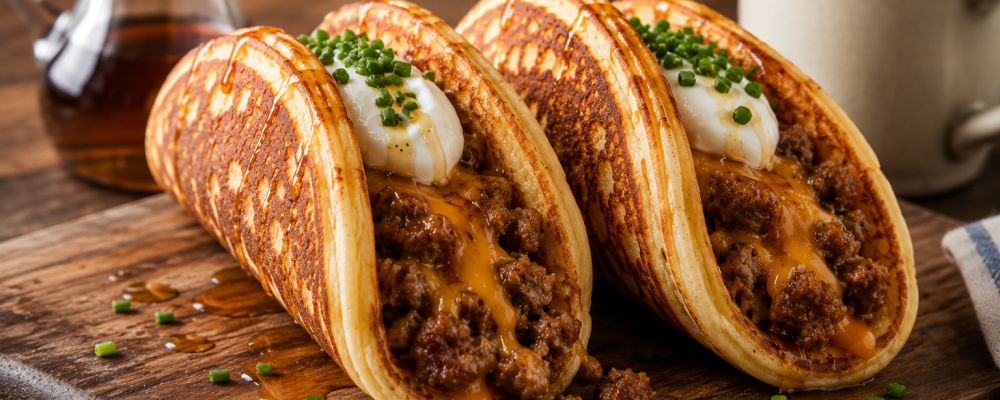

The pancake taco solves a genuine structural problem in breakfast eating. Traditional pancake service requires a fork, a knife, separate plates for different components, and the awkward logistics of getting syrup, sausage, and pancake into a single cohesive bite. The taco format—fold the pancake, fill it, eat it with your hands—addresses all of these simultaneously. This isn’t novelty for its own sake. It’s applied problem-solving that produces a measurably better eating experience while also being more visually interesting and socially engaging than a stack of pancakes on a plate.
What makes this recipe succeed beyond the format is the technical foundation: a properly made buttermilk pancake that has enough structural integrity to fold without cracking while remaining tender enough to eat without feeling like you’re biting through cardboard. That balance requires understanding the role of each ingredient. Buttermilk’s acidity activates the baking soda, producing carbon dioxide that creates lift and tenderness. The combination of baking powder and baking soda provides both immediate and sustained leavening. The butter contributes fat that creates tenderness and the slight crispness at the edges that gives the pancake structural resilience when folded.
The topping selection is equally deliberate. Maple syrup provides sweetness that bridges the savory sausage and neutral pancake. Sour cream adds tangy richness and cooling contrast to the warm components. Chives contribute fresh, aromatic brightness that cuts through butter and fat. Each element serves a specific flavor function—nothing is decorative, everything contributes to the complete eating experience that makes this format genuinely superior to conventional pancake service.
─────────
The Inspiration Behind This Recipe
This recipe emerged from analyzing the taco’s fundamental structural logic and identifying whether it transferred to breakfast contexts. The taco is a brilliant food delivery system: a pliable shell that folds around fillings, provides structural support while eating, and creates a format where every bite contains all components in designed proportion. The question was whether a pancake could serve the shell function effectively, and the answer required understanding what properties make a good taco shell and whether pancakes could provide them.
A good taco shell needs to be pliable enough to fold without breaking, sturdy enough to hold fillings without collapsing, and flavorful enough to contribute positively to the eating experience rather than just providing neutral structure. Buttermilk pancakes, cooked to the right thickness and eaten while warm, satisfy all three requirements. The buttermilk creates enough tenderness for folding, the egg provides enough structure for holding fillings, and the slightly tangy, buttery flavor of the pancake actively complements the sausage and cheese inside rather than merely containing them.
The specific filling of sausage and cheddar was chosen for both flavor compatibility and practical functionality. Sausage provides savory protein and enough fat that it doesn’t dry out when enclosed in the warm pancake. Cheddar melts slightly from the residual heat, creating a binding quality that helps the taco hold together while adding sharp flavor that contrasts with the sweet pancake. The toppings—maple syrup, sour cream, chives—were selected to address the components the filling doesn’t provide: sweetness, acidity, and freshness.
─────────
A Brief History of Breakfast Tacos
The breakfast taco is most firmly rooted in Texas, particularly Austin and San Antonio, where Mexican culinary traditions merged with American breakfast conventions to produce something that belongs fully to neither tradition while drawing meaningfully from both. Traditional Mexican tacos de desayuno—breakfast tacos—feature scrambled eggs, beans, cheese, and salsa in corn tortillas and have been eaten throughout northern Mexico and Texas border communities for generations. The broader American breakfast taco trend represents this regional tradition gaining national recognition.
The pancake taco variation represents a distinctly contemporary innovation, emerging from the food mashup culture that characterized early 21st century American cooking. As brunch culture expanded and food media celebrated creative format combinations, home cooks and restaurant chefs began applying the taco structure to non-traditional shells and fillings. Pancake tacos appear in this context as a natural experiment: if the taco format works for eggs and tortillas, does it work for pancakes and sausage? The answer, when properly executed, is definitively yes.
What’s interesting about pancake tacos from a culinary history perspective is how they collapse the distinction between breakfast’s sweet and savory traditions. American breakfast has long maintained a somewhat arbitrary separation between pancakes (sweet) and eggs with sausage (savory), typically keeping them on separate plates if served together. The pancake taco forces their integration, creating a format where sweet and savory must coexist in each bite. This integration produces a more interesting eating experience than either tradition delivers separately.
─────────
Why This Cooking Method Works
The buttermilk pancake batter’s chemistry is specifically calibrated for the taco format. Baking soda requires an acid to activate—buttermilk provides this through its lactic acid content, producing rapid carbon dioxide production that creates the bubbles visible on the cooking surface. Baking powder provides additional, heat-activated leavening that continues working in the oven or on the hot griddle. This dual-leavening system creates pancakes that rise significantly despite their thin format, producing the slight thickness and airiness that allows folding without cracking.
Cooking each pancake two to three minutes per side at medium heat creates the specific texture profile the taco format requires. The first side develops structure through protein coagulation and starch gelation before flipping—the bubbles that form and pop on the surface indicate this process is complete and the pancake is ready to flip. Medium heat (rather than high) allows this structure development to happen evenly throughout the pancake’s thickness rather than only at the surface, producing a pancake with consistent texture from edge to center that folds predictably.
The assembly sequence matters for both structural and flavor reasons. Placing sausage and cheese in the pancake before adding liquid toppings ensures the fold holds—wet toppings applied before folding would make the pancake slippery and difficult to handle. The cheese, still warm from proximity to hot sausage and fresh pancake, melts slightly and acts as a natural adhesive that helps the taco maintain its shape. Maple syrup and sour cream go on after folding specifically because their contrast—hot and cold, sweet and tangy—with the warm, savory interior is part of the dish’s appeal and would be lost if mixed in during assembly.
─────────
Flavor Profile: What to Expect
These pancake tacos deliver complete sweet-savory satisfaction in every handheld bite:
- Tangy buttermilk pancake – Slightly sweet, subtly tangy shell with golden, buttery edges
- Savory breakfast sausage – Seasoned, browned pork with herby, slightly spiced depth
- Sharp cheddar melt – Warm, slightly melted cheese that adds tang and richness
- Maple syrup sweetness – Caramel-like natural sweetness that bridges savory and sweet elements
- Cool sour cream tang – Temperature and flavor contrast that refreshes between bites
- Fresh chive brightness – Clean, mild onion notes that cut through fat and richness
- Butter notes throughout – From both the pancake and cooking fat, adding cohesive richness
The overall experience is one of complete breakfast satisfaction achieved more efficiently than conventional service allows. The key moment is when all components arrive simultaneously—warm pancake, savory sausage, sharp cheese, sweet syrup, cool sour cream—creating a flavor combination that’s more than the sum of its parts. The taco format isn’t just clever; it’s technically superior to eating these components separately because it ensures proper proportion and combination in every single bite.
─────────
Tips for Making the Best Pancake Tacos
Cook pancakes slightly thicker than you might for regular service—they need enough body to fold without tearing, which requires slightly more batter per pancake than paper-thin crepe-style cooking.
- Don’t overmix the batter – Lumps are acceptable and preferable; overmixing develops gluten that creates tough, less foldable pancakes
- Let batter rest 5 minutes – Allows flour to fully hydrate and leavening to begin activating
- Watch for bubble cues – Flip when bubbles form across the entire surface and edges look set
- Keep pancakes warm – Hold finished pancakes in a 200°F oven while cooking the remaining batch
- Cook sausage thoroughly – Internal temperature should reach 160°F; no pink should remain
- Crumble sausage finely – Smaller pieces distribute more evenly and make folding easier
- Fold while warm – Pancakes are most pliable immediately off the griddle; assemble quickly
- Apply syrup last – Adding syrup before other toppings makes everything slide
For a more elaborate version, add scrambled eggs alongside the sausage inside the taco, or incorporate diced jalapeños for heat. A smear of cream cheese inside the pancake before adding fillings adds richness and helps the taco hold its shape.
─────────
Serving Suggestions and Side Pairings
These pancake tacos are self-contained enough to be a complete breakfast meal, but they benefit from accompaniments that add freshness and extend the meal for larger gatherings. Fresh fruit—particularly citrus or tropical varieties whose acidity contrasts with the rich taco fillings—provides palate-cleansing refreshment between bites. A simple green salad is unconventional for breakfast but genuinely effective at balancing the richness of sausage, cheese, and butter.
For brunch presentation, arrange assembled tacos on a large platter or wooden board standing upright (fold-side up if possible) with small bowls of maple syrup, sour cream, and extra chives for self-service customization. This creates an interactive element that makes brunch more engaging and accommodates guests who want different topping ratios. Hash browns or breakfast potatoes on the side extend the meal for heartier appetites without duplicating any flavors already in the taco.
These tacos work particularly well for casual, social brunches where handheld food encourages movement and conversation. They’re excellent for feeding groups of varying sizes because they scale easily—simply make more pancakes and sausage. They’re also well-suited to occasions where you want something that feels fun and creative without requiring elaborate preparation or specialized equipment.
─────────
Storage, Reheating, and Make-Ahead Tips
- Make batter ahead: Mix dry and wet ingredients separately up to 12 hours ahead; combine just before cooking
- Cook pancakes early: Make and stack with parchment between layers; refrigerate up to 2 days
- Cook sausage ahead: Brown and crumble up to 2 days ahead; refrigerate until needed
- Reheat pancakes effectively: 20 seconds in the microwave or 2 minutes in a dry skillet restores flexibility
- Assemble to order: Build tacos fresh for best texture and temperature contrast
- Freeze cooked pancakes: Stack between parchment, wrap tightly, freeze up to 2 months
- Reheat from frozen: Microwave 30-45 seconds or warm in a 300°F oven for 5-8 minutes
- Keep components separate: Store pancakes, sausage, and toppings independently until service
The component-based nature of this recipe makes it practical for various group sizes and timing scenarios. Pancakes and sausage can both be prepared well ahead, keeping warm separately until assembly time. This approach allows you to serve a crowd efficiently without a bottleneck at the griddle during brunch service.
─────────
Why This Recipe Deserves a Spot in Your Rotation
This recipe earns its place because it improves on a breakfast format most people already make while teaching transferable principles about food structure and flavor integration. Once you understand why the pancake taco works—pliable shell, complementary fillings, contrasting toppings applied in the right sequence—you can apply that logic to other combinations: different proteins, different cheeses, different flavor profiles built on the same structural framework. The recipe is a template as much as a dish.
Beyond the conceptual value, these pancake tacos simply produce a better eating experience than conventional pancake service for the same ingredients and effort level. Better flavor integration, more satisfying handheld format, more visually appealing presentation, easier for groups to serve and eat. These improvements cost nothing extra in time or technique—they come entirely from thinking about the problem differently. That kind of efficiency, where a format change rather than additional complexity produces meaningfully better results, is exactly what makes certain recipes genuinely valuable in a home cook’s repertoire.
─────────
Recommended Drink Pairing
The sweet-savory complexity of pancake tacos benefits from beverages with enough character to complement without competing and sufficient acidity or bitterness to balance the butter, sausage fat, and maple syrup. Coffee is the primary recommendation—a medium roast with caramel or chocolate notes echoes the maple syrup’s sweetness while the coffee’s bitterness provides essential counterbalance to the rich, fatty components. Cold brew’s smooth, concentrated flavor and cool temperature create pleasant contrast against the warm taco components.
Fresh-squeezed orange juice provides bright citrus acidity that cuts through butter and sausage fat effectively while complementing maple syrup’s sweetness in the natural way that orange and maple always work together. Grapefruit juice offers similar acidity with additional bitterness that some palates prefer against sweet-savory combinations. Both options work particularly well for morning service when the refreshing quality of fresh juice feels most appropriate.
For brunch occasions where cocktails are appropriate, Bloody Marys bring savory depth and spice that complement the sausage and cheese while providing tomato’s natural affinity for egg and pork flavors. Mimosas add celebratory bubbles and orange notes that work with the maple syrup. For non-alcoholic options, sparkling water with citrus provides effervescence and acidity without adding flavor competition. Chai tea brings warming spices that complement the sausage seasoning and cinnamon notes that harmonize with maple syrup. Cold milk remains the most reliable, universally appropriate choice—neutral enough to work with all components, cool enough to contrast with the warm taco, and familiar enough that it never feels like the wrong answer for breakfast food.
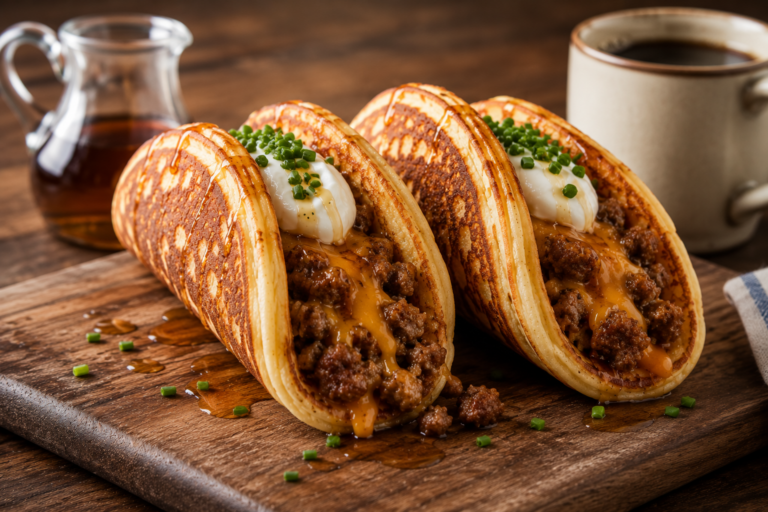
Pancake Tacos
These Pancake Tacos fold golden buttermilk pancakes around savory breakfast sausage and sharp cheddar, then finish with maple syrup, cool sour cream, and fresh chives—delivering the perfect sweet-savory breakfast in one brilliant, handheld format.
4
servings20
minutes15
minutes350
kcal35
minutesIngredients
1 cup all-purpose flour
2 tablespoons sugar
1 teaspoon baking powder
0.5 teaspoon baking soda
0.25 teaspoon salt
1 cup buttermilk
1 large egg
2 tablespoons unsalted butter, melted
0.5 pound breakfast sausage
4 tablespoons maple syrup
1 cup shredded cheddar cheese
0.5 cup sour cream
0.5 cup chopped fresh chives
Directions
- In a bowl, mix flour, sugar, baking powder, baking soda, and salt.
- In another bowl, whisk buttermilk, egg, and melted butter.
- Combine wet and dry ingredients until smooth batter forms.
- Heat a non-stick skillet over medium heat.
- Pour 1/4 cup of batter onto skillet for each pancake.
- Cook each pancake 2-3 minutes per side until golden brown.
- In a separate pan, cook sausage until browned and fully cooked.
- To assemble, place sausage and cheese in pancake, fold like taco.
- Serve topped with maple syrup, sour cream, and chives.
Nutrition Facts
- Total number of serves: 4
- Calories: 350kcal
About This Author

Benjamin Brown
Recipe Developer
Benjamin is our flavor engineer. A classically trained chef turned recipe developer, he’s obsessed with balancing taste, texture, and creativity. He ensures that every recipe we publish is not only delicious but also reliable, approachable, and repeatable — even for beginners.
Favorite dish: Slow-braised short ribs with red wine reduction.
Kitchen motto: “Cooking is part science, part soul.”