
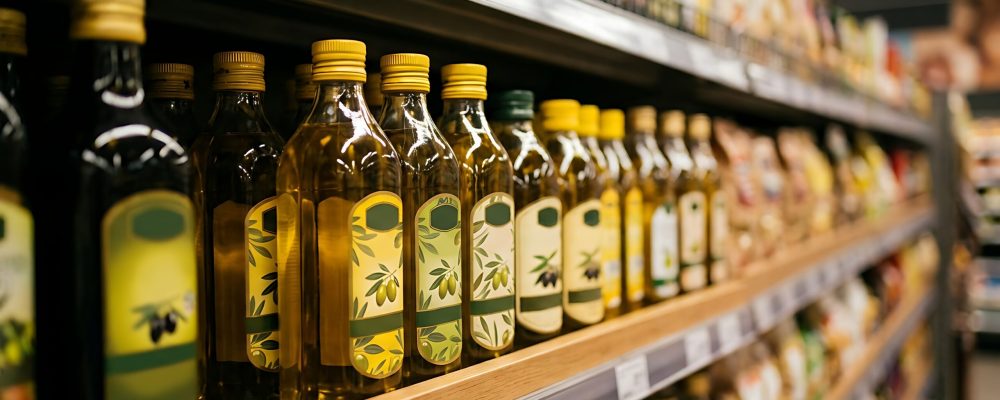

Walk down the olive oil aisle and almost every bottle claims the same thing: “extra virgin,” often paired with words like “premium,” “cold-pressed,” or “first press.” It sounds like a guarantee of quality.
It’s mostly a guarantee of very little, at least on its own.
What “Extra Virgin” Actually Means
Extra virgin olive oil is technically a grading category based on acidity level and how the oil was extracted — pressed mechanically, without heat or chemicals, and testing below a certain threshold of oleic acid.
That’s a real distinction, and it matters. But it says nothing about how fresh the oil is, how it was stored, or whether it’s been mixed with cheaper oils along the way. A technically accurate “extra virgin” label can still describe an oil that’s stale, poorly handled, or diluted.
The category is a floor, not a promise of excellence.
Why So Much “Extra Virgin” Oil Fails Its Own Standard
Multiple independent studies over the years, including testing by universities and consumer groups, have found that a significant percentage of oils labeled extra virgin don’t actually meet the chemical or sensory standards for that grade once tested.
Some of this comes from oxidation during shipping and storage. Some comes from blending in refined or lower-grade oils to cut costs. Because enforcement varies by country and testing is expensive, a lot of mislabeled oil simply never gets caught.
This isn’t universal — plenty of brands are exactly what they claim to be. But the label alone isn’t proof.
The Clues That Actually Matter More Than the Front Label
A few details tend to say more about quality than the words “extra virgin” ever will.
Harvest date matters more than almost anything else — olive oil is a fresh product that degrades over time, similar to fresh juice, not a shelf-stable pantry staple. A harvest date within the last year is a good sign. No date at all is a small red flag.
Dark glass or tin packaging protects oil from light, which speeds up oxidation. Clear glass bottles sitting under store lighting are quietly degrading on the shelf.
A specific country or region of origin, rather than a vague “packaged in” location, usually points to more accountability in the supply chain.
Why Real Olive Oil Should Taste Like Something
Good extra virgin olive oil isn’t neutral. It should have some genuine character — grassy, peppery, slightly bitter, sometimes with a noticeable back-of-throat catch.
That bitterness and peppery bite come from polyphenols, the same compounds linked to olive oil’s health benefits. Oil that tastes completely flat and neutral has often lost those compounds through age, poor storage, or processing that stripped them out along the way.
A little sharpness isn’t a flaw. It’s often a sign the oil is doing what it’s supposed to.
How to Actually Buy Better Olive Oil
None of this requires becoming an expert or spending dramatically more money.
A few habits that make a real difference:
Check for a harvest date, and buy the most recent one available
Choose dark glass or tin over clear bottles
Buy smaller bottles more often instead of one large bottle that sits for months
Store it away from heat and light, and use it within a few months of opening
Oil that tastes sharp, grassy, or slightly bitter is usually telling you it’s fresh — not that something’s wrong with it.
The Takeaway
“Extra virgin” was never designed to be a marketing claim, even though it’s mostly used as one now.
The real signals of quality are quieter: a date, a container, a taste that has some bite to it. None of them are on the front of the bottle in big letters.
Once you know what to actually look for, the olive oil aisle stops being a guessing game.














