
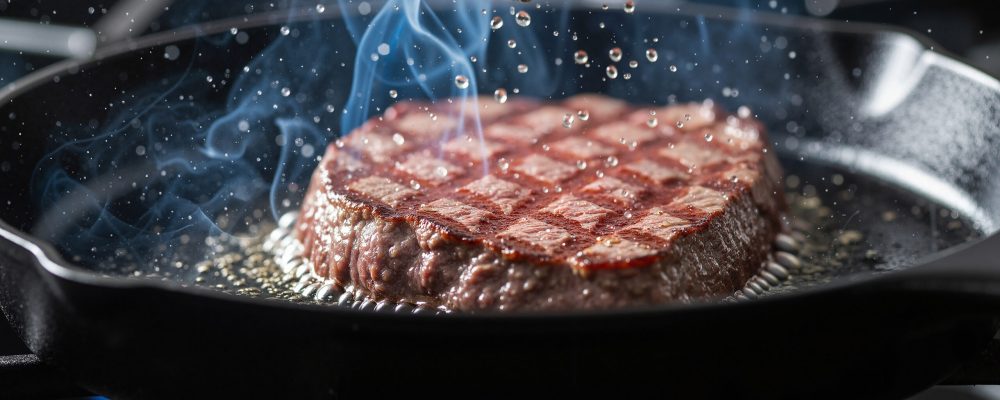

“Searing locks in the juices.” It’s one of the most repeated pieces of cooking advice in existence, taught in cookbooks, cooking shows, and passed down through generations of home cooks.
It’s also not true. And understanding why changes how you should actually think about searing.
Where This Myth Came From
The idea has been around for over a century, tracing back to early food science writing that assumed browning meat created some kind of seal on the surface, trapping moisture inside.
It’s an intuitive idea. It sounds like it should be true. It also doesn’t hold up when actually tested.
What Happens When You Actually Test It
If searing sealed in moisture, seared meat should weigh more after cooking than unseared meat, or at least lose less liquid. Repeated tests comparing seared and unseared cuts, cooked to the same internal temperature, show almost no difference in moisture loss between the two.
Meat loses moisture during cooking based mostly on internal temperature, not on whether the outside was browned first. A steak cooked to medium loses roughly the same amount of juice whether it was seared hard or barely touched.
The seal was never really there.
So Why Does Searing Matter at All?
If it’s not about trapping moisture, why does virtually every good cook still do it?
Flavor. Searing triggers the same browning reaction responsible for toasted bread, roasted coffee, and browned onions — a chemical process that creates dozens of new flavor compounds that don’t exist in raw or gently cooked meat.
That crust isn’t sealing anything in. It’s adding something that wasn’t there before: texture, color, and a deep, savory flavor that plain gray meat simply doesn’t have.
Why This Misunderstanding Actually Hurts Your Cooking
Believing the “locks in juice” myth can lead to bad decisions in the kitchen.
Some cooks sear meat and then assume it’s now protected, cooking it further than they should because they think the seal will keep it moist regardless. Others sear at too low a temperature to properly brown, believing any amount of color counts as “locking it in,” when a proper sear needs real heat and a dry surface to actually develop flavor.
Once the real purpose is understood, it becomes obvious that searing is about the crust itself, not a shield underneath it.
How to Actually Get a Better Sear
If flavor is the goal instead of moisture retention, a few things matter more than they used to seem:
Pat meat completely dry before it hits the pan
Use high heat and let the pan fully preheat
Avoid crowding the pan, which traps steam and prevents browning
Don’t flip too early — a proper crust takes longer than it feels like it should
None of these are about sealing anything. They’re all about giving the browning reaction the conditions it needs to actually happen.
The Takeaway
Searing is one of the most useful techniques in cooking, just not for the reason most people think.
It was never a shield. It was always a flavor upgrade, hiding in plain sight behind a myth that’s been repeated so often it started to sound like fact.
The next time someone says searing “locks in the juices,” it’s worth knowing the real reason to do it anyway — because the truth is arguably a better reason than the myth ever was.














