
Salt doesn’t really have a flavor of its own. It’s sharp, mineral, a little harsh on its own — nothing you’d want a spoonful of. And yet it’s the single ingredient credited with making food taste like itself.
That contradiction is worth understanding, because once you do, seasoning stops being a guessing game.
Salt Doesn’t Add Flavor — It Reveals It
Most people think of salt as a flavor on its own, sitting alongside sweet, sour, and bitter. In practice, it works differently.
Salt suppresses bitterness and amplifies the flavors already present in food. A tomato salted properly doesn’t taste “salty” — it tastes more like a tomato. A pot of soup that seems flat isn’t usually missing an ingredient. It’s usually just under-salted.
This is why professional recipes call for salt in stages, not all at once at the end. Each addition unlocks a little more of what’s already there.
The Science of Why This Happens
Taste buds detect salt almost instantly, and that sodium interacts directly with how bitter compounds are perceived on the tongue.
At the right concentration, salt dampens bitterness enough that sweetness and other flavors become more noticeable by comparison. Too little salt, and bitter or dull notes dominate. Too much, and salt itself becomes the flavor you taste, drowning out everything else.
The sweet spot is narrower than most people think, which is part of why salting “to taste” is genuinely more accurate advice than it sounds.
Why the Type of Salt Matters Less Than Timing
A lot of kitchen debates focus on which salt to buy — kosher, sea salt, table salt, pink Himalayan. The type matters less than most people assume.
What actually changes the outcome is when salt gets added. Salting early — before or during cooking — gives it time to dissolve and distribute evenly through a dish. Salting only at the very end creates uneven pockets: some bites taste seasoned, others taste bland.
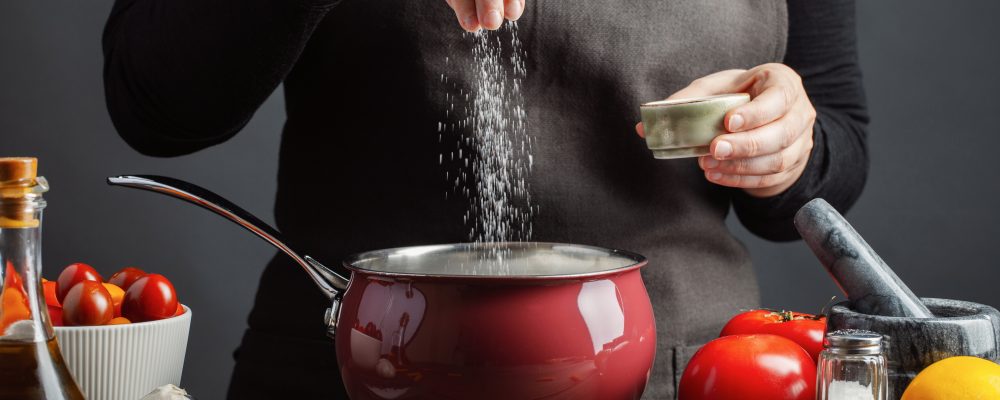
Pasta water is the clearest example. Salting the water lets pasta absorb seasoning from the inside as it cooks — something no amount of salt added afterward can fully replicate.
The Mistake That Makes People Afraid of Salt
Salt gets a bad reputation because of how it’s used, not because of what it is.
Most excess sodium in the average diet comes from processed and packaged foods, not from home cooking with a salt shaker. A pot of vegetables salted properly during cooking often ends up with less sodium overall than the same vegetables eaten unsalted, then drowned in a bottled sauce or dressing to compensate for the blandness.
Under-salted food often gets “fixed” later with things far saltier than a pinch would have been.
How to Actually Get Better at Seasoning
Seasoning well isn’t about memorizing a measurement. It’s about tasting as you go.
A few things worth practicing:
Taste before salting, then taste again after
Add small amounts repeatedly, rather than one large amount
Salt in layers — during cooking, not just at the end
Compare an unsalted bite to a salted one side by side
That last one is the fastest way to actually learn what salt does, rather than just being told.
The Takeaway
Salt isn’t a flavor you’re adding. It’s a filter you’re removing.
Under a proper amount of salt, bitterness fades and the flavors that were always there — sweetness, richness, acidity — finally come through clearly.
The next time a dish tastes like something’s missing, it’s worth reaching for salt before reaching for another ingredient entirely.