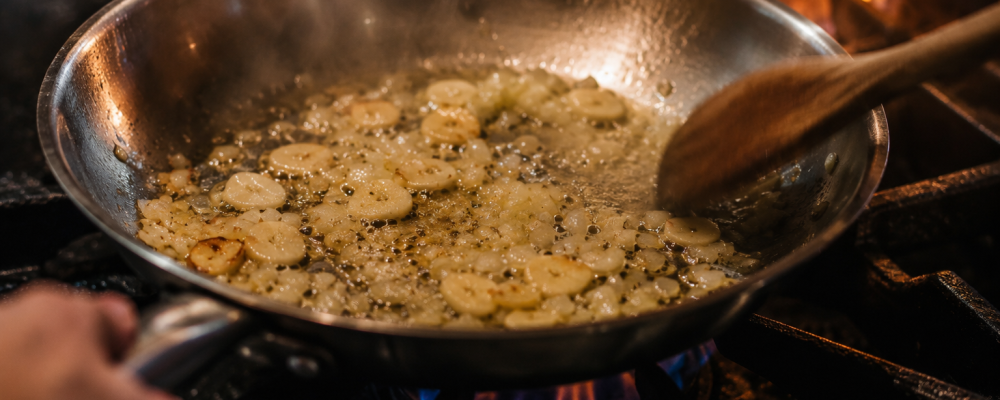

Walk into any home kitchen making a stir-fry or a pasta sauce, and there’s a good chance the garlic already smells slightly bitter before the dish is even done.
It’s one of the most common mistakes in cooking — and one of the easiest to fix once you understand why it happens.
Why Garlic Burns So Easily
Garlic is small, thin, and packed with sugar and moisture. That combination means it goes from raw to burnt faster than almost anything else in the pan.
Most recipes tell you to add garlic early, right after the onions. In a hot pan, that’s often already too late. By the time the rest of the dish catches up, the garlic has been cooking for several extra minutes it didn’t need.
Burnt garlic doesn’t just taste bad — it tastes bitter enough to throw off an entire dish, no matter how good everything else is.
What Line Cooks Do Differently
In professional kitchens, garlic almost never hits the pan first.
Instead, cooks build a base with onions, celery, or other slower-cooking vegetables, softening them before garlic ever gets involved. Garlic goes in near the end of that step — just long enough to turn fragrant, never long enough to brown.
Some kitchens go a step further and add garlic straight into a liquid, like stock or wine, skipping the dry pan entirely. No direct heat, no risk of scorching.
The Timing Trick Almost No One Uses
Here’s the simplest fix, and it takes zero extra ingredients: add garlic 30 to 60 seconds later than your instinct tells you to.
That’s it. Let the onions get most of the way there first. Then add garlic, stir constantly, and pull the pan off heat or add liquid the moment it turns fragrant.
If you can smell garlic clearly across the room, you’re already close to the edge.
Why Pre-Minced Garlic Makes This Harder
Jarred, pre-minced garlic burns even faster than fresh, since it’s already been bruised and broken down before it ever touches the pan.
Fresh garlic, sliced or minced right before cooking, holds up slightly longer and tastes noticeably cleaner. It’s a small swap, but it buys you a few extra seconds of margin — which, with garlic, is most of the battle.
Beyond the Pan: Other Ways Restaurants Use Garlic
Sautéing isn’t the only option, and it’s often not the best one.
A few techniques worth stealing:
Roasting whole heads until soft and sweet, with none of the sharp bite
Infusing oil with garlic over low heat, then removing the cloves
Grating raw garlic into dressings, where it never sees heat at all
Each method sidesteps the burning problem completely by changing when — or whether — garlic meets high heat.
The Takeaway
Garlic isn’t a difficult ingredient. It’s just an unforgiving one.
Restaurants don’t have special garlic. They just know it needs a few seconds of respect and a spot later in the cooking order than most recipes suggest.
Give it that, and one of the most common kitchen mistakes disappears completely.