

Every restaurant kitchen has a secret meal you’ll never see on the menu.
It’s called “family meal,” and it happens before service, when the cooks eat together using whatever’s left over from prep. Trim, odd cuts, extra vegetables, a sauce that didn’t make the cut. It’s fast, it’s resourceful, and it’s often the best food made in the building all day.
Most home cooks treat leftovers like an afterthought. Restaurants treat them like an assignment.
Why Restaurants Never Waste a Scrap
In a professional kitchen, food cost is sacred. Nothing gets thrown away if it can be used.
Bread scraps become croutons or bread pudding. Vegetable trim becomes stock. Bones become more stock. Even the tops of fennel or the ends of herbs get chopped into a garnish or folded into a dressing.
This isn’t about being cheap. It’s about respect for the ingredient. Something was grown, shipped, and paid for—wasting it feels like admitting you didn’t plan well enough to use it.
The Family Meal Mentality
Family meal works because it flips the pressure of cooking on its head.
There’s no ticket. No guest waiting. No plate that needs to look a certain way. Just cooks turning random ingredients into something edible, fast, before the real work starts.
That constraint often produces more creativity than an open-ended recipe ever could. Give a cook five random ingredients and thirty minutes, and something delicious usually happens.
The Home Version of Family Meal
You already have the ingredients for this mindset in your fridge right now.
Try thinking of leftovers as:
A base, not a repeat
A blank canvas, not a rerun
An ingredient, not a whole meal
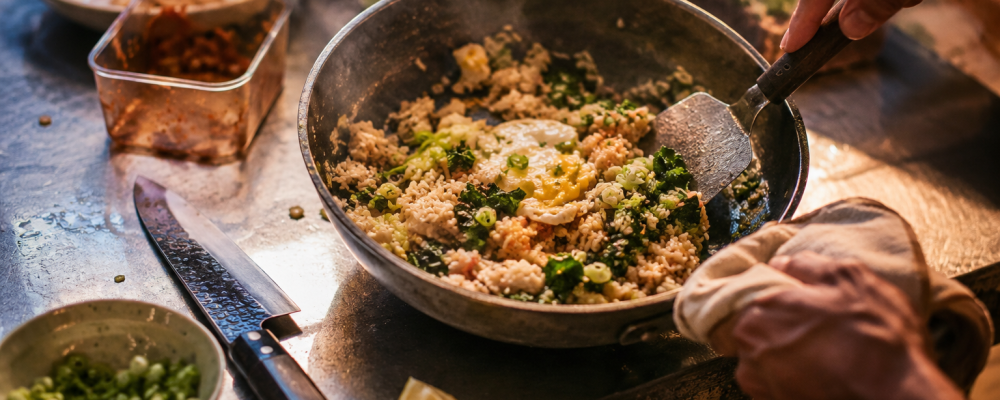
Last night’s roasted vegetables aren’t dinner again—they’re the start of a frittata. Extra rice isn’t a side dish repeat—it’s fried rice with whatever’s wilting in the crisper drawer. A little leftover sauce isn’t garbage—it’s tomorrow’s soup base.
Why Reheating Kills Good Food
Most leftovers taste worse the second time around for one simple reason: they get reheated instead of re-cooked.
Restaurants almost never just microwave something and call it done. They add a little fat, a splash of acid, or fresh heat to bring the dish back to life. A tired piece of chicken gets sliced thin and tossed into a hot pan with a spoonful of stock. Rice gets a hit of oil and high heat until it crisps again.
The difference between sad leftovers and a genuinely good second meal is almost always the reheating method, not the ingredients themselves.
The Skill Restaurants Are Quietly Teaching
Family meal isn’t officially “training,” but it teaches something recipes can’t: how to think without one.
Cooks who make family meal every day get faster at reading what’s in front of them. They stop needing exact instructions and start recognizing patterns—what goes with what, what needs acid, what needs heat, what needs nothing at all.
That instinct transfers directly to the line. And it transfers directly to your kitchen too.
The Takeaway
The best home cooks don’t have less food waste because they’re more disciplined. They have less waste because they’ve stopped seeing leftovers as a downgrade.
Restaurants don’t treat extra ingredients as a problem to deal with. They treat them as the next dish waiting to happen.
Your fridge is already full of tomorrow’s meal. It just needs a little heat, a little fat, and a little less hesitation.














