
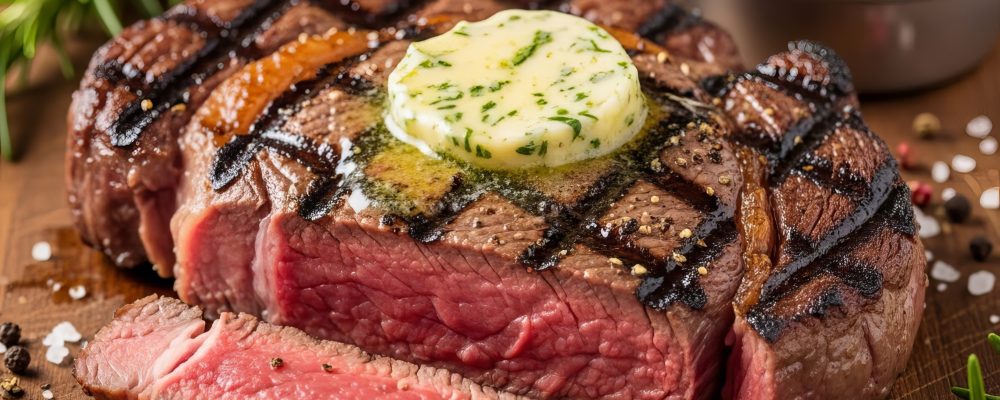

There is a preparation that takes ten minutes to make and that improves almost everything it touches.
Not a sauce, which requires skill and timing and the specific conditions of a hot pan and a moment of focused attention. Not a marinade, which requires advance planning and the patience to wait while it does its work. Not a complex condiment that demands a list of ingredients and a specific technique.
Compound butter.
The simple mixture of softened butter with herbs and aromatics and acid — rolled into a log, wrapped in plastic, and stored in the refrigerator or the freezer — is one of the most broadly useful preparations available in any kitchen. It requires no cooking. It improves with time. It serves as a finishing element for grilled proteins, as a sauce for pasta, as a spread for bread, as a flavor base for vegetables, as the specific richness that finishes a pan sauce, as the thing that goes on corn the moment it comes off the grill and produces a result that plain butter never quite matches.
In August, with the herb garden at its most productive and the grilling and the outdoor cooking at their peak, compound butter is the preparation that most specifically serves the season — made from the herbs that are abundant right now, used with the grilled proteins and the corn and the bread that August’s outdoor cooking produces.
The Technique That Requires Almost Nothing
The technique of compound butter is so simple that calling it a technique feels generous — and yet the specific steps of the preparation, done correctly, produce a result that is more useful and more durable than the incorrectly made version.
The butter must be at room temperature. Not melted — the melted butter that is re-solidified produces a different and less pleasant texture than the properly softened butter that was never heated. The properly softened butter yields to a finger’s pressure without breaking, holds its shape without pooling, and incorporates the added ingredients without effort.
The herbs and aromatics must be dry — moisture in the compound butter promotes spoilage and produces an inferior texture. Fresh herbs should be washed and dried thoroughly, ideally several hours before use, patting dry and leaving on a towel until no surface moisture remains. The herbs should be chopped finely — not minced to a paste, but chopped small enough to distribute evenly through the butter without large, uneven pieces.
The incorporation is done with a fork or a rubber spatula — pressing the herbs and the aromatics and the acid into the butter, folding and pressing until everything is evenly distributed. The salt — always more than seems right — is added and incorporated last, tasted and adjusted.
The formed log — the butter turned onto a sheet of plastic wrap, shaped into a cylinder by rolling the plastic around it and twisting the ends to compress the butter into an even form — is refrigerated for at least an hour before use to firm the butter back to its working consistency.
This is the entire technique. The rest is the selection of what goes into the butter.
The Flavor Combinations Worth Knowing
The compound butter is as varied as the ingredients available to compose it — and the August kitchen, with its abundance of fresh herbs and the specific ingredients that summer cooking produces, offers more options than any other month.
The classic combination that anchors the compound butter tradition: butter with shallot and fresh thyme and lemon zest, finished with a squeeze of lemon juice and a generous amount of salt and freshly cracked black pepper. This is the butter that goes on everything — the steak pulled from the grill, the chicken breast that finished cooking a moment ago, the corn that came off the fire. Its specific combination of allium sweetness and herb freshness and citrus brightness works with almost any protein and most vegetables.
The more specifically summer combination: butter with fresh basil and sun-dried tomato and a small amount of garlic, finished with a pinch of red pepper flakes. This is the butter for pasta — melted into the hot pasta with a splash of pasta water, it produces a sauce of specific depth from nothing more than a slice off the butter log. It is also excellent on bread, on grilled fish, on vegetables.
The specifically herb-garden combination: butter with whatever combination of herbs is most abundant right now — the parsley and the chives and the tarragon that have been growing all summer and that need to be used before the season ends. This improvisational compound butter, made from whatever is at its peak, is often the best version — because the herbs are fresher and more vivid than any specifically purchased for the purpose.
The blue cheese and walnut combination that belongs to the steak: butter with crumbled blue cheese and toasted walnuts and a small amount of fresh thyme. Placed on a hot steak the moment it comes off the grill, it melts into the meat’s surface and produces a richness and a complexity that finishes the steak in the way that a full pan sauce would, from nothing more than a slice of prepared butter.
And the miso butter that belongs to corn and to vegetables: butter with white miso and a small amount of sesame oil and a squeeze of lime. This is the compound butter that produces the most surprising and most specific result — the miso’s fermented depth combining with the butter’s richness to produce something that tastes more complex and more considered than any of its components suggests.
What Compound Butter Does That Other Preparations Don’t
The specific advantage of compound butter over other finishing preparations — over the sauce, the drizzle of olive oil, the squeeze of lemon — is the combination of richness and flavor delivery that butter’s fat content specifically enables.
Fat is a flavor carrier — a vehicle for the fat-soluble aromatic compounds that produce most of what we experience as herb flavor. The volatile aromatic compounds in fresh herbs are, by their chemical nature, more soluble in fat than in water. When fresh herbs are incorporated into butter, these compounds transfer into the fat and are carried by it, distributing more efficiently and more evenly through whatever the butter is applied to than the same herbs chopped and scattered on top would distribute.
This means that a compound butter applied to a piece of grilled protein provides a different and more complete herb experience than the same herbs scattered over the same protein without the butter as a carrier. The herbs are not just on the surface of the food — they are carried in the fat that is melting into the surface, distributing their flavor compounds as the fat penetrates.
The second specific advantage of compound butter is its behavior at the critical moment of service — the moment when the food is hottest and most receptive to the finishing element. The slice of cold compound butter placed on a hot piece of food melts slowly, pooling over the surface in a specific way that produces the basting effect that restaurant kitchens achieve through active spooning of butter over food during the final moment of cooking. The cold butter melting on hot food is its own technique, producing a glossy, richly flavored surface that the room-temperature butter applied to cool food cannot replicate.
The August Herb Butter Project
The compound butter is not just a single preparation — it is a project, in the late summer kitchen, of preserving the herb abundance of August in the most useful and the most durable form available.
A Saturday afternoon spent making four or five different compound butters from the herbs that are at their most productive right now — the basil that is about to bolt, the tarragon that is at its most fragrant, the chives that need to be cut back to encourage new growth — produces a freezer full of flavor that serves the cooking of the months that follow.
The compound butter freezes beautifully, maintaining its quality for up to three months with no significant degradation in flavor or texture. The butter log that is wrapped tightly in plastic and then in foil and placed in the freezer preserves the specific vivid herb flavor of August in a form that is immediately available — sliced from frozen, placed on hot food, producing a result in November that carries the memory and the flavor of August’s herb garden.
This is one of the most efficient forms of late summer preservation available — turning thirty minutes of herb processing into three months of excellent finishing material.
The Everyday Uses That Make It Irreplaceable
Beyond the specific preparations that compound butter is designed for — the steak, the corn, the pasta — the everyday uses that the compound butter log in the refrigerator makes available are the ones that most specifically change the quality of the daily cooking.
The slice placed on a piece of toast instead of plain butter. The knob that finishes the roasted vegetables pulled from the oven, melting into the hot vegetables in the final minute before serving. The piece that goes into the pan after a piece of fish is seared and removed, creating a quick pan sauce from the fond and the compound butter’s herbs without any additional preparation. The slice that finishes a bowl of soup — placed in the center of the hot soup and allowed to melt — adding richness and herb flavor to a preparation that needed only this final element to be complete.
Each of these is a small application. The compound butter’s accumulation of small improvements across the week of cooking is the measurement of its specific value — not in any single dramatic preparation but in the consistent quality it adds to everything it touches.
The Takeaway
Compound butter is the ten-minute preparation that improves an entire month of cooking — made from the herbs that are most abundant right now, stored in the refrigerator and the freezer, applied to everything that heat and fat and herbs improve.
Make it this weekend. Make several variations. Freeze what won’t be used within two weeks.
And then forget about it — until the moment when the steak comes off the grill and the slice of herb butter is placed on top and the compound butter earns every minute it took to make.














