
Some cocktails achieve cult status through clever marketing or celebrity association. The Bushwacker earned its legendary reputation the old-fashioned way — by being genuinely, exceptionally delicious in a way that’s difficult to articulate but impossible to forget. As someone who approaches cocktails analytically, I find the Bushwacker fascinating because it shouldn’t work as well as it does. Coconut milk, chocolate liqueur, coffee liqueur, dark rum, cream of coconut, and milk — that’s a lot of competing richness and sweetness in a single glass. Yet somehow, the combination achieves a balance that’s remarkably clean, complex, and satisfying. Understanding why requires examining each component’s role with some precision.
The key is how the various fat and sugar sources interact. Coconut milk and cream of coconut both contribute fat and sweetness, but they’re different products with different flavor profiles and textures. Coconut milk is lighter, with subtle tropical flavor. Cream of coconut is richer, sweeter, and more intensely coconut-flavored. Together, they create a layered coconut character that’s more complex than either alone. The milk adds protein and additional fat that helps the blended mixture achieve that silky, almost milkshake-like consistency without being as heavy as ice cream.
The chocolate and coffee liqueurs perform a critical balancing function. Both provide bitterness — chocolate liqueur through cocoa compounds, coffee liqueur through caffeine and roasted coffee oils — that counteracts the coconut’s sweetness. Without this bitter counterpoint, the drink would be cloying and one-dimensional. With it, the sweetness becomes pleasant rather than overwhelming, and the drink achieves the kind of sophisticated balance that keeps you returning to it long after a simpler sweet drink would have become tiresome.
─────────
The Inspiration Behind This Recipe
The Bushwacker’s origin story is well-documented enough to be worth telling accurately. The drink was created in 1975 by Linda Murphy at the Sandshaker Lounge on Pensacola Beach, Florida. Murphy was experimenting with ingredients behind the bar and created a frozen blended drink that combined the flavors she loved — coconut, chocolate, coffee, and rum — into something entirely new. The drink became an immediate sensation at the Sandshaker, and its reputation spread rapidly through the Gulf Coast bar community.
What makes the Bushwacker’s origin particularly interesting from a recipe development standpoint is how Murphy arrived at the combination intuitively rather than analytically. She wasn’t calculating fat content or bitterness ratios — she was following flavor instincts that happened to create near-perfect balance. That kind of intuitive mastery is what separates great bartenders from technically competent ones. The combination she landed on has proven so well-calibrated that the fundamental recipe has remained largely unchanged for fifty years.
The drink subsequently spread to the Caribbean, where variations became signature cocktails at beach bars throughout the Virgin Islands, particularly in St. Thomas where the Bushwacker became so associated with local culture that the island now hosts a Bushwacker Festival. The drink’s journey from a Pensacola beach bar to Caribbean cultural institution represents one of cocktail history’s most interesting geographical progressions.
─────────
A Brief History of the Bushwacker and Frozen Cocktail Culture
Frozen cocktails became possible only with the widespread adoption of electric blenders in American homes and bars during the 1950s. Before blenders, ice-based drinks were limited to shaken or stirred cocktails served over crushed ice. The blender created entirely new possibilities — drinks with uniform frozen textures, incorporated dairy and fruit, and completely emulsified ingredients that couldn’t be achieved any other way.
The frozen daiquiri and piña colada established frozen cocktails as legitimate serious drinks rather than novelties during the 1960s-70s. The Bushwacker emerged from this culture in 1975, adding chocolate and coffee elements that distinguished it from the tropical fruit-and-rum frozen drinks that dominated the category. Its complexity — six ingredients rather than the three or four typical of most frozen cocktails — positioned it as a more sophisticated offering while its creamy, sweet character maintained broad appeal.
The Gulf Coast and Caribbean bar culture that embraced the Bushwacker had specific characteristics that influenced its evolution. These regions prize hospitality and generosity — drinks are made with abundance rather than restraint. The Bushwacker’s multiple dairy components and generous spirit content reflect this culture of genuine, unself-conscious indulgence. It’s a drink from a place where pleasure is taken seriously, where the point of a cocktail is to make someone feel genuinely happy rather than merely impressed.
─────────
Why This Mixing Method Works
The blending method is the only appropriate technique for the Bushwacker because you’re working with multiple ingredients of different densities and consistencies that need complete homogenization. Coconut milk, cream of coconut, regular milk, and the two liqueurs would separate into distinct layers if simply stirred or shaken — the blender’s high-speed mechanical action is what creates the uniform, creamy emulsion that makes the Bushwacker’s texture so distinctive.
The ice-to-liquid ratio is the most technically demanding aspect of this recipe. Too much ice and the drink becomes thin and watery as the ice over-dilutes the other flavors — a frozen cocktail should never taste like a snow cone with alcohol. Too little ice and the drink is too rich and dense, losing the refreshing quality that makes frozen cocktails so appealing. The correct ratio produces a texture that’s thicker than a slushie but more fluid than soft-serve ice cream — something that pours easily but maintains its body in the glass for several minutes before melting significantly.
Blending in the correct order matters for achieving optimal texture. Adding ice first, then liquids, allows the blender to begin breaking down the ice before the liquids arrive, creating smaller, more uniform ice crystals throughout the final mixture. This produces a smoother texture than adding everything simultaneously and hoping for the best. The cream of coconut should be added last since its high fat content can impede blending efficiency if present from the start — adding it after the other ingredients are partially blended ensures it incorporates smoothly without creating pockets of unblended fat.
─────────
Flavor Profile: What to Expect
The Bushwacker delivers a rich, sophisticated frozen cocktail experience:
- Layered Coconut Character: Both coconut milk’s subtle tropical lightness and cream of coconut’s rich sweetness create complex, multi-dimensional coconut flavor
- Chocolate Bitterness: Chocolate liqueur’s cocoa compounds provide essential bitter counterpoint that prevents the drink from becoming cloying
- Coffee Complexity: Coffee liqueur adds roasted, slightly bitter depth that creates sophistication beyond simple sweetness
- Dark Rum Backbone: The spirit’s caramel, vanilla, and molasses notes integrate beautifully with the coconut and chocolate
- Creamy Dairy Smoothness: The combination of coconut milk and regular milk creates silky, almost milkshake-like mouthfeel
- Balanced Sweetness: Multiple sweet components that paradoxically achieve restraint through mutual moderation
- Refreshing Frozen Texture: Cold temperature and uniform ice crystals that keep the drink feeling light despite its richness
The overall experience is indulgent yet balanced — this is a serious frozen cocktail that happens to taste like dessert rather than a dessert that happens to contain alcohol.
─────────
Tips for Making the Best Bushwacker
Execute this legendary cocktail with precision using these essential techniques:
- Use full-fat coconut milk: Light coconut milk lacks the fat content necessary for the Bushwacker’s signature creamy texture. Always use full-fat — Native Forest or Thai Kitchen are reliable brands.
- Distinguish cream of coconut from coconut cream: These are different products. Cream of coconut (like Coco López) is sweetened and thick, designed specifically for cocktails. Coconut cream is unsweetened and used in cooking. The recipe requires cream of coconut — don’t substitute.
- Choose quality chocolate liqueur: Godiva Chocolate Liqueur or Tempus Fugit Crème de Cacao provide genuine chocolate flavor. Avoid cheap options that taste artificial.
- Quality coffee liqueur matters: Kahlúa is the standard, but Mr. Black offers more complex coffee flavor for a more sophisticated result.
- Use good dark rum: The rum’s quality impacts the final flavor significantly. Appleton Estate, Myers’s, or Gosling’s Black Seal all work beautifully.
- Chill your glasses: Put serving glasses in the freezer for at least 20 minutes before pouring. A cold glass keeps the frozen drink in optimal condition longer.
- Blend in stages: Start on low speed to break down ice, then increase to high for final emulsification. This creates smoother texture than blending on high throughout.
For additional complexity, add a dash of nutmeg to the blender — it’s a traditional Caribbean addition that adds aromatic warmth that complements the rum and coconut beautifully.
─────────
Serving Suggestions and Garnish Ideas
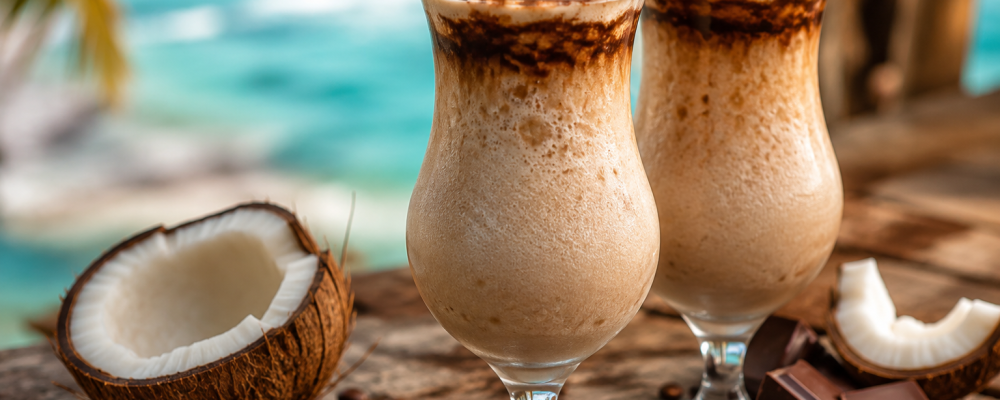
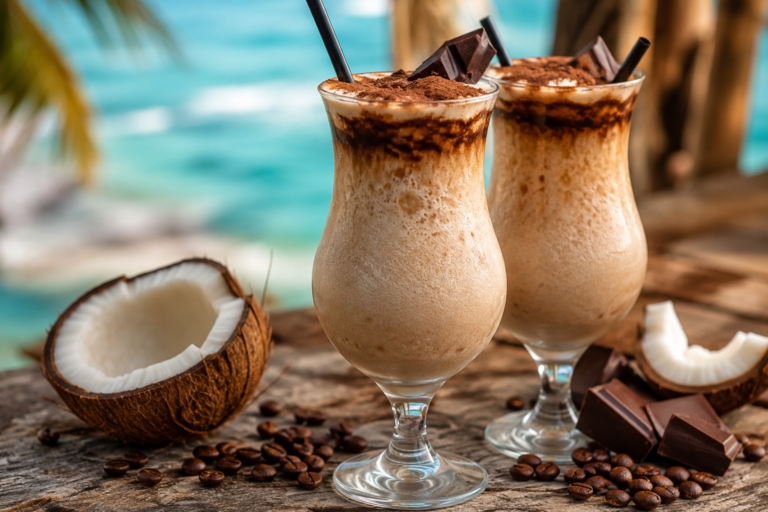
The Bushwacker looks best served in chilled hurricane glasses or large rocks glasses that showcase its creamy, pale brown color. The drink’s appearance is understated compared to its flavor impact — it looks like a chocolate milkshake, which is both accurate and slightly misleading given the complex spirit content. Clear glassware allows the uniform, creamy texture to be appreciated, and the contrast between the frozen drink and the chilled glass creates appealing condensation that signals proper temperature.
Garnish options for the Bushwacker reflect its Gulf Coast heritage — keep them simple and honest. A light dusting of cocoa powder or fresh grated nutmeg on the surface adds aromatic appeal and visual interest without complicating the drink’s essential character. Some Gulf Coast bars serve them with a splash of dark rum floated on top — poured gently over the back of a spoon — which creates a beautiful visual gradient and delivers an intensified rum hit with the first sip. A cocktail straw and perhaps a simple maraschino cherry on a pick complete the presentation appropriately.
This cocktail is perfect for beach-themed gatherings, Caribbean dinner nights, poolside entertaining, or any occasion where you want something that feels genuinely special without requiring elaborate preparation. Its dessert-cocktail dual nature makes it excellent for serving as the final course of a dinner party — something that functions as both digestif and dessert, concluding the evening with rich, satisfying pleasure. It’s also exceptional for introducing skeptical guests to frozen cocktails — its sophisticated flavor profile challenges the assumption that blended drinks are frivolous.
─────────
Storage and Make-Ahead Tips
- Blend immediately before serving: The Bushwacker’s frozen texture degrades quickly as ice crystals melt and refreeze unevenly. Always blend fresh and serve immediately.
- Pre-measure all liquid ingredients: Combine coconut milk, chocolate liqueur, coffee liqueur, dark rum, cream of coconut, and milk in a sealed container and refrigerate for up to 24 hours. Add ice and blend when ready to serve.
- Cream of coconut storage: Once opened, cream of coconut keeps for several weeks refrigerated. It will solidify when cold — warm slightly and stir before using.
- Scale for parties: For larger groups, multiply the recipe proportionally and blend in batches. Keep blended portions in a covered pitcher in the freezer between batches, stirring before serving.
- Glass preparation: Freeze serving glasses up to several hours in advance. The colder the glass, the longer the drink maintains its ideal frozen texture.
- Coconut milk storage: Once opened, coconut milk keeps for 5-7 days refrigerated. Always shake or stir before using as it separates.
Never attempt to make Bushwackers in advance and freeze them — the texture becomes grainy and the emulsion breaks during extended freezing.
─────────
Why This Recipe Deserves a Spot in Your Rotation
The Bushwacker deserves serious consideration in your cocktail repertoire because it demonstrates a principle that applies across all cooking and bartending: when the right combination of ingredients is properly balanced, the result transcends what any individual component could achieve alone. Six ingredients that might seem like too much — too rich, too sweet, too complex — achieve equilibrium that’s more elegant than simpler drinks. That’s not an accident; it’s the result of fifty years of refinement and proof that the recipe is genuinely well-calibrated.
What makes the Bushwacker particularly instructive is how it forces you to think about bitterness as a positive cocktail element. The chocolate and coffee liqueurs are present not despite their bitterness but because of it — they’re the structural elements that make everything else work. Once you understand how bitterness functions as a counterbalancing agent in sweet cocktails, you’ll approach recipe development with a new analytical tool that improves everything you make. The Bushwacker is more than a great cocktail; it’s a lesson in balance.
─────────
Recommended Food Pairing
The Bushwacker’s rich, chocolate-coffee-coconut complexity pairs most successfully with foods that provide savory contrast rather than competing sweetness. Given its dessert cocktail character, it works beautifully as a standalone conclusion to a meal — the drink itself is substantial enough to function as dessert without requiring additional food. However, if pairing is desired, certain foods create genuinely excellent combinations.
Salted nuts — particularly macadamia nuts, cashews, or almonds — provide textural contrast and salt that amplifies the drink’s sweetness while their fat content complements the coconut’s richness. Salty, savory snacks like pretzel bites, seasoned popcorn, or even potato chips work on the same principle — the salt-sweet contrast that makes the Bushwacker’s flavors more vivid and interesting.
For more substantial food pairings, consider the Gulf Coast cuisine from which the Bushwacker emerged — grilled Gulf shrimp, blackened fish, or crawfish étouffée create regional authenticity where drink and food share cultural heritage. The cocktail’s sweetness and richness balance the bold Cajun and Creole seasonings characteristic of this cuisine. For dessert pairings, if you’re committed to maximum indulgence, dark chocolate truffles or chocolate-dipped coconut macaroons create harmonious flavor connections. Keep portions small — the Bushwacker is itself substantial, and the combination should feel celebratory rather than overwhelming.
Bushwacker
This legendary frozen cocktail blends coconut milk, chocolate liqueur, coffee liqueur, and dark rum into a creamy, indulgent masterpiece that tastes like a tropical vacation in a glass.
4
servings30
minutes40
minutes300
kcal1
hour10
minutesIngredients
1.5 cup ice cubes
1 cup coconut milk
1 cup chocolate-flavored liqueur
0.5 cup coffee liqueur
0.5 cup dark rum
0.5 cup cream of coconut
0.25 cup milk
Directions
- Combine ice cubes, coconut milk, chocolate-flavored liqueur, coffee liqueur, dark rum, cream of coconut, and milk in a blender.
- Blend until smooth and creamy.
- Pour into chilled glasses and serve immediately.
Nutrition Facts
- Total number of serves: 4
- Calories: 340kcal
About This Author

Benjamin Brown
Recipe Developer
Benjamin is our flavor engineer. A classically trained chef turned recipe developer, he’s obsessed with balancing taste, texture, and creativity. He ensures that every recipe we publish is not only delicious but also reliable, approachable, and repeatable — even for beginners.
Favorite dish: Slow-braised short ribs with red wine reduction.
Kitchen motto: “Cooking is part science, part soul.”