
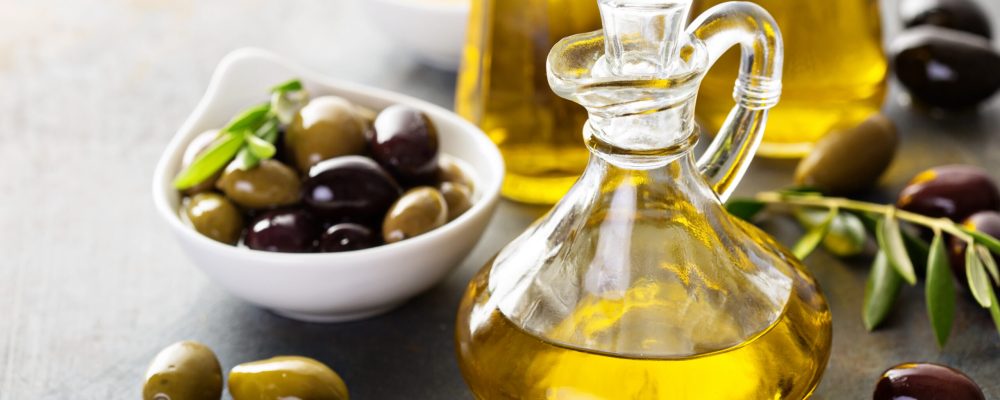

There is a product in almost every kitchen that most people treat as a pantry staple — something to be purchased without particular urgency, stored without particular care, and replaced when the bottle runs out rather than when the quality has declined.
Olive oil.
The treatment of olive oil as a pantry staple — as something equivalent in its stability and its indifference to time to a jar of dried pasta or a can of beans — is one of the most consequential and most widespread misunderstandings in contemporary home cooking.
Olive oil is not a stable pantry staple. It is a fresh product — as perishable in its own specific way as the fruit it is pressed from, as dependent on the conditions of its production and storage for its quality as any seasonal ingredient at the farmers market. The olive oil that was exceptional at the moment of pressing becomes, through the natural processes of oxidation and degradation, a progressively less exceptional product over time — and eventually, if stored long enough or stored badly enough, something that contributes off-flavors and oxidative compounds to food rather than the specific flavor and health benefits that make good olive oil worth using.
Understanding olive oil as a fresh product — with a specific season, a specific peak of quality, and a specific decline that storage conditions can slow but cannot prevent — changes the relationship with the ingredient in ways that improve everything it touches.
The Olive Oil Harvest and What It Produces
Olive oil is a product of a specific agricultural moment: the olive harvest, which occurs in the Northern Hemisphere between October and January depending on the region, the variety, and the specific decisions of the producer about when to harvest for maximum quality.
The timing of the harvest is one of the most significant determinants of the character of the resulting oil. Olives harvested early in the season — when they are still green and have not yet fully ripened — produce an oil that is high in polyphenols, the antioxidant compounds that give good olive oil its specific health benefits and its specific flavor character. This early harvest oil is typically more pungent, more bitter, more intensely flavored, and more vibrant in color than oil from later harvests — and it is also more nutritionally potent, with polyphenol concentrations that can be several times higher than oils from more mature olives.
Olives harvested later in the season — when they have fully ripened and turned from green to black — produce an oil that is lower in polyphenols but higher in oil content per fruit. This later harvest oil is typically milder, less bitter, more golden in color, and less intensely flavored than the early harvest version. It is easier to use in cooking contexts where the assertive character of early harvest oil might overwhelm delicate flavors, but it offers fewer of the specific health benefits that make extra virgin olive oil nutritionally significant.
The best producers make decisions about harvest timing that reflect a specific vision of what they want their oil to be — and the resulting oils have specific and identifiable characters that reflect those decisions. Understanding that the character of an olive oil reflects harvest timing — not just variety and region — gives the buyer a framework for understanding what they are tasting and what they are purchasing.
The Chemistry of Freshness
The freshness of olive oil is not a vague quality. It is a specific chemical state — the presence of specific compounds in specific concentrations — that degrades through specific and measurable processes over time.
The primary mechanism of olive oil degradation is oxidation — the reaction of the oil’s fatty acids and polyphenols with oxygen. This reaction is inevitable but proceeds at different rates depending on the conditions under which the oil is stored. Heat accelerates oxidation. Light accelerates oxidation. Oxygen contact — through an improperly sealed bottle or a bottle that is opened and closed repeatedly over months — accelerates oxidation.
The products of oxidation are the compounds responsible for the specific off-flavors that degraded olive oil produces: the waxy, crayon-like flavor of rancid oil, the flat, musty quality of oil that has oxidized significantly, the general dullness that replaces the specific vibrancy of fresh oil as it ages.
The polyphenols that give fresh olive oil its specific health benefits — and the compound oleocanthal that gives it the characteristic peppery finish at the back of the throat that indicates high polyphenol content — are themselves antioxidants that slow the oxidation of the oil’s other components. As the oil ages, these compounds are consumed in protecting the oil, progressively reducing both the health benefit and the protective function simultaneously.
This means that the olive oil that is fresh and high in polyphenols is not just more flavorful and more nutritionally potent than degraded oil — it is also more stable, because its own antioxidant compounds are slowing the degradation process. The highest-quality fresh olive oil degrades more slowly than a mediocre oil, in addition to being better to begin with.
What the Harvest Date Tells You
The single most useful piece of information available on any bottle of olive oil — more useful than the region, the variety, or the producer’s reputation — is the harvest date.
Not the best-by date, which is typically calculated from the bottling date and which tells the buyer nothing about when the olives were harvested. The harvest date — the specific month and year in which the olives were picked and pressed — which tells the buyer exactly how old the oil is and therefore how much of its original quality remains.
The best extra virgin olive oils reach their peak of flavor within three to six months of pressing, as the oil stabilizes after the initial shock of pressing and the aromatic compounds develop fully. They remain excellent for twelve to eighteen months from pressing under proper storage conditions. After eighteen months, even high-quality oil has typically lost significant polyphenol content and flavor vibrancy, though it may still be perfectly safe to use and may have maintained acceptable quality.
This means that olive oil purchased at a specialty retailer in August 2025 from the most recent Northern Hemisphere harvest should bear a harvest date of late 2024 — no older. Oil bearing a harvest date of 2022 or 2023 is two to three years old and has lost the majority of its original quality regardless of how impressive its producer or its origin.
The buyer who looks for the harvest date — who passes over the bottle without one and selects among those that have it based on recency — is making the single most impactful selection decision available in the olive oil category.
The Producing Regions and What They Offer
The world’s olive oil producing regions — the Mediterranean basin primarily, but also California, Chile, Australia, South Africa, and other regions that have developed olive oil industries in recent decades — each produce oils with specific character profiles that reflect their specific climate, soil, and olive variety.
The Tuscan tradition — oils from the Frantoio, Moraiolo, and Leccino varieties grown in the hills around Florence and Siena — produces some of the most assertive and most polyphenol-rich oils available. The cold of the Tuscan hills at harvest time, combined with early harvest practices that favor polyphenol content over yield, produces oils of extraordinary intensity — vivid green in color when fresh, with a specific pungency and bitterness and the characteristic throat-catching finish of high oleocanthal content.
The Sicilian tradition — oils from the Nocellara del Belice variety grown in the western part of the island — produces oils that are simultaneously fruity and bitter, with a specific tomato-leaf note that is characteristic of this variety and that makes these oils among the most immediately recognizable in blind tasting.
The Greek tradition — oils from the Koroneiki variety, which is the dominant variety in the Peloponnese and throughout much of Greece — produces oils that are typically more herbaceous than Italian oils, with a specific freshness and a slightly lower intensity of bitterness that makes them more broadly approachable for cooking as well as finishing.
The California tradition — developed over the past several decades from a range of varieties including Mission, Arbequina, and several Italian transplants — produces oils that range widely in character but that have the specific advantage of a very short supply chain. California oil pressed in November can be in a specialty retailer in California within weeks — making the freshness of the oil at purchase potentially higher than the freshness of any imported oil regardless of its original quality.
How to Store Olive Oil Properly
The storage conditions that preserve olive oil quality — that slow the oxidation and the degradation that are inevitable but whose rate depends on conditions — are simple to implement and widely ignored.
Dark. The light-exposed olive oil — the beautiful bottle displayed on the windowsill, the glass bottle on the countertop where sunlight reaches it for part of the day — is degrading faster than its protected equivalent. Light accelerates the photosensitive reactions that produce off-flavors and that degrade the polyphenols. The olive oil that is stored in a dark cupboard away from any light source — or in a tin, which provides complete light protection — retains its quality significantly longer than the light-exposed version.
Cool. The heat of the kitchen — the warmth that rises from the stove, the ambient temperature of a kitchen that is producing food — accelerates oxidation. The olive oil stored away from the stove, in the coolest part of the kitchen, degrades more slowly than the oil stored next to the heat source. It does not need to be refrigerated — and refrigeration produces a harmless but visually alarming solidification that resolves when the oil returns to room temperature — but it should be kept as cool as the kitchen allows.
Sealed. The olive oil that is opened and resealed promptly after each use — that is not left open on the counter — retains its quality longer than the oil exposed to extended oxygen contact. The smaller the remaining volume in the bottle, the greater the headspace and the greater the oxygen exposure, which is why buying smaller bottles and replacing them more frequently is better for quality than buying the large bottle for economy and using it over many months.
The Olive Oil Worth Spending More On
The specific investment in a genuinely high-quality, recently harvested extra virgin olive oil — used where its character will be perceptible — is one of the highest-return ingredient investments available in any kitchen.
Not all olive oil. The olive oil used for high-heat cooking — for searing, for deep frying, for any application where the oil will be heated above its smoke point and its volatile aromatic compounds will be destroyed — does not need to be the finest available. The heating will eliminate the flavor advantage of quality oil while not eliminating its cost. For these applications, a less expensive, light-flavored olive oil or a neutral oil with a higher smoke point is more appropriate.
The olive oil that deserves the finest available is the olive oil used raw or barely warmed — the dressing, the finish, the drizzle over a completed dish, the bread dipping, the preparation where the oil’s character is the primary flavor experience.
In these applications — which are, in the summer kitchen especially, the most frequent applications — the difference between a mediocre oil and a genuinely excellent, recently harvested one is among the most immediately perceptible quality differences available in any ingredient category.
The August kitchen, with its abundance of peak-season vegetables and its preference for raw and minimally cooked preparations, is the kitchen that most specifically benefits from the best olive oil available.
The Takeaway
Olive oil is a fresh product with a specific season and a specific peak of quality that declines with time. Treating it as a pantry staple — purchasing without regard to harvest date, storing without regard to light and heat exposure, replacing only when the bottle runs out — produces consistently inferior results from an ingredient that, at its best, is one of the most valuable flavor and nutrition contributions available in any kitchen.
Look for the harvest date. Choose the most recent one available. Store in a dark, cool place. Use it where its character will be tasted.
And replace it before it degrades — not when it runs out.
The freshest bottle on the shelf is always the best one.
The difference it makes in the food is immediate and significant.














