
There is a specific category of meal that is remembered not for the food.
Not primarily, anyway. The food is present in the memory — the specific smell of something on a grill, the weight of a cold drink in a plastic cup, the particular sweetness of a watermelon eaten outside in the heat. But the food is not what the memory is about. The memory is about the day. The people. The specific quality of an afternoon that extended into an evening that no one wanted to end.
The cookout is the meal format most specifically designed to produce this kind of memory — not because cookouts always succeed at it, but because the cookout at its best creates conditions that almost no other meal format provides in the same form.
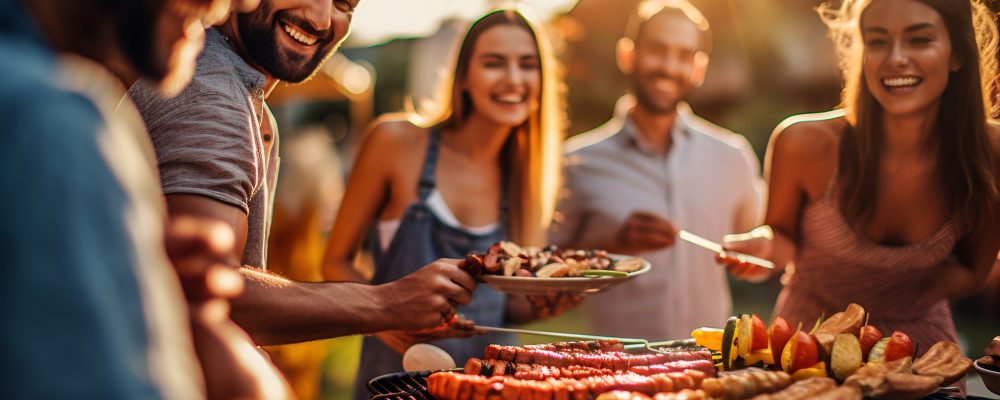
It is outdoor. It unfolds over hours rather than minutes. It has no formal structure — no courses, no seating arrangement, no schedule. It produces movement and gathering and conversation in a way that the seated indoor dinner does not. And it almost always includes more people than the intimate dinner — the extended family, the neighborhood, the collection of friends and friends of friends that the outdoor occasion invites in ways that the limited seats of a dining room table do not.
The cookout that nobody forgets is not the result of exceptional food. It is the result of specific conditions — created deliberately or arrived at accidentally — that allow the specific quality of a long outdoor summer day, with good food and good company and no particular agenda, to produce something that the participants will describe to each other for years.
Understanding what creates those conditions is worth more than any recipe.
The Structure That Allows Freedom
The specific paradox of the memorable cookout is that it feels effortless and unstructured while actually depending on specific advance preparation that makes the effortlessness possible.
The host who is visibly managing logistics — who is running between the grill and the kitchen and the drinks table and the conversation, who cannot stay in one place for more than a few minutes because something always needs attention — is not a host who is present at their own cookout. They are a manager of their own event. And the guests who observe this, even without consciously noting it, experience the event differently than they would if the host were simply present with them.
The advance preparation that makes host presence possible at a cookout is more specific and more thorough than most hosts achieve — because the cookout’s informality is deceptive. The informality feels like it requires less planning. It requires more, because the structure that a formal seated dinner provides — the fixed menu, the predetermined order of courses, the specific timing that the seated format imposes — is absent, and must be replaced by a more organic but no less deliberate plan.
The food that requires no attention during the event — the salads that were made in the morning, the dips and the spreads that are simply set out, the drinks that are in the cooler and require nothing from anyone — is the food that frees the host. The food that requires active management during the event — the grilled items that must be timed and turned and monitored — should be minimized or delegated.
The host who has prepared thoroughly enough to spend most of the cookout away from the grill has understood the fundamental structure of a successful outdoor gathering: the work happens before, so that the occasion itself can be inhabited rather than managed.
The Food That Works at a Cookout
The food that works at a cookout — that produces genuine pleasure and that holds up to the specific conditions of outdoor summer eating — is a specific category that most hosts don’t think about deliberately enough.
The conditions that cookout food must survive are specific and demanding. It must be edible at ambient summer temperature, because it will inevitably sit in the heat for an extended period before being eaten. It must not require individual plating or last-minute assembly, because the informal service of a cookout precludes this. It must be holdable in the hand or on a single plate without utensils, or at least manageable with minimal utensil use. And it must be abundant — because the social dynamics of a cookout produce more eating than any individual intended when they arrived.
The foods that meet all these requirements are a specific and identifiable group.
The marinated things — the chicken thighs in a bold marinade, the vegetables in a herb-and-olive-oil preparation, the skewers of whatever the cook decided to thread on a stick — are the cookout protein format that most reliably produces good results. The marinade seasons deeply, protects against the drying that high grill heat can produce, and provides flavor that makes the protein excellent even if the cooking is imprecise. Chicken thighs, specifically, are the most forgiving cookout protein available — they tolerate a wider range of doneness than breasts, they are difficult to dry out completely, and their higher fat content produces the specific flavor that the grill’s heat renders out and caramelizes.
The grain salad — cooked ahead, dressed in advance, served at room temperature — is the cookout side that most reliably improves with the time it spends at ambient temperature. The vinaigrette that was slightly sharp when the salad was first assembled has mellowed and integrated by the time it is served three hours later. The grain has absorbed the dressing and become fully seasoned throughout. The vegetables have softened slightly and become more supple. The cookout grain salad is actively better for having sat than it would have been if served immediately.
The dips — the hummus, the baba ghanoush, the tzatziki, the guacamole — are the cookout food format that most completely solves the problem of providing something substantial without requiring cooking during the event. They are made in advance, served at ambient temperature, and consumed with whatever is at hand for dipping. They provide protein and fat and flavor in a format that requires no management and that accommodates any dietary restriction without modification.
The Drinks That Make the Cookout
The specific drinks of a memorable cookout are worth thinking about with the same deliberateness as the food — because the drink is what most people are holding for most of the event, and what is in the glass shapes the experience of the entire afternoon.
The big-batch drink — the sangria, the punch, the agua fresca, the iced tea in a large vessel — is the cookout drink format that most reduces the logistical complexity of providing drinks to a crowd. It is made in advance. It requires no individual preparation for each guest. It is served from a single vessel with a ladle or a spout. And it provides, in its single prepared form, a drink that is specific to this occasion — that was made for this gathering rather than simply opened from a bottle.
The big-batch non-alcoholic option — the agua fresca or the shrub diluted in sparkling water or the hibiscus iced tea — is as important as the alcoholic one, and too frequently absent from cookout drink planning. The guest who doesn’t drink alcohol should have access to something as considered and as celebratory as the sangria — not a glass of tap water or a can of soda, but something that was made for the occasion.
The cold beer in the cooler is the cookout drink that requires the least planning and that serves the most guests most reliably — but it is incomplete as the only option, and the cookout that provides only beer and soda is a cookout that has not thought carefully about what the people at it most want to drink.
The Long Table Outside
The specific table arrangement of the cookout — how the eating space is organized, where people sit or stand or gather — shapes the social dynamics of the event in ways that are worth thinking about deliberately.
The long table — the single surface that seats everyone at once, that creates a linear configuration that encourages conversation across its length and between seats — is the formal outdoor dining arrangement. It produces a specific kind of occasion — more structured, more seated, more like a dinner party that happens to be outside. It is excellent for the smaller cookout where the gathering is intimate and the meal is the primary event.
The scattered arrangement — multiple small tables and chairs, blankets on the grass, areas for standing and sitting in different configurations — is the more casual outdoor format that allows people to move and reconfigure and find the specific conversations they want to have. It is the arrangement that most allows the cookout to unfold organically — that permits the gathering to be its own thing rather than a meal that happens outdoors.
The food table separate from the eating areas — the long table of food that people approach to serve themselves and then carry to wherever they are sitting or standing — is the arrangement that most facilitates the specific social dynamic of the cookout: the movement, the mingling, the approaching and retreating that characterizes a successful large gathering.
The specific arrangement chosen should reflect the specific gathering — the size, the character, the relationship between the people attending, and the specific mood the host wants to create.
The Memory Maker: The Moment That Defines the Cookout
Every cookout that is remembered has, somewhere in it, a specific moment that becomes the defining memory of the event — a moment that was not planned and could not have been planned, that arose from the specific combination of people and conditions and timing that the day produced.
The spontaneous game that developed in the backyard among people who had never met before. The conversation that continued at the table hours after the food was cleared and the light had completely faded. The specific song that came from a phone at the exact right moment and produced the response from the crowd that no playlist could have engineered. The moment when someone said something that made everyone laugh in the specific way that produces a memory that is recalled at subsequent gatherings for years.
These moments cannot be engineered. But the conditions that make them possible can be created — and the host who understands this creates those conditions rather than trying to produce the moments themselves.
The conditions are: enough time for the event to develop beyond the initial hour of arrival and settling. Enough food and drink that no one is preoccupied with basic needs. A physical environment that encourages movement and conversation. A host who is present enough in the gathering to sense when something is happening and to allow it rather than redirect it toward the schedule.
The cookout that nobody forgets happened because something unexpected occurred and the conditions allowed it to be fully inhabited. The host who created those conditions made the memorable cookout possible — without knowing in advance exactly what form the memory would take.
What to Do the Day After
The cookout that produced the specific meal, the specific gathering, the specific memory — also produces, the following day, the specific aftermath that any serious cooking event generates.
The leftovers that must be used. The grill that must be cleaned. The cooler that must be emptied. The dishes that were used outside that are now stacked somewhere not quite right.
But also: the stock that can be made from the chicken bones if there are any. The grain salad that is better today than it was yesterday. The dip that has melded overnight into something more integrated than it was when fresh. The drinks that can be topped off with sparkling water and ice for the afternoon that follows.
The day after the cookout is quieter than the day of it — and the specific quietness of a day that follows a full and successful gathering has its own pleasures. The satisfaction of an event that went well. The comfort of familiar leftovers eaten without ceremony. The specific pleasure of a day without obligation, eating the remains of something excellent that was made for an occasion that has now passed into memory.
This, too, is part of the cookout. The echo of it. The specific quietness of the day after, eating the last of the grain salad for lunch, that is in its own way as satisfying as the event itself.
The Takeaway
The cookout that nobody forgets is not the result of exceptional food or exceptional planning. It is the result of conditions — created through advance preparation, through the deliberate design of the physical space, through the presence of the host at their own gathering — that allow the specific quality of a long summer afternoon with good people and good food to produce something that exceeds the sum of its parts.
Prepare thoroughly in advance. Minimize the food that requires active management during the event. Make the big-batch drink. Set up the space for movement and conversation. And then be present — at your own cookout, with your own guests, in the specific afternoon that will not come again in exactly this form.
The food is the occasion.
The people are the memory.
Make the conditions for both as good as they can be.